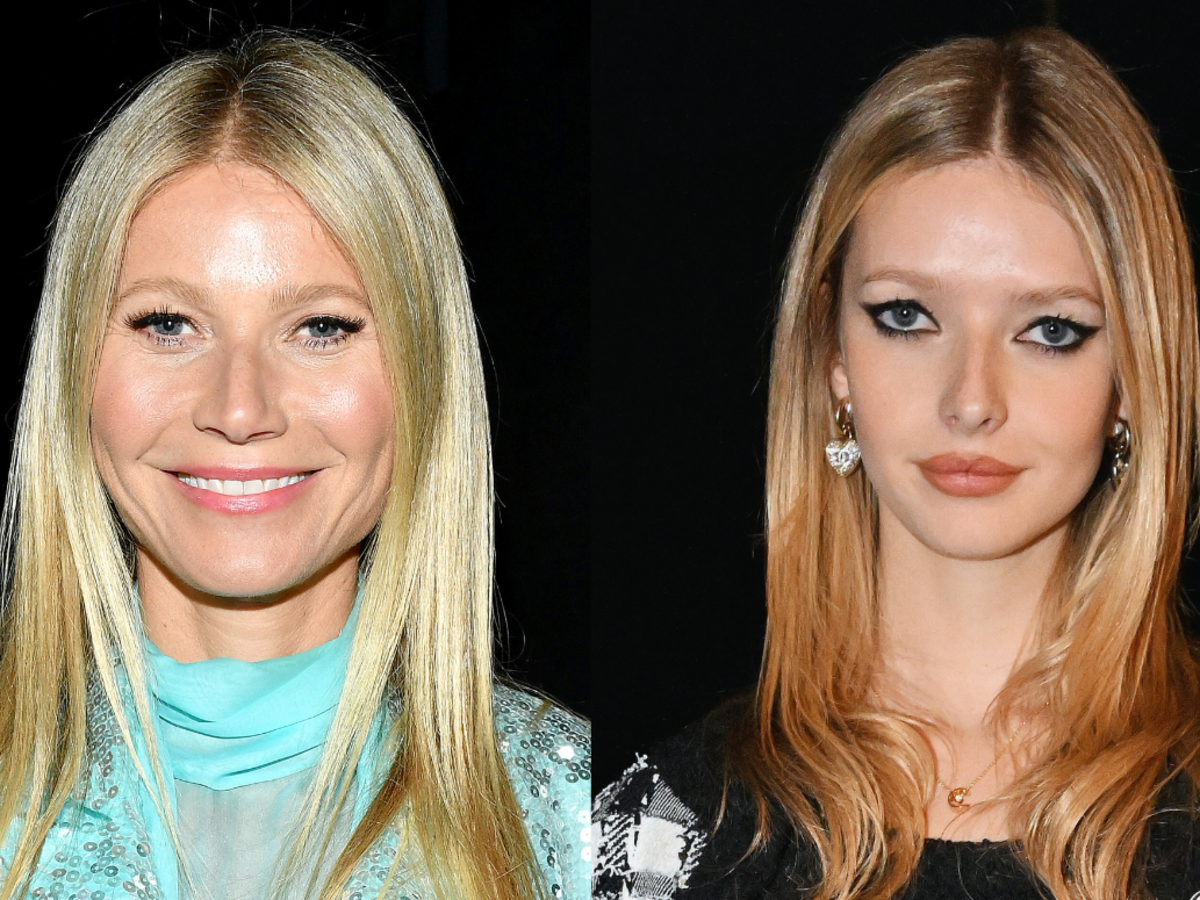
The recurring public fascination with Apple Martin’s physical appearance, particularly the frequent comparisons to her mother, actress Gwyneth Paltrow, centers on the genetic inheritance of facial features, specifically the eyes. As of 2026, Apple Martin has transitioned into a public figure in her own right, moving past the childhood scrutiny of the tabloids and into a phase of independent identity, though the "Paltrow eyes" narrative remains a persistent trope in digital celebrity culture.
The Intersection of Celebrity Genetics and Public Perception
In the digital era, the scrutiny of children of high-profile celebrities often focuses on physical markers of heritage. When Gwyneth Paltrow, an Academy Award-winning actress and founder of the wellness brand Goop, began appearing in public with her daughter, Apple Martin, the media immediately sought to identify which parent the child resembled most. The "eyes" became the focal point of this observation.
Genetic inheritance is a complex biological process, but in the context of celebrity analysis, it is often simplified into "looking like" one parent or the other. For Apple Martin, the discourse has often centered on her blue, almond-shaped eyes, which many observers compare to the iconic features of her mother during her 1990s and early 2000s film career. This curiosity reflects a broader societal interest in the persistence of beauty standards and how features are passed down through generations.
Why Physical Resemblance Draws Attention
Celebrity culture thrives on the human interest in familial lineage. When a child matures into adulthood, the physical resemblance becomes a tangible connection to the past. For fans of Gwyneth Paltrow, seeing her features reflected in her daughter serves as a narrative bridge between the mother's career-defining roles and the daughter's emergence as an individual. This phenomenon is not limited to the Paltrow-Martin family; it is a hallmark of how the public consumes the lives of celebrity offspring.
Development of the Narrative Over Time
To understand the current fascination with Apple Martin's features, one must look at the timeline of her public presence. Born in 2004 to Gwyneth Paltrow and musician Chris Martin, Apple was shielded from the press during her early years. However, as social media platforms grew in influence, and as Paltrow began to share more about her family life, the photographic evidence of their resemblance became widely available.
By the early 2020s, Apple began to make more public appearances at fashion shows and events. With each high-resolution image released, the "Paltrow eyes" comparison gained traction on social media platforms and fashion blogs. By 2026, the discourse has shifted from seeing her as a "mini-me" to observing her distinct personal style, even while acknowledging the undeniable genetic similarities.
Comparison of Genetic and Stylistic Features
When analysts and fans compare the eyes of mother and daughter, they are usually identifying a set of specific characteristics that fall under the "Paltrow" aesthetic. The following table outlines the components often cited in these visual comparisons.
| Feature Component | Gwyneth Paltrow (Historical/Current) | Apple Martin (Current) |
|---|---|---|
| Eye Color | Characteristic cool blue | Deep, piercing blue |
| Eye Shape | Elongated, slightly upturned | Almond-shaped, defined |
| Brows | Arched, groomed aesthetic | Natural, fuller profile |
| Expression | Known for "cool", composed look | Often described as stoic or elegant |
| Context | Screen/Red Carpet presence | Fashion and lifestyle influence |
The Role of Grooming and Style
It is crucial to differentiate between raw genetic traits and stylistic choices. Much of the resemblance noted in media is also attributed to shared stylistic preferences, such as minimalist makeup, preference for specific lighting in portraiture, and a shared affinity for understated elegance in fashion. These choices emphasize the eyes, making the genetic resemblance more pronounced to the casual observer.
The Psychological Impact of Public Scrutiny
For those in the public eye, being scrutinized for one’s physical appearance—even when the comparison is complimentary—can have complex effects. While the resemblance to a famous parent is often framed as a "tribute" or a "genetic stroke of luck" in the media, it can also lead to a persistent narrative that defines an individual solely by their relation to their parents.
As of 2026, Apple Martin has navigated this environment by balancing the inherent interest in her background with her own personal pursuits. By maintaining a controlled public image and engaging in projects that are distinct from her mother’s acting career, she has asserted an independent identity. The "eyes" narrative, while persistent, is increasingly treated as a footnote to her own evolving professional path rather than the defining element of her public persona.
Common Misconceptions Regarding Celebrity Look-Alikes
The obsession with finding "look-alikes" in celebrity families often ignores the reality of genetic variation.
- The "Copy-Paste" Fallacy: Many fans assume that a child is a perfect visual replica of one parent. In reality, features are polygenic—meaning they result from the combination of hundreds of genes. Apple Martin displays a unique blend of both Chris Martin’s and Gwyneth Paltrow’s features, though the media frequently isolates the maternal traits for the sake of a simpler headline.
- The Influence of Filters: In the current digital landscape, professional photography and image editing can shift the appearance of facial features. What looks like an exact match in a high-fashion magazine spread may look quite different in candid, unedited street photography.
- Age Bias: Comparisons often compare the child at a specific age to the parent at a specific age, ignoring that environmental factors, aging, and cosmetic enhancements (in the case of the parent) change the baseline over time.
Analyzing the "Iconic Eye" Aesthetic
The reason the "Paltrow eyes" are such a frequent topic of conversation is that they are considered an "iconic" feature of 90s cinema. Gwyneth Paltrow’s eyes were frequently highlighted in film through specific cinematography choices that emphasized their color and clarity. Because this look is preserved in film history, the public has a high "brand recall" for those specific features.
When Apple Martin enters a room or is photographed at an event, the brain of the observer—primed by years of seeing Paltrow’s films—immediately draws the connection. It is a psychological shortcut rather than a rigorous biological assessment. This underscores the power of visual legacy in the entertainment industry.
Frequently Asked Questions
Is the resemblance between Apple Martin and Gwyneth Paltrow considered scientifically significant?
No. While they share a strong genetic connection as mother and daughter, the public fixation on the resemblance is a cultural phenomenon rather than a scientific one. The perception of "looking alike" is influenced heavily by media framing and the public's pre-existing knowledge of the mother's features.
Why do media outlets continue to focus on this physical comparison?
The comparison serves as "soft" content that is easy for readers to process. It bridges generations, appeals to fans of both the parent and the child, and fits neatly into the "celebrity offspring" media category, which has high engagement rates on social media.
Does Apple Martin use her resemblance to her mother in her own career?
There is no evidence to suggest that she leans into this comparison intentionally for professional advancement. On the contrary, she has largely focused on her own interests, such as fashion and education, often keeping her public interactions neutral regarding the "resemblance" debate.
How does this public attention affect the privacy of celebrity children?
Constant comparison can lead to a loss of individuality, where the child is viewed as an extension of the parent rather than a unique person. This is a common challenge for the children of high-profile celebrities who navigate the transition into adulthood in the public eye.
Can photography techniques enhance the appearance of family resemblance?
Yes. Techniques such as lighting, lens selection, and color grading can be used by photographers to emphasize similarities between two people. By positioning a subject in a way that mimics a famous portrait of a parent, photographers can intentionally invoke a sense of nostalgia or recognition in the audience.
Moving Forward: The Evolution of Identity
The focus on "Apple Paltrow eyes" is a reflection of the audience's desire to find continuity in the rapidly changing world of celebrity. As we look at the trajectory of 2026 and beyond, it is likely that Apple Martin will continue to build her own legacy. While the genetic connection to her mother will always be a part of her history, the public's interest will eventually shift toward her own achievements, style, and professional milestones.
For those interested in the genetics or media analysis of such figures, the best approach is to observe the individual as a distinct entity. The "resemblance" is a product of human pattern recognition, a testament to the enduring public interest in the Paltrow-Martin family, and a modern case study in how celebrity image is constructed and perceived in the 21st century.