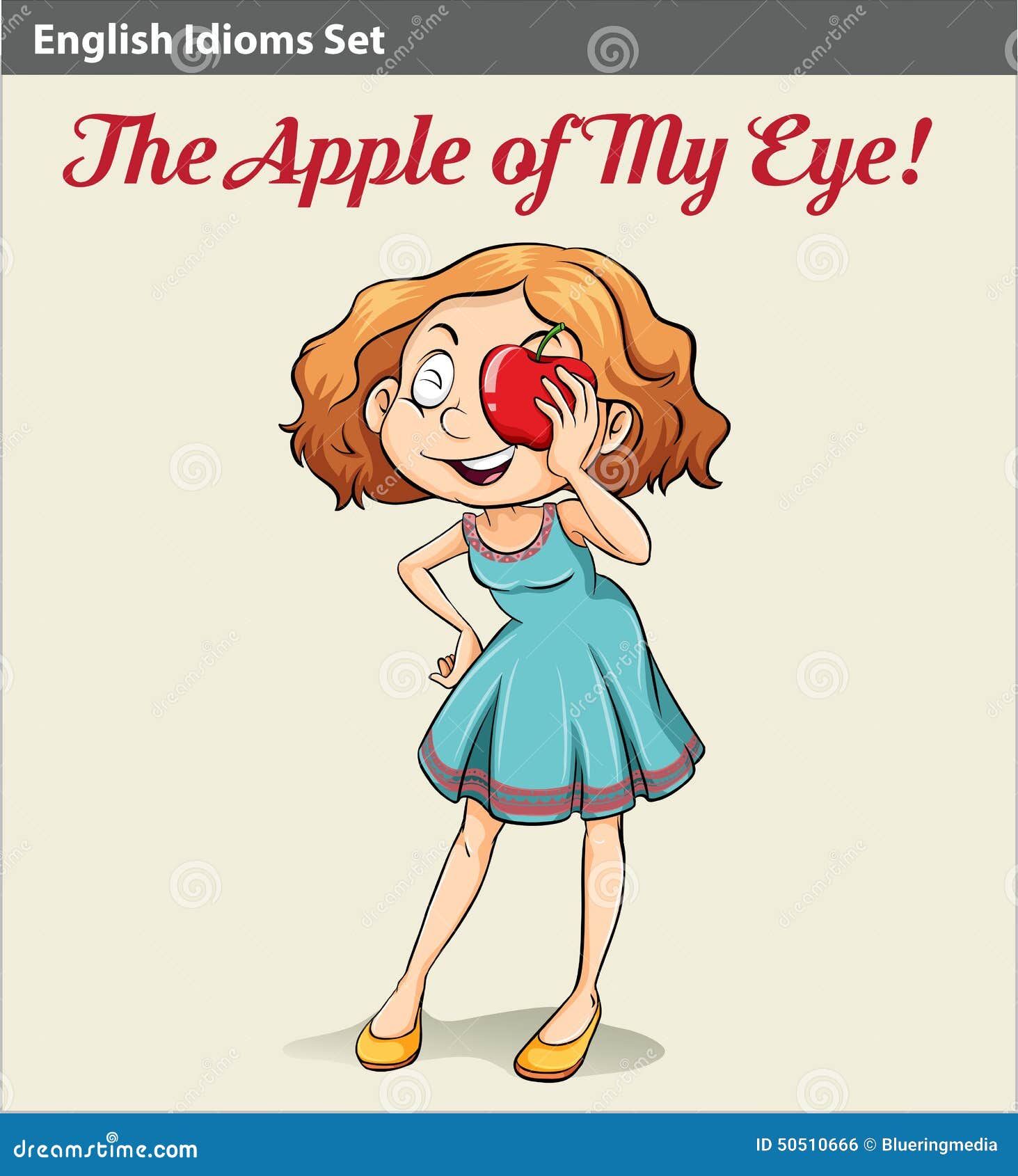
The phrase "the apple of my eye" is an English idiom used to describe a person or thing that is cherished above all others. It denotes an individual who holds a position of immense affection, importance, or pride in someone’s life. Rooted in ancient anatomical understanding, the term signifies something so precious that one instinctively protects it as carefully as they would their own vision.
The Etymological Origins of the Expression
The historical development of the idiom is rooted in both early medical knowledge and biblical literature. Before the advent of modern ophthalmology, the term "apple" was frequently used in Old English to describe the pupil of the eye. This usage likely stemmed from the spherical, solid, and dark appearance of the pupil, which resembled a small, round fruit.
In ancient times, the pupil was considered the most vital and vulnerable part of the human eye. To damage the pupil was to risk permanent blindness, a catastrophic event in an era without surgical intervention. Consequently, the "apple" of the eye was something that required constant protection and intense focus.
The idiom gained significant cultural prominence through its appearances in the King James Version of the Bible. It appears in several passages, most notably in Deuteronomy 32:10, where it is used to describe how God watched over his people in the wilderness, and in Zechariah 2:8, which speaks of the vulnerability of those under divine protection. These literary references helped cement the connection between the "apple" and the concept of something held in high, defensive regard.
While the biological definition of the pupil has evolved—we now know it is an aperture rather than a physical object—the linguistic metaphor has remained static. The transition from a literal reference to a physiological part to a symbolic representation of love and value illustrates the enduring power of metaphor in the English language.
Psychological and Emotional Significance
When someone calls a person the "apple of their eye," they are communicating a profound level of emotional attachment. This phrase is most commonly applied to children, partners, or close family members who serve as a primary source of happiness. The psychological weight of the term lies in the concept of "gaze." By labeling someone the apple of one’s eye, the speaker suggests that this person is the focal point of their attention.
In contemporary usage, the term often implies a sense of protectiveness. Just as one might flinch or close their eyelids at the slightest threat to their eyes, an individual who is the apple of another’s eye is often the recipient of fierce advocacy, support, and care. This creates a feedback loop of emotional safety; the loved one feels secure, and the caretaker derives a sense of purpose from their role as a protector.
However, the idiom can also carry complex social nuances. In some contexts, it can suggest a sense of favoritism. When a parent has multiple children, for instance, the identification of one as the "apple of their eye" may create feelings of imbalance or jealousy among others. Understanding the context in which the phrase is used is essential, as the intensity of the sentiment can be perceived as both a compliment and a source of social friction.
Usage in Literature, Media, and Pop Culture
The longevity of the phrase is largely due to its consistent use in literature and media. By appearing in works ranging from classic poetry to modern screenplays, the idiom has been kept relevant across generations. It serves as a shorthand for "beloved" or "darling," allowing writers to quickly establish the depth of a character's devotion without resorting to lengthy descriptions of affection.
In film and television, the phrase is often employed during moments of reconciliation or declarations of love. It acts as an anchor for the audience, signaling that the character being discussed is the most important person in the speaker's emotional ecosystem. Because the term is universally understood, it transcends cultural and geographic boundaries, making it one of the most recognizable idioms in the global English lexicon.
Comparative Sentiment Analysis
To better understand how this term fits into the spectrum of human affection, it is helpful to compare it to other common expressions of endearment. While many phrases denote love, they each carry a slightly different weight and origin.
| Phrase | Primary Connotation | Contextual Use |
|---|---|---|
| Apple of my eye | Cherished, protected, central | Family, close partners |
| Light of my life | Source of hope or inspiration | Romantic or deep gratitude |
| Fair-haired child | The favored, often lucky | Competitive or social status |
| Blue-eyed boy | Someone granted special favor | Institutional or professional bias |
| Treasure | Valuable and highly kept | General appreciation |
As shown in the table above, the "apple of my eye" remains unique because it bridges the gap between deep love and active, instinctual protection.
Common Misconceptions and Modern Interpretations
Despite its ubiquity, there are common misconceptions regarding the phrase. Some users mistakenly believe it refers to a literal apple, perhaps conflating it with the common "apple a day" adage or the forbidden fruit in mythology. It is important to clarify that the "apple" in this idiom is exclusively a metaphor for the pupil.
In 2026, the use of the term continues to evolve within digital communication. While it remains a staple of traditional literature and spoken conversation, it is frequently used in social media captions and messaging to express pride in milestones, such as a child’s graduation or a partner’s achievement. Its transition into digital formats has not diluted its meaning; rather, it has expanded its use to include public displays of affection that were once reserved for private moments.
Furthermore, there is a recurring debate regarding whether the term can be used for inanimate objects. While the traditional usage is focused on people, it is not uncommon to hear someone refer to a prized possession—such as a restored classic car or a significant creative work—as the "apple of their eye." While this represents a slight linguistic drift, it is widely accepted as a valid expression of high-value attachment.
Navigating Social Contexts
Deciding when to use this expression requires a degree of social awareness. Because of its weight, it is generally considered a "heavy" compliment. Using it prematurely in a relationship might signal an intensity that the other party is not prepared to reciprocate. Conversely, using it with family members—particularly children or grandchildren—is almost universally viewed as a warm, positive affirmation of their importance.
When using the phrase in a professional or formal setting, one should exercise caution. While it can express admiration for a colleague or subordinate, it may also imply favoritism, which can be counterproductive in a workplace environment focused on equity. In these instances, expressions like "valued contributor" or "highly respected colleague" might be more appropriate to maintain a professional distance.
Practical Steps to Expressing Endearment
If you are looking to convey the sentiment of this idiom to someone you care about, consider the following approach:
- Assess the Relationship: Ensure the recipient understands the depth of your affection. This phrase is best reserved for those with whom you share a deep, long-standing bond.
- Choose the Right Setting: Verbalizing such a sentiment is often most impactful in a one-on-one, quiet environment.
- Explain the "Why": If you use the phrase, follow it up with specific reasons why the person holds such a position in your life. For example, "You are the apple of my eye because of your kindness and the strength you show every day." This elevates the idiom from a cliché to a personalized, heartfelt tribute.
- Observe Their Reaction: If the person seems uncomfortable with the intensity of the term, shift to more casual expressions of appreciation to allow the relationship to progress at a comfortable pace.
Frequently Asked Questions
Is "apple of my eye" a religious phrase?
While the term originated in biblical texts, it is not exclusively religious. It is a secular idiom used in daily English to describe profound affection and protection.
Can I use this phrase to describe a group of people?
While possible, it is linguistically awkward. The singular nature of the "eye" implies a focus on a single individual or a singular entity. It is most effective when directed at one person.
Does the phrase imply favoritism?
Yes, it can. Because it denotes something cherished above others, it carries an inherent suggestion of preference. Be mindful of this when speaking in groups or within a family setting.
How did the anatomical understanding change?
Historically, the "apple" was thought to be a physical structure inside the eye. We now know that the pupil is merely an opening that allows light to enter the retina. The idiom survived even as the science became more accurate.
Is there a formal way to say this in business?
"The apple of my eye" is far too intimate for business. Instead, use phrases like "highly valued member of the team" or "essential to our success" to convey importance without the personal baggage.
How do I respond if someone calls me the apple of their eye?
If the feeling is mutual, a simple "I feel the same way about you" is sufficient. If you are uncomfortable, a polite acknowledgment such as "That is very kind of you to say" maintains your boundaries without being rude.
Conclusion and Next Actions
The phrase "the apple of my eye" remains one of the most poignant ways to express that someone is the focal point of your world. By understanding its origins in protective instincts and its evolution through literary history, you can use the idiom with greater appreciation for its depth.
If you identify someone in your life who fits this description, take a moment to reflect on why they hold that place. Often, we take our closest relationships for granted. A deliberate effort to tell them—whether through a heartfelt letter, a quiet conversation, or a thoughtful gesture—can strengthen the bonds that make life meaningful.