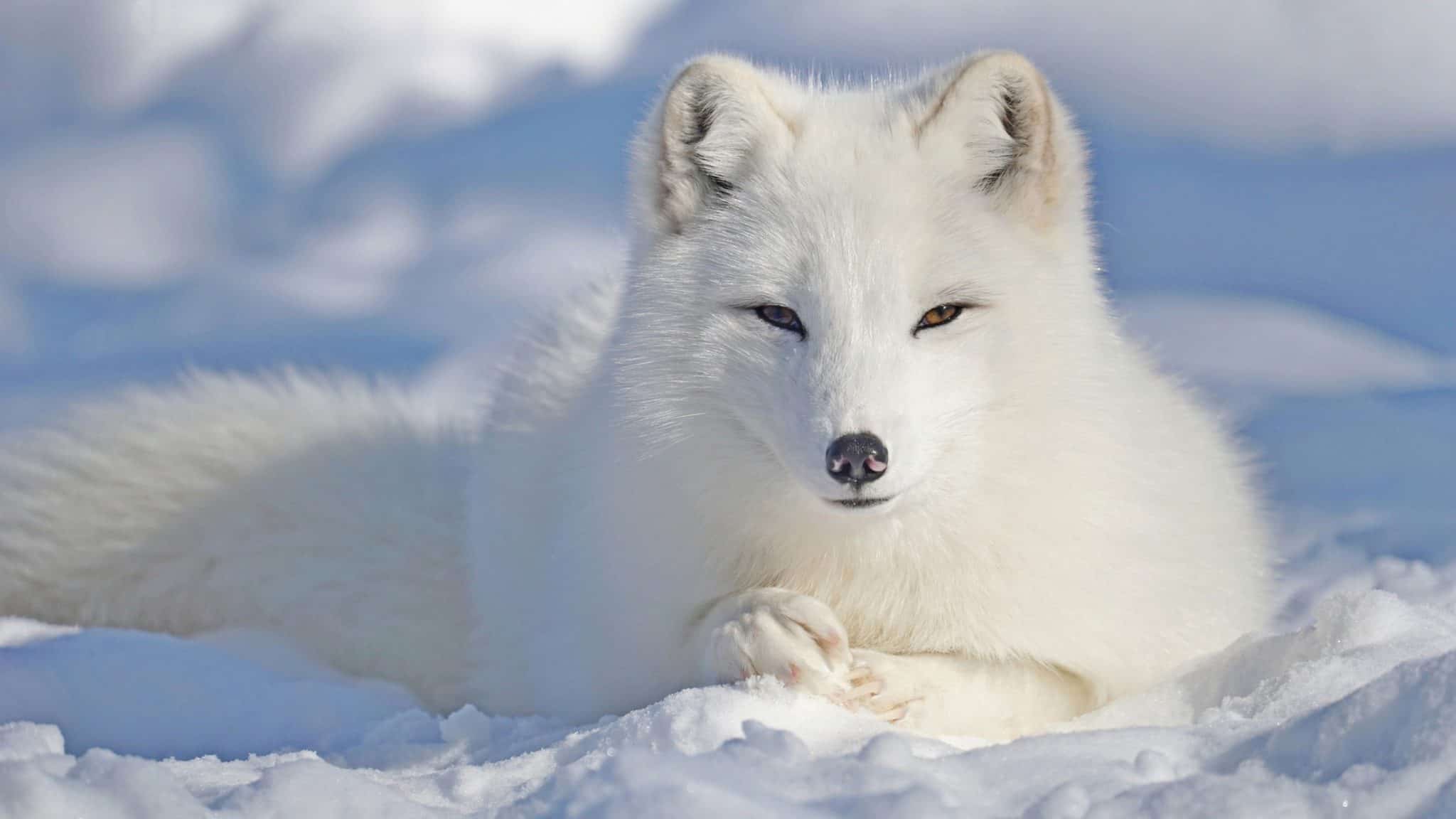
The animals that live in the arctic desert are highly specialized survivors, ranging from the massive polar bear and the prehistoric-looking muskox to the resilient Arctic fox and snowy owl. These species possess unique physiological and behavioral adaptations, such as thick insulating fur, layers of blubber, and seasonal camouflage, allowing them to endure extreme sub-zero temperatures and scarce food supplies in one of Earth's most inhospitable biomes.
Understanding the Arctic Desert Biome
To appreciate the wildlife of the High North, one must first distinguish between the Arctic tundra and the Arctic desert. While the tundra is known for its low-growing vegetation and permafrost, the Arctic desert is a much harsher environment located at even higher latitudes. These regions, which include parts of the Canadian Arctic Archipelago, Greenland, and the Svalbard archipelago, receive less than 250 millimeters of precipitation annually, qualifying them as deserts despite the presence of ice and snow.
In this environment, temperatures rarely rise above freezing, and the soil is largely composed of rock, gravel, and permafrost. Vegetation is incredibly sparse, often limited to lichens, mosses, and a few hardy vascular plants. This scarcity of primary production means that the food web is extremely fragile. Animals that live in the arctic desert must be mobile, energy-efficient, and capable of enduring months of total darkness during the polar night. By 2026, tracking technology has shown that many of these species are expanding or shifting their ranges in response to subtle climatic shifts, making their study more critical than ever.
The Polar Bear: Apex Predator of the Ice
The polar bear (Ursus maritimus) is the most iconic of the animals that live in the arctic desert. Although they are classified as marine mammals because they spend most of their lives on sea ice, they are the undisputed kings of the High Arctic landscape. Their survival is inextricably linked to the presence of sea ice, which they use as a platform to hunt their primary prey: ringed and bearded seals.
The physiological adaptations of the polar bear are a marvel of evolutionary engineering. Their fur is not actually white but translucent and hollow, which traps heat and reflects light, giving them their snowy appearance. Beneath this fur lies black skin, which absorbs the sun's rays. Furthermore, a layer of blubber up to 11 centimeters (4.3 inches) thick provides insulation and acts as an energy reserve during periods when hunting is unsuccessful.
By 2026, researchers have documented a shift in polar bear behavior. As sea ice becomes less predictable, some populations are spending more time on land in the Arctic desert, scavenging for bird eggs or even kelp. However, their primary caloric intake must come from seal blubber to maintain their massive body mass. A male polar bear can weigh up to 700 kilograms (1,540 pounds), requiring immense energy to navigate the rugged, frozen terrain.
The Muskox: A Relic of the Ice Age
Often described as a living fossil, the muskox (Ovibos moschatus) is one of the most resilient herbivores among the animals that live in the arctic desert. Related more closely to sheep and goats than to cattle, muskoxen have inhabited the Arctic for thousands of years, surviving the end of the last Pleistocene ice age.
Their primary defense against the biting cold is their coat, which consists of two distinct layers. The outer layer, known as guard hairs, can reach nearly a meter in length, reaching almost to the ground. Beneath this lies the qiviut, an underwool that is eight times warmer than sheep's wool and finer than cashmere. This dual-layered system allows them to remain stationary during winter storms, conserving energy while the wind howls around them.
Muskoxen are social animals, often found in herds of 10 to 20 individuals. When threatened by predators like Arctic wolves, they perform a unique defensive maneuver: they form a circular "fortress," with the large adults facing outward and the calves protected in the center. This strategy is highly effective against wolves, though it leaves them vulnerable to human hunters. Their diet in the Arctic desert consists of willow shoots, grasses, and lichens, which they must often dig for beneath the snow using their sturdy hooves.
The Arctic Fox: The Master of Camouflage
The Arctic fox (Vulpes lagopus) is perhaps the most versatile of the animals that live in the arctic desert. Smaller than its red fox cousin, the Arctic fox is built for heat retention, featuring short ears, a short muzzle, and thick fur on the soles of its feet—an adaptation that acts like natural snowshoes.
One of their most striking features is their seasonal color change. During the winter, their fur is a pristine, snowy white, providing perfect camouflage against the desert ice. As the snow melts in the brief summer, they shed this coat for a brown or grayish-blue pelt that blends in with the rocky tundra and lichens. This allows them to remain "invisible" to both their prey (lemmings and birds) and their predators (polar bears and golden eagles).
In the High Arctic desert, food can be incredibly scarce. The Arctic fox has adapted by becoming a master scavenger. They often follow polar bears at a distance, waiting for the bear to finish a meal so they can scavenge the remains of the seal carcass. They are also known to bury extra food in the permafrost, creating "natural refrigerators" to sustain them through the leanest months of the polar night.
The Peary Caribou: Specialized Island Dwellers
While many people associate caribou with the vast herds of the subarctic, the Peary caribou (Rangifer tarandus pearyi) is a subspecies specifically adapted to the High Arctic islands and the Arctic desert. They are the smallest of all North American caribou, with a shorter snout and a coat that is mostly white throughout the year.
The Peary caribou's survival depends on its ability to navigate the "polar oases"—small patches of the Arctic desert where moisture and soil conditions allow for slightly more vegetation. Unlike their southern relatives, they do not undertake massive migrations over thousands of miles. Instead, they move between islands or across the sea ice to find areas where the wind has blown the snow thin, making it easier to reach the frozen plants beneath.
In 2026, the status of the Peary caribou remains a point of concern for conservationists. Their habitat is frequently impacted by "icing events," where rain falls on snow and then freezes, creating a layer of ice that the caribou cannot break through to reach their food. This phenomenon, which is becoming more common in the changing High Arctic climate, can lead to mass starvation events within herds.
Avian Residents: Snowy Owls and Arctic Terns
The sky above the Arctic desert is far from empty. The snowy owl (Bubo scandiacus) is a year-round resident of the High North. Unlike most owls, snowy owls are diurnal, meaning they hunt during both day and night—a necessary adaptation for the 24-hour daylight of the Arctic summer. Their thick plumage makes them the heaviest owl species in North America, and their feathered talons act as insulation against the frozen ground.
While the snowy owl stays put, the Arctic tern (Sterna paradisea) is the ultimate traveler. Each year, these birds migrate from the Arctic desert all the way to the Antarctic and back, a round-trip of approximately 70,000 to 90,000 kilometers. By spending the summer in the High Arctic, they take advantage of the explosion of insect and fish life during the brief period of 24-hour sun, providing their chicks with an abundance of food before the long journey south begins again.
Marine Mammals at the Desert's Edge
The boundary between the Arctic desert and the Arctic Ocean is where the highest density of life is found. Marine mammals are essential components of this ecosystem, as they provide the nutrient link between the sea and the land.
- Ringed Seals: These are the most common seals in the Arctic and the primary food source for polar bears. They use their sharp claws to maintain breathing holes in the sea ice.
- Walruses: Found in the coastal areas of the Arctic desert, walruses use their tusks to haul themselves onto ice floes and to forage for mollusks on the ocean floor.
- Narwhals and Belugas: These whales are often found in the leads (cracks) of the sea ice surrounding the Arctic desert. Their presence is a vital indicator of the health of the polar marine environment.
Comparison of Key Species in the Arctic Desert
The following table outlines the differences in habitat and survival strategies for the most prominent animals that live in the arctic desert.
| Species | Primary Habitat | Diet Type | Key Survival Adaptation |
|---|---|---|---|
| Polar Bear | Sea ice and coastal desert | Carnivore (Seals) | Thick blubber and hollow, heat-trapping fur. |
| Muskox | Rocky plains and valleys | Herbivore (Lichens/Willow) | Qiviut underwool; defensive circle formation. |
| Arctic Fox | Burrows and sea ice edges | Omnivore/Scavenger | Color-changing fur; fur-covered paw pads. |
| Peary Caribou | High Arctic islands | Herbivore (Mosses/Grasses) | Compact body size; ability to digest frozen moss. |
| Snowy Owl | Open tundra and desert | Carnivore (Lemmings/Birds) | Dense plumage; diurnal hunting patterns. |
| Ringed Seal | Sea ice and shelf waters | Piscivore (Fish/Shrimp) | Ability to maintain ice breathing holes. |
Physiological Adaptations to Extreme Cold
Survival for animals that live in the arctic desert is not merely about "toughing it out"; it involves complex biological mechanisms. Two ecological principles, Bergmann’s Rule and Allen’s Rule, are clearly visible in Arctic wildlife.
- Bergmann’s Rule: This principle states that within a broadly distributed taxonomic group, populations and species of larger size are found in colder environments. The massive size of the polar bear and the muskox helps them maintain a low surface-area-to-volume ratio, which minimizes heat loss.
- Allen’s Rule: This rule suggests that animals adapted to cold climates have shorter limbs and appendages than those in warm climates. Arctic foxes and lemmings have noticeably shorter ears and tails than their temperate counterparts, preventing frostbite and reducing the area through which heat can escape.
Additionally, many Arctic animals utilize counter-current heat exchange in their extremities. In the legs of a caribou or the flippers of a seal, the warm arterial blood flowing away from the heart passes close to the cool venous blood returning to the heart. This allows the heat to be transferred to the returning blood before it reaches the body's core, keeping the internal organs warm while allowing the limbs to remain at a lower temperature.
Frequently Asked Questions
What do animals that live in the arctic desert eat during the winter?
Most herbivores, like muskoxen and caribou, eat frozen vegetation, mosses, and lichens that they find by "cratering" (digging) through the snow. Carnivores like the Arctic fox often scavenge on the remains of kills made by polar bears, while snowy owls may hunt small mammals like lemmings that remain active beneath the snow in the subnivean zone.
Do any animals hibernate in the Arctic desert?
Unlike bears in more temperate regions, polar bears do not truly hibernate. Pregnant females enter a state of "carnivore lethargy" in snow dens to give birth, but their body temperature does not drop significantly. Most animals that live in the arctic desert remain active year-round, as the extreme cold requires a high metabolic rate to maintain body heat.
How do Arctic animals get water?
In a desert where most water is frozen, animals obtain hydration through their food. Herbivores get moisture from the plants they eat, and carnivores get it from the blood and tissues of their prey. Some animals will eat snow, but this is energy-expensive because the body must use heat to melt the snow into water.
Why are there no trees in the Arctic desert?
The Arctic desert is too cold and dry for trees to survive. The combination of permafrost (which prevents deep root growth), extremely short growing seasons, and lack of liquid water creates conditions where only low-lying plants like mosses and certain grasses can survive.
Is the Arctic desert the same as Antarctica?
No. The Arctic is an ocean surrounded by land (the northern parts of North America, Europe, and Asia), while Antarctica is a continent surrounded by ocean. While both have polar deserts, the animal species are entirely different; for example, there are no penguins in the Arctic and no polar bears in the Antarctic.
Recommendations for Further Exploration
If you are interested in the ongoing conservation and study of the animals that live in the arctic desert, consider following the research published by the National Snow and Ice Data Center (NSIDC) or the Arctic Council. These organizations provide real-time data on habitat health and species populations. For those looking to see these animals in their natural habitat, eco-tourism expeditions to Svalbard or Northern Canada offer guided opportunities to observe these resilient creatures responsibly. Always prioritize travel operators that adhere to the Association of Arctic Expedition Cruise Operators (AECO) guidelines to ensure that wildlife is not disturbed.