Anticholinergics, also known as muscarinic antagonists, are a cornerstone of pharmacological management for Chronic Obstructive Pulmonary Disease (COPD). They work by blocking acetylcholine from binding to muscarinic receptors on airway smooth muscles, which prevents bronchoconstriction and reduces mucus secretion. By inhibiting the parasympathetic nervous system’s influence on the lungs, these medications improve airflow, reduce symptoms of breathlessness, and decrease the frequency of life-threatening exacerbations.
Understanding the Role of Anticholinergics in COPD
Chronic Obstructive Pulmonary Disease is characterized by persistent respiratory symptoms and airflow limitation, primarily caused by significant exposure to noxious particles or gases. In patients with COPD, the airways often maintain a high level of "vagal tone"—a state where the parasympathetic nervous system causes the smooth muscles in the airways to remain partially constricted. Anticholinergic medications are specifically designed to counteract this tone.
Unlike asthma, where inflammation is often the primary driver of airway narrowing, COPD involves a combination of small airway disease (obstructive bronchiolitis) and parenchymal destruction (emphysema). Anticholinergics are particularly effective in this context because they target the primary reversible component of COPD: the cholinergic-mediated bronchoconstriction. By 2026, the medical community has further refined the use of these agents, moving toward more personalized delivery methods and potent long-acting formulations that provide 24-hour stabilization.
Mechanism of Action: The Science of Bronchodilation
To understand how anticholinergics work, one must look at the muscarinic receptors located throughout the human respiratory tract. There are three primary subtypes of muscarinic receptors involved in airway function: M1, M2, and M3.
- M1 Receptors: Located in the parasympathetic ganglia, these facilitate neurotransmission and contribute to the overall cholinergic signal.
- M2 Receptors: These act as "autoreceptors" on the nerve endings. Their role is actually to inhibit the release of more acetylcholine. Medications that accidentally block M2 receptors can sometimes cause a paradoxical increase in acetylcholine release.
- M3 Receptors: Found directly on the smooth muscle cells of the airways and the submucosal glands. When acetylcholine binds to M3 receptors, it triggers muscle contraction (bronchoconstriction) and mucus production.
Anticholinergic drugs compete with acetylcholine for these receptor sites. Modern long-acting muscarinic antagonists (LAMAs) are engineered to dissociate very slowly from M3 receptors but rapidly from M2 receptors. This kinetic selectivity ensures prolonged bronchodilation without interfering with the body's natural feedback loops that regulate acetylcholine levels.
Classification of Anticholinergic Agents
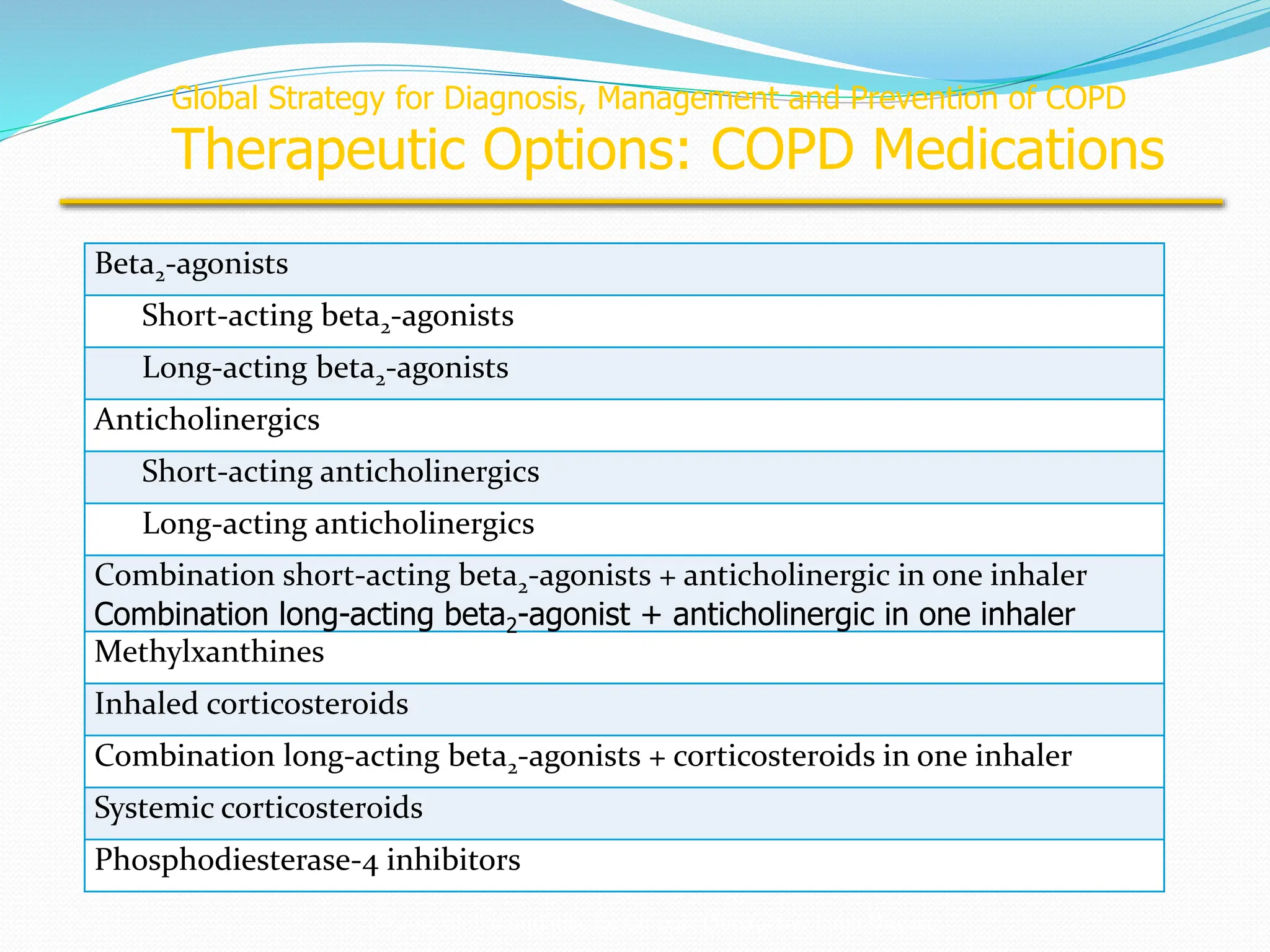
Anticholinergics used in COPD management are categorized based on their duration of action. The distinction between short-acting and long-acting agents is critical for determining whether a drug is used for immediate symptom relief or long-term maintenance.
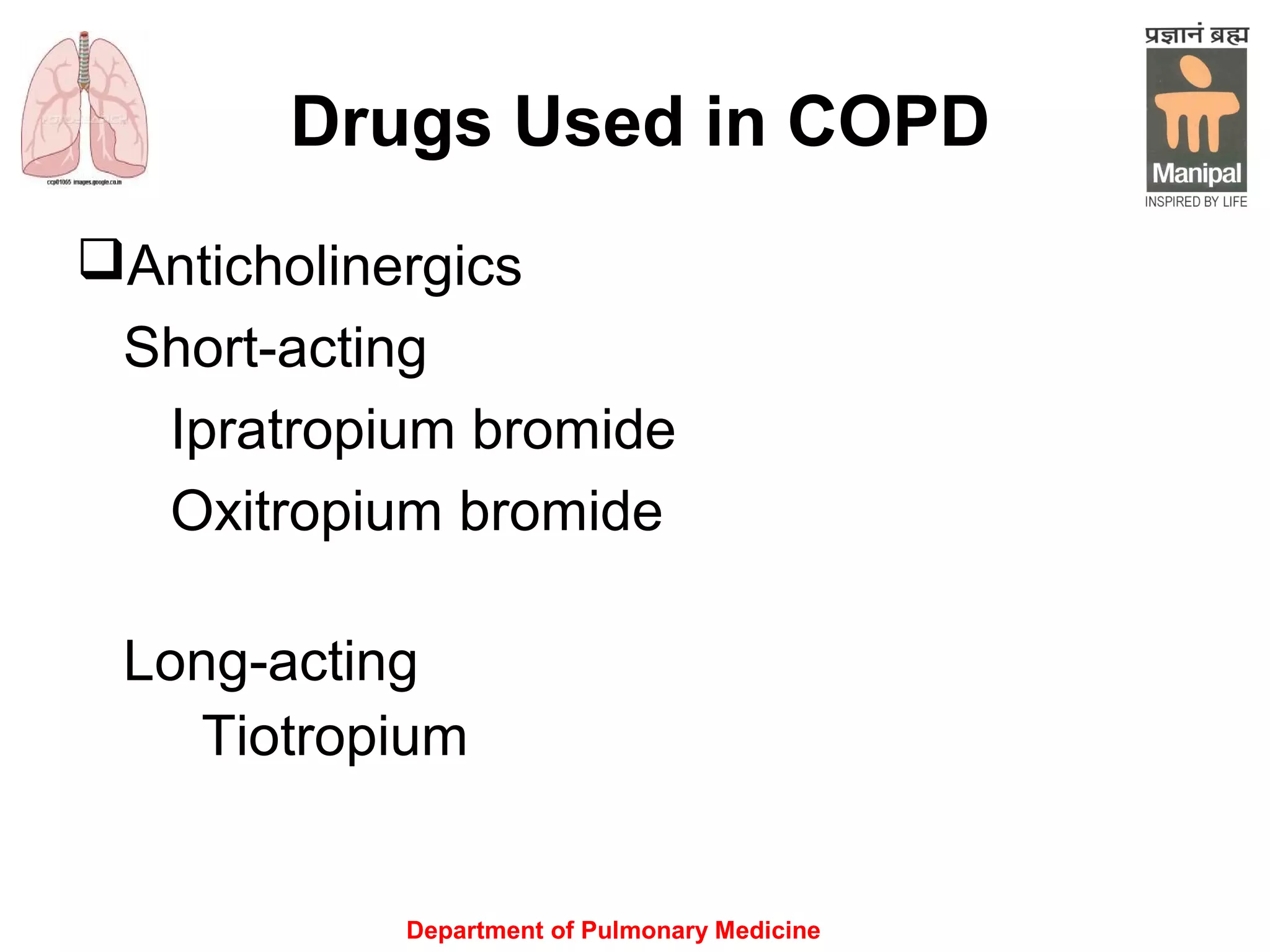
Short-Acting Muscarinic Antagonists (SAMA)
Ipratropium bromide is the primary SAMA used in clinical practice. It typically has an onset of action within 15 to 30 minutes and lasts for approximately 6 to 8 hours. Because of its relatively short duration, it must be dosed several times a day. In 2026, SAMAs are largely reserved for "rescue" situations or for patients with very mild, intermittent symptoms who do not yet require daily maintenance therapy.
Long-Acting Muscarinic Antagonists (LAMA)
LAMAs have revolutionized COPD care by providing sustained bronchodilation with once- or twice-daily dosing. These agents have a much higher affinity for muscarinic receptors and stay bound for longer periods. Common LAMAs include:
- Tiotropium: The most extensively studied LAMA, often delivered via the HandiHaler or Respimat.
- Umeclidinium: Known for its high potency and 24-hour efficacy.
- Glycopyrronium: Often used in combination inhalers due to its rapid onset and long duration.
- Aclidinium: Typically dosed twice daily, which some clinicians prefer for managing nocturnal symptoms.
Comparison of Common Anticholinergic Medications
The following table outlines the technical specifications and dosing frequencies for the most common anticholinergic agents utilized in 2026 COPD treatment protocols.
| Generic Name | Class | Common Brand(s) | Delivery Device | Usual Dosage |
|---|---|---|---|---|
| Ipratropium Bromide | SAMA | Atrovent | MDI, Nebulizer | 2-4 puffs, 4x daily |
| Tiotropium | LAMA | Spiriva | DPI (HandiHaler), SMI (Respimat) | Once daily |
| Umeclidinium | LAMA | Incruse | DPI (Ellipta) | Once daily |
| Glycopyrronium | LAMA | Seebri | DPI (Neohaler) | Once daily |
| Aclidinium | LAMA | Tudorza | DPI (Pressair) | Twice daily |
| Ipratropium / Albuterol | SAMA/SABA | Combivent, DuoNeb | SMI, Nebulizer | 1 puff, 4x daily |
Clinical Benefits and Outcomes
The administration of anticholinergics in COPD is not merely about "opening the airways." The physiological benefits translate into significant clinical outcomes that improve the daily lives of patients.
Reduction in Lung Hyperinflation
One of the most debilitating aspects of COPD is "air trapping." Because the airways collapse during exhalation, air stays trapped in the lungs, leading to hyperinflation. This makes it harder for the patient to take the next breath. By keeping the airways open longer and more effectively, LAMAs reduce the residual volume in the lungs, allowing for more efficient gas exchange and reduced "work of breathing."
Exacerbation Prevention
The Global Initiative for Chronic Obstructive Lung Disease (GOLD) guidelines consistently emphasize the role of LAMAs in reducing the risk of exacerbations. Clinical trials have shown that LAMAs are often superior to long-acting beta-agonists (LABAs) in preventing the sudden worsening of symptoms that lead to hospitalization. This is likely due to their effect on reducing mucus hypersecretion and stabilizing airway caliber.
Improved Exercise Tolerance
When hyperinflation is reduced, patients find it easier to remain active. Increased physical activity is one of the few interventions shown to improve the long-term prognosis of COPD. Patients on LAMA therapy consistently report being able to walk further and perform activities of daily living with less fatigue.
The Evolution to Combination Therapy
As of 2026, the standard of care for symptomatic COPD patients has shifted heavily toward combination therapy. While monotherapy with a LAMA is still appropriate for some, many patients benefit from the "dual bronchodilation" provided by a LAMA and a LABA in a single inhaler.
The rationale behind LAMA/LABA combinations is synergistic. LABAs stimulate beta-2 receptors to actively relax the muscles, while LAMAs prevent the parasympathetic nervous system from constricting them. This two-pronged approach provides superior FEV1 (forced expiratory volume in one second) improvement compared to either drug alone. Furthermore, for patients with high blood eosinophil counts or frequent exacerbations despite dual therapy, "Triple Therapy" (LAMA + LABA + Inhaled Corticosteroid) has become the gold standard for maximal protection.
Side Effects and Safety Considerations
Anticholinergics are generally well-tolerated because they are delivered topically to the lungs via inhalation, which limits systemic absorption. However, some side effects can occur if the medication enters the bloodstream or is deposited in the mouth.
- Dry Mouth (Xerostomia): This is the most frequently reported side effect. It occurs because muscarinic receptors in the salivary glands are also blocked.
- Urinary Retention: Caution is advised for patients with pre-existing bladder outlet obstruction or benign prostatic hyperplasia (BPH). Blocking muscarinic receptors can relax the bladder muscle and tighten the sphincter, making urination difficult.
- Narrow-Angle Glaucoma: If the medication (particularly when using a nebulizer with a face mask) accidentally gets into the eyes, it can increase intraocular pressure. Patients with a history of glaucoma should be monitored closely.
- Constipation: A less common but possible systemic effect of parasympathetic inhibition in the digestive tract.
According to the American Thoracic Society, the cardiovascular safety of LAMAs has been a topic of extensive research. Current evidence suggests that when used at recommended doses, LAMAs do not significantly increase the risk of major adverse cardiovascular events (MACE), making them safe for the majority of COPD patients who often have concurrent heart disease.
Proper Inhaler Technique and Adherence
The effectiveness of an anticholinergic is entirely dependent on the drug reaching the small airways. Unlike a pill that is swallowed, an inhaler requires specific physical coordination. In 2026, healthcare providers place a heavy emphasis on "device-drug matching."
For example, a patient with very low inspiratory flow might struggle with a Dry Powder Inhaler (DPI), as these require a forceful, deep breath to aerosolize the powder. Such a patient might be better served by a Soft Mist Inhaler (SMI) or a Metered-Dose Inhaler (MDI) with a spacer, which provides the medication in a slow-moving cloud.
Failure to master inhaler technique is the leading cause of "treatment failure" in COPD. Patients are encouraged to bring their devices to every medical appointment for a technique review. Common mistakes include forgetting to exhale completely before inhaling the dose and failing to hold one's breath for the recommended 5 to 10 seconds after inhalation.
Frequently Asked Questions
Can I use an anticholinergic and a beta-agonist at the same time?
Yes, and in many cases, it is encouraged. These two classes of drugs work through different pathways to relax the airways. Many modern medications combine a LAMA (anticholinergic) and a LABA (beta-agonist) into a single device for convenience and improved efficacy.
How quickly will I feel the effects of a LAMA?
While some LAMAs like glycopyrronium have a relatively fast onset (within 5-15 minutes), they are not designed to be "rescue" inhalers. Their primary goal is to provide a steady state of bronchodilation over 12 to 24 hours. You may notice an immediate slight improvement, but the full benefit is usually realized after several days of consistent use.
Are anticholinergics safe for long-term use?
Yes. Clinical studies, such as the landmark UPLIFT trial for tiotropium, have followed patients for several years and found that long-term use of LAMAs is both safe and effective. They are designed for daily maintenance and should not be stopped without consulting a physician.
What should I do if I experience a very dry mouth?
Dry mouth is a common side effect. Maintaining good oral hygiene, sipping water frequently, or using sugar-free lozenges can help manage this symptom. If the dryness becomes severe or leads to oral sores, discuss an alternative delivery method or a different medication class with your doctor.
Can anticholinergics help with the "smoker's cough"?
Anticholinergics can reduce mucus production by blocking the M3 receptors on the submucosal glands. While they are not "cough suppressants" in the traditional sense, by reducing airway irritation and mucus, many patients find that their chronic cough becomes less frequent and less productive.
Next Steps for Patients and Caregivers
If you or a loved one has been diagnosed with COPD, the introduction of an anticholinergic into the treatment plan is often a turning point in managing the disease. To ensure the best results, you should verify your inhaler technique with a respiratory therapist or pharmacist. Additionally, keep a "symptom diary" for the first two weeks of starting a new LAMA to track improvements in breathlessness and any potential side effects. Always ensure that you have a clear distinction between your daily "maintenance" inhaler (the anticholinergic) and your "rescue" inhaler (usually a short-acting beta-agonist like albuterol) to avoid confusion during a flare-up.