Antique brass cooking pots are prized historical artifacts made from a copper-zinc alloy, valued for their exceptional heat conductivity and golden aesthetic. While they remain popular as decorative items and collectibles, using them for modern food preparation requires specific knowledge of tin-lining requirements and safety precautions to prevent the leaching of metallic ions into acidic ingredients.
The Historical Significance of Brass in the Kitchen
Brass, an alloy primarily composed of copper and zinc, has been a staple of the culinary world for centuries. Unlike bronze, which is an alloy of copper and tin, brass became more prevalent in domestic kitchens during the post-medieval period as metallurgical techniques improved, allowing for a more malleable and durable material. By the 18th and 19th centuries, brass cooking vessels were common sights in both humble cottages and grand manor houses across Europe and Asia.
The popularity of antique brass cooking pots stemmed from their superior thermal properties. Brass distributes heat more evenly than iron, though slightly less efficiently than pure copper. This made it ideal for tasks requiring precise temperature control, such as making delicate preserves, simmering thick stews, or boiling sugar. In many cultures, brass pots were considered family heirlooms, passed down through generations and frequently mentioned in dowry inventories.
In 2026, the market for these vessels remains robust. Collectors value them not just for their utility, but as tangible links to the "slow living" movements of the past. The weight, the tactile nature of the hand-hammered surface, and the distinct golden hue provide a sensory experience that modern stainless steel or non-stick cookware cannot replicate.
Identifying Authentic Antique Brass Cookware
Distinguishing a true antique (defined as being over 100 years old) from a vintage reproduction or a modern "decor-only" piece requires a keen eye for manufacturing details. Because brass has been used continuously for centuries, the methods of construction are the most reliable indicators of age.
Construction Techniques and Seams
Before the widespread adoption of industrial machinery in the late 19th century, brass pots were constructed from sheets of metal joined together. Look for dovetail joints (also known as cramp joints) along the sides or bottom of the pot. These look like interlocking teeth and indicate that the piece was hand-fashioned. Modern reproductions are usually cast in a single piece or have smooth, machine-welded seams that are almost invisible.
Hammering Marks
Authentic antique pots often feature "planishing" marks. These are small, slightly irregular indentations left by the craftsman's hammer as they shaped and hardened the metal. While some modern pieces mimic this look, genuine hand-hammering will be slightly inconsistent in depth and spacing. If the pattern is perfectly symmetrical and repeating, it is likely machine-pressed to look old.
Weight and Density
Brass is a heavy material. Antique pots were often made from thick-gauge sheets to ensure longevity and prevent warping over open fires. If a pot feels unusually light for its size, it may be a modern decorative piece made of thin brass-plated steel or a lower-quality alloy.
Regional Variations and Common Forms
Antique brass cooking pots vary significantly depending on their geographical origin. Each region developed specific shapes optimized for their traditional cooking methods and fuel sources.
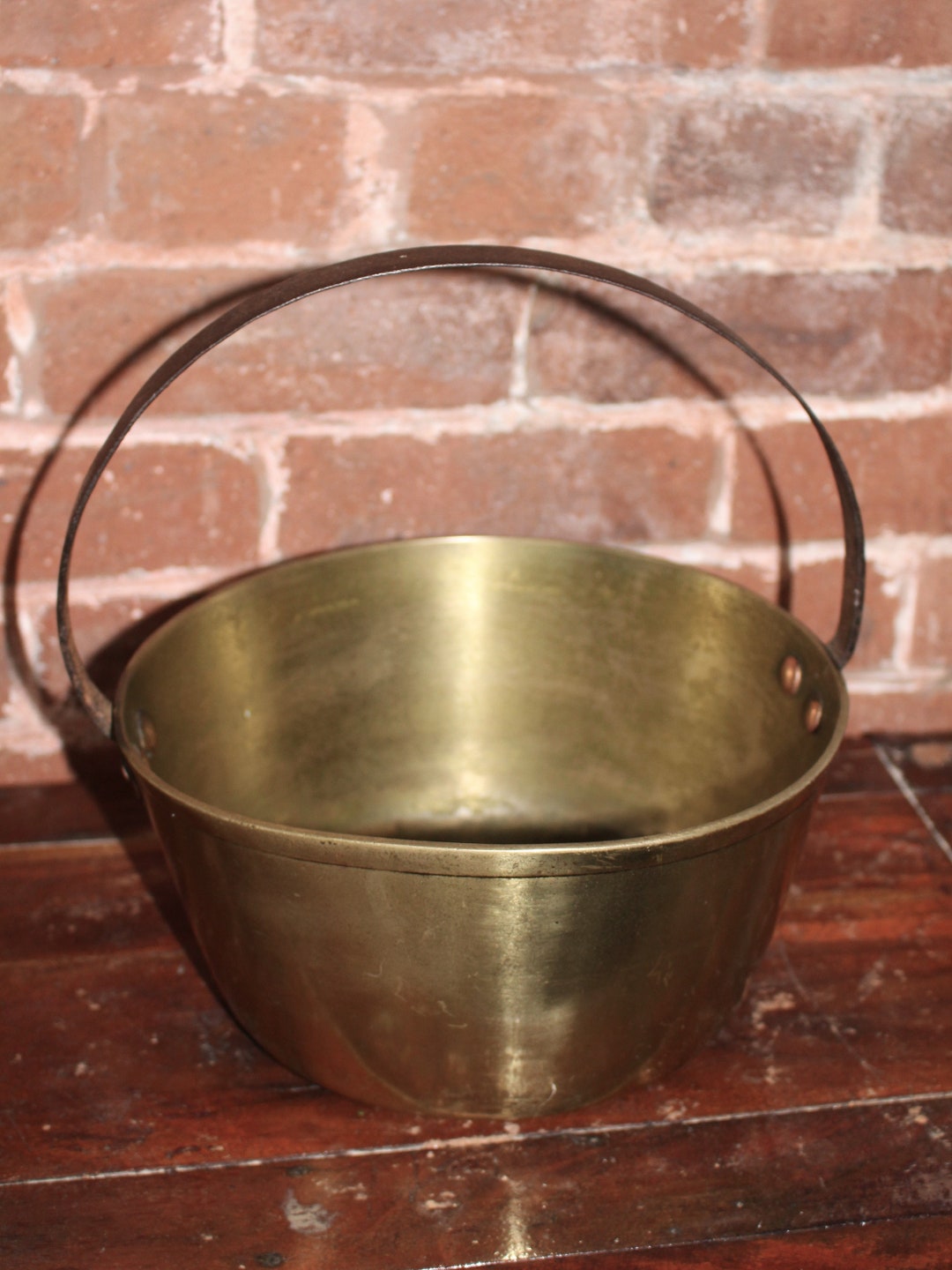
- European Preserving Pans: Often large, shallow, and featuring fixed brass or iron handles. These were designed for the high-temperature boiling required to make jams and jellies. The flared rim helped moisture evaporate quickly.
- Indian Handis and Degchis: Traditionally used in South Asian cuisine, these often have a narrow neck and a wide base. In 2026, authentic 19th-century Indian brassware is highly sought after for its intricate hand-engraved motifs and heavy construction.
- Middle Eastern Dallahs: While technically coffee pots rather than cooking pots, these long-spouted brass vessels represent a significant portion of the antique brass market. They were used over hot coals to brew traditional bitter coffee.
- Dutch and English Cauldrons: These usually stand on three integral legs (tripod pots) so they could be placed directly into the embers of a hearth. They often feature heavy "ear" lugs where a swing handle (bail) is attached.
The Science of Cooking with Brass: Safety and Lining
The primary concern when dealing with antique brass cooking pots is food safety. Brass is a reactive metal. When it comes into contact with acidic foods—such as tomatoes, citrus, vinegar, or wine—a chemical reaction occurs that can cause copper and zinc to leach into the food.
The Role of Tin Lining
To mitigate the risks of toxicity and the "metallic" taste associated with reactive metals, most antique brass pots intended for wet cooking were "tinned." This process involved coating the interior of the vessel with a thin layer of molten tin. Tin is non-reactive and provides a safe barrier between the brass and the food.
By 2026, many antique pots found in shops have had their tin lining worn away by decades of scrubbing. If you intend to cook in an antique brass pot, it must be re-tinned if the brass is visible on the interior. Cooking in unlined brass is generally safe for dry tasks (like roasting nuts) or high-sugar tasks (like making caramel), but it is hazardous for most standard recipes.
Verdigris Awareness
The most dangerous element of antique brass is verdigris—the bright green pigment (copper acetate or copper carbonate) that forms when brass is exposed to moisture and air. Verdigris is toxic if ingested. Any antique pot showing green spots must be thoroughly cleaned and, if the lining is compromised, professionally restored before it comes anywhere near a kitchen.
Comparison of Antique Brass Cookware Types
The following table provides a comparison of common antique brass vessels frequently encountered by collectors in 2026.
| Vessel Type | Primary Origin | Common Features | 2026 Market Value (Est. USD) | Use Case |
|---|---|---|---|---|
| Jam Pan | Europe (UK/France) | Shallow, fixed side handles, unlined | $150 – $350 | Boiling sugar/fruit |
| Handi | India | Bulbous body, narrow rim, often tinned | $80 – $250 | Slow-cooking grains/meat |
| Tripod Cauldron | Northern Europe | Three legs, heavy bail handle, thick walls | $200 – $600 | Hearth cooking/stews |
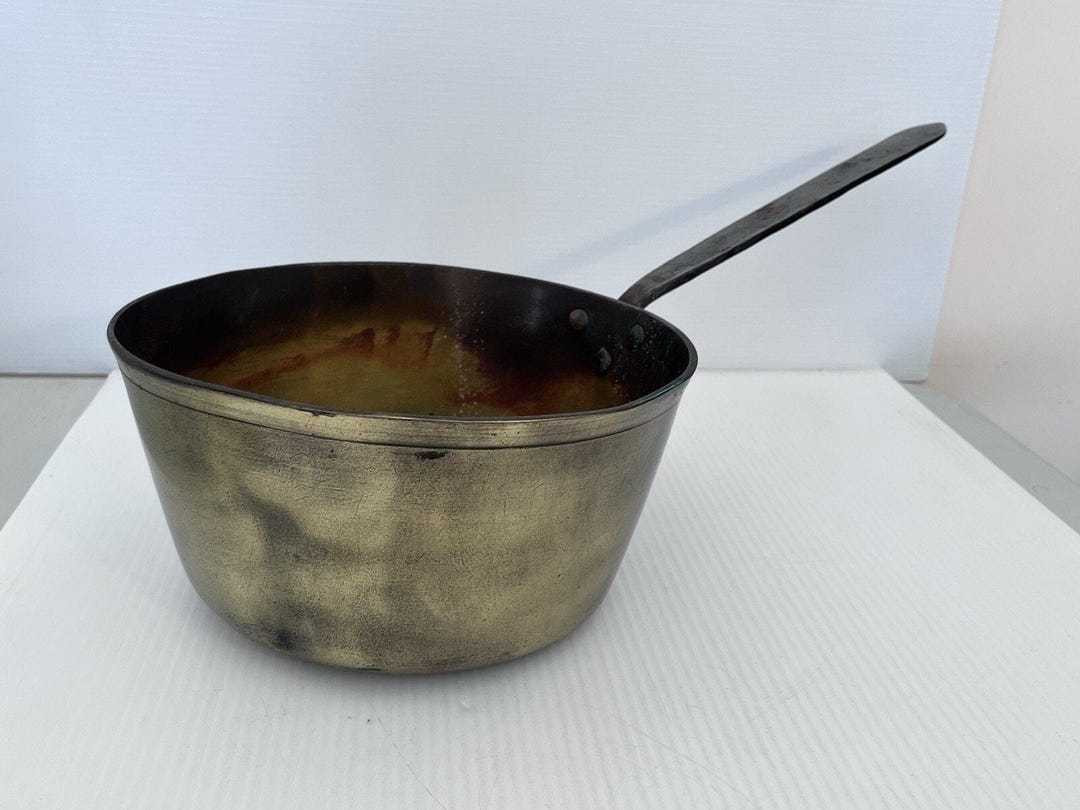
| Skillet/Long-Handle | Colonial America | Forged iron handle, riveted to brass body | $120 – $400 | Frying or sautéing |
| Apple Butter Kettle | North America | Massive capacity (10+ gallons), copper-brass alloy | $400 – $1,200 | Large-scale outdoor rendering |
Restoration and Maintenance in 2026
Preserving the value and functionality of antique brass requires a balanced approach to cleaning. Collectors must decide between maintaining a "historical patina" or achieving a "high-shine" finish.
Cleaning for Display
If the pot is for decorative use only, a gentle cleaning with warm soapy water followed by a light application of a specialized brass polish (like Wright's Brass Polish) is sufficient. Avoid using abrasive steel wool, which can leave permanent scratches on the soft brass surface.
Cleaning for Use
If the pot is to be used for cooking, the interior must be surgically clean.
- De-greasing: Use a strong dish soap to remove old oils.
- Acidic Wash: A paste made of lemon juice and salt, or vinegar and flour, can be applied to the brass to remove oxidation.
- Rinsing: Ensure all acidic cleaning agents are neutralized with a baking soda rinse to prevent immediate tarnishing.
Professional Re-tinning
As of 2026, professional coppersmiths and tinners are the only reliable sources for restoring the interior of these pots. The process involves "wiping" molten tin onto a chemically cleaned surface. This creates a food-safe, silvery finish that can last for several years of regular use if cared for with wooden or silicone utensils.
Common Pitfalls for Collectors
When purchasing antique brass cooking pots, several factors can negatively impact the item's value or safety:
- Lead Solder: Many 19th-century repairs were made using lead-based solder. Check the joints and handle rivets for dull, grey metal that looks different from the brass. If lead solder is present on the interior, the pot should be relegated to a decorative role only.
- Pitting: Deep pits in the metal are often the result of "bronze disease" or severe corrosion. These pits can harbor bacteria and are difficult to clean, making the pot unsuitable for food prep even after re-tinning.
- Thinning Bottoms: Pots that were used daily over high-sulfur coal fires for decades may have dangerously thin bottoms. Check for "flex" in the base; a pot that feels springy or paper-thin in the center is at risk of burning through or leaking.
Frequently Asked Questions
Can I cook tomato sauce in an antique brass pot?
No, you should never cook highly acidic foods like tomato sauce in an antique brass pot unless it has a fresh, thick, and intact tin lining. The acid in the tomatoes will react with the copper and zinc in the brass, creating a metallic taste and potentially causing heavy metal toxicity. Even with a tin lining, prolonged simmering of acidic foods can wear the tin away faster than usual.
How can I tell if my pot is brass or bronze?
Brass typically has a lighter, more yellow or "golden" tone, while bronze is usually darker, with a reddish or brown hue. Acoustically, if you strike the rim gently with a wooden spoon, brass tends to have a shorter, flatter "clunk," whereas bronze (which is harder) often produces a clearer, more resonant ring. However, chemical testing is the only definitive way to tell the difference in alloys.
Is the green stuff on my brass pot dangerous?
Yes, the green coating is known as verdigris. It is a result of a chemical reaction between the copper in the brass and acetic acid or moisture. It is toxic if it enters the digestive system. If you find verdigris on a pot you intend to use for food, it must be completely removed with an acidic cleaner (like vinegar) and the surface must be neutralized and polished before use.
Why does my brass pot turn black when I heat it?
This is normal oxidation. When brass is exposed to direct heat, the surface reacts with oxygen to form copper oxides, which appear as dark brown or black discoloration. This does not harm the pot's structural integrity but will require polishing if you wish to maintain the golden shine. Many traditional cooks prefer this darkened "fire patina" as a mark of a well-used kitchen tool.
Are antique brass pots a good investment in 2026?
Antique brass has maintained steady value because the supply of authentic 18th- and 19th-century pieces is finite. As modern consumers move away from "disposable" kitchenware, high-quality, heavy-duty antique brass is increasingly viewed as both a functional tool and a piece of art. Specifically, signed pieces or those with unique regional provenance (like early American or French culinary brass) tend to appreciate the most.
Next Steps for Enthusiasts
If you have recently acquired or inherited an antique brass cooking pot, your first step should be a thorough inspection for lead solder and structural thinning. For those looking to integrate these pieces into a modern kitchen, locate a reputable metal restorer who specializes in food-safe tinning. By respecting the chemical properties of the alloy and maintaining the protective lining, you can safely enjoy the same thermal performance that chefs and home cooks have relied on for centuries.