The Apple-IBM partnership, inaugurated in 2014, fundamentally transformed how large-scale enterprises deploy mobile technology by marrying Apple’s intuitive user experience with IBM’s deep analytical prowess and cloud infrastructure. By developing industry-specific apps tailored for the iPhone and iPad, the collaboration enabled businesses to integrate iOS hardware directly into core operational workflows, bridging the gap between consumer-grade devices and enterprise-grade data security and utility.
Historical Context and Genesis of the Alliance
In mid-2014, Apple and IBM announced an exclusive partnership that sought to redefine the mobile enterprise. At the time, the "bring your own device" (BYOD) trend was reaching its zenith, yet companies struggled with a lack of specialized software that could leverage the hardware capabilities of mobile devices for complex tasks. Apple possessed a dominant market share in consumer-facing hardware and a highly refined ecosystem, while IBM held deep expertise in enterprise data, cloud computing, and industry-specific business processes.
The collaboration was not merely a marketing arrangement; it was a deep technical integration. IBM became a reseller of Apple devices to business clients, while Apple gained a powerful partner to help it crack the professional market—an area historically dominated by legacy desktop computing. By focusing on "MobileFirst" for iOS, the two companies aimed to create a new class of enterprise apps that leveraged big data, analytics, and workflow automation.
Core Pillars of the Partnership
The partnership was structured around three primary pillars that enabled iPhone users to perform high-level tasks previously reserved for workstations:
1. IBM MobileFirst for iOS Apps
These were a set of native, enterprise-grade apps designed specifically for iOS. Unlike general mobile software, these apps were purpose-built for industries such as retail, healthcare, banking, travel, and public safety. By utilizing the iPhone’s sensors, processing power, and secure architecture, these applications allowed field workers to access real-time enterprise data at the point of action.
2. Deep Integration with IBM Cloud
The apps were powered by IBM’s cloud services, including Bluemix (later IBM Cloud). This backend infrastructure allowed for the seamless integration of enterprise data systems (ERP and CRM) into the iPhone interface. It ensured that data captured in the field—such as a customer’s shopping history or a patient’s latest vitals—was instantly synced with the company’s central repository.
3. Hardware-Software Synergy
The partnership leveraged Apple’s hardware-level security, specifically the Secure Enclave and Touch ID (and later Face ID). By integrating these security features with IBM’s enterprise mobility management solutions, companies could ensure that sensitive corporate data remained encrypted and accessible only to authorized personnel, meeting the stringent compliance requirements of regulated industries.
Impact on Industry-Specific Workflows
The true utility of the Apple-IBM partnership lay in the functional depth of the apps developed. Rather than creating generic productivity tools, the duo focused on solving specific "bottlenecks" within major industrial sectors.
Retail and Customer Experience
Retail-focused apps provided store associates with real-time access to inventory, customer profiles, and personalized purchasing recommendations. An associate could identify a returning customer as they entered the store, view their previous purchases, and suggest items in stock, effectively turning the iPhone into a high-powered point-of-sale and customer intelligence tool.
Healthcare and Patient Management
In hospital environments, nurses and doctors could use iPhone apps to monitor patient vitals in real time, securely exchange clinical data, and access digital records. This mobility reduced the reliance on stationary computer terminals, allowing medical staff to spend more time at the bedside while maintaining full compliance with health data protection standards.
Finance and Banking
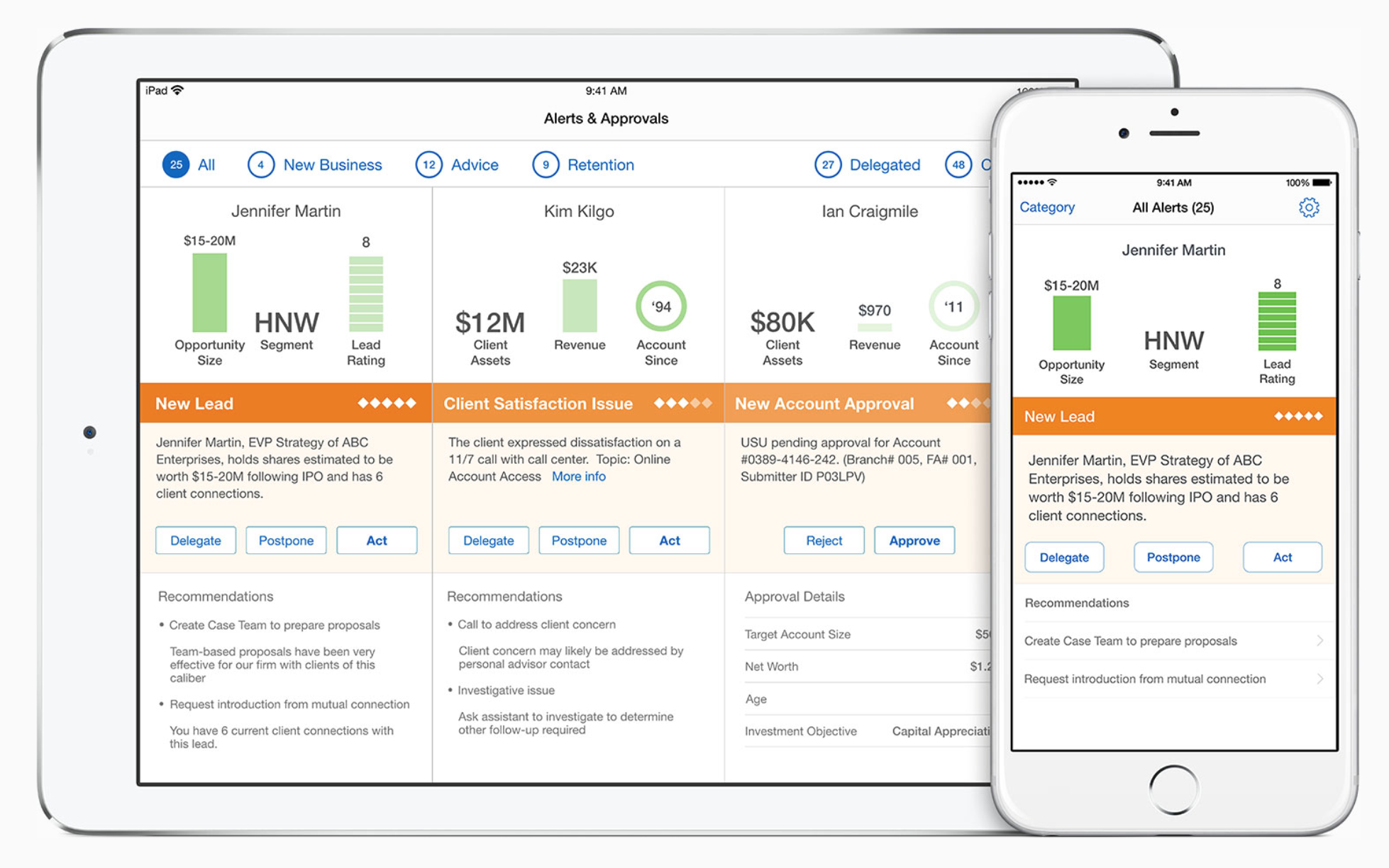
Financial advisors utilized dedicated apps to perform complex portfolio analysis, market modeling, and secure client communication. By moving these workflows to the iPhone, advisors gained the ability to conduct high-level financial planning sessions in any location, backed by the analytical depth of IBM’s backend engines.
Technical Requirements and Security Framework
For organizations to deploy these enterprise applications, they had to move beyond standard device management. The partnership mandated a robust infrastructure that balanced accessibility with ironclad security.
| Feature Component | Enterprise Requirement | Benefit to the Organization |
|---|---|---|
| Mobile Device Management | MDM/EMM platform integration | Centralized oversight, remote wipe, and policy enforcement. |
| End-to-End Encryption | AES-256 and TLS 1.2+ | Protection of sensitive data in transit and at rest. |
| Identity Management | Multi-Factor Authentication | Ensures identity verification beyond simple passwords. |
| Data Syncing | Secure Cloud API Gateway | Real-time connectivity between mobile and legacy ERP systems. |
Assessing the Strategic Value for Modern Enterprises
By 2026, the legacy of this partnership remains visible in how modern businesses perceive the role of the iPhone in the workplace. The collaboration proved that consumer technology, when properly "wrapped" in enterprise software, is far more effective than proprietary, clunky, or purpose-built industrial hardware.
Benefits of the MobileFirst Approach
- Reduced Training Curves: Because employees are already familiar with the iOS interface, the time required to onboard staff to new enterprise apps is significantly reduced.
- Hardware Longevity: Apple’s commitment to sustained software support for iPhones ensures that hardware investments have a predictable, multi-year lifecycle.
- Enhanced Productivity: By moving data-heavy tasks from the desk to the field, companies can respond to customer needs and operational issues in real time.
Challenges and Considerations
While the model is highly effective, organizations must navigate significant hurdles:
- Connectivity Dependency: As these apps rely heavily on real-time cloud connectivity, field work in areas with poor cellular coverage or unstable Wi-Fi can suffer.
- Regulatory Compliance: Organizations in heavily regulated sectors (e.g., defense or high-finance) must ensure that the specific app version and cloud configuration meet all jurisdictional data sovereignty requirements.
- Customization Costs: While the initial apps were standardized, organizations often require deep, custom integrations that can increase the Total Cost of Ownership (TCO).
Troubleshooting Common Implementation Issues
When organizations deploy enterprise-grade iOS applications, technical issues can arise. Understanding how to address these is critical for maintaining uptime:
- Authentication Failures: Often caused by certificate mismatches between the iOS device and the corporate MDM profile. Regularly auditing device certificates is essential.
- Latency in Data Syncing: This is typically an issue of backend API bottlenecks rather than the iPhone hardware. Scaling the IBM Cloud integration layer is the standard remedy.
- Application Crashes: Ensure that the specific app build is compatible with the version of iOS running on the device. Enterprises often implement "OS-lock" policies, delaying updates until the application has been verified for the latest version.
Frequently Asked Questions
Does the Apple-IBM partnership still offer new, off-the-shelf software? The partnership shifted the landscape by establishing a precedent for co-development. While the original suite of "MobileFirst" apps laid the foundation, modern enterprises now largely rely on a combination of these legacy foundations and modern, bespoke applications developed via IBM’s expanded ecosystem.
Are these iPhone apps secure enough for sensitive data? Yes. These solutions were architected to meet high-security standards, including integration with enterprise-grade encryption and biometric authentication. However, security is always a shared responsibility; the organization’s configuration of its MDM (Mobile Device Management) is the final arbiter of security.
What if my organization uses Android devices? The Apple-IBM partnership was explicitly focused on the iOS ecosystem. Organizations using a mixed-fleet environment must look for cross-platform enterprise solutions, which may lack the specific deep-hardware optimizations that the original Apple-IBM initiative provided for the iPhone.
How does this partnership differ from standard App Store apps? Standard apps are designed for individual productivity. The Apple-IBM collaboration focused on "Enterprise App" architecture, meaning these tools are designed for multi-user, multi-layer data integration, and are distributed via private enterprise deployment methods rather than the public App Store.
Is there a cost to participate in the enterprise ecosystem? Participation involves licensing fees for the IBM cloud infrastructure, management software, and potentially bespoke development fees. Organizations should conduct a cost-benefit analysis comparing the hardware savings of mobile workflows against the ongoing SaaS (Software as a Service) subscription costs.
Strategic Recommendation for Deployment
For organizations looking to implement mobile solutions similar to those pioneered by the Apple-IBM partnership, the recommended path is to begin with a pilot program focusing on a single, data-intensive department. Evaluate your existing backend infrastructure, assess whether your current cloud services support robust API integration with iOS, and prioritize an MDM solution that offers granular control over device permissions. Moving forward, the objective should not be to simply "put apps on phones," but to create a mobile-first environment where the device becomes an extension of the enterprise's central intelligence system.