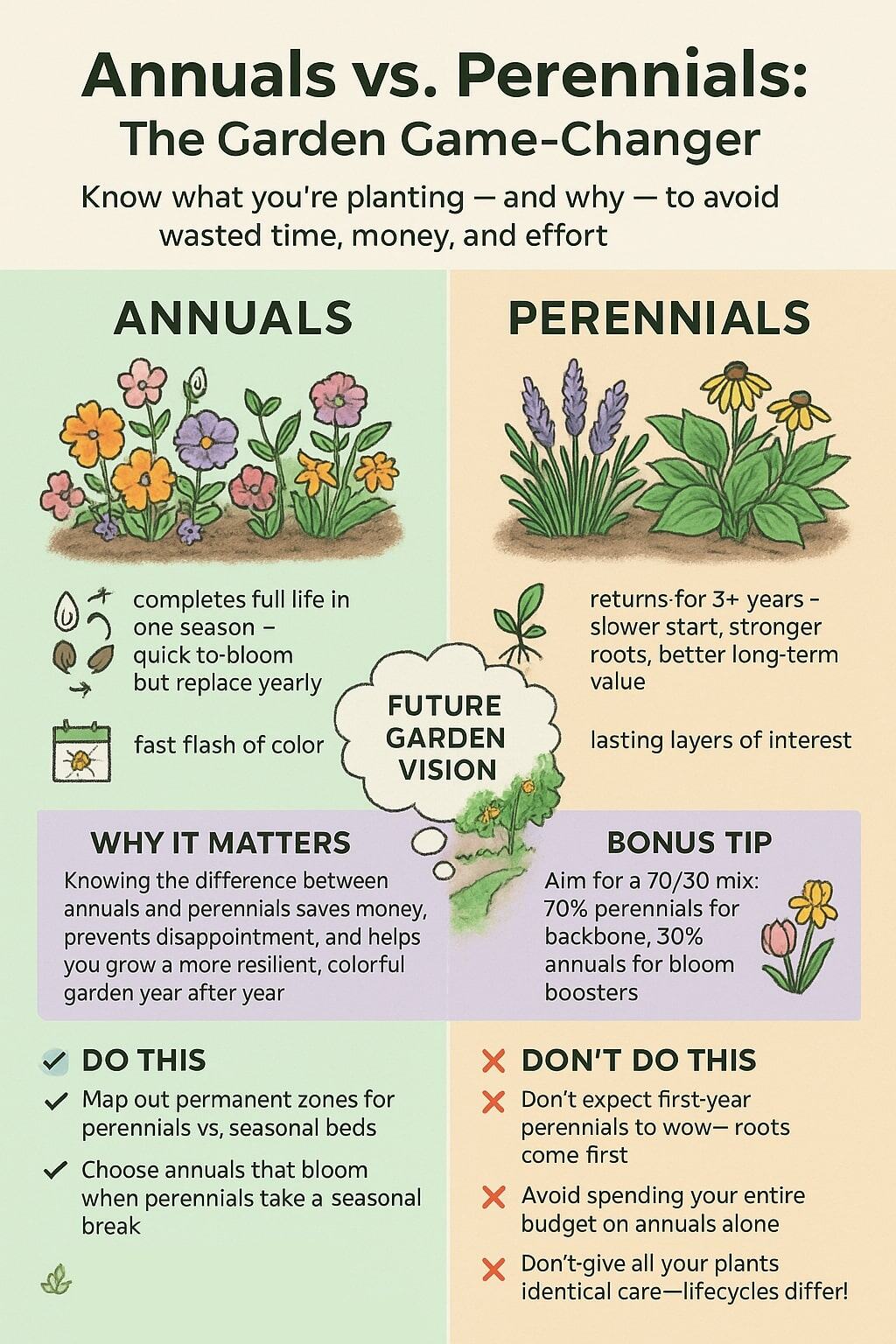
To choose the right garden plants, you must understand their lifecycles: annuals live for one season, perennials return for several years, and biennials require two years to complete their biological cycle. Balancing these three types allows for a garden that offers immediate color, long-term structure, and naturalistic variety throughout the 2026 growing season.
Understanding the Biological Lifecycles of Garden Plants
The distinction between annuals, perennials, and biennials is rooted in how a plant allocates its energy to survive, reproduce, and endure environmental stress. For a gardener, these categories dictate everything from the timing of the initial planting to the long-term maintenance schedule of the landscape. As we look at modern gardening trends in 2026, there is a significant shift toward understanding these cycles to create more resilient, climate-adaptive outdoor spaces.
A plant’s classification is not always fixed; it can be influenced by your local climate. A plant that is a perennial in a tropical environment may be grown as an annual in a northern temperate zone because it cannot survive the winter frost. Therefore, the first step in choosing the right plant is identifying your specific hardiness zone and understanding how the following three categories behave within that environment.
Annuals: The Sprinters of the Garden
Annuals are plants that complete their entire lifecycle—from germination to seed production and death—within a single growing season. Because they have only a few months to ensure the survival of their species, they channel a massive amount of energy into flower production. This makes them the primary source of "instant color" for garden beds, containers, and hanging baskets.
The Appeal of Annual Plants
The primary reason gardeners choose annuals is their duration of bloom. Unlike many perennials that flower for only two to three weeks, most annuals will bloom continuously from late spring until the first hard frost of autumn. This makes them indispensable for filling gaps in the landscape or providing a focal point of vibrant color.
Annuals also offer maximum flexibility. If you are experimenting with a new color palette for your 2026 garden, annuals allow you to change the entire look of your yard every year without a long-term commitment. They are generally less expensive per individual plant than perennials, though the cost adds up over time since they must be replaced annually.
Categories of Annuals
Annuals are often categorized by their tolerance to cold temperatures:
- Hardy Annuals: These can withstand light frosts. Examples include pansies and snapdragons, which are often planted in early spring or even late autumn.
- Half-Hardy Annuals: These can tolerate cool weather but will perish in a freeze. Examples include cosmos and petunias.
- Tender Annuals: These originate from tropical climates and require warm soil and air temperatures to thrive. Zinnias, marigolds, and impatiens fall into this category and should not be planted until all danger of frost has passed.
Perennials: The Foundation of the Landscape
Perennials are the "marathon runners" of the plant world. By definition, a perennial is a plant that lives for more than two years. While their top growth may die back to the ground during the winter, their root systems remain dormant and alive underground, ready to send up new shoots when the soil warms in the spring.
Investing in Longevity
Perennials are often viewed as an investment. While the initial purchase price of a peony, hosta, or daylily is higher than that of a flat of marigolds, the perennial provides value for a decade or more. Over time, many perennials also expand, allowing gardeners to "divide" them—splitting one large plant into three or four smaller ones to be replanted elsewhere or shared with neighbors.
The trade-off for this longevity is usually a shorter bloom window. Most perennials have a specific flowering period that lasts about 14 to 21 days. To maintain color throughout the season, a gardener must "sequence" their plantings—choosing early-spring bloomers (like bleeding hearts), mid-summer bloomers (like coneflowers), and late-season bloomers (like sedum or asters).
Maintenance and Dormancy
Perennials require a different type of care than annuals. Because they stay in the same spot for years, soil preparation is critical. Adding organic matter and ensuring proper drainage before planting is essential for long-term health. Additionally, most perennials require "deadheading" (removing spent flowers) to encourage more blooms and "cutting back" in the late autumn or early spring to clear away dead foliage and make room for new growth.
Biennials: The Two-Year Strategy
Biennials are the least common of the three types but offer some of the most dramatic architectural interest in the garden. A biennial requires two growing seasons to complete its life cycle.
The Two-Stage Growth Cycle
In the first year, a biennial focuses entirely on vegetative growth. It typically produces a low-growing rosette of leaves and a robust root system. It does not flower during this stage. This stage is critical for energy storage. In the second year, the plant undergoes "vernalization" (a period of cold) which triggers the reproductive phase. The plant sends up a tall flower stalk, produces seeds, and then dies.
Famous examples of biennials include Foxgloves (Digitalis), Hollyhocks, and Silver Dollar plants (Lunaria). Many gardeners are initially frustrated when they buy a biennial and it fails to flower the first year, but this is simply the nature of the plant's biology.
Managing Biennials for Continuous Bloom
To have biennials blooming every year, you must plant them two years in a row. Once established, many biennials are prolific self-seeders. If you allow the seeds to drop naturally, the garden will eventually contain a mix of first-year rosettes and second-year flowering stalks, creating a permanent cycle of blooms without further intervention from the gardener.
Comparing Annuals, Perennials, and Biennials
The following table summarizes the key differences to help you decide which types are best for your specific gardening goals in 2026.
| Feature | Annuals | Perennials | Biennials |
|---|---|---|---|
| Lifespan | One growing season (under 1 year) | 3 to 50+ years (varies by species) | Exactly two growing seasons |
| Bloom Duration | Very long (typically months) | Short (typically 2–4 weeks) | One massive bloom in Year 2 |
| Initial Cost | Low per plant | Moderate to High | Low to Moderate |
| Maintenance | High (frequent watering/replanting) | Moderate (pruning/dividing) | Low (requires patience) |
| Root System | Shallow and fibrous | Deep, often with tubers or rhizomes | Taproots or rosettes |
| Best Use | Containers, edging, seasonal color | Backbones, borders, structure | Height, architectural interest |
| Reproduction | Heavy seed production | Seeds, offsets, and root division | Self-seeding after Year 2 |
Design Strategies: Mixing Plant Types
For a truly professional-looking garden in 2026, the goal should not be to choose one category over the others, but rather to integrate all three. A mixed border utilizes the strengths of each type while masking their weaknesses.
Building the "Bone Structure" with Perennials
Start your garden design with perennials. These are the "bones" of your landscape. Use them to define the shape of your beds and provide permanent greenery. For example, use evergreen perennials or large-leafed hostas to create a consistent backdrop. Because perennials return every year, they provide a sense of stability and reduce the amount of digging required each spring.
Adding "Color Pops" with Annuals
Once your perennials are in place, use annuals to fill the spaces between them. Since perennials often leave a "hole" in the garden after they finish blooming, annuals can be tucked into these spots to maintain visual interest. Annuals are also the best choice for containers on porches or patios where you want high-impact color in a confined space.
Creating Vertical Interest with Biennials
Biennials like foxgloves and hollyhocks often reach heights of five to eight feet. Use these in the back of the border to provide verticality that annuals rarely achieve. Their "wilder" look is perfect for cottage gardens or naturalistic meadow designs, which are seeing a resurgence in 2026 as gardeners move away from overly manicured lawns.
Climate Resilience and the 2026 Gardening Environment
As we navigate the 2026 growing season, climate resilience has become a primary factor in plant selection. Weather patterns are becoming more erratic, with longer periods of drought followed by intense rainfall.
- Perennials and Deep Roots: Perennials are generally more drought-tolerant than annuals because their root systems go much deeper into the soil. Once established, many perennials can survive weeks without supplemental watering, whereas annuals may wilt within a day or two of extreme heat.
- The "Tender Perennial" Confusion: It is important to note that many plants sold as "annuals" are actually perennials in their native habitats. Lantana, Coleus, and Geraniums (Pelargoniums) are perennials in warm zones. If you live in a colder climate, you can treat these as annuals, or you can bring them indoors over the winter to keep them alive for the 2027 season.
- Native Species: Choosing native perennials and biennials is the most effective way to support local pollinators. Native plants have co-evolved with local bees, butterflies, and birds, providing the specific nectar and pollen they need to survive.
Common Mistakes to Avoid
When choosing your plants, avoiding these frequent pitfalls will save time and money:
- Ignoring Sun Requirements: A perennial that loves shade (like a Hosta) will scorched and die if planted in the same full-sun bed as a heat-loving annual (like a Zinnia). Always group plants by their light and water needs, regardless of their lifecycle.
- Overcrowding: Perennials need room to grow. A small 4-inch pot of Lavender may look tiny now, but in three years, it will be three feet wide. Always check the "mature spread" on the plant tag before digging your hole.
- Forgetting the "Wait": If you plant only biennials, your garden will look like a patch of weeds the first year. Always interplant biennials with annuals to ensure you have something beautiful to look at while the biennials are building their energy for the following year.
- Neglecting Soil Health: Because perennials stay in the ground for years, they can eventually exhaust the nutrients in their immediate vicinity. Top-dressing with compost every spring is vital to keep them vigorous.
FAQs
Can an annual become a perennial?
Biologically, no. A true annual is genetically programmed to die after seed production. However, some annuals are so good at "self-seeding" that they appear to be perennials. For example, if you plant Moss Roses (Portulaca) once, they will drop thousands of seeds that sprout the following spring, giving the illusion that the same plant returned.
Why are my perennials not coming back in the spring?
The most common reason is "winter kill," which happens if the plant is not hardy to your specific zone or if the soil was too wet during the winter, causing the roots to rot. Another possibility is that the plant reached the end of its natural lifespan; while some perennials live for decades, others (like many varieties of Coreopsis) are "short-lived perennials" that typically only last 3–5 years.
Do I have to remove annuals at the end of the year?
While you can leave dead annuals in the garden, it is generally better to remove them. Removing the dead foliage prevents pests and diseases from overwintering in the debris. Furthermore, pulling them up allows you to prep the soil with compost in the autumn so it is ready for the 2027 planting season.
Are vegetables annuals or perennials?
Most common garden vegetables are grown as annuals, including tomatoes, peppers, and cucumbers. However, some are true perennials, such as asparagus, rhubarb, and artichokes. Some, like carrots and onions, are actually biennials; we usually harvest them in their first year for their roots or bulbs, but if left in the ground, they would flower and seed in their second year.
How do I know if a plant is a biennial before I buy it?
Check the plant tag for the words "biennial" or look for specific species known for this cycle. If a plant is sold in a pot without flowers and has a very low, leafy profile, it may be a first-year biennial. Reputable nurseries in 2026 will clearly label these to ensure customers are not disappointed by a lack of blooms in the first season.
Final Recommendation
To create a balanced and sustainable garden, prioritize perennials for 60-70% of your landscape to establish structure and reduce long-term labor. Use annuals to fill containers and the edges of your beds for continuous, vibrant color throughout the summer months. Finally, sprinkle in biennials to add height and a "wildflower" charm. Before purchasing any plants, verify your local hardiness zone and test your soil pH to ensure your selections will thrive in your specific 2026 environmental conditions.