In Canada, an annuity is a financial contract purchased from a life insurance company that provides a guaranteed stream of income in exchange for a lump-sum payment. It serves as a personal pension, protecting retirees from the risk of outliving their savings by shifting investment and longevity risks to the insurer.
As of 2026, the Canadian retirement landscape has evolved to prioritize stable, predictable cash flow amid fluctuating market conditions. For many Canadians, annuities have transitioned from a niche financial product to a cornerstone of a diversified retirement strategy. Whether you are nearing retirement or already managing your post-work finances, understanding the mechanics, tax implications, and protective frameworks of Canadian annuities is essential for long-term fiscal health.
How Annuities Function in the Canadian Market
The fundamental premise of an annuity is the conversion of capital into a reliable income stream. When you purchase an annuity, you enter into a binding agreement with a Canadian life insurance provider. You provide a single premium—often sourced from a Registered Retirement Savings Plan (RRSP), a Registered Retirement Income Fund (RRIF), or non-registered savings—and in return, the insurer guarantees regular payments for a specific period or for the remainder of your life.
This process relies on the principle of "risk pooling." Insurers collect premiums from thousands of individuals, calculating payout rates based on actuarial data, current interest rates, and life expectancy. Those who live longer than average receive more in total payments than their initial investment, funded in part by the pool of capital from those who do not live as long. These are often referred to as "mortality credits," which allow annuities to offer higher payout rates than many other fixed-income investments like GICs or government bonds.
The Impact of Interest Rates in 2026
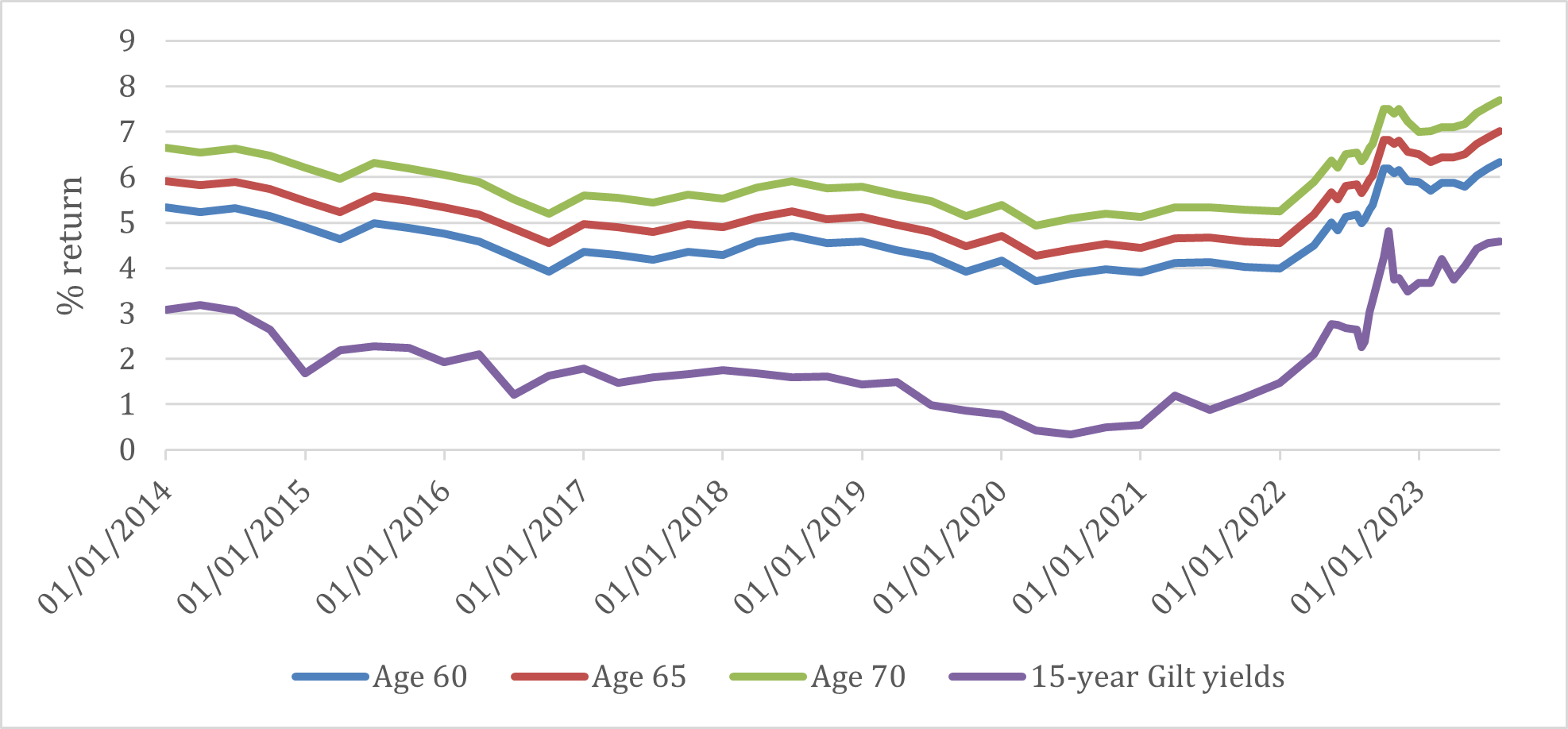
Interest rates are the primary driver of annuity payout levels. When rates are higher, insurers can earn more on the underlying investments they use to fund your payments, allowing them to offer a higher "internal rate of return" to the annuitant. In the 2026 economic environment, interest rates have stabilized after a period of volatility, making annuities significantly more attractive than they were during the record-low rate era of the early 2020s. Locking in a rate today can provide a hedge against future rate drops, ensuring your baseline lifestyle is funded regardless of how the Bank of Canada adjusts its overnight rate in the future.
Primary Types of Annuities Available to Canadians
Selecting the right annuity requires matching the product's features to your specific retirement goals. The Canadian market offers several distinct structures, each designed to solve different financial challenges.
Life Annuities
A life annuity is the most common form chosen by retirees seeking maximum security. It provides a guaranteed payment for as long as you live. There is no risk of the money "running out," even if you live to 110.
- Single Life: Payments are based on the life of one person. These typically offer the highest monthly payout because the risk ends upon that individual's death.
- Joint and Survivor: These cover two lives, usually spouses. When the first spouse passes away, the payments continue to the survivor, either at the full amount or a reduced percentage (e.g., 60% or 75%), depending on the contract terms.
Term Certain Annuities
Unlike a life annuity, a term certain annuity provides payments for a fixed period (e.g., 10, 15, or 20 years). If you die before the term ends, the remaining payments are made to your designated beneficiary or estate. This is often used as a "bridge" to cover expenses between early retirement and the start of Old Age Security (OAS) or Canada Pension Plan (CPP) benefits.
Deferred Annuities
While immediate annuities start paying out right away, a deferred annuity allows you to lock in a future income stream. You pay the premium now, and the payments begin at a predetermined future date. This is particularly useful for younger retirees who want to secure their income for their 80s and 90s while relying on other assets in their 60s and 70s.
Advanced Life Deferred Annuities (ALDA)
A relatively recent addition to the Canadian tax code, the ALDA allows individuals to move funds from an RRSP or RRIF into a deferred annuity that can start as late as age 85. This helps mitigate "longevity risk" at the end of life and reduces the mandatory minimum withdrawal amounts from RRIFs, which can lower your tax burden in early retirement.
Tax Treatment of Annuities in Canada
The taxation of your annuity payments depends entirely on the source of the funds used to purchase the contract. The Canada Revenue Agency (CRA) applies different rules based on whether the funds were "registered" or "non-registered."
Registered Funds (RRSP, RRIF, LIRA)
If you use money from a registered account to buy an annuity, the entire amount of each payment is considered taxable income. This is because the original contributions to those accounts were tax-deducted, and the growth was tax-deferred. When you receive the annuity payment, it is treated similarly to a withdrawal from a RRIF or a pension payment.
Non-Registered Funds (Cash, Savings)
When using non-registered funds, only a portion of each payment is taxable. The CRA views a portion of the payment as a return of your original capital (tax-free) and the remainder as interest (taxable).
- Prescribed Annuities: These offer a significant tax advantage by leveling out the interest portion over the life of the contract. Instead of paying more tax in the early years and less later, you pay a consistent, lower amount of tax throughout. To qualify for prescribed status, the annuity must meet specific CRA criteria, such as being non-commutable and non-assignable.
- Non-Prescribed (Accrual) Annuities: These are taxed based on the actual interest earned each year. In the early years, the interest component is high, leading to a higher tax bill, which gradually decreases as the principal is depleted.
Comparing Annuities vs. RRIFs
Most Canadians face a choice at age 71: convert their RRSP into a RRIF or purchase an annuity. Below is a comparison to help determine which fits your needs.
| Feature | Life Annuity | Registered Retirement Income Fund (RRIF) |
|---|---|---|
| Income Guarantee | Guaranteed for life, regardless of market performance. | No guarantee; depends on investment returns and withdrawal rates. |
| Flexibility | Very low; usually cannot change payment amounts once started. | High; can withdraw more than the minimum if needed. |
| Estate Value | Typically zero unless a "guarantee period" is added. | Remaining balance goes to beneficiaries or estate. |
| Inflation Protection | Only if an indexing rider is purchased (often expensive). | Potential for growth through equity investments to beat inflation. |
| Investment Risk | Borne by the insurance company. | Borne by the individual. |
| Longevity Risk | Fully mitigated. | High; you may run out of money if you live too long. |
Consumer Protection: The Role of Assuris
A common concern for Canadians is the stability of the insurance company. If the insurer goes bankrupt, what happens to the annuity? In Canada, this risk is mitigated by Assuris, a non-profit organization that protects Canadian policyholders.
If a member insurance company fails, Assuris guarantees that you will continue to receive at least $2,000 per month or 85% of your promised monthly income, whichever is higher. For most Canadians with modest to moderate annuities, this provides 100% protection. For those with very large annuities, it is often recommended to split the purchase across two or more different insurance companies to ensure the full amount falls under the Assuris guarantee thresholds.
Key Considerations and Potential Drawbacks
While annuities provide peace of mind, they are not a "one-size-fits-all" solution. It is vital to weigh the benefits against the limitations before committing capital.
- Irreversibility: Once the "cooling-off" period (usually 10 days) has passed, an annuity contract is generally permanent. You cannot "cancel" the contract and get your lump sum back. This lack of liquidity means you should never put all your savings into an annuity; you must maintain a separate emergency fund.
- Inflation Risk: A fixed monthly payment that feels comfortable in 2026 may lose significant purchasing power by 2046. While indexed annuities exist, they start with a much lower initial payment. Most advisors recommend using an annuity to cover "fixed" expenses (utilities, taxes, food) while using a flexible portfolio (like a TFSA or RRIF) to handle inflation and discretionary spending.
- Interest Rate Locking: If you buy an annuity when interest rates are at a cyclical low, you are locked into that lower payout rate for life. In 2026, with rates having stabilized at higher levels than the previous decade, this risk is currently lower but still present.
- Health Status: Annuities are an "anti-insurance" product. Life insurance pays out if you die too soon; annuities pay out if you live too long. If you have a significantly shortened life expectancy due to illness, a standard annuity may not be a good financial move unless you opt for an "Impaired Life Annuity," which offers higher payments due to the shorter projected payout period.
How to Purchase an Annuity in Canada
The process of buying an annuity is relatively straightforward, but it requires due diligence.
- Determine Your Income Gap: Calculate your guaranteed income from CPP, OAS, and any employer pensions. Subtract this from your essential living expenses. The "gap" is the amount you may want to cover with an annuity.
- Request Multiple Quotes: Payout rates vary significantly between providers like Canada Life, Sun Life, Manulife, and others. Use an independent insurance broker who can shop the market for the best internal rate of return.
- Choose Your Features: Decide on joint-life options, guarantee periods (e.g., ensuring at least 10 years of payments even if you die sooner), and indexing.
- Transfer Funds: If using registered funds, the transfer is done directly from your RRSP/RRIF to the insurer to avoid immediate taxation.
- Receive Payments: You choose the frequency—monthly, quarterly, or annually—and the funds are typically deposited directly into your bank account.
Frequently Asked Questions
What happens to my annuity if I die shortly after starting it?
Unless you have a "guarantee period" or a "return of premium" clause, the insurance company keeps the remaining balance. For example, with a 10-year guarantee, if you die in year three, your beneficiary receives payments for the remaining seven years. If you live 30 years, the payments continue for all 30 years.
Can I buy an annuity with my TFSA?
Yes, you can use Tax-Free Savings Account funds to purchase an annuity. The primary benefit is that the resulting income stream is entirely tax-free. However, because TFSA room is valuable and withdrawals are flexible, many Canadians prefer to keep their TFSA in higher-growth assets and use RRSP or non-registered funds for annuity purchases.
Is there a maximum age to buy an annuity?
Most insurance companies in Canada allow you to purchase an annuity up to age 85 or 90. However, the older you are, the higher the payout rate will be because your life expectancy is shorter. For those using RRSP funds, federal law requires you to convert your RRSP by the end of the year you turn 71, making that a common age for annuity purchases.
Are annuity rates the same across all provinces?
The base payout rates are generally consistent across Canada as they are based on national actuarial tables and interest rates. However, the regulation of the insurance agents and the specific contract protections may fall under provincial jurisdictions, such as the Financial Services Regulatory Authority (FSRA) in Ontario or the Autorité des marchés financiers (AMF) in Quebec.
Should I wait for interest rates to go higher before buying?
Trying to "time" the annuity market is similar to timing the stock market. While waiting for higher rates might increase your payout, you are losing the income you would have received during the waiting period. A common strategy is "laddering"—buying smaller annuities every two or three years to average out interest rates and age-based payout increases.
Final Recommendation for 2026
In 2026, annuities represent one of the most effective tools for managing the financial uncertainties of aging. For the average Canadian retiree, the most prudent approach is a hybrid strategy. Use a portion of your savings to purchase a life annuity that, when combined with CPP and OAS, covers your "floor" or essential expenses. This ensures that no matter how long you live or how the stock market performs, your basic needs are met. Keep the remainder of your assets in a flexible, invested RRIF or TFSA to provide for emergencies, inflation protection, and potential inheritance for your heirs.
Always consult with a licensed financial advisor or an independent insurance broker to compare the latest 2026 quotes and ensure the product fits your specific tax situation and family needs.