The choice between an annuity and universal life insurance depends primarily on whether your objective is creating a guaranteed lifetime income stream or providing a tax-advantaged death benefit for heirs. Annuities function as private pension vehicles designed to exhaust or distribute assets during retirement, while universal life insurance acts as a permanent protection tool with flexible cash value accumulation.
Understanding the Fundamental Distinctions
As we navigate the financial landscape of 2026, the distinction between "accumulation" and "protection" remains the bedrock of retirement planning. An annuity is essentially a contract between an individual and an insurance company where the individual provides a lump sum or a series of payments in exchange for regular disbursements, either immediately or at a future date. It is an asset meant to be lived on—a hedge against longevity risk, or the danger of outliving one's money.
Universal life (UL) insurance, conversely, is a form of permanent life insurance. While it also involves a contract with an insurer and can build cash value over time, its primary legal and financial structure is centered on the death benefit. The "universal" component refers to the flexibility of the policy; policyholders can often adjust their premium payments and death benefit amounts as their financial circumstances change. In 2026, many consumers use universal life insurance not just for the death benefit, but as a "tax-free" bucket for supplemental retirement income through policy loans.
The Role of Underwriting
One of the most immediate practical differences lies in how you qualify for these products. Most annuities do not require medical underwriting. Since the insurance company is taking on the risk that you might live a long time (requiring them to pay out more), your poor health is actually a lower risk for them in a standard immediate annuity. Universal life insurance requires health and lifestyle underwriting. Your age, medical history, and even your hobbies will determine your eligibility and the cost of the insurance (COI) within the policy.
The Mechanics of Universal Life Insurance in 2026
Universal life insurance is often described as a combination of a term life insurance policy and a tax-deferred savings account. The premiums you pay are split into three directions: the cost of insurance (COI), administrative fees, and the cash value account.
Premium Flexibility and Policy Lapses
The hallmark of universal life is flexibility. If the cash value account has grown sufficiently, the policyholder can skip premium payments, allowing the internal cash value to cover the COI. However, this is a double-edged sword. If interest rates underperform or the COI rises significantly as the policyholder ages—as is common in the current 2026 mortality tables—the cash value can be depleted. If the cash value hits zero and the policyholder does not resume payments, the policy lapses, and the life insurance protection vanishes.
Types of Universal Life
- Guaranteed Universal Life (GUL): Focuses on a secondary guarantee that the policy will not lapse as long as a specific premium is paid, regardless of the cash value performance. It behaves more like "term insurance to age 120."
- Indexed Universal Life (IUL): Credits interest to the cash value based on the performance of a market index (like the S&P 500), typically with a "floor" of 0% to prevent losses and a "cap" on maximum gains.
- Variable Universal Life (VUL): Allows the policyholder to invest the cash value in sub-accounts similar to mutual funds. This offers the highest growth potential but carries the highest risk, as the cash value can decrease if the market drops.
The Mechanics of Annuities in 2026
Annuities are categorized by when the payments start and how the money grows. They are designed to solve the "spend-down" problem in retirement.
Immediate vs. Deferred
A Single Premium Immediate Annuity (SPIA) is purchased with one lump sum, and payments begin within 12 months. This is the simplest form of the product. A Deferred Annuity allows the principal to grow tax-deferred for years or decades before the "annuitization" phase begins.
Growth Strategies
Similar to universal life, annuities offer different ways to credit interest:
- Fixed Annuities: Offer a guaranteed interest rate for a set period, much like a Certificate of Deposit (CD), but with tax-deferred growth.
- Fixed Indexed Annuities (FIA): These have become highly popular in 2026 as a middle ground. They offer protection against market loss while providing a portion of market-linked gains.
- Variable Annuities: These invest directly in the market. While they offer the potential for high growth, they often come with significant fees for "living benefits" or death benefit riders.
Comparison of Key Features: 2026 Perspectives
| Feature | Annuity | Universal Life Insurance |
|---|---|---|
| Primary Goal | Retirement income/Longevity hedge | Death benefit/Legacy/Tax-free loans |
| Underwriting | Generally none required | Medical exam and history required |
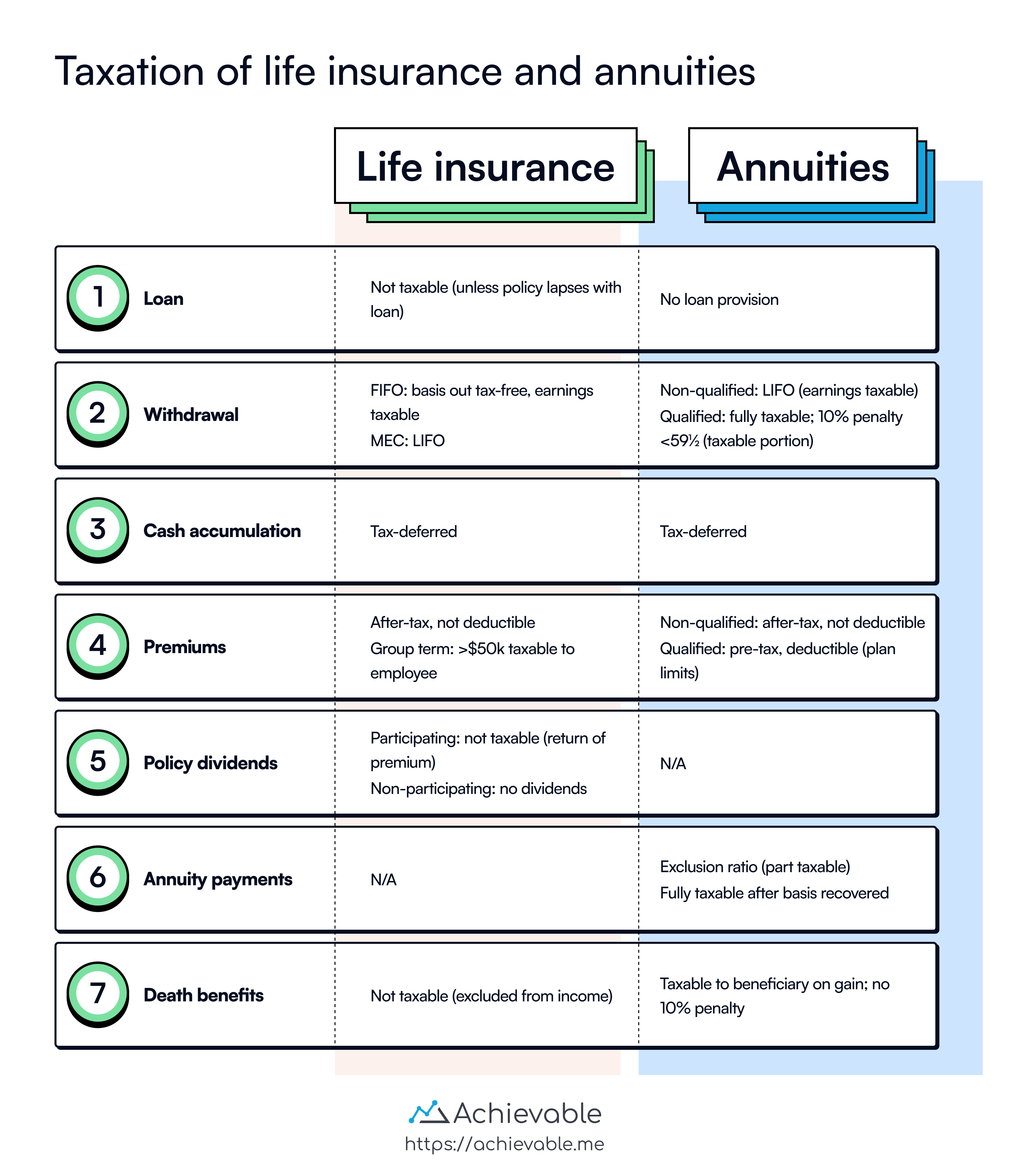
| Taxation of Growth | Tax-deferred | Tax-deferred |
| Withdrawal Rules | LIFO (Last-In, First-Out) - Gains taxed first | FIFO (First-In, First-Out) - Principal out first |
| Death Benefit | Usually limited to account value | Generally much higher than premiums paid |
| 10% IRS Penalty | Applies to withdrawals before age 59½ | Does not apply to policy loans/withdrawals |
| Fees | Surrender charges, M&E fees, Rider fees | COI, Admin fees, Surrender charges |
Taxation and the "Access to Cash" Dilemma
The tax treatment of these two vehicles is where most long-term financial strategies are won or lost. Both products offer tax-deferred growth, meaning you do not pay taxes on interest or capital gains as long as the money stays inside the contract.
Annuity Taxation (LIFO)
When you take money out of an annuity, the IRS follows the Last-In, First-Out (LIFO) rule. This means the first dollars you withdraw are considered "earnings" and are taxed as ordinary income. Only after all earnings are exhausted can you access your original principal tax-free. Additionally, if you withdraw funds before age 59½, you may face a 10% federal tax penalty on the earnings.
Universal Life Taxation (FIFO)
Universal life insurance enjoys First-In, First-Out (FIFO) treatment for withdrawals. You can withdraw your original basis (the premiums you paid) tax-free before you touch any of the earnings. Furthermore, you can "borrow" the earnings through a policy loan. Because a loan is not considered income, it is not taxed, even if you are under age 59½. This makes universal life a preferred vehicle for those seeking "tax-free" retirement income, provided the policy is managed carefully to avoid a lapse.
Cost Considerations and Fee Structures
Both products are criticized for their complexity and fee structures. In 2026, transparency has improved, but costs remain a major factor.
Universal Life Costs
The most significant cost in a UL policy is the Cost of Insurance (COI). This is the "term" cost of providing the death benefit. This cost increases every year as the insured person gets older. If the cash value does not grow fast enough to offset the rising COI, the policyholder may be forced to pay higher premiums later in life just to keep the policy active. There are also premium loads (taxes and fees taken off the top of every premium payment) and surrender charges that can last 10 to 15 years.
Annuity Costs
Annuity fees vary wildly. A simple fixed annuity might have no explicit "fee" (the insurer makes money on the spread between what they earn and what they pay you). However, variable annuities can have total annual fees exceeding 3% to 4% when you include Mortality and Expense (M&E) charges, sub-account management fees, and optional income riders. Like UL policies, annuities have surrender periods where withdrawing more than a certain percentage (usually 10%) results in a penalty.
When to Choose Universal Life Insurance
Universal life insurance is generally the superior choice if your primary concern is the financial security of your family or business partners after you pass away.
- Estate Planning: For high-net-worth individuals in 2026, universal life is used to provide liquidity to pay estate taxes, ensuring that heirs do not have to sell off illiquid assets like real estate or a family business.
- Tax-Free Income Shifting: If you have already maximized your 401(k) and IRA contributions, a properly structured IUL or VUL can act as an additional tax-advantaged "bucket."
- Flexibility Needs: If your income is volatile, the ability to adjust premiums makes universal life more attractive than whole life insurance or fixed-commitment annuities.
When to Choose an Annuity
Annuities are the better fit when your primary concern is "outliving your money" during your own lifetime.
- Guaranteed Income: If you lack a traditional corporate pension, an annuity can create a "personal pension" that pays out as long as you (and your spouse) are alive.
- Asset Protection: In many states, annuity assets are protected from creditors, making them attractive for professionals in high-liability fields.
- Simplification: For retirees who do not want to manage a portfolio of stocks and bonds, a fixed or indexed annuity provides a "set it and forget it" return with a guaranteed floor.
- No Health Qualifications: If you have chronic health conditions that make life insurance prohibitively expensive or unavailable, an annuity allows you to still gain tax-deferred growth and income without a medical exam.
Common Pitfalls and Strategic Errors
One of the most frequent mistakes in 2026 is treating a universal life policy solely as an investment. If you do not need the death benefit, the COI is a "drag" on your returns that an annuity does not have. Conversely, buying an annuity with money you might need for an emergency before age 59½ can lead to heavy taxes and penalties.
Another risk is the "Internal Policy Lapse" in universal life. Many policyholders in the early 2020s saw their policies fail because they assumed interest rates would stay high enough to cover the COI. In 2026, it is vital to request an "in-force illustration" every year to see if your policy is still on track or if it requires additional funding to stay active.
Frequently Asked Questions
Can I switch from a universal life policy to an annuity?
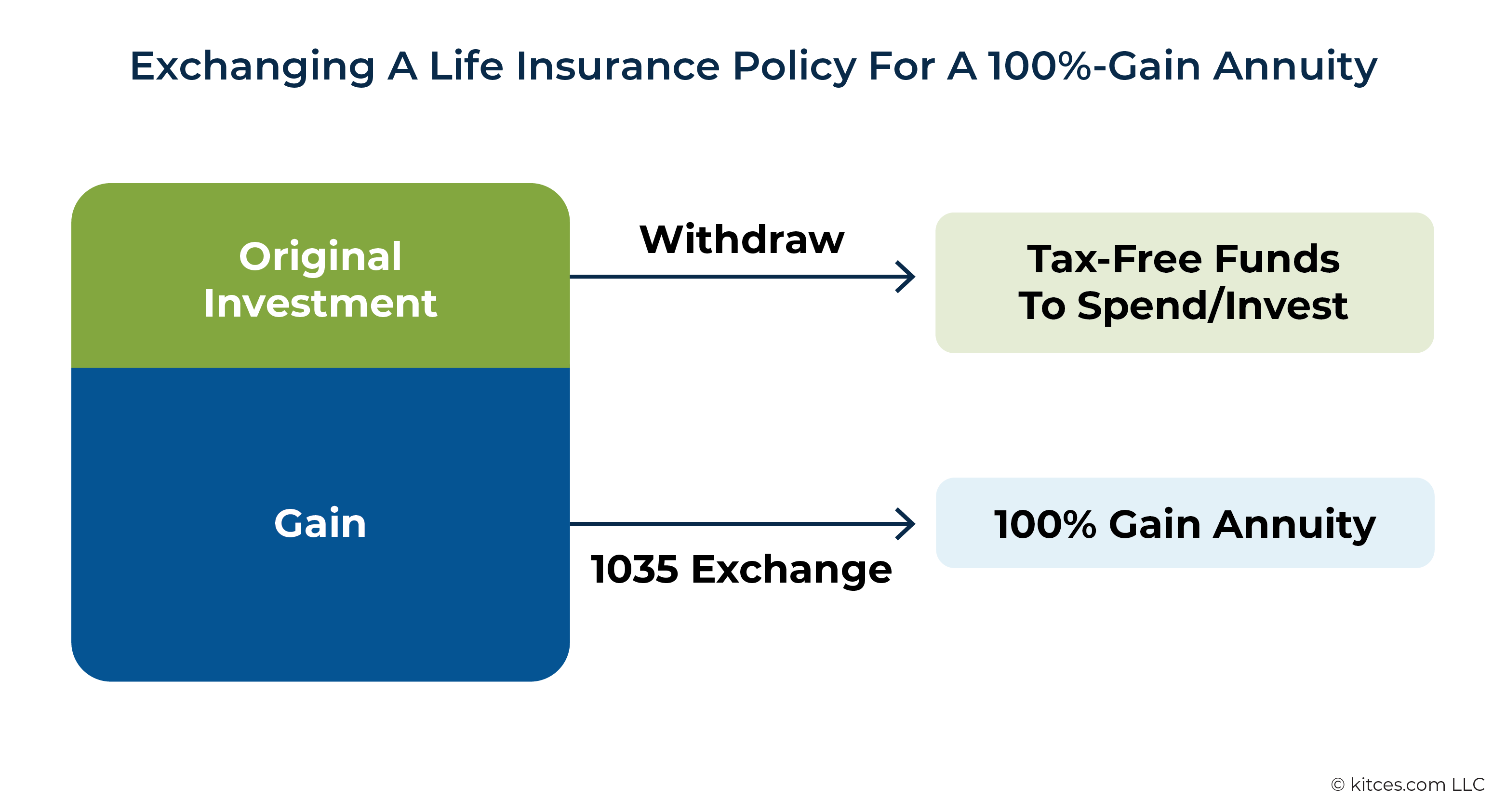
Yes, under Section 1035 of the Internal Revenue Code, you can perform a tax-free exchange of a life insurance policy's cash value into an annuity. This is often done by retirees who no longer need the death benefit and want to convert the cash value into a guaranteed income stream. However, you cannot go from an annuity to a life insurance policy tax-free.
Which is better for inflation protection?
Generally, variable versions of both products (Variable Annuities and Variable Universal Life) offer the best inflation protection because they are tied to the stock market, which historically outpaces inflation. Some annuities also offer "Cost of Living Adjustment" (COLA) riders, which increase your payout by a set percentage each year, though this usually results in a lower initial payment.
Is the death benefit of an annuity tax-free?
No. Unlike life insurance, where the death benefit is generally income tax-free to beneficiaries, the earnings in an annuity are taxed as ordinary income to the heirs when they receive them. Only the original principal (the "basis") is passed on tax-free.
Does a universal life policy have a maturity date?
Historically, policies matured at age 95 or 100, but most modern universal life policies in 2026 have maturity dates at age 121. If you live to the maturity date, the insurance company typically pays out the cash value to you, and the policy ends.
Can I have both an annuity and a universal life policy?
Many comprehensive financial plans include both. A universal life policy can provide for a spouse or children in the event of an early death, while an annuity ensures that the couple has enough monthly income to maintain their lifestyle if they both live to age 100.
Final Recommendation
If you are evaluating these options in 2026, start by defining your primary "pain point." If your fear is dying too soon and leaving your family in debt, prioritize universal life insurance. If your fear is living too long and running out of money at age 85, prioritize an annuity. For those seeking a balance of both, consider a 1035 exchange strategy later in life, or a "split-funded" approach where you use an annuity to pay the premiums on a life insurance policy. Always consult with a fiduciary financial advisor to review the specific expense ratios and internal costs of any contract before signing.