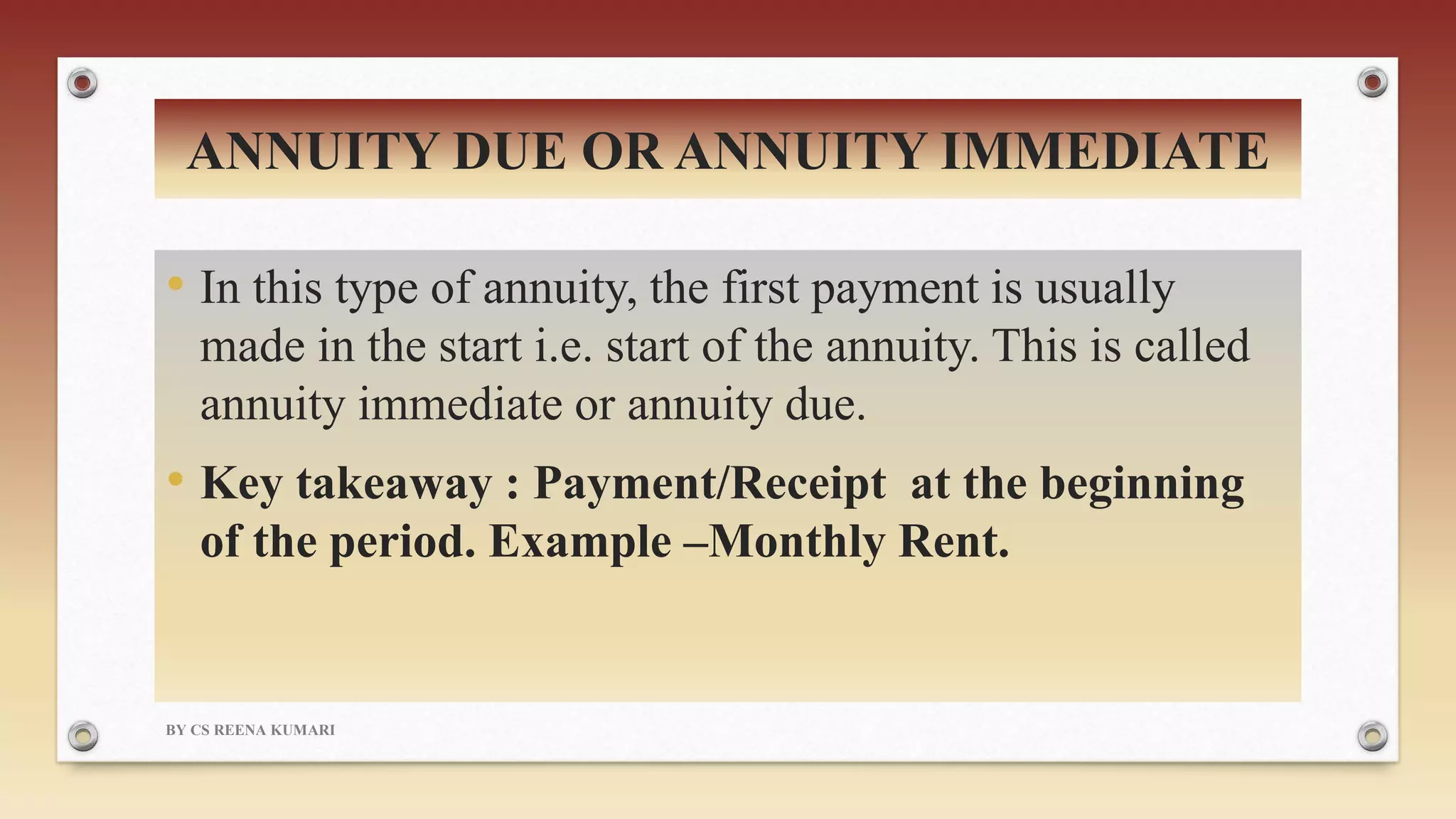
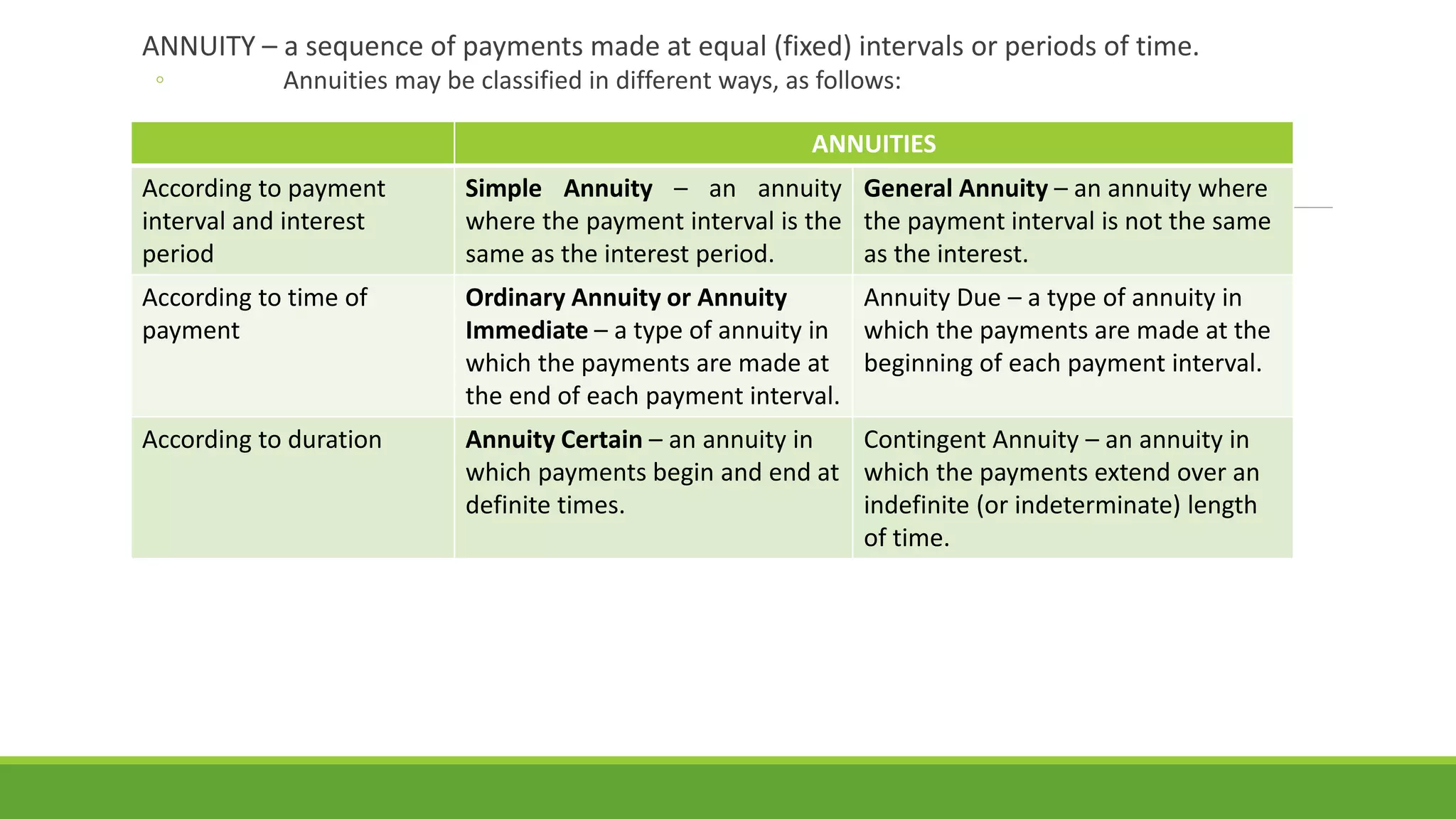
The primary difference between an annuity due and an annuity immediate (also known as an ordinary annuity) lies in the timing of payments. In an annuity due, payments occur at the beginning of each period, while an annuity immediate requires payments at the end of each period. This timing shift significantly affects the present and future value of the investment.
In the financial landscape of 2026, understanding the nuances between these two structures is critical for retirement planning, loan management, and corporate finance. While they may appear similar at first glance, the one-period shift in cash flow timing creates a ripple effect across the entire valuation of the contract. Whether you are a retiree looking for consistent income or a student of finance analyzing time value of money (TVM), distinguishing between these two is the first step toward accurate financial modeling.
Defining the Core Concepts
To grasp the "due vs. immediate" debate, one must first define what an annuity represents. An annuity is a series of equal payments made at regular intervals (monthly, quarterly, or annually) over a specified period.
What is an Annuity Immediate (Ordinary Annuity)?
An annuity immediate, or ordinary annuity, is the most common form of payment structure encountered by consumers. In this arrangement, the first payment is made one full period after the agreement begins. For example, if you take out a car loan on January 1st, your first payment is typically due on February 1st (at the end of the first month).
Ordinary annuities are standard for:
- Mortgage payments.
- Auto loans.
- Interest payments on corporate bonds.
- Standard personal loans.
What is an Annuity Due?
An annuity due requires the first payment to be made immediately upon the start of the contract. In this scenario, the first payment occurs at "Time 0." If you lease an apartment on January 1st, the landlord usually requires the first month’s rent that same day.
Annuities due are common in:
- Lease and rental agreements.
- Insurance premium payments.
- Lottery payout distributions.
- Retirement income streams where the beneficiary needs funds immediately.
The Fundamental Difference: Timing of Payments
The distinction between these two types of annuities is entirely a matter of when the cash moves. This "timing of cash flows" is a foundational pillar of finance because of the Time Value of Money (TVM). The TVM principle states that a dollar today is worth more than a dollar tomorrow because of its potential earning capacity.
In an annuity due, every single payment in the series is made one period earlier than it would be in an annuity immediate. Because you receive or pay the money sooner, that money has more time to earn interest (if you are receiving it) or costs more in terms of lost interest (if you are paying it).
In 2026, with interest rates serving as a primary lever for economic stability, even a single month’s difference in payment timing can result in thousands of dollars of difference over the life of a long-term contract, such as a 30-year pension plan or a structured settlement.
Mathematical Foundations and Formulas
The mathematical relationship between an annuity due and an ordinary annuity is elegant and straightforward. Because an annuity due is simply an ordinary annuity where every payment is shifted forward by one period, you can calculate the value of an annuity due by taking the value of an ordinary annuity and multiplying it by $(1 + r)$, where $r$ is the interest rate per period.
Present Value (PV) Calculations
The Present Value represents what a series of future payments is worth in today’s dollars.
- Ordinary Annuity PV: You discount each payment back to the present. The first payment is discounted by one period.
- Annuity Due PV: The first payment is not discounted at all because it happens today (at Time 0). Consequently, the PV of an annuity due is always higher than the PV of an ordinary annuity, assuming all other variables (payment amount, rate, number of periods) are equal.
The Formula Relationship: $$PV_{Annuity Due} = PV_{Ordinary Annuity} \times (1 + i)$$
Future Value (FV) Calculations
The Future Value represents how much a series of payments will grow to by the end of the term.
- Ordinary Annuity FV: The last payment is made at the very end of the term, so it earns zero interest.
- Annuity Due FV: The last payment is made at the beginning of the last period, meaning it has one full period to earn interest before the term ends.
The Formula Relationship: $$FV_{Annuity Due} = FV_{Ordinary Annuity} \times (1 + i)$$
In a 2026 economic context, where many investors use automated calculators and software, it is vital to check the "Type" setting (often 0 for Ordinary and 1 for Due) to avoid significant valuation errors.
Practical Examples and Real-World Scenarios
To illustrate the difference, let’s look at two common scenarios an individual might face in 2026.
Scenario A: The Retirement Income Stream
Suppose a retiree has $1,000,000 and wants to purchase an income annuity that pays $5,000 per month for 20 years.
- If they choose an annuity immediate, they receive their first check one month after handing over the $1,000,000.
- If they choose an annuity due, they receive their first check the day they sign the contract.
For the retiree, the annuity due is often preferable because it provides immediate liquidity for living expenses. However, the insurance company will likely adjust the monthly payment slightly downward for an annuity due to account for the fact that they are losing a month of interest on that first payment.
Scenario B: The Corporate Lease
A business in 2026 signs a 5-year lease for office space at $10,000 per month. Almost all commercial leases are structured as annuities due. The business must pay at the start of the month to "buy" the right to use the space for the following 30 days. If this were an ordinary annuity, the business would pay at the end of the month, effectively using the space on credit. Landlords rarely agree to this because it increases their risk of tenant default.
Comparative Analysis: Summary Table
The following table highlights the key distinctions that practitioners and students should remember when comparing these two structures.
| Feature | Annuity Immediate (Ordinary) | Annuity Due |
|---|---|---|
| Payment Timing | End of each period | Beginning of each period |
| First Payment | One period from today (T=1) | Today (T=0) |
| Common Use Cases | Mortgages, Car Loans, Bond Interest | Rent, Insurance, Leases, Pensions |
| Present Value (PV) | Lower | Higher (by a factor of $1+i$) |
| Future Value (FV) | Lower | Higher (by a factor of $1+i$) |
| Calculator Setting | END Mode | BEGIN Mode |
| Interest Accrual | Last payment earns no interest | Last payment earns interest for 1 period |
Impact on Retirees and Investors in 2026
As of 2026, the financial planning community emphasizes "cash flow sequencing." This refers to the order and timing in which an investor withdraws funds. The choice between an annuity due and an annuity immediate can influence the sustainability of a portfolio.
Compounding Benefits
For those in the accumulation phase (saving for retirement), an annuity due is mathematically superior for a savings plan. If you contribute to your 401(k) or IRA at the beginning of the month (Annuity Due) rather than the end (Ordinary Annuity), that money starts compounding immediately. Over 30 or 40 years, the difference of just 30 days of compounding on every single contribution can lead to a significantly larger nest egg.
Cash Flow Management
For those in the distribution phase (spending in retirement), the annuity due aligns better with the reality of bills. Most household expenses—rent, utilities, and insurance—are due at the beginning of the month. Receiving an annuity payment on the 1st (Annuity Due) rather than the 30th (Ordinary Annuity) reduces the need for a large "cash buffer" in a checking account, allowing more of the retiree's wealth to remain invested in higher-yielding assets.
Common Pitfalls and Misunderstandings
One of the most frequent errors in financial analysis is the "off-by-one" error. This occurs when a person uses an ordinary annuity formula for a situation that is actually an annuity due.
The "One Extra Period" Myth
A common misconception is that an annuity due has more payments than an ordinary annuity. This is false. Both have the same number of payments ($n$). The difference is simply that the annuity due starts at period 0 and ends at period $n-1$, while the ordinary annuity starts at period 1 and ends at period $n$.
Valuation Discrepancies
In a high-interest-rate environment, the discrepancy between the two becomes more pronounced. In 2026, if interest rates are at 5%, the difference in value between the two types is 5%. If rates were to rise to 10%, the difference would jump to 10%. Investors must be particularly vigilant during periods of rate volatility, as the "cost" of choosing the wrong payment timing increases alongside interest rates.
Which One Should You Choose?
The "choice" is often dictated by the industry standard for the product in question. You generally cannot ask a bank to let you pay your mortgage as an annuity due, nor can you easily convince a landlord to accept rent as an ordinary annuity. However, in structured settlements and certain private investment contracts, the timing is negotiable.
Choose Annuity Due when:
- You are the recipient: You want your money as soon as possible to begin spending or reinvesting.
- You are saving: You want your deposits to start earning interest immediately.
- Inflation is high: Getting money earlier allows you to spend it before its purchasing power further declines.
Choose Annuity Immediate when:
- You are the payer: You want to keep your money in your own pocket for as long as possible to earn interest for yourself before handing it over.
- Aligning with income: If you receive your paycheck at the end of the month, an ordinary annuity payment (like a mortgage) aligns better with your cash inflows.
For further information on regulatory standards regarding annuity disclosures, the U.S. Securities and Exchange Commission (SEC) provides guidelines on how these products must be marketed to consumers. Additionally, the Internal Revenue Service (IRS) offers publications regarding the tax treatment of different annuity distributions, which can vary based on the timing and nature of the payments.
FAQ
Is an annuity due always worth more than an ordinary annuity?
Yes, assuming the number of payments, the amount of each payment, and the interest rate are identical, the present value and future value of an annuity due will always be higher. This is because the payments occur sooner, allowing more time for interest to accrue or less time for the value to be discounted.
Can I convert an ordinary annuity calculation to an annuity due?
Absolutely. To find the value of an annuity due, calculate the value as if it were an ordinary annuity and then multiply the result by $(1 + i)$, where $i$ is the interest rate for the period. This "shifts" the value forward by one period to account for the earlier payment timing.
Why do insurance premiums use the annuity due model?
Insurance companies require payment at the beginning of the coverage period (annuity due) to ensure they are compensated before providing the service. If premiums were paid as an ordinary annuity (at the end of the term), a policyholder could theoretically receive a full month of coverage and then default on the payment at the end.
Does the timing affect the total number of payments?
No. If a contract specifies 12 monthly payments, both an annuity due and an annuity immediate will result in exactly 12 payments. The only change is whether those payments occur on the 1st of the month or the last day of the month.
How does this impact my taxes in 2026?
The timing of the payment can affect which tax year the income falls into. For example, an annuity due payment made on January 1st, 2026, is clearly in the 2026 tax year. However, an ordinary annuity payment for December might be paid on December 31st or January 1st, depending on the contract, potentially shifting the tax liability between years.
Final Recommendation
When navigating financial agreements in 2026, always verify the payment trigger date. If you are modeling a retirement plan or evaluating a lease, confirm whether the "BEGIN" or "END" setting is active on your financial software. For most consumers, the goal is to receive payments as an annuity due and make payments as an annuity immediate. By mastering this distinction, you can optimize your cash flow, maximize interest earnings, and ensure that your long-term financial projections remain accurate and achievable.