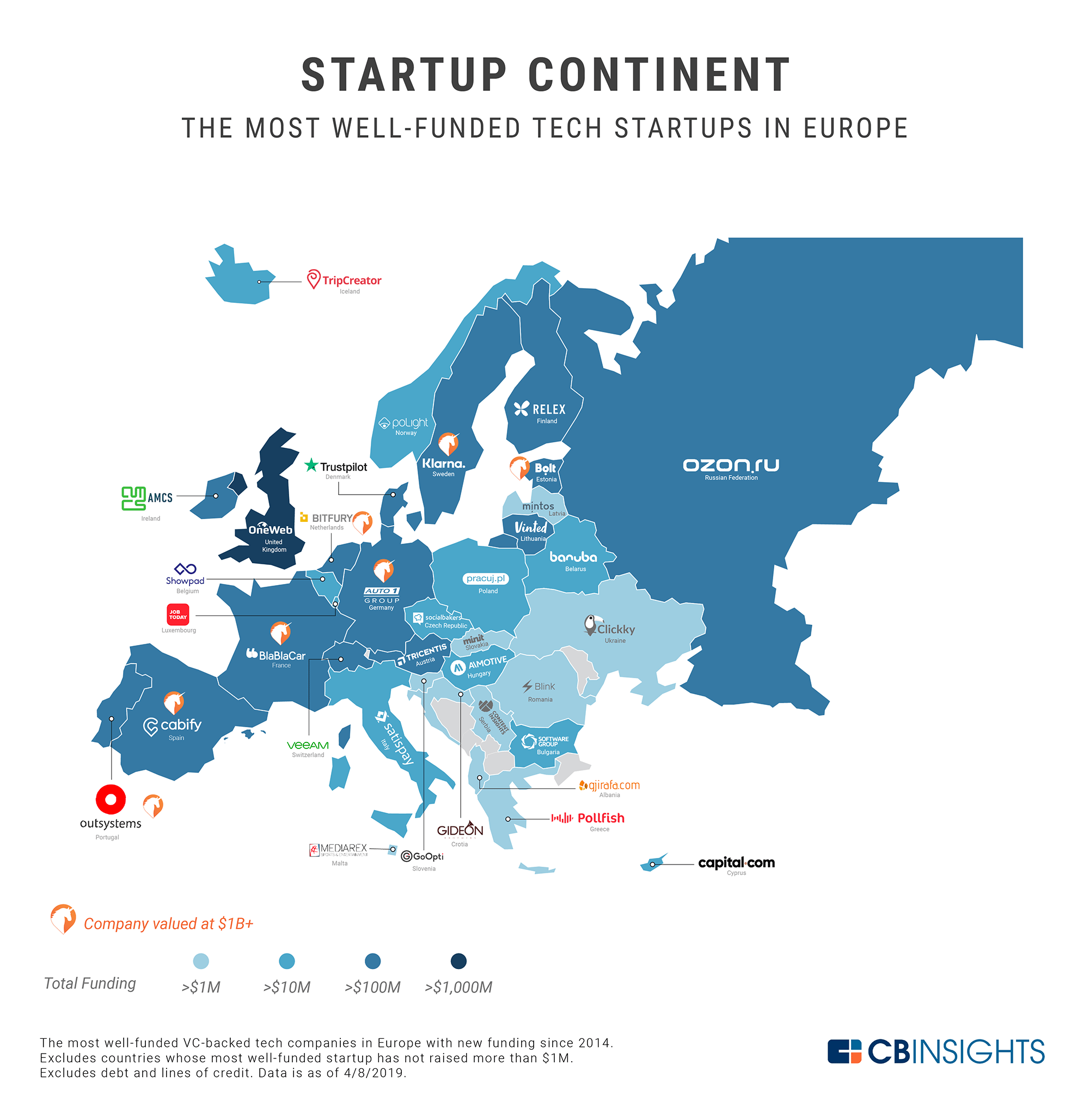
The annual volume of founders starting new tech startups in Europe now exceeds that of the United States, driven by a decentralized network of tech hubs, a surge in "second-generation" entrepreneurs, and robust institutional support for deep tech. While the US retains a lead in total venture capital and late-stage "mega-rounds," Europe’s massive pipeline of early-stage talent has fundamentally shifted the global innovation landscape in 2026.
The Structural Shift in Global Entrepreneurship
For decades, the narrative of global technology was synonymous with Silicon Valley. However, the data emerging through 2026 confirms a trend that began in the early 2020s: the European startup ecosystem is now the world’s most prolific factory for new founders. This transition is not merely a statistical anomaly but the result of a coordinated maturation of the European market.
The volume of new founders is a "leading indicator" of future economic health. When Europe produces more founders annually than the US, it signals a broader democratization of technology. Unlike the US, where startup activity remains heavily concentrated in a few powerhouse regions like the Bay Area, New York, and Austin, Europe has successfully activated dozens of diverse urban centers. From Lisbon to Tallinn and Munich to Paris, the barriers to entry for starting a tech company have plummeted.
Understanding the Volume vs. Value Distinction
It is vital to distinguish between volume of activity and concentration of capital. The US continues to command a larger share of global venture capital (VC) dollars, particularly in Series C rounds and beyond. However, in terms of raw entrepreneurial entry—the number of individuals filing incorporations and seeking pre-seed or seed funding—Europe has moved into the lead.
This volume is fueled by a lower "burn rate" environment and a massive influx of technical talent from world-class universities that previously funneled graduates into traditional industries like automotive, banking, or civil engineering. Today, the "default" career path for a top-tier STEM graduate in Zurich or Stockholm is increasingly entrepreneurial.
The "Founder Factory" Effect: Success Breeding Success
One of the primary drivers behind Europe’s superior founder volume is the "multiplier effect" of previous successes. In the early 2010s, Europe had only a handful of "unicorns" (startups valued at over $1 billion). By 2026, the continent has hundreds of such companies.
When a company like Spotify, Adyen, or Revolut reaches a certain scale, it acts as a training ground for the next generation of entrepreneurs. Employees at these firms gain "hyper-growth" experience and eventually leave to start their own ventures. This phenomenon, often called the "Founder Factory," has reached a tipping point in Europe.
The Role of "Alumni Networks"
In 2026, we see a sophisticated network of angel investors—often former founders themselves—who are specifically targeting "second-generation" founders. This internal recycling of wealth and expertise keeps the startup pipeline full. Because Europe has more individual countries and cities participating in this cycle, the aggregate number of new entities created each year has naturally scaled to surpass the US, which faces higher living costs and increased saturation in its traditional tech hubs.
Decentralization: The European Advantage
The United States has a "hub and spoke" model for technology. While this allows for incredible density in places like Palo Alto, it also creates high economic barriers. The cost of living and the cost of talent in US tech hubs often act as a deterrent to first-time founders who lack significant personal runways.
In contrast, Europe’s ecosystem is inherently decentralized. There is no single "capital" of European tech. Instead, a founder can start a world-class AI company in Paris, a fintech firm in London, or a robotics company in Munich.
Diversity of Hubs and Specialization
- Paris: Has become the European epicenter for Artificial Intelligence, supported by significant government initiatives and elite mathematical talent.
- London: Remains the global leader in Fintech innovation, despite post-Brexit adjustments, due to its proximity to the world’s financial markets.
- Berlin and Stockholm: Continue to dominate in SaaS and consumer platforms.
- Tallinn and Helsinki: Lead the world in per-capita founder creation, specializing in lean, highly automated software solutions.
This geographic spread ensures that Europe is not vulnerable to a downturn in any single city’s economy. If real estate prices skyrocket in London, talent moves to Lisbon or Warsaw, maintaining the overall volume of new company registrations across the continent.
Deep Tech and the Academic Pipeline
A significant portion of Europe’s new founder volume comes from "Deep Tech"—companies founded on tangible scientific discoveries or engineering breakthroughs. European universities have historically been world-class in research, but they were often criticized for failing to commercialize that research.
By 2026, this has changed. Initiatives like Horizon Europe and the European Innovation Council (EIC) have streamlined the process of spinning out companies from research labs. We are now seeing a massive volume of founders emerging from the halls of ETH Zurich, Oxford, and TU Delft.
These founders are not just building "another app"; they are focused on climate tech, quantum computing, and advanced biotechnology. Because these fields often require less initial capital for the "proof of concept" phase than for-profit consumer social networks, the volume of these seed-stage startups has grown exponentially.
Comparative Analysis: Europe vs. the United States (2026 Data)
The following table outlines the key differences in the startup landscape between the two regions, explaining why the volume of founders has tilted in Europe's favor.
| Metric | Europe (EU + UK + EFTA) | United States |
|---|---|---|
| Annual New Founders | ~140,000 - 160,000 | ~110,000 - 130,000 |
| Primary Hub Strategy | Decentralized (30+ major cities) | Concentrated (Top 5 cities dominate) |
| Key Growth Driver | Deep Tech & University Spin-offs | Generative AI & Software-as-a-Service |
| Early-Stage Funding Access | High (Abundant Seed/Angel capital) | Very High (Mature VC ecosystem) |
| Regulatory Environment | High (GDPR, AI Act) | Moderate (Fragmented state laws) |
| Cost of Talent | Moderate (Competitive but sustainable) | Extremely High (Significant wage inflation) |
| Talent Pool Source | Large STEM graduate base per capita | Global immigration & Top-tier universities |
Addressing the "Growth Gap"
While the volume of founders in Europe is higher, it is essential to address the "Growth Gap." Historically, US startups have been more successful at transitioning from a "new startup" to a "global giant." The US market is a single, unified block with a common language, currency, and regulatory framework. Europe remains a fragmented market of many nations.
However, in 2026, European founders have become "born global." From day one, a startup in Estonia or the Netherlands is built to operate across borders. The European "Single Market" for services and digital goods has matured, allowing these founders to scale across 27+ countries with relative ease compared to a decade ago.
The Impact of the "Digital Single Market"
The harmonization of digital regulations across Europe has reduced the legal friction that once hindered growth. While the volume of founders is the headline, the quality and ambition of these founders have also increased. They are no longer content with being the "Spotify of France"; they aim for global dominance from the outset.
Investment Trends Supporting Founder Volume
The rise in founder volume is also supported by a shift in where capital is deployed. In the past, European VCs were often seen as risk-averse. Today, the landscape is populated by aggressive, founder-friendly firms that mimic the Silicon Valley "fail fast" mentality.
Furthermore, US-based VC firms have established permanent offices in Europe. Sequoia, Accel, and Lightspeed have significantly increased their European footprints. By providing "US-style" capital to "European-volume" founders, they have accelerated the rate at which new companies are formed.
Crowdfunding and Community Investment
Europe has also led the way in democratizing investment through crowdfunding platforms. Founders in Europe often raise their initial €500k to €2M from their own users and communities. This provides a "bottom-up" source of capital that is less prevalent in the US, where institutional "accredited investor" rules are often more restrictive for early-stage retail participation.
Frequently Asked Questions
Does more founders mean more successful companies?
Not necessarily. A higher volume of founders indicates a healthy "top of the funnel" for innovation, but it does not guarantee a higher volume of trillion-dollar companies. However, a larger pool of startups increases the statistical probability of producing "outlier" successes. Europe’s strategy is currently focused on maximizing the number of "at-bats" (entrepreneurial attempts).
Why is the US falling behind in raw founder volume?
The US isn't necessarily "falling behind" in a vacuum; rather, Europe has caught up and expanded. Factors in the US such as the high cost of healthcare for self-employed individuals, restrictive visa policies for international talent, and the extreme concentration of wealth in a few expensive cities have made it more difficult for the "average" person to take the risk of starting a company.
What industries are European founders focusing on most?
In 2026, the primary focus areas for new European founders are Sustainability/Climate Tech, Fintech, and B2B Industrial AI. Europe’s regulatory focus on carbon neutrality has created a massive market for startups solving energy and supply chain problems.
Is the European regulatory environment a deterrent?
While regulations like the GDPR and the AI Act are often viewed as hurdles, many founders now see them as a "gold standard." By building a company that is compliant with strict European laws from the start, founders find it easier to expand into other regulated markets globally, treating compliance as a competitive advantage rather than a burden.
How has the "remote work" trend impacted this volume?
Remote and hybrid work models have benefited Europe immensely. Because Europe has many high-quality cities within a few hours' flight of each other, founders can tap into talent across the continent without requiring everyone to live in an expensive hub like London or Paris. This has kept operational costs lower for new startups, allowing more founders to launch with less capital.
Strategic Recommendations for Stakeholders
As the volume of founders in Europe continues to outpace the US, different stakeholders should adjust their strategies:
- For Investors: Focus on "unconventional" hubs. The next billion-dollar company is as likely to come from Warsaw or Athens as it is from London. Diversifying geographic reach within Europe is essential to capturing this volume.
- For Policymakers: Focus on "Scale-up" capital. Europe has solved the "founder volume" problem; the next challenge is ensuring these companies don't move to the US once they reach Series C rounds. Incentivizing pension funds to invest in late-stage VC is a critical next step.
- For Talent: The "European Dream" is now entrepreneurial. Aspiring founders should leverage the massive support networks, grants, and incubators available across the EU to launch their ventures with lower personal risk than in many other parts of the world.
The shift in founder volume marks a permanent change in the global tech hierarchy. Europe is no longer just a consumer of technology; it has become the world’s most active laboratory for creating it.