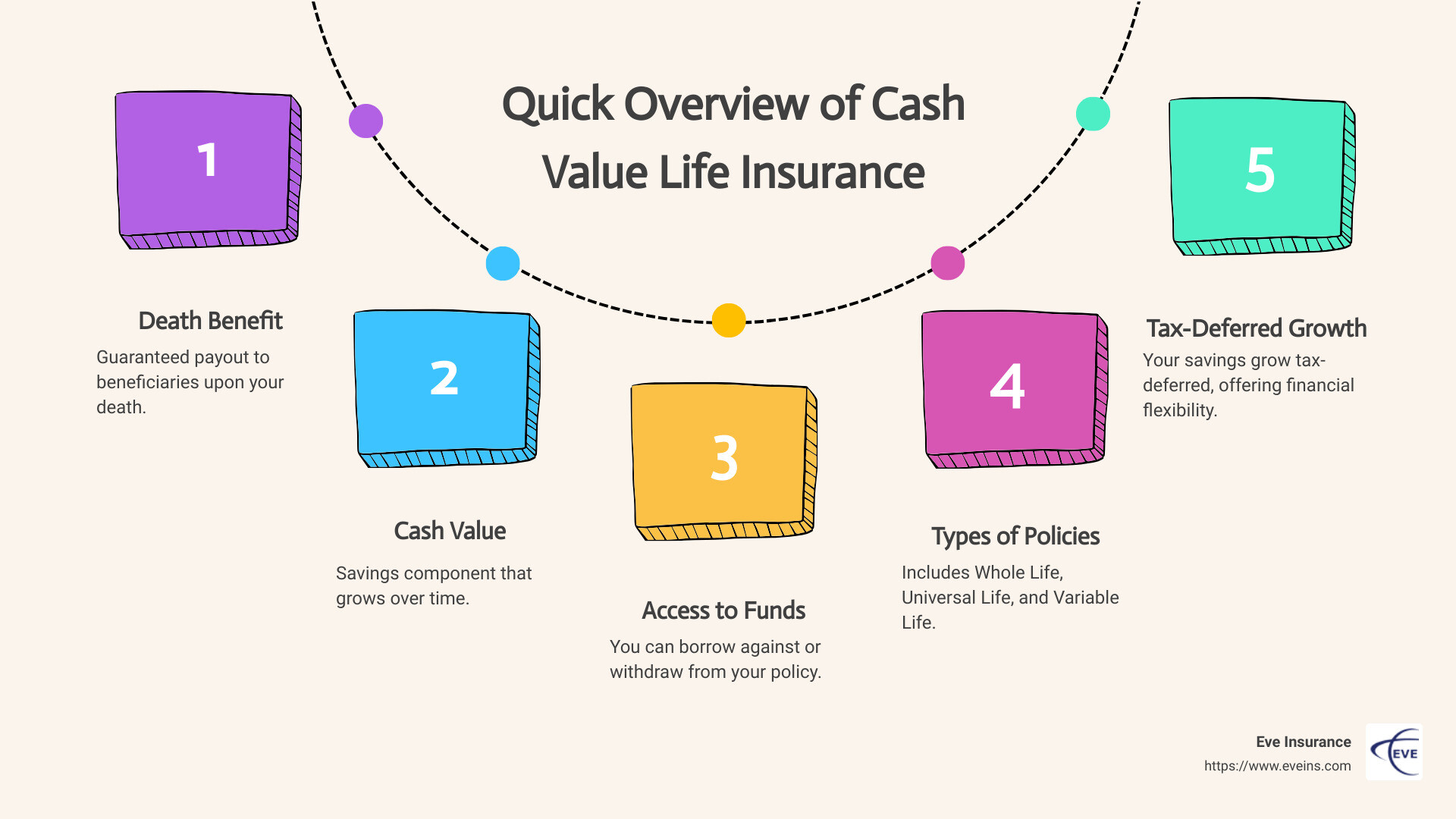
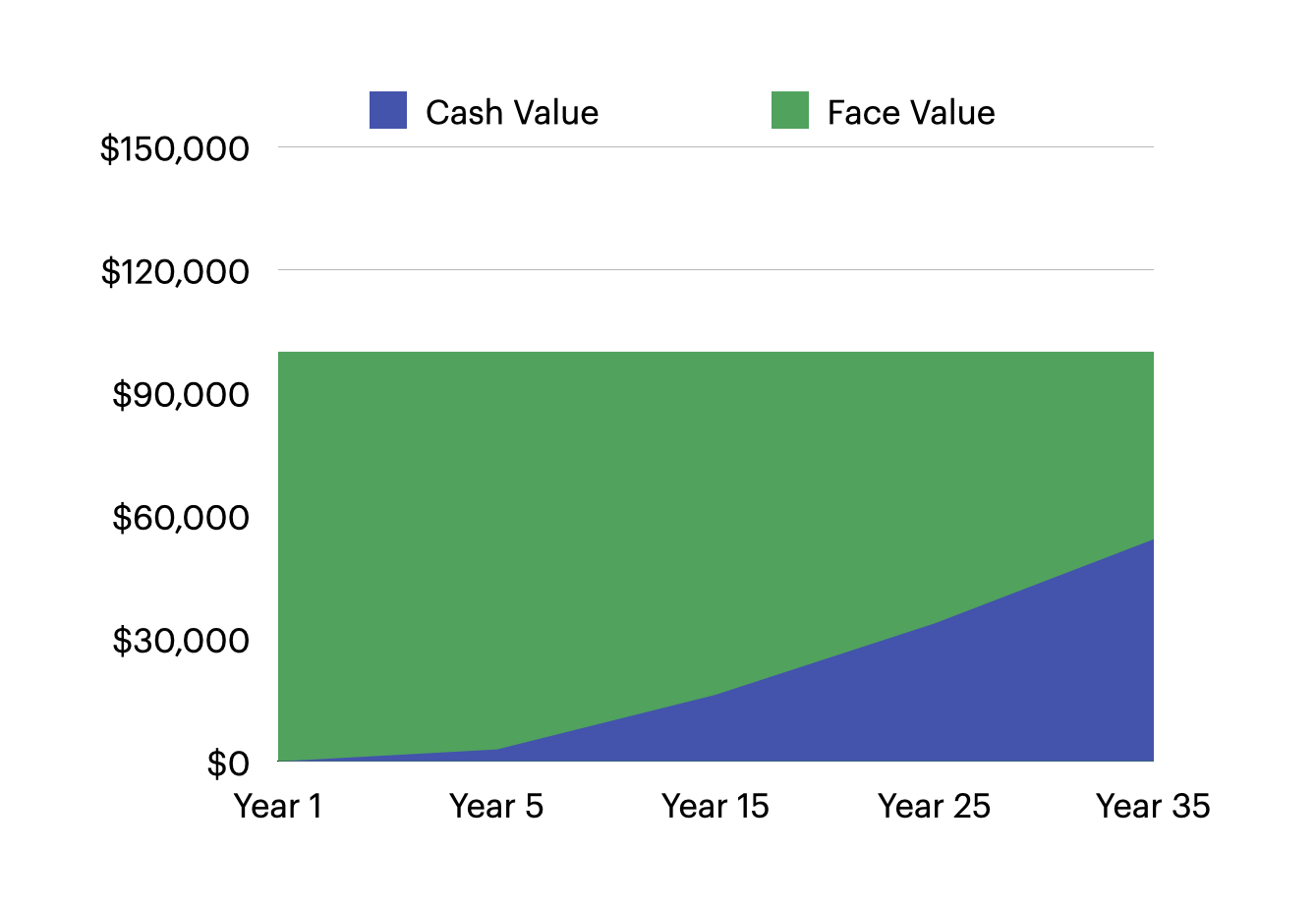
Annually renewable term (ART) life insurance typically does not include a cash value component, as it is designed for pure death benefit protection. However, certain hybrid products, such as Return of Premium (ROP) term policies or Universal Life structures with ART-based cost of insurance, allow policyholders to combine year-to-year flexibility with a capital accumulation or refund feature.
Traditional life insurance is usually split into two camps: term insurance, which provides temporary coverage with no savings element, and permanent insurance, which offers lifelong coverage and builds cash value. Annually renewable term (ART) life insurance sits at the most basic end of the term spectrum. It provides coverage for one year at a time, with the option to renew every year without a new medical exam.
The request for "annually renewable term life insurance with cash value" often stems from a desire for the low entry cost of ART combined with the long-term equity of permanent insurance. As of 2026, the insurance market has evolved to offer several "synthetic" or hybrid ways to achieve this balance. Understanding how these mechanisms interact is essential for choosing a policy that aligns with your financial goals and risk tolerance.
What is Annually Renewable Term (ART) Life Insurance?
To understand how cash value fits into the equation, one must first master the mechanics of the ART structure. Unlike 10-, 20-, or 30-year level term policies—where your premium stays the same for the duration of the term—ART premiums are recalculated every year based on your attained age.
Because the probability of death increases as you get older, the insurance company increases the premium annually to reflect this rising mortality risk. In the early years, ART is often the least expensive way to purchase a large amount of death benefit protection. However, as the insured reaches their 50s, 60s, and 70s, the "cost of insurance" (COI) curve becomes exponential, often making the policy prohibitively expensive in later stages of life.
The Logic of the ART Structure
The primary advantage of ART is that you are only paying for the "pure" risk of death for that specific year. You are not pre-paying for future coverage, which is what happens in a level-premium policy. In a level-premium policy, you overpay in the early years so that the company can subsidize the higher costs of your older years. ART avoids this early-year overpayment, making it a favorite for businesses covering short-term debts or individuals who expect their need for insurance to vanish within a few years.
The Intersection: How Term Insurance Integrates Cash Value
Standard ART policies do not accumulate cash value because every dollar of the premium (minus administrative fees) is used to cover the mortality risk for that year. There is no "excess" premium left over to be invested. However, there are three specific ways a consumer in 2026 can find a product that functions like an ART policy but provides a cash-centric benefit.
1. Return of Premium (ROP) Riders
While not technically "cash value" in the sense of a growing investment account, a Return of Premium rider is the most common way to get money back from a term policy. If you purchase an ART policy with an ROP rider and maintain the policy for a specified duration, the insurer refunds 100% of the premiums you paid if you outlive the term or reach a certain age.
- How it works: You pay a higher premium than a standard ART policy. This "extra" amount is essentially invested by the insurance company.
- The Benefit: It acts as a forced savings vehicle. If you die, your beneficiaries get the death benefit. If you live, you get your premiums back tax-free (up to the amount paid).
2. Universal Life (UL) with ART Internal Costs
Most modern Universal Life insurance policies are structured internally as annually renewable term policies. When you pay a premium into a Universal Life policy, the money goes into a cash value account. Every month, the insurance company deducts the "cost of insurance" (COI) from that account.
In many UL policies, that COI is based on an annually renewable term schedule. This allows you the flexibility to pay only the ART cost if you choose, or to "overfund" the policy to build substantial cash value. This is often the most efficient way to have "ART with cash value," as it provides the permanent structure required for tax-advantaged growth.
3. Participating Term Insurance
Very rarely, some mutual insurance companies offer "participating" term insurance. These policies are eligible to receive dividends. While the dividends are usually used to reduce premiums or buy additional coverage, they can sometimes be left in an interest-bearing account, creating a modest cash accumulation within a term framework.
Comparing ART with Cash Value Options
The following table compares how different policy types handle the balance between annually increasing costs and cash accumulation.
| Feature | Standard ART | ART with ROP Rider | Universal Life (ART internal) |
|---|---|---|---|
| Initial Premium | Lowest | Moderate | Highest (if building cash) |
| Premium Structure | Increases Annually | Increases Annually | Flexible |
| Cash Value Growth | None | None (Refund only) | Market-linked or Fixed Interest |
| Tax Treatment | N/A | Tax-free refund | Tax-deferred growth |
| Policy Duration | Annual Renewal | Fixed Term or to Age 65 | Permanent/Lifelong |
| Best For | Short-term debt | Risk-averse savers | Wealth transfer/Tax strategy |
Technical Specifications: The Cost of Insurance (COI) Curve
In 2026, insurance carriers use updated mortality tables (such as the 2017 CSO tables and subsequent adjustments) to calculate ART rates. It is vital to understand the "Net Amount at Risk" (NAR).
In a policy that has cash value, the insurance company does not actually insure the full face amount. For example, if you have a $1,000,000 death benefit and $200,000 in cash value, the insurance company is only "at risk" for $800,000.
As your cash value grows, the "Net Amount at Risk" decreases. If you are using an ART-style internal structure, this can help offset the rising costs of insurance associated with aging. This "decreasing risk" mechanism is a primary reason why high-net-worth individuals use ART-based Universal Life policies as part of their estate planning; they use the cash value to eventually "self-insure" the mortality cost.
The Advantages of Annually Renewable Structures with Cash Elements
Choosing an ART-based structure with a cash component offers specific strategic advantages that traditional Whole Life or Level Term policies cannot match.
Maximum Liquidity in Early Years
Because you aren't locked into a high, level premium that accounts for your 80s while you are still in your 30s, ART-based structures allow you to keep more of your capital liquid. If you link this to a Universal Life account, you have the option to dump large sums of cash into the policy when you have a high-income year and pay only the bare minimum ART cost during leaner years.
Transparency of Costs
Traditional Whole Life insurance is often criticized for being a "black box" where it is difficult to see exactly how much you are paying for the insurance vs. how much is going to the investment. ART-based policies are transparent. You see the exact COI deduction every year, which allows for more precise financial modeling and adjustments to your savings rate.
Adaptability for Business Needs
For businesses, ART with an ROP or cash feature is often used for "Key Person" insurance. If the key employee stays until retirement, the company can use the accumulated cash value or the returned premiums as part of a deferred compensation package. If the employee leaves early, the company has only paid the "pure" cost of the risk during their tenure.
Potential Risks and Disadvantages
While the flexibility of ART with cash value is appealing, it carries significant risks that require active management.
- The "Lapse" Trap: In a Universal Life policy with ART costs, if the cash value does not grow as expected or if the cost of insurance rises too sharply in later years, the cash value can be entirely consumed by the premiums. This results in the policy lapsing just when the insured needs it most.
- Rising Mortality Costs: Unlike a 20-year level term where you are "protected" from price hikes, ART rates are guaranteed to go up. In your 70s, the annual premium for a $1 million policy could be tens of thousands of dollars per year.
- Tax Implications of ROP: While the refund of premiums is generally tax-free, any "interest" earned on a cash-value account within a policy may be subject to different rules if the policy is classified as a Modified Endowment Contract (MEC) under Internal Revenue Code Section 7702.
Eligibility and Underwriting in 2026
Purchasing an ART policy, with or without cash value, still requires the standard underwriting process. However, because ART is often viewed as a shorter-term commitment by the carrier, underwriting can sometimes be more streamlined.
- Medical Examination: Most policies over $500,000 will require a paramedical exam, including blood work and urinalysis.
- Digital Health Records: By 2026, most insurers use automated underwriting that pulls data from the Medical Information Bureau (MIB) and electronic health records to provide instant or near-instant decisions for healthy applicants.
- Financial Underwriting: If you are adding a significant cash value component or an ROP rider, the insurer will verify that your income justifies the total death benefit.
Common Misconceptions
"ART is always cheaper than Level Term."
This is only true in the first few years. Over a 20-year horizon, a level-term policy is almost always cheaper in total aggregate premiums because the "leveling" effect protects you from the massive price spikes in the later years of the term.
"Cash Value in a Term Policy is the same as a Savings Account."
It is not. Cash value within a life insurance policy is subject to surrender charges during the first 10–15 years. If you cancel the policy early to "get your cash," you may find that most of it is withheld by the insurance company to recoup their upfront commission costs.
"You can keep ART forever."
Technically, most ART policies are renewable up to age 95 or 100. However, the cost becomes so high that almost no one keeps them. The "annually renewable" feature is a safety net to ensure you aren't dropped if you become uninsurable, not a strategy for lifelong coverage.
Summary of Actionable Steps
If you are considering an annually renewable term policy with a cash value or refund component, follow these steps:
- Define the Time Horizon: If you only need coverage for 5 years or less, a standard ART is best. If you need it for 20+ years, ART with cash value is likely less efficient than a Level Term or a properly structured Whole Life policy.
- Request an Illustration: Ask your broker for a "ledger statement" that shows the guaranteed and non-guaranteed values. Pay close attention to the column showing the "Annual Cost of Insurance."
- Check for Conversion Privileges: Ensure the ART policy can be converted to a permanent policy without a medical exam. This is your "exit ramp" if the annual premiums eventually become too expensive.
- Verify the Carrier's Rating: Since cash value and ROP riders rely on the insurer's ability to pay decades from now, only work with companies rated A or better by A.M. Best or S&P Global.
FAQ
Does every ART policy have a cash value option?
No. The vast majority of ART policies are "pure" insurance and have no cash value. You must specifically look for policies with a Return of Premium (ROP) rider or use a Universal Life policy structured with ART internal costs to achieve this.
Can I withdraw the cash value from an ART-based Universal Life policy?
Yes, usually through policy loans or partial withdrawals. However, withdrawing money reduces the death benefit and may cause the policy to lapse if the remaining cash isn't enough to cover the rising annual mortality costs.
Is the cash value in these policies guaranteed?
In a Return of Premium term policy, the refund is generally guaranteed as long as you pay the premiums. In a Universal Life policy, the cash value growth is usually not guaranteed and depends on interest rates or market performance.
Why would I choose ART over Level Term if I want cash back?
The main reason is initial cash flow. If you are a startup founder or have high current debts but low liquid cash, the low starting premium of ART allows you to get the coverage you need today, while the ROP or UL structure ensures those early payments aren't "wasted" if you outlive the need for insurance.
What happens to the cash value if I die?
In most traditional cash-value structures, the insurance company keeps the cash value and pays the beneficiaries the face amount (death benefit). Some Universal Life policies offer an "Option B" which pays both the face amount and the cash value, but this requires a much higher premium.
Strategic Recommendation
For most individuals in 2026, the most effective way to utilize an annually renewable term life insurance with cash value structure is through a Flexible Premium Universal Life policy. This provides the "pure" pricing of ART while allowing you to build a tax-deferred bucket of money that can eventually be used to pay those high future premiums. If your goal is simply to get your money back if you don't die, a Level Term policy with an ROP rider is often more cost-effective and predictable than a pure ART policy with the same rider. Always consult with a licensed financial advisor to run a "break-even analysis" between ART and Level Term before committing to a multi-year strategy.