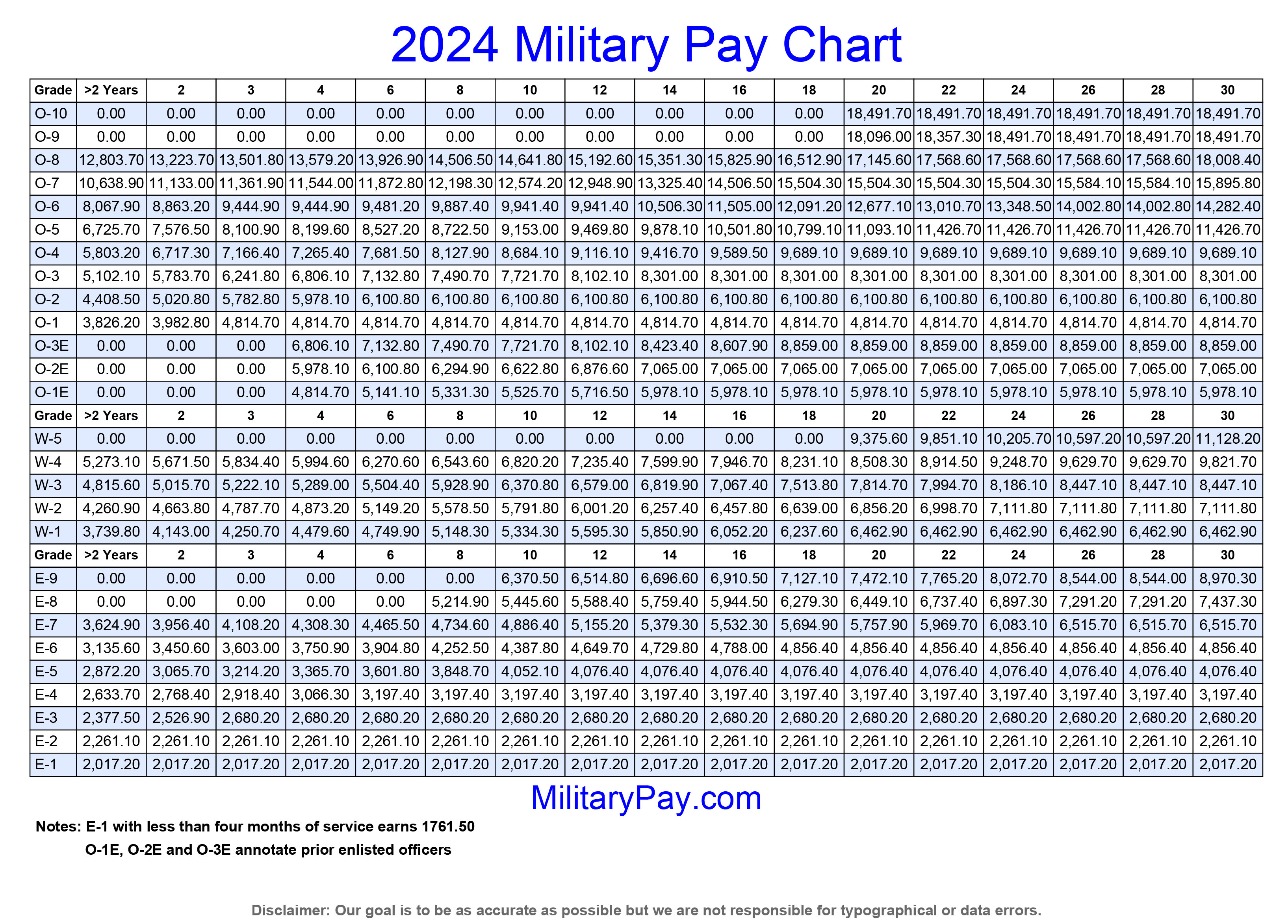
Army Warrant Officer compensation is frequently misunderstood because the "Basic Pay" figure on a standard salary table represents only the taxable foundation of a much larger financial package. When accounting for non-taxable allowances, special duty incentives, and unique tax advantages, a Warrant Officer’s true "civilian equivalent" salary is often 30% to 40% higher than their base pay suggests.
The Foundation: Understanding the 2026 Warrant Officer Pay Scale
To understand why basic pay is deceptive, one must first understand what it is. In the U.S. Army, Warrant Officers (WOs) are technical experts, combat leaders, and advisors. Their pay scale is categorized from W-1 to W-5. As of 2026, these figures are adjusted annually for inflation and cost-of-living requirements, but the structure remains tiered based on both rank and "Time in Service" (TIS).
A common misconception is that a Warrant Officer 1 (WO1) starts at a low entry-level wage. However, most Army Warrant Officers are accessed from the non-commissioned officer (NCO) ranks, meaning they often enter the warrant corps with 6 to 12 years of prior service. This placement on the pay table ensures their basic pay reflects their total military experience, not just their time as a warrant officer. For example, a W-1 with 8 years of prior enlisted service earns significantly more than a W-1 with fewer years, recognizing the technical proficiency they bring to the cohort.
The progression from W-1 to CW5 (Chief Warrant Officer 5) represents a path of increasing responsibility. While basic pay provides a reliable, steady floor for a household budget, it is merely the "gross taxable income" component of a complex ledger. To see the full picture, we must look at what is added to that check before it hits the bank account.
The Power of Non-Taxable Allowances: BAH and BAS
The most significant reason basic pay isn't the whole story is the inclusion of allowances. Unlike civilian "stipends," military allowances are largely exempt from federal and state income taxes. This creates a massive disparity between a Warrant Officer's gross pay and their actual purchasing power.
Basic Allowance for Housing (BAH)
The Basic Allowance for Housing is a geographic-based entitlement designed to cover the cost of off-post housing. In 2026, as housing markets continue to fluctuate, BAH remains a critical stabilizer. Because it is based on location, rank, and dependency status, a Warrant Officer stationed in a high-cost-of-living area (like Fort Belvoir, VA, or Joint Base Lewis-McChord, WA) may receive a monthly BAH that equals 40% or more of their basic pay.
Crucially, because BAH is non-taxable, a Warrant Officer receiving $3,000 a month in housing allowance is actually receiving the equivalent of roughly $4,000 in civilian "taxable" salary (depending on their tax bracket). This "tax advantage" is the single most overlooked aspect of military compensation.
Basic Allowance for Subsistence (BAS)
While BAH covers the home, BAS covers the table. This is a flat monthly rate intended to offset the cost of meals for the service member. While it is a smaller portion of the total package than BAH, it remains a consistent, non-taxable addition to the monthly income that civilian employees typically have to pay for out of their post-tax "take-home" pay.
Incentives and Special Pays: Rewarding Technical Expertise
Warrant Officers are the Army’s "subject matter experts." Whether they are aviators, cyber technicians, or maintenance officers, their specific MOS (Military Occupational Specialty) often qualifies them for additional monthly stipends that are not reflected on the basic pay chart.
Aviation Incentive Pay (AvIP)
Army Aviators, the largest cohort of Warrant Officers, receive Aviation Incentive Pay. In 2026, these rates remain structured to incentivize long-term service. As a Warrant Officer progresses through their flight career, this monthly incentive increases, often adding several hundred to over a thousand dollars to their monthly income. This is "flight pay," and it is designed to retain highly skilled pilots who might otherwise be lured by commercial airline salaries.
Assignment Incentive Pay (AIP) and Special Duty Pay
Warrant Officers in high-demand fields, such as Special Forces (180A) or Cyber (170A/B), often qualify for Assignment Incentive Pay or Special Duty Assignment Pay (SDAP). These bonuses recognize the extreme technical requirements or the hazardous nature of their specific roles. In the cyber domain specifically, the Army uses these incentives to compete with the private sector's high-six-figure salaries.
Hardship Duty and Hostile Fire Pay
For Warrant Officers deployed to designated regions, additional pays like Hardship Duty Pay (HDP) and Hostile Fire Pay/Imminent Danger Pay (HFP/IDP) apply. Furthermore, when serving in a designated combat zone, the "Combat Zone Tax Exclusion" (CZTE) may apply, making all or a significant portion of their entire income—including basic pay—tax-free for the duration of the deployment.
The "Tax Advantage" Calculation
To truly compare Army Warrant Officer pay to a civilian job, you must calculate the "Tax Adjusted Income." This formula accounts for the fact that a significant portion of military compensation is not subject to Federal Insurance Contributions Act (FICA) taxes or federal/state income tax.
| Pay Component | Annual Amount (Hypothetical W-3) | Taxable Status | Civilian Equivalent Value |
|---|---|---|---|
| Basic Pay | $78,000 | Taxable | $78,000 |
| BAH (Avg. Location) | $30,000 | Non-Taxable | ~$39,000 |
| BAS | $5,600 | Non-Taxable | ~$7,200 |
| Special Pays (Avg.) | $4,800 | Taxable | $4,800 |
| Healthcare Premium Value | $0 (Army Paid) | Benefit | ~$15,000 |
| Total Estimated Value | $118,400 | -- | ~$144,000 |
Note: Civilian equivalent values assume a 22-25% effective tax bracket and average private-sector healthcare premiums for a family.
As the table demonstrates, a Warrant Officer with a "base pay" of $78,000 is actually living a lifestyle comparable to a civilian earning nearly $145,000. This is the "whole story" that basic pay charts fail to communicate.
Beyond the Monthly Check: Healthcare and Retirement
The total compensation package for an Army Warrant Officer includes "invisible" benefits that have massive financial implications, particularly in the 2026 economic landscape.
TRICARE Prime/Select
The cost of healthcare in the civilian sector is a major detractor from net income. Army Warrant Officers and their families are covered by TRICARE, which features zero or very low premiums and minimal out-of-pocket costs. For a family of four, this benefit alone is worth between $12,000 and $20,000 annually when compared to high-deductible civilian health plans.
The Blended Retirement System (BRS) and TSP
In 2026, most serving Warrant Officers are under the Blended Retirement System (BRS). This system combines a traditional defined-benefit pension (after 20 years of service) with a defined-contribution component via the Thrift Savings Plan (TSP).
- Government Matching: The Army matches up to 5% of the Warrant Officer's basic pay into their TSP. This is "free money" that is often omitted from pay discussions.
- The Pension: A Warrant Officer who retires after 20 years receives a lifetime monthly pension. In the civilian world, purchasing an annuity that provides a similar guaranteed income would require a multi-million dollar investment portfolio.
Institutional Perks: Space-A, PX, and Education
While harder to quantify, the secondary benefits of being a Warrant Officer add further layers to the financial story.
- Post Exchange (PX) and Commissary: Tax-free shopping on-post typically saves families 10% to 15% on groceries and consumer goods.
- Space-Available (Space-A) Travel: Warrant Officers and their families can utilize military aircraft for travel at little to no cost, provided seats are available.
- Post-9/11 GI Bill: This benefit can be used by the officer or transferred to their dependents, covering the cost of a college education. This represents a future cost saving of tens, if not hundreds, of thousands of dollars.
Common Pitfalls in Evaluating Warrant Officer Pay
When people look at a Warrant Officer's "Basic Pay," they often make three critical mistakes:
- Ignoring the Tax Bracket: They fail to realize that because only the base pay is taxed, the officer remains in a lower tax bracket than a civilian with the same total take-home pay.
- Forgetting the Bonus Structure: Many technical Warrant Officer fields offer "Retention Bonuses" that can range from $20,000 to $100,000 for a multi-year re-enlistment.
- Underestimating the Value of "Time in Grade": Warrant Officers receive automatic pay increases every two years of service, regardless of whether they are promoted. This ensures a steady upward trajectory in income that is not always guaranteed in the corporate world.
FAQs
Is Warrant Officer pay higher than Commissioned Officer pay?
Generally, no. Commissioned Officers (O-1 through O-10) typically have a higher basic pay scale than Warrant Officers. However, because many Warrant Officers enter the service with significant prior enlisted time, a W-1 or W-2 often earns more than a junior O-1 or O-2 due to the "years of service" multipliers. Furthermore, the specialized bonuses for certain Warrant Officer technical fields can bridge the gap significantly.
Does being a Warrant Officer change my retirement pay compared to enlisted?
Yes. Retirement pay is calculated as a percentage of your "High-3" average basic pay. Since Warrant Officers have a higher basic pay scale than Enlisted soldiers (E-1 through E-9), retiring as a Warrant Officer results in a substantially higher monthly pension. For example, a CW3 retiring at 20 years will receive significantly more than an E-7 retiring at the same mark.
Are Warrant Officer allowances (BAH/BAS) the same regardless of rank?
No. While BAS (Subsistence) is a standard flat rate for all officers, BAH (Housing) increases as you promote through the Warrant Officer ranks. Additionally, BAH is higher for those with "dependents" (spouse or children) than for those without.
How does the Army handle pay for Warrant Officers in the National Guard or Reserve?
National Guard and Reserve Warrant Officers receive "drill pay," which is a prorated portion of the active-duty basic pay scale based on the number of periods worked. While they do not receive full BAH/BAS daily, they are eligible for "BAH-II" (a smaller housing allowance) during short-term training and full allowances when activated for more than 30 days.
Are there specific bonuses for becoming a Warrant Officer in 2026?
Yes, certain high-demand technical branches, such as 170A (Cyber Operations Technician) and 153A (Rotary Wing Aviator), frequently offer "Accession Bonuses" for those who successfully complete Warrant Officer Candidate School (WOCS) and their respective Basic Officer Leader Course (BOLC). These bonuses change based on the Army's current manning requirements.
Final Recommendation
When evaluating the financial viability of a career as an Army Warrant Officer in 2026, do not rely on the Basic Pay table alone. Instead, use a Total Return on Investment (ROI) approach. Calculate your anticipated BAH for your desired duty station, factor in the 5% TSP match, and add the value of a comprehensive healthcare plan. For those in technical or aviation fields, ensure you include the specific monthly incentive pays. For most professionals, the Warrant Officer path provides a level of financial stability and "real-world" net income that is difficult to replicate in the civilian sector without significant corporate seniority.