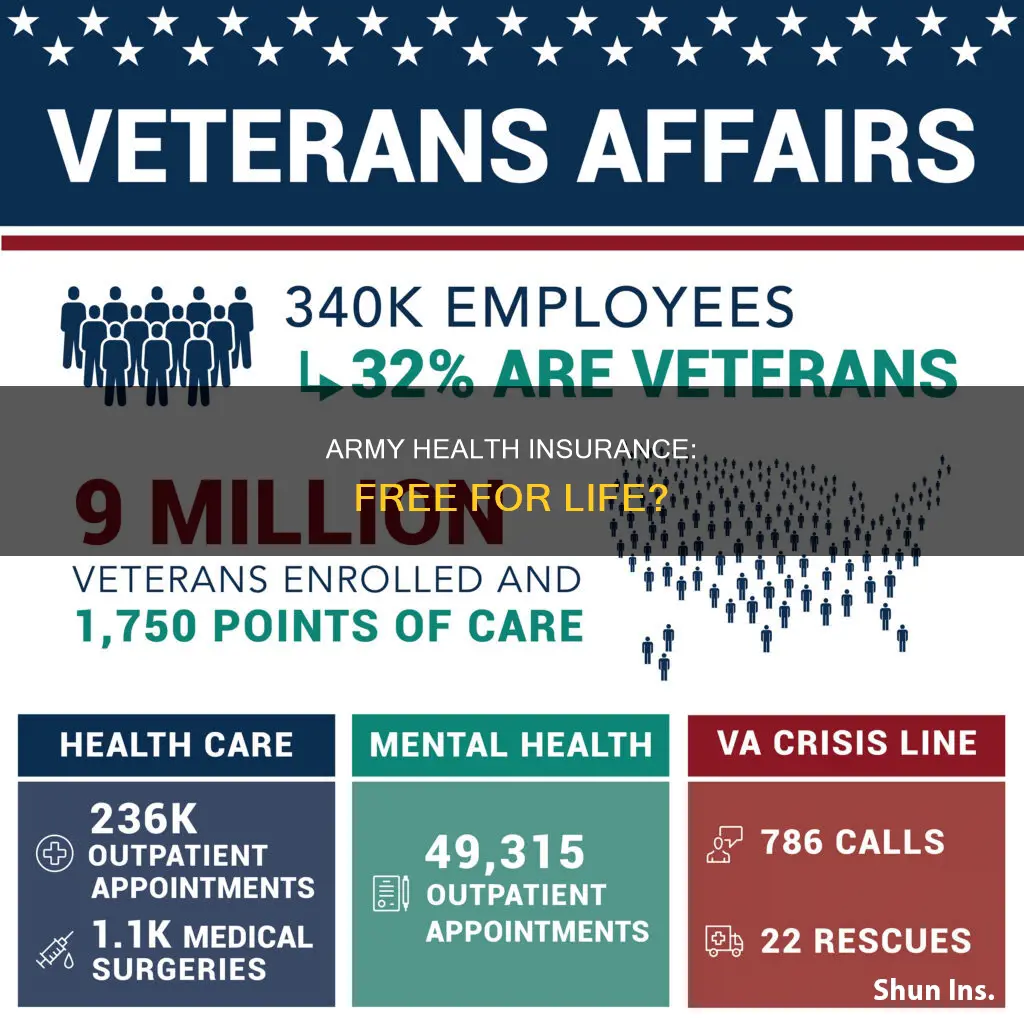
Army life insurance and health insurance provide essential financial security and medical coverage for active-duty soldiers, Reserve and National Guard members, and veterans. These benefits primarily include Servicemembers’ Group Life Insurance (SGLI) and TRICARE health plans. Access depends on duty status, and enrollment is often managed through the Defense Enrollment Eligibility Reporting System (DEERS).
Navigating the complexities of military benefits is a critical task for every soldier and their family. In 2026, the landscape of Army life and health insurance remains a cornerstone of the military compensation package, offering protections that are often significantly more affordable than comparable private-sector plans. However, the specific rules regarding eligibility, enrollment windows, and transitions from active duty to veteran status require careful attention to detail to ensure no gaps in coverage occur.
Understanding Army Life Insurance: SGLI and VGLI
Life insurance for Army personnel is designed to provide immediate financial support to survivors in the event of a soldier's death. The primary vehicle for this is the Servicemembers’ Group Life Insurance (SGLI), a program managed by the Department of Veterans Affairs (VA) but administered through the military branches.
Servicemembers’ Group Life Insurance (SGLI)
As of 2026, SGLI remains the primary life insurance option for active-duty soldiers and members of the Ready Reserve or National Guard who are scheduled to perform at least 12 periods of inactive training per year. Coverage is automatic for most eligible members upon entry into service.
The maximum coverage amount is $500,000, a standard that was solidified to reflect the modern economic needs of military families. Soldiers can elect lower coverage amounts in increments of $50,000 or decline coverage entirely, though doing so requires written acknowledgement of the risks involved. The premiums for SGLI are exceptionally competitive, typically costing a flat rate regardless of the soldier's age or health status, which is a significant advantage over private-sector policies that use medical underwriting.
FSGLI and TSGLI: Expanding the Safety Net
Beyond the soldier, the Army provides options for family members through Family Servicemembers’ Group Life Insurance (FSGLI). This program covers spouses and dependent children. Spousal coverage is available up to $100,000 (not to exceed the soldier’s own SGLI amount), while dependent children are automatically covered for $10,000 at no additional cost to the soldier.
Additionally, every soldier covered by SGLI is also enrolled in Traumatic Injury Protection (TSGLI). This provides short-term financial assistance to help severely injured service members recover from traumatic injuries sustained either on or off duty. TSGLI payments range from $25,000 to $100,000 depending on the severity of the loss (such as sight, hearing, or limb).
Transitioning to Veterans’ Group Life Insurance (VGLI)
When a soldier separates from the Army, SGLI coverage continues for 120 days at no cost. To maintain life insurance coverage after this period, veterans can convert their SGLI to Veterans’ Group Life Insurance (VGLI).
The transition to VGLI is a critical administrative step. Veterans have one year and 120 days from their date of separation to apply. If the application is submitted within the first 240 days, no medical evidence of good health is required—a vital benefit for those who may have developed service-connected disabilities that would make private insurance prohibitively expensive. Unlike SGLI, VGLI premiums are age-based, meaning costs will increase as the veteran grows older.
Navigating Army Health Insurance: The TRICARE System
Health insurance for the Army is managed through TRICARE, a comprehensive program that combines military medical resources with networks of civilian healthcare professionals. In 2026, TRICARE continues to offer several plan tiers tailored to the soldier’s duty status and geographic location.
TRICARE Prime and TRICARE Select
For active-duty soldiers, TRICARE Prime is the mandatory enrollment option. It functions similarly to a Health Maintenance Organization (HMO). Under Prime, the soldier has a Primary Care Manager (PCM) who coordinates all care and provides referrals to specialists. For active-duty members, there are no out-of-pocket costs for care received at Military Treatment Facilities (MTFs) or through authorized civilian providers.
Active-duty family members (ADFMs) have the choice between TRICARE Prime and TRICARE Select. TRICARE Select is a Preferred Provider Organization (PPO) model. It offers more flexibility in choosing doctors and does not require referrals for most services, but it involves out-of-pocket costs such as annual deductibles and cost-shares. Families who prefer to see specific civilian providers often find the extra cost of Select worth the increased autonomy.
Coverage for Reserve and National Guard
The Army Reserve and National Guard have unique health insurance needs, especially when not on active-duty orders. TRICARE Reserve Select (TRS) is a premium-based plan available to qualified Selected Reserve members and their families.
TRS provides coverage that is comparable to the TRICARE Select plan. In 2026, it remains one of the most cost-effective health insurance options available to part-time service members, offering a robust network of providers for a monthly premium that is typically lower than employer-sponsored plans in the private sector. When these members are called to active duty for more than 30 consecutive days, they and their families transition to the same benefits as active-duty soldiers.
TRICARE For Life (TFL) for Retirees
For those who complete a full military career, TRICARE For Life serves as Medicare-wraparound coverage. Once a retiree reaches age 65 and enrolls in Medicare Part A and Part B, TFL pays secondary to Medicare for TRICARE-covered services. This significantly reduces the out-of-pocket medical expenses for Army retirees, providing a seamless transition into senior healthcare.
Comparison of Army Insurance Programs
The following table outlines the key differences between the primary life and health insurance programs available to Army personnel in 2026.
| Program Name | Type | Eligibility | Primary Benefit | Cost Structure |
|---|---|---|---|---|
| SGLI | Life Insurance | Active Duty / Ready Reserve | Up to $500,000 death benefit | Low flat-rate monthly premium |
| VGLI | Life Insurance | Veterans | Lifetime renewable coverage | Age-based monthly premiums |
| TRICARE Prime | Health Insurance | Active Duty / Families | Comprehensive HMO-style care | No cost for Active Duty; fees for others |
| TRICARE Select | Health Insurance | Families / Retirees | Flexible PPO-style care | Annual deductibles and cost-shares |
| TRICARE Reserve Select | Health Insurance | Selected Reserve | PPO-style care for part-time | Monthly premium + cost-shares |
| TSGLI | Injury Insurance | SGLI Policy Holders | $25k–$100k for traumatic loss | $1 monthly (included in SGLI) |
Eligibility and Enrollment Procedures
Maintaining eligibility for Army insurance requires proactive management of personnel records. The foundation of all Army benefits is the Defense Enrollment Eligibility Reporting System (DEERS).
The Role of DEERS
If a soldier's information in DEERS is incorrect, health insurance claims can be denied, and life insurance payouts can be delayed. Soldiers must update DEERS immediately following major life events (Qualifying Life Events or QLEs), such as:
- Marriage or divorce
- Birth or adoption of a child
- A move to a new primary residence
- Changes in duty status (e.g., activating from Reserve to Active Duty)
SGLI Online Enrollment System (SOES)
For life insurance, the Army utilizes the SGLI Online Enrollment System (SOES). This portal allows soldiers to name or update beneficiaries, increase or decrease coverage amounts, and view their current certifications. It is highly recommended that soldiers review their SOES designations annually, particularly before deployments, to ensure that the intended individuals are listed as beneficiaries. Relying on "By Law" designations can often lead to legal complications or funds being distributed in ways the soldier did not intend.
Managing Transitions: From Active Duty to Veteran Status
One of the most vulnerable times for a soldier’s financial and physical health is the period immediately following separation from the Army. The "Transition Assistance Program" (TAP) provides briefings on these topics, but the execution of these transitions lies with the individual.
Health Insurance Post-Separation
Soldiers separating from the Army do not keep TRICARE indefinitely unless they retire. For those transitioning to civilian life, the Transitional Assistance Management Program (TAMP) provides 180 days of premium-free health care benefits after regular active-duty service. This covers the soldier and their eligible family members, providing a bridge while the veteran searches for civilian employment or enrolls in the VA healthcare system.
If a veteran is not eligible for TAMP or VA healthcare, they may look into the Continued Health Care Benefit Program (CHCBP). This is a premium-based program that acts as a temporary bridge (up to 18–36 months) between military and civilian health insurance, though the premiums are significantly higher than standard TRICARE rates.
Life Insurance Post-Separation
As noted previously, the window to convert SGLI to VGLI is time-sensitive. Many veterans make the mistake of waiting until their 120-day free coverage period ends to start the application. Because VGLI does not require a medical exam if applied for within 240 days of separation, it is often the best option for veterans with service-connected conditions that would lead to high premiums or denial in the private market.
Common Mistakes to Avoid
- Neglecting Beneficiary Updates: Many soldiers fail to update their life insurance beneficiaries after a divorce or remarriage. Under federal law, the SGLI payment must go to the person listed on the form, regardless of current marital status or the contents of a will.
- Missing the VGLI Window: Veterans often assume they can sign up for VGLI at any time. Missing the one-year-and-120-day deadline means losing the ability to ever enroll in the program.
- Forgetting Dental and Vision: TRICARE health plans generally do not include comprehensive adult dental or vision coverage. These require separate enrollment through programs like the TRICARE Dental Program (TDP) or the Federal Employees Dental and Vision Insurance Program (FEDVIP).
- Inaccurate DEERS Data: A simple mistake in a home address or a child’s birthdate in DEERS can result in "Ineligible" status at a doctor's office, causing immediate out-of-pocket expenses.
Supplemental Insurance Options
While Army life and health insurance are robust, some soldiers may require supplemental coverage. For example, high-net-worth individuals or those with significant debt may find that $500,000 in life insurance is insufficient to cover their family's long-term needs. In such cases, private "military-friendly" insurance companies offer supplemental policies that do not contain "war clauses"—exclusions that prevent payouts if a death occurs in a combat zone.
Similarly, for health insurance, retirees using TRICARE Select often purchase TRICARE Supplemental Insurance to cover the cost-shares and deductibles that the primary plan does not pay. This can create a "zero out-of-pocket" experience for the user, albeit for an additional monthly premium.
Frequently Asked Questions
Can I keep SGLI after I leave the Army?No, SGLI ends 120 days after you separate from the service. However, you can convert it to VGLI or a commercial permanent life insurance policy within specific timeframes. VGLI is the most common path for veterans wishing to maintain group-rate coverage without a medical exam.
What is the difference between TRICARE Prime and TRICARE Select?TRICARE Prime is an HMO-style plan where you are assigned a Primary Care Manager and need referrals for specialty care, but it has the lowest out-of-pocket costs. TRICARE Select is a PPO-style plan that offers more freedom to choose your own doctors without referrals, but it requires paying deductibles and a percentage of the costs (cost-shares).
Does Army health insurance cover dental and vision?Standard TRICARE health plans offer limited dental and vision coverage (usually restricted to emergency care or specific eye exams). Active-duty soldiers receive dental care through military clinics. Families and retirees must typically enroll in separate, premium-based plans such as the TRICARE Dental Program or FEDVIP for comprehensive coverage.
How do I update my life insurance beneficiaries?Beneficiaries are updated through the SGLI Online Enrollment System (SOES), which is accessible via the MilConnect portal. You will need a Common Access Card (CAC) or a DS Logon to make changes. It is vital to ensure your beneficiary's contact information is current to avoid delays in payment.
What is TSGLI and do I have to apply for it?TSGLI is Traumatic Injury Protection. Enrollment is automatic for any soldier who has SGLI coverage. You do not need to apply for the coverage itself, but you must submit a claim if you suffer a qualifying traumatic injury. The benefit is designed to help with immediate expenses during recovery.
Practical Recommendations
To maximize the value of Army life and health insurance in 2026, every service member should take the following steps:
- Log into MilConnect: Access the SGLI Online Enrollment System (SOES) to verify your beneficiaries and coverage levels. Ensure your "By Law" or specific name designations match your current family situation.
- Verify DEERS Status: Check your DEERS record to ensure all dependents are correctly listed and your contact information is accurate. This is the only way to guarantee TRICARE eligibility.
- Evaluate Your Health Plan: During the annual TRICARE Open Season (usually held in the fall), evaluate whether TRICARE Prime or TRICARE Select better fits your family’s needs for the coming year.
- Plan for Separation: If you are within 12 months of leaving the service, attend a TAP briefing specifically focused on the VA Life Insurance conversion process to ensure you don't miss the VGLI enrollment window.
Disclaimer: This article provides general information regarding military insurance programs and does not constitute legal, financial, or medical advice. For specific policy details, consult your unit S-1, the Department of Veterans Affairs, or a TRICARE representative.