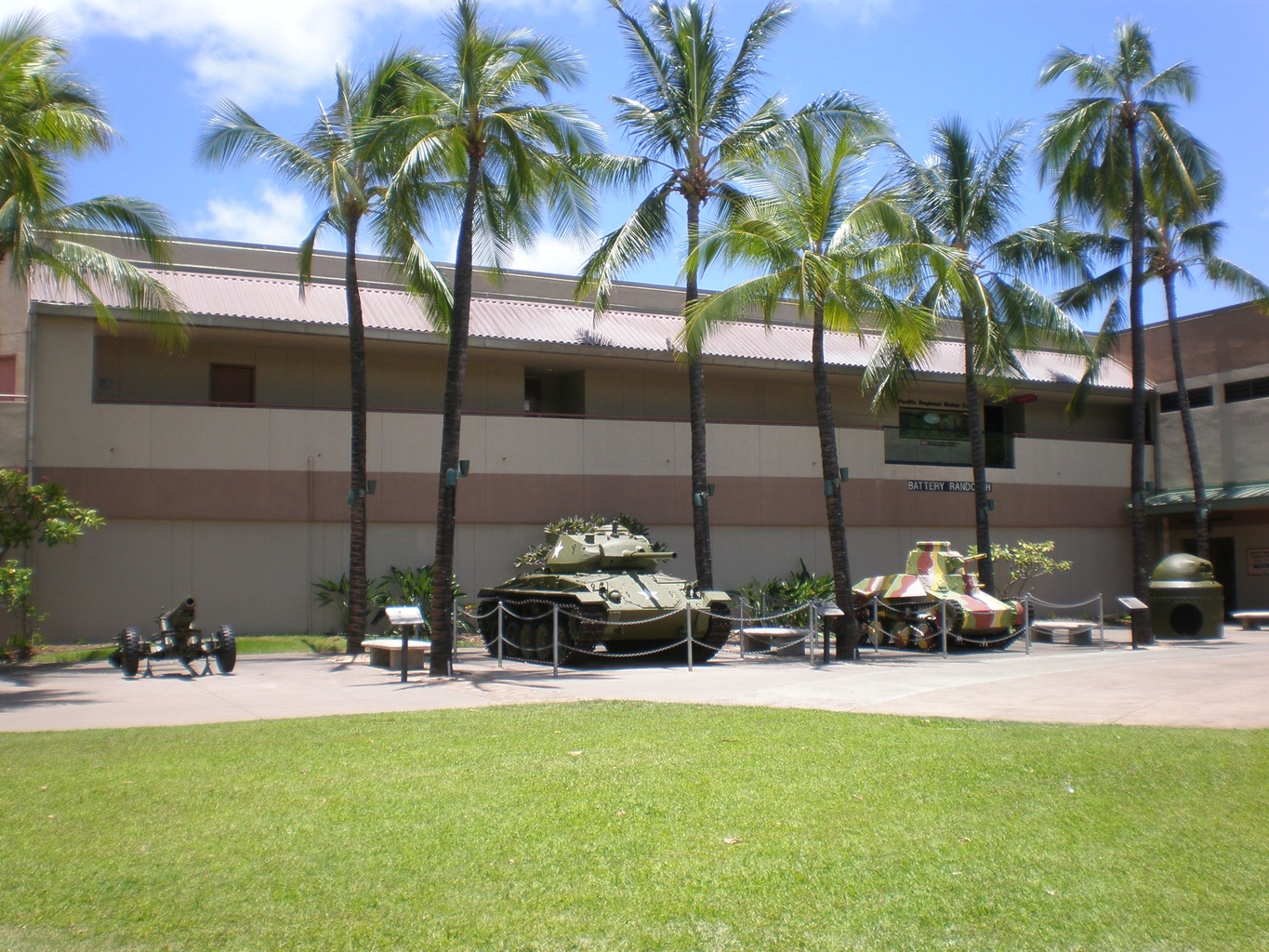
The U.S. Army Museum of Hawaii, housed within the historic Battery Randolph at Fort DeRussy in Waikiki, is a premier military history institution. It provides a detailed chronological narrative of Hawaii’s military evolution, from ancient warfare to modern global conflicts. As of 2026, it remains a free, highly accessible destination for history enthusiasts and families alike.
The Significance of Fort DeRussy and Battery Randolph
To understand the museum, one must first understand the structure that contains it. Fort DeRussy is a United States military reservation located in the heart of Waikiki. While much of the land is now a public park and the site of the Hale Koa Hotel, its core historical identity is preserved in Battery Randolph.
Completed in 1911, Battery Randolph was designed as a coastal defense fortification. During the early 20th century, the United States was deeply concerned about the protection of Honolulu Harbor and Pearl Harbor from naval bombardment. The battery was equipped with two 14-inch guns mounted on "disappearing carriages," which allowed the weapons to be lowered behind massive concrete walls for reloading and protection.
The engineering of Battery Randolph is a marvel of early 20th-century military architecture. The walls are remarkably thick—up to 22 feet of reinforced concrete in some sections. In fact, when the Army considered demolishing the structure in the 1970s, the battery proved so resilient that the cost of demolition was deemed prohibitive. This structural integrity led to its preservation and eventual conversion into the U.S. Army Museum of Hawaii, which officially opened in 1976.
Navigating the Museum: Major Exhibits and Eras
The museum is organized chronologically, guiding visitors through the layers of Hawaii’s complex and often turbulent history. Unlike many museums that focus solely on modern mechanization, this institution pays significant homage to the indigenous foundations of Hawaiian society.
Ancient Hawaiian Warfare
The journey begins with the era of the Hawaiian monarchs and the unification of the islands. This section explores the tactical brilliance of King Kamehameha I and the specific weaponry used in pre-contact Hawaii. Visitors can examine artifacts such as the leiomano (weapons made of shark teeth) and pahoa (wooden daggers). The exhibit explains the transition from traditional tribal skirmishes to the organized military force that unified the archipelago under a single kingdom.
Hawaii’s Role in World War I and the Interwar Years
This section details the professionalization of the Hawaii National Guard and the strategic importance of the islands as a "Crossroads of the Pacific." While Hawaii was not a primary combat zone in the First World War, the museum illustrates how the conflict spurred the development of permanent military installations like Schofield Barracks and Fort Shafter.
World War II: The Turning Point
The World War II exhibits are the centerpiece of the museum. The narrative begins with the attack on Pearl Harbor on December 7, 1941. While the Navy’s story is often told at the USS Arizona Memorial, the Army Museum focuses on the ground defense, the impact of martial law in Hawaii, and the mobilization of local residents.
A significant portion of the museum is dedicated to the 100th Infantry Battalion and the 442nd Regimental Combat Team (RCT). These units, comprised primarily of Japanese-Americans (Nisei), became the most decorated units in U.S. military history for their size and length of service. The museum provides a somber and respectful look at their bravery in the European Theater, contrasting their battlefield heroics with the challenges of discrimination they faced at home.
The Gallery of Heroes
Located on the upper level, the Gallery of Heroes is a dedicated space honoring recipients of the Medal of Honor and the Distinguished Service Cross from Hawaii or those who served in units based in Hawaii. The 2026 updates to this gallery have ensured that modern conflicts, including the Global War on Terrorism, are represented with accurate citations and personal stories of valor.
Outdoor Displays and Heavy Equipment
The museum experience extends beyond the concrete walls of Battery Randolph. The surrounding grounds of Fort DeRussy feature a variety of large-scale military hardware that serves as a tangible link to the past. These displays are particularly popular for photography and provide a sense of scale for the machinery used in the 20th century.
- Tanks and Armored Vehicles: The collection includes an M24 Chaffee light tank, which saw service during the later stages of WWII and in Korea. Its compact design was a significant contrast to the heavier tanks used in European theaters, making it a point of interest for technical historians.
- Aviation: A prominent feature is the AH-1 Cobra attack helicopter, which was instrumental during the Vietnam War. Its presence at the museum highlights the evolution of air cavalry and the shift in modern warfare tactics.
- Artillery: Several anti-aircraft guns and coastal defense pieces are positioned around the perimeter, reminding visitors of the battery's original purpose as a shield against aerial and naval threats.
Practical Visitor Information for 2026
Visiting the U.S. Army Museum of Hawaii requires some logistical planning, particularly regarding transportation and timing, as Waikiki is a high-traffic area.
| Feature | Details |
|---|---|
| Admission Fee | Generally Free (Donations are highly encouraged) |
| Operating Hours | Tuesday – Saturday, 10:00 AM to 5:00 PM (Closed Sun/Mon) |
| Location | 2131 Kalia Rd, Honolulu, HI 96815 (Fort DeRussy Beach Park) |
| Parking | Paid parking available at the Fort DeRussy lot (Validated rates may apply) |
| Audio Tour | Self-guided audio tours are available for a small fee |
| Accessibility | Fully ADA compliant with elevator access to the upper galleries |
Parking and Access
As of 2026, parking in Waikiki remains expensive. Visitors are advised to use the Fort DeRussy Parking Lot, located across the street from the museum. If you visit the museum, ensure you bring your parking ticket to the front desk; the museum often provides validation that significantly reduces the hourly rate. For those staying in Waikiki, the museum is within easy walking distance of most major hotels and is serviced by the Waikiki Trolley and TheBus.
Security and Prohibited Items
Because the museum is a Department of the Army facility, security protocols are in place. Large backpacks and luggage are generally not allowed inside. There are no lockers on-site, so visitors should leave large items at their hotels. Small purses and camera bags are typically permitted following a brief inspection.
Comparing Military History Sites on Oahu
For visitors planning a "history-focused" itinerary in 2026, it is helpful to understand how the U.S. Army Museum of Hawaii compares to other major sites. While Pearl Harbor is the most famous, the Army Museum offers a different perspective and a much lower "hassle factor" in terms of booking tickets in advance.
- U.S. Army Museum (Fort DeRussy): Focuses on ground troops, Nisei soldiers, and the specific military history of the Hawaiian Islands. It is the most accessible for those staying in Waikiki.
- Pearl Harbor National Memorial: Focuses on the naval attack and the USS Arizona. It requires advance reservations and is located about 30-40 minutes away from Waikiki.
- Pacific Air Museum (Ford Island): Focuses exclusively on aviation history. It is a paid attraction and requires a shuttle bus from the Pearl Harbor Visitor Center.
- USS Missouri (Ford Island): Provides an in-depth look at battleship life and the signing of the surrender documents that ended WWII.
The U.S. Army Museum of Hawaii is often considered the "hidden gem" of these options because it provides a comprehensive overview of 2,000 years of history without the crowds often found at the Pearl Harbor sites.
Frequently Asked Questions
Is the U.S. Army Museum of Hawaii free to the public?
Yes, admission to the museum is free of charge. However, it is operated largely through the support of the Hawaii Army Museum Society, a non-profit organization. Donations are vital for the maintenance of the exhibits and the preservation of the artifacts. There is a donation box near the entrance and the gift shop where visitors can contribute.
How long does it take to tour the museum?
A thorough self-guided tour typically takes between 1.5 to 2.5 hours. This allows enough time to read the detailed placards in the WWII and Vietnam sections and to visit the outdoor displays. If you choose the audio tour, expect to spend closer to 3 hours to hear the full historical context provided for each major display.
Can civilians visit the museum, or is it only for military personnel?
The museum is open to the general public. While it is located on a military reservation (Fort DeRussy), this specific area is designated as a public-access park. You do not need a military ID to enter the museum or the surrounding grounds.
Are there guided tours available?
Currently, the museum primarily offers self-guided experiences. However, audio tour devices are available at the entrance for a nominal fee (usually around $5.00 in 2026). These audio guides provide narrated stories, veteran interviews, and technical details that are not fully captured on the printed signs.
What is the best time of day to visit?
To avoid the warmest part of the day and the largest groups, it is best to arrive shortly after opening at 10:00 AM. Because the museum is located inside a massive concrete battery, it remains relatively cool, but the outdoor displays can get quite hot in the afternoon sun. Visiting on a weekday (Tuesday through Thursday) is generally quieter than on Saturdays.
Recommendation for Visitors
For a complete experience, start your visit by walking the perimeter of Battery Randolph to appreciate the scale of the coastal defense architecture. Once inside, prioritize the 442nd RCT exhibit and the Gallery of Heroes, as these provide the most unique and localized insights into Hawaii’s contribution to global security. After exiting, take a short stroll through the adjacent Fort DeRussy Beach Park, which offers a peaceful transition from the solemnity of the military exhibits back to the vibrant energy of Waikiki Beach.