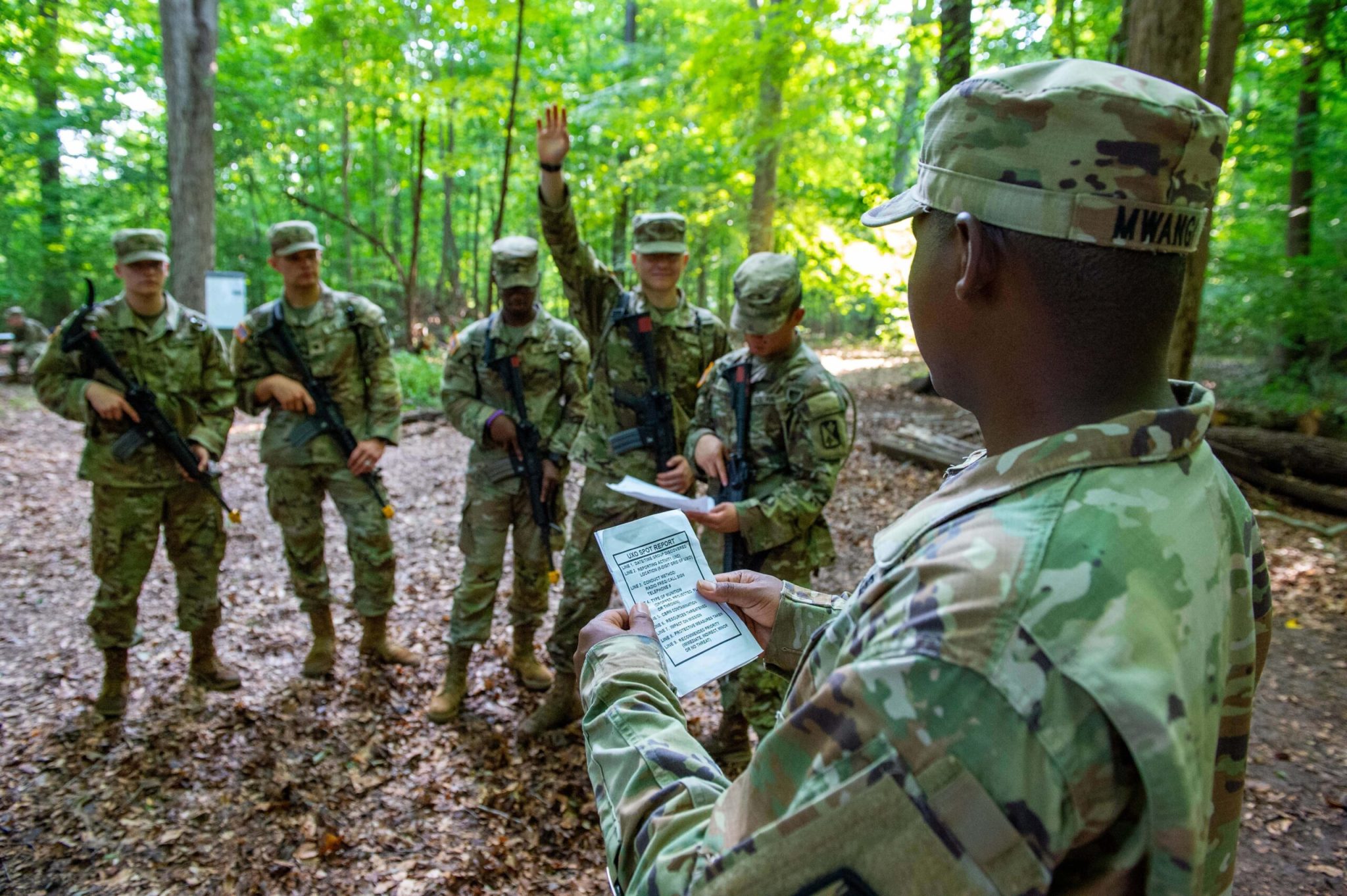
Advanced Individual Training (AIT) in Virginia is centered primarily at Fort Gregg-Adams and Fort Eustis, focusing on the Army’s logistics, ordnance, quartermaster, and aviation maintenance sectors. These installations provide specialized technical instruction to Soldiers who have completed Basic Combat Training, transforming them into proficient technicians, mechanics, and supply specialists.
Virginia serves as a critical geographic hub for the United States Army’s Training and Doctrine Command (TRADOC). If you are a new Soldier or a family member preparing for the transition from Basic Combat Training (BCT) to the next phase of military life, understanding the landscape of Army AIT in Virginia is essential. As of 2026, the state remains the "Logistics Capital of the Army," hosting tens of thousands of trainees annually across various Military Occupational Specialties (MOS).
The two primary installations for AIT in Virginia are Fort Gregg-Adams (formerly known as Fort Lee) near Petersburg and Fort Eustis (part of Joint Base Langley-Eustis) near Newport News. These bases do not just teach technical skills; they integrate Soldiers into the professional culture of their respective branches, whether it be the Quartermaster Corps, the Ordnance Corps, or the Transportation Corps.
Fort Gregg-Adams: The Army’s Logistics Powerhouse
Fort Gregg-Adams is the home of the Combined Arms Support Command (CASCOM) and serves as the headquarters for the Quartermaster, Ordnance, and Transportation Schools. For most Soldiers assigned to AIT in Virginia, this will be their destination. The installation is a massive enterprise designed to support the "Sustainment" warfighting function.
The Quartermaster School (92 Series)
The Quartermaster School at Fort Gregg-Adams is responsible for training Soldiers in supply, subsistence, water, and fuel management. This is one of the largest technical training centers in the Department of Defense.
- 92A - Automated Logistical Specialist: Trainees learn to manage warehouse operations, track parts, and use complex inventory software.
- 92G - Culinary Specialist: These Soldiers attend the Joint Culinary Training Center, learning everything from large-scale field feeding to advanced nutrition and garnishing.
- 92W - Water Treatment Specialist: This technical MOS focuses on purifying water in diverse environments, a critical survival skill for deployed units.
- 92Y - Unit Supply Specialist: Training involves the accountability of millions of dollars worth of equipment, arms room management, and organizational logistics.
The Ordnance School (91 and 89 Series)
The Ordnance School moved its headquarters to Virginia during the Base Realignment and Closure (BRAC) process and has since expanded into a state-of-the-art campus. It focuses on the maintenance of weapons, vehicles, and electronics.
- 91B - Wheeled Vehicle Mechanic: This is one of the Army's largest MOS populations. Trainees work on everything from Humvees to the Joint Light Tactical Vehicle (JLTV) and heavy tactical trucks.
- 89B - Ammunition Specialist: Training involves the safe handling, storage, and transport of various munitions and explosives.
- 91J - Quartermaster and Chemical Equipment Repairer: These mechanics specialize in the heaters, pumps, and purification units used by supply and chemical units.
The Transportation School (88 Series)
While some transportation training occurs at Fort Eustis, the administrative and core instructional leadership is based at Fort Gregg-Adams. Soldiers in the 88 series learn the movement of personnel and equipment via land and sea.
Fort Eustis: Aviation Maintenance and Maritime Operations
Located in the Virginia Peninsula region, Fort Eustis serves a distinct and highly technical segment of the Army’s AIT population. As part of Joint Base Langley-Eustis (JBLE), it offers a unique environment where Army trainees often see Air Force and Navy operations in close proximity.
Aviation Maintenance (15 Series)
Fort Eustis is home to the U.S. Army Aviation Center of Excellence (USAACE) technical training battalions. Soldiers here are responsible for ensuring the airworthiness of the Army's helicopter fleet.
- 15T - UH-60 Helicopter Repairer: Focuses on the maintenance and repair of the Black Hawk helicopter.
- 15U - CH-47 Helicopter Repairer: Focuses on the heavy-lift Chinook helicopter.
- 15R - AH-64 Apache Attack Helicopter Repairer: Specialized training on the Army's primary attack airframe.
Aviation AIT is generally longer and more academically rigorous than many logistics MOSs. Soldiers spend significant time in hangars and classroom environments learning complex electrical systems, powerplants (engines), and structural repair.
Maritime and Watercraft Operations (88 Series)
Fort Eustis is also the hub for the Army’s "navy." The Transportation School here trains Soldiers who operate and maintain the Army’s fleet of landing craft and tugboats.
- 88L - Watercraft Engineer: These Soldiers maintain the massive engines and mechanical systems on Army vessels.
- 88K - Watercraft Operator: Focuses on navigation, deck operations, and maritime tactical maneuvers.
The AIT Experience: Phasing and Regulations
AIT in Virginia follows a standardized TRADOC phasing system. As of 2026, these phases dictate the level of freedom a Soldier has and the responsibilities they must uphold. Unlike Basic Training, AIT is designed to transition the recruit into a professional Soldier.
Phase IV: The Transition
Upon arrival at Fort Gregg-Adams or Fort Eustis, Soldiers enter Phase IV. This is a highly restrictive period usually lasting about three weeks. Soldiers must wear their uniforms at all times, are restricted to the company area, and cannot have personal electronics or visitors. The focus is on reinforcing the discipline learned in BCT while introducing the technical requirements of the MOS.
Phase V: Increased Responsibility
After demonstrating proficiency and discipline, Soldiers move to Phase V. During this phase:
- Soldiers may be allowed to wear civilian clothes during off-duty hours.
- Limited off-post privileges are granted on weekends.
- Personal electronics, such as laptops and cell phones, are permitted during personal time.
- Soldiers can visit local areas like Richmond (from Fort Gregg-Adams) or Newport News/Virginia Beach (from Fort Eustis).
Phase V+: Mastery and Preparation
For longer AIT courses (generally those over 20 weeks, common in Aviation), Soldiers eventually reach Phase V+. This phase offers the most freedom, including extended radius passes and more relaxed supervision, intended to mimic the life of a Soldier at their first permanent duty station.
Comparison of Major AIT Hubs in Virginia
| Feature | Fort Gregg-Adams | Fort Eustis |
|---|---|---|
| Primary Focus | Logistics, Supply, Ordnance, Ground Transport | Aviation Maintenance, Watercraft, Maritime |
| Location | Petersburg/Hopewell, VA | Newport News/Hampton, VA |
| Major Units | CASCOM, 23rd Quartermaster Brigade | 128th Aviation Brigade, 599th Transportation BDE |
| Training Environment | Large campus, heavy vehicle focus | Hangar-based, maritime pier operations |
| Nearby Amenities | Richmond, VA (30 mins) | Virginia Beach/Colonial Williamsburg |
| Pace of Training | High volume, high throughput | Highly technical, longer course durations |
Requirements and Prerequisites for Virginia-based AIT
To attend AIT in Virginia, a Soldier must meet specific criteria determined by their chosen MOS. These requirements are verified during the recruitment process and again upon arrival at the schoolhouse.
- ASVAB Scores: Every MOS has a minimum score requirement in specific line segments. For example, Aviation Repairers (15 series) typically require high scores in Mechanical Maintenance (MM) and General Technical (GT) categories.
- Physical Demands: Under the Occupational Physical Assessment Test (OPAT), most logistics and ordnance jobs are classified as "Heavy" or "Significant," requiring Soldiers to demonstrate strength in lifting and hauling equipment.
- Security Clearance: Many MOSs at Fort Eustis and certain Ordnance roles at Fort Gregg-Adams require a Secret security clearance. Soldiers must undergo a background investigation to ensure they can handle sensitive technical manuals and equipment.
- Medical Readiness: Aviation trainees must meet specific hearing and vision standards (often correctable to 20/20) and pass a Class 4 flight physical where applicable.
Daily Life and Logistics for Trainees
The daily routine in a Virginia AIT environment is rigorous. A typical day begins with First Call around 0500, followed by Physical Readiness Training (PRT). After breakfast, Soldiers march to their respective schoolhouses or "bays" for instruction.
Housing and Dining
Soldiers live in modernized barracks, typically with two to four Soldiers per room. Each Soldier has a designated wall locker and bed space. Fort Gregg-Adams is known for having some of the largest dining facilities (DFACs) in the Army, such as the Samuel Sharpe DFAC, which is designed to feed thousands of Soldiers in short windows of time.
Weather Considerations
Virginia's climate significantly impacts training.
- Summer: High humidity and heat indices often lead to "Black Flag" conditions, where outdoor training is limited to prevent heat casualties.
- Winter: While snow is infrequent, ice and freezing rain can cause delays. Soldiers are issued the Extended Cold Weather Clothing System (ECWCS) to manage the damp, cold Virginia winters.
Graduation and Family Attendance
Graduation is the culmination of months of technical training. Families are generally encouraged to attend, and both installations provide ample support for visitors.
- Fort Gregg-Adams Graduations: Usually held at the multi-purpose facilities or outdoor parade fields. Given the proximity to I-95, travel is relatively straightforward for families on the East Coast.
- Fort Eustis Graduations: Often take place in or near the aviation hangars or the post theater. The historical backdrop of Colonial Williamsburg and the Yorktown battlefield makes this a popular graduation to visit.
Families should ensure they have valid identification (Real ID compliant) to pass through the installation access control points. It is recommended to coordinate with the Soldier's specific training company regarding the exact time and location, as schedules can shift due to weather or mission requirements.
Frequently Asked Questions
Can I bring my car to AIT in Virginia?
In most cases, IET (Initial Entry Training) Soldiers are not permitted to have personal vehicles at AIT. However, "prior service" Soldiers or those in exceptionally long AITs (over 26 weeks) may sometimes receive an exception to policy or be authorized to have a vehicle during the final phases of training. Always check the specific Brigade policy letters for the current year.
How long is AIT at Fort Gregg-Adams?
The duration depends entirely on the MOS. A 92Y (Unit Supply) course may last approximately 8 to 10 weeks, whereas a 91P (Artillery Mechanic) course can last significantly longer. Most logistics courses range between 7 and 15 weeks.
Is Fort Lee the same as Fort Gregg-Adams?
Yes. As part of the Department of Defense's initiative to rename installations with Confederate ties, Fort Lee was officially redesignated as Fort Gregg-Adams in 2023. By 2026, all signage and official documentation reflect the new name, honoring Lt. Gen. Arthur Gregg and Charity Adams Earley.
What is there for Soldiers to do on weekends in Virginia?
Soldiers in Phase V or higher often visit local malls, movie theaters, and historical sites. Those at Fort Eustis are close to Busch Gardens and Virginia Beach. Soldiers at Fort Gregg-Adams frequently visit the city of Richmond for its restaurants and cultural sites.
Can family members live with a Soldier during AIT in Virginia?
Only if the AIT is longer than 20 weeks (considered a Permanent Change of Station or PCS move). For most AITs in Virginia, which are shorter than 20 weeks, the Soldier is considered to be on TDY (Temporary Duty) status, and families are not authorized to move at government expense.
Practical Recommendation for Incoming Soldiers
If you are headed to Army AIT in Virginia, the most important action you can take is to maintain the physical fitness standards established in Basic Training. The humidity in Virginia can be a shock to the system, and many Soldiers fall out of shape during the classroom-heavy portions of technical training.
Furthermore, ensure you have all your paperwork—including your military ID, copies of orders, and enlistment contracts—organized in a "love me" book or folder. The transition from BCT to AIT involves a significant amount of administrative "in-processing," and being organized will allow you to move through the requirements faster and reach Phase V privileges sooner.