The Army 74D Military Occupational Specialty (MOS) designates a Chemical, Biological, Radiological, and Nuclear (CBRN) Specialist responsible for protecting the force against weapons of mass destruction and hazardous materials. These soldiers operate advanced detection equipment, conduct decontamination missions, and train units to survive and win in contaminated environments.
Introduction to the 74D CBRN Specialist
In the complex landscape of modern warfare and domestic defense, the role of the 74D CBRN Specialist is more critical than ever. Often referred to as "Dragon Soldiers," members of the Chemical Corps are the primary defense against non-conventional threats. As of 2026, the Army continues to prioritize the modernization of CBRN units to counter evolving global risks, including industrial accidents and the proliferation of sophisticated chemical and biological agents.
A 74D soldier is not merely a technician; they are a subject matter expert who advises commanders on hazard mitigation and protective postures. Their work spans from the front lines of combat to supporting civil authorities during domestic emergencies involving hazardous materials (HAZMAT). This MOS requires a unique blend of physical stamina, technical aptitude, and the psychological resilience to work in high-stress, high-hazard environments while encapsulated in protective equipment.
Eligibility and Prerequisites for 74D
Entering the Chemical Corps requires meeting specific academic, physical, and security standards. Because 74D soldiers handle sensitive detection equipment and may be exposed to classified defense strategies, the vetting process is more rigorous than for some other support roles.
ASVAB Score Requirements
To qualify for the 74D MOS, a recruit must take the Armed Services Vocational Aptitude Battery (ASVAB). The Army specifically looks at the Skilled Technical (ST) segment of the test.
- Minimum Score: A 91 or higher in the ST category is generally required.
- Aptitude Areas: Success in this role is often linked to high scores in General Science, Word Knowledge, Paragraph Comprehension, and Mathematics Knowledge.
Physical and Medical Standards
The physical demands of being a 74D are classified as "Heavy." Soldiers must be able to perform their duties while wearing Mission Oriented Protective Posture (MOPP) Level 4 gear, which includes a heavy charcoal-lined suit, rubber boots, gloves, and a protective mask.
- PULHES Profile: Candidates typically need a physical profile of at least 122221.
- Vision: Normal color vision is required to identify chemical markers, color-coded detection paper (like M9 or M8 paper), and digital displays on monitoring equipment.
- Clausrophobia: Candidates must not have a fear of confined spaces or the inability to wear a protective mask for extended periods.
Security Clearance
A Secret Security Clearance is mandatory for all 74D personnel. This involves a background check into the recruit’s criminal history, financial stability, and foreign influences. The ability to maintain this clearance is a condition of continued service in the MOS.
Training Pipeline: From Recruit to CBRN Specialist
The journey to becoming a 74D involves two distinct phases of training, totaling approximately 21 weeks. All CBRN training is centralized at the U.S. Army Maneuver Support Center of Excellence.
Phase 1: Basic Combat Training (BCT)
Before learning the specifics of chemical defense, recruits must complete 10 weeks of Basic Combat Training. This phase transforms civilians into soldiers by teaching marksmanship, land navigation, physical fitness, and the Army Values.
Phase 2: Advanced Individual Training (AIT)
Upon graduation from BCT, soldiers proceed to Fort Leonard Wood, Missouri, for 11 weeks of AIT. The CBRN School is renowned for its technical depth and includes the following key areas of instruction:
- The Mask Confidence Room: Commonly known as the "gas chamber," where soldiers learn to trust their M50 protective mask in a controlled CS (tear gas) environment.
- Live Agent Training: One of the most unique aspects of 74D training occurs at the Chemical Defense Training Facility (CDTF). Under strictly controlled conditions, students may work with actual toxic chemical agents to validate their detection and decontamination procedures.
- Detection and Identification: Soldiers learn to operate the Joint Chemical Agent Detector (JCAD) and other sophisticated sensors used to identify nerve, blister, blood, and choking agents.
- Decontamination Operations: Instruction covers the setup and operation of thorough decontamination sites for personnel, vehicles, and sensitive equipment.
| Training Component | Duration | Primary Focus |
|---|---|---|
| Basic Combat Training | 10 Weeks | Physical conditioning, rifle marksmanship, discipline |
| CBRN Fundamentals | 3 Weeks | Theory of chemical/biological warfare and agent types |
| Equipment Proficiency | 4 Weeks | Maintenance and operation of detection/monitoring tools |
| Field Exercise (STX) | 2 Weeks | Real-world application of decontamination and recon |
| Live Agent Validation | 2 Weeks | Confidence building in actual hazardous environments |
Core Responsibilities and Daily Duties
The life of a 74D soldier varies significantly depending on their unit assignment. They may be assigned to a dedicated Chemical Company or serve as the sole CBRN expert within an infantry, armor, or aviation battalion.
Unit Training and Readiness
In a standard garrison environment, the 74D is responsible for the unit’s CBRN equipment. This includes the periodic inspection and maintenance of hundreds of protective masks (PMCS - Preventive Maintenance Checks and Services). They also manage the "CBRN Room," ensuring that all filters, suits, and detection kits are within their service life and ready for immediate deployment.
Reconnaissance and Surveillance
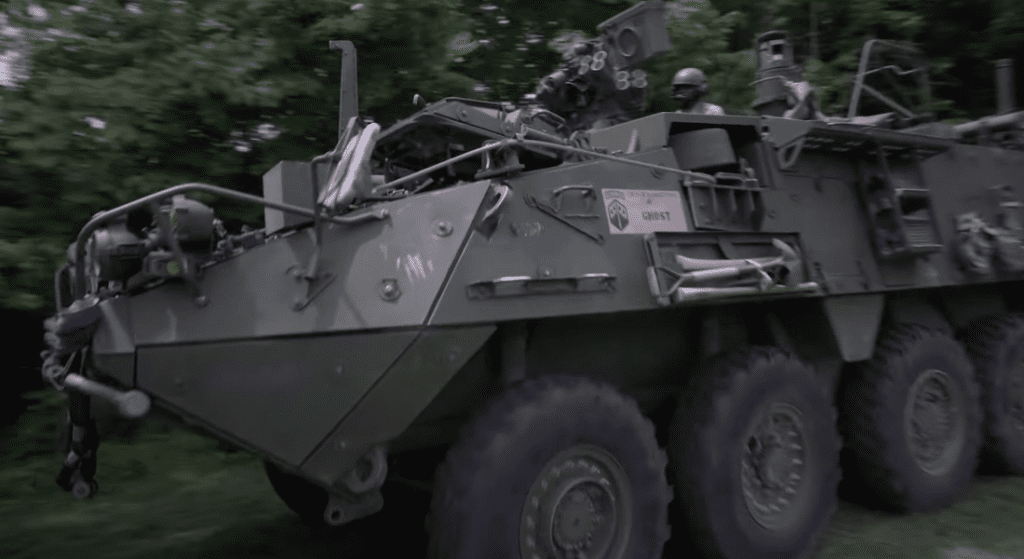
74D soldiers are often part of specialized reconnaissance teams. Using vehicles like the M1135 Stryker CBRN Reconnaissance Vehicle, they move ahead of the main force to detect potential hazards. They use "stand-off" detection technology to identify clouds of chemical agents from a distance, allowing the commander to maneuver the unit safely around the contaminated area.
Decontamination (DECON) Operations
In the event of an attack or an accidental spill, the 74D leads the decontamination effort. This is a labor-intensive process involving the neutralization of hazards using chemical rinses and high-pressure water systems. They ensure that soldiers can safely exit their protective gear without cross-contaminating themselves or their environment.
Technical Advice to Leadership
Non-commissioned officers (NCOs) in this MOS act as advisors to the Battalion and Brigade staff. They calculate "hazard templates" based on weather patterns and wind speed to predict how a chemical plume might move across a battlefield. Their expertise determines when it is safe for the rest of the unit to "unmask."
Specialized Equipment of the 74D MOS
Modern CBRN specialists utilize a suite of high-tech tools that require constant study and technical proficiency. In 2026, the integration of unmanned systems has become a standard part of the 74D toolkit.
- M50 Joint Service General Purpose Mask: The primary life-support system for the soldier, featuring twin filters and an improved field of vision over older models.
- Joint Chemical Agent Detector (JCAD): A handheld device that uses ion mobility spectrometry to detect and identify chemical warfare agents and toxic industrial chemicals in real-time.
- Dismounted Reconnaissance, Sets, Kits, and Outfits (DR-SKO): A comprehensive system of sensors and protective gear used for site assessment and sampling in high-threat environments.
- CBRN Unmanned Ground Vehicles (UGVs): Small, remote-controlled robots equipped with sensors that can be sent into "hot zones" to sample air and soil, keeping the human soldier at a safe distance.
Challenges and Rewards of the 74D MOS
The 74D MOS is not for everyone. It involves working in some of the most uncomfortable conditions found in the military. Wearing MOPP gear in the heat of summer can lead to rapid heat exhaustion, and the psychological weight of knowing you are the line of defense against invisible killers is significant.
However, the rewards are equally substantial. 74D soldiers gain a high level of technical expertise that is rare in the general population. They often develop a strong sense of "Esprit de Corps" within the Chemical Corps, unified by their "Elementis Regamus Proelium" (Let us rule the battle by means of the elements) motto. Furthermore, the certifications earned—such as HAZMAT Technician and various emergency responder credentials—are highly valuable in the civilian sector.
Civilian Career Opportunities After Service
Transitioning from the Army as a 74D provides a clear path into several high-paying civilian sectors. The skills required to manage chemical threats translate directly into industrial safety and emergency management.
- HAZMAT Technician: Working for private environmental firms or local fire departments to manage chemical spills and industrial accidents.
- Emergency Management Director: Planning and coordinating disaster response for local, state, or federal government agencies (such as FEMA).
- Occupational Health and Safety Specialist: Ensuring that workplaces comply with safety regulations regarding hazardous substances.
- Environmental Scientist: Using sampling and analysis skills to monitor environmental health and pollution levels.
- Biosecurity Consultant: Working with laboratories or government agencies to prevent the accidental or intentional release of biological agents.
Frequently Asked Questions
Is the 74D MOS dangerous?
While training and operations involve hazardous materials, the Army utilizes the highest safety standards in the world. 74D soldiers are the most highly trained individuals in the military regarding protective measures. Most daily tasks involve equipment maintenance and training, but like any combat support role, there is inherent risk during deployments and live-agent training.
How much do 74D soldiers get paid?
Base pay is determined by rank and years of service, identical to other Army MOSs. However, 74D soldiers may be eligible for specialized bonuses during enlistment or reenlistment. Additionally, those in specific high-risk assignments may receive Hazardous Duty Incentive Pay (HDIP).
Can I choose my duty station as a CBRN Specialist?
While the "Needs of the Army" always come first, 74D soldiers are needed at almost every Army installation worldwide. Whether it is a large base like Fort Cavazos or an overseas assignment in Korea or Germany, 74D positions are ubiquitous, offering a wide range of geographic possibilities.
Is the "Gas Chamber" mandatory?
Yes. Passing the mask confidence and CBRN defense training is a graduation requirement for both BCT and AIT. It is designed to prove to the soldier that their equipment works, which is vital for maintaining discipline during a real-world chemical event.
Does 74D require a lot of math and science?
A basic understanding of chemistry and math is very helpful, especially when calculating plume models or dilution ratios for decontamination. While you don't need a degree in chemistry, you must be comfortable learning technical manuals and scientific terminology.
Professional Recommendation for Prospective Recruits
If you are considering the 74D MOS, focus on your physical conditioning and your ability to remain calm under pressure. This role is ideal for those who enjoy technical challenges and want a job that combines field-time with scientific application. Before enlisting, try to secure a HAZMAT awareness certification or study basic chemistry; this will give you a significant head start during the rigorous AIT at Fort Leonard Wood. For those looking for a career that translates well to high-level civilian safety and emergency roles, the 74D MOS is one of the most strategic choices in the U.S. Army.