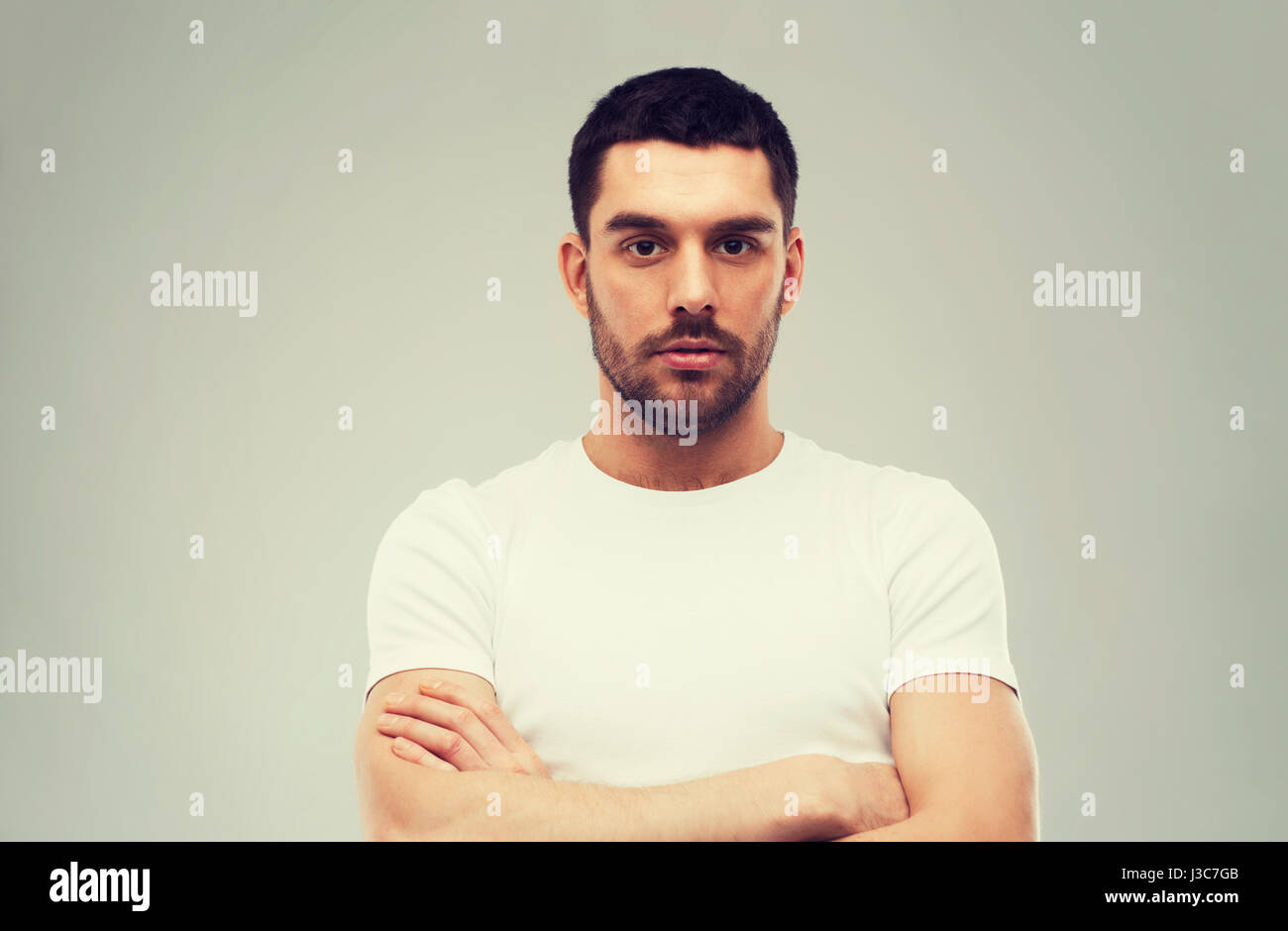
The arms crossed posture in men is a multifaceted non-verbal signal that primarily functions as a physical or psychological barrier. While frequently interpreted as a sign of defensiveness, resistance, or social discomfort, it can also signify deep concentration, physical coldness, or a subconscious effort to provide self-comfort during periods of high cognitive load.
Understanding body language is a cornerstone of effective interpersonal communication, especially in the professional and social landscapes of 2026. Among the vast array of non-verbal cues, the "arms crossed" posture remains one of the most frequently observed and debated. In men, this specific gesture often carries significant weight, influenced by evolutionary biology, social conditioning, and immediate environmental triggers. By deconstructing the nuances of this posture, we can move beyond simple clichés—like "he is angry"—and uncover the nuanced psychological states driving the behavior.
The Evolutionary and Biological Roots of Arm Crossing
To understand why a man crosses his arms, one must first look at the evolutionary history of the human body. The front of the human torso—containing the heart, lungs, and vital digestive organs—is the "ventral side." From an evolutionary perspective, this is the most vulnerable part of the body. When early humans felt threatened by predators or rival groups, they instinctively protected their ventral side.
In modern times, while physical predators are rare in daily life, psychological threats are ubiquitous. When a man feels socially anxious, criticized, or placed in an unfamiliar environment, his limbic system—the part of the brain responsible for the fight-or-flight response—may trigger a "blocking" behavior. Crossing the arms over the chest effectively creates a shield, protecting the vital organs and providing a sense of security. This is why the posture is so often associated with defensiveness; it is a literal and figurative "closing off" to the external environment.
Psychophysiological Drivers: Beyond Defensiveness
While the barrier effect is the most common explanation, the significance of the arms crossed posture in men extends into several other psychological domains.
Self-Comforting and Stress Regulation
Psychologically, crossing the arms is a form of self-hugging. The physical pressure applied to the ribcage and the biceps can lower cortisol levels and provide a grounding sensation. Men who find themselves in high-stress situations, such as a difficult negotiation or a public speaking event, may cross their arms to self-soothe. This is often an unconscious act aimed at regaining emotional equilibrium rather than projecting hostility toward others.
Cognitive Processing and Concentration
Research into kinesics (the study of body motion) has revealed a fascinating link between arm crossing and mental persistence. A landmark study by Ron Friedman and Andrew Elliot found that individuals who crossed their arms while working on difficult puzzles persisted for significantly longer than those who kept their hands on the table. For men, this posture may signal that the brain is in "deep work" mode. By folding the arms, a person effectively "locks" their focus, reducing external distractions and channeling energy into internal problem-solving.
Power, Dominance, and Shoulder Broadening
In the context of male body language, the physical dimensions of the posture matter. When a man crosses his arms while standing with his feet shoulder-width apart, he increases his perceived physical size. The act of crossing the arms can push the biceps outward, making the chest and shoulders appear broader. In 2026, where executive presence is still highly valued, some men may use this posture to project authority or a "no-nonsense" attitude, even if they are not consciously trying to be aggressive.
Identifying Specific Variations of the Crossed Arms Posture
Not all arm-crossing is created equal. To accurately decode the significance, one must observe the specific placement of the hands, the tension in the muscles, and the accompanying facial expressions.
The Standard Cross
The most common version involves both arms folded over the chest with the hands tucked under the armpits. This is the neutral "barrier" signal. If the man’s shoulders are relaxed and his face is neutral, he is likely just comfortable or listening intently. If the shoulders are raised toward the ears and the jaw is clenched, the signal shifts toward high-level defensiveness or irritation.
The Reinforced Barrier (Clenched Fists)
When a man crosses his arms and clenches his fists, the significance shifts from defensive to offensive. This "reinforced" barrier indicates significant hostility or suppressed anger. It is a sign that the individual is not only protecting himself but is also prepared for a confrontation. In professional settings, this is a "red flag" gesture that suggests a complete breakdown in communication.
The Arm-Gripping Posture
In this variation, the hands are not tucked away; instead, they firmly grip the upper arms or biceps. This is a clear indicator of insecurity or fear. The grip is a tactile way for the man to "hold himself together" in an environment where he feels exposed or judged. This is frequently seen in waiting rooms, during performance reviews, or in socially overwhelming situations.
The "Alpha" Cross (Thumbs Up)
A notable variation is the arms crossed with the thumbs pointing upward. This is generally a positive signal. While the crossed arms still provide a barrier, the protruding thumbs signify confidence and a sense of being in control. It suggests that the man is listening and analyzing but remains self-assured in his position.
Contextual Analysis: When the Environment Dictates the Posture
One of the most common mistakes in body language analysis is ignoring the "Context Rule." The significance of a man crossing his arms can change entirely based on the physical environment.
- Temperature: The most obvious reason a man crosses his arms is that he is cold. By tucking his hands and pressing his arms against his torso, he is attempting to preserve body heat. Before assuming someone is being "closed off," check the thermostat.
- Lack of Furniture: In social settings like cocktail parties where there are no tables to lean on or chairs to sit in, men often cross their arms simply because they don't know what else to do with them. It provides a "home base" for the limbs.
- Physical Pain: Lower back pain or abdominal discomfort can lead to a crossed-arm posture as the individual attempts to provide support to their trunk or alleviate pressure on the spine.
- Mirroring: In a social interaction, if one person crosses their arms, the other may subconsciously mirror the gesture. This does not necessarily indicate a shared negative mood; rather, it can be a sign of subconscious rapport or "syncing up" with the conversation partner.
Comparing Crossed Arm Variations and Their Meanings
| Posture Variation | Primary Psychological State | Key Physical Cues | Recommended Response |
|---|---|---|---|
| Standard Cross | Neutral / Defensive / Cold | Relaxed hands, neutral face | Offer a drink or pen to break the posture. |
| Fists Clenched | Hostility / Defiance | Tight jaw, narrowed eyes | De-escalate; give them physical space. |
| Arm Gripping | Anxiety / Insecurity | White knuckles, hunched shoulders | Use reassuring language; lower the pressure. |
| Thumbs Up | Confidence / Analysis | Thumbs visible, upright spine | Continue your point; they are engaged. |
| One-Arm Cross | Social Shyness | One arm across, holding the other | Move to a more private or quiet setting. |
The Impact of Cultural and Professional Norms in 2026
As we navigate 2026, the interpretation of body language has been refined by a more nuanced understanding of neurodiversity and global cultural standards. In many Western cultures, the crossed-arm posture is still viewed through the lens of "disengagement." However, in other regions, it is a standard posture of respect or deep listening.
In the modern hybrid workplace, where many interactions happen via video, the significance of the arms crossed posture has shifted. Since only the upper body is usually visible, crossing the arms can be interpreted as "leaning back" or being disinterested. Professional coaches now often advise men to keep their hands visible (the "honesty" signal) to build trust during virtual negotiations. Conversely, in physical boardrooms, the posture is often seen as a sign of a "tough negotiator"—someone who is not easily swayed by emotional appeals.
Common Misinterpretations and How to Avoid Them
The "myth of the single gesture" is the biggest hurdle in accurately reading body language. No single movement has a universal meaning. To avoid misinterpreting a man's crossed arms, follow the three Cs of non-verbal communication:
- Clusters: Look for other signs. Is he also tapping his foot? Is he frowning? A single gesture is a hint; a cluster of gestures is a pattern.
- Congruence: Does the posture match the words? If a man says, "I'm very excited to work with you," but his arms are tightly crossed and his body is angled away, there is a lack of congruence. In these cases, the body language is usually more honest than the spoken word.
- Context: As previously mentioned, always account for the environment. A man crossing his arms at a funeral has a very different significance than a man crossing his arms at a football game.
FAQs
Is it always a bad sign if a man crosses his arms during a first date?
Not necessarily. While it can indicate that he is feeling defensive or "guarded," it is more likely a sign of initial nerves. He may be using the posture to feel more secure in an environment where he feels he is being evaluated. If his posture relaxes as the date progresses, it’s a sign that he is becoming more comfortable with you.
Why do I cross my arms even when I'm alone and happy?
This is often a matter of physical comfort or habit. For many men, the weight of their arms can feel taxing on the shoulders, and crossing them provides a way to rest the limbs. It can also be a way to create a "cocoon" of focus when watching a movie or reading.
How can I get someone to uncross their arms if I feel they are being defensive?
The best way to break a "blocking" posture is to give the person something to do with their hands. Hand them a document to look at, offer them a cup of coffee, or ask them to hold something for a moment. Once the physical barrier is broken, their psychological state often follows suit and becomes more open.
Does crossing your arms actually make you smarter?
It doesn't increase IQ, but it can increase "cognitive persistence." By physically "locking" the body into a stable position, the brain is less distracted by the need to manage posture and can dedicate more resources to the task at hand. It is a functional tool for concentration.
Can arm crossing be a sign of high status?
Yes, in specific contexts. A "fixed" or "regal" arm cross—where the man stands tall, chin slightly up, and arms folded loosely—can project a sense of "I don't need to impress anyone." This is a display of high status and self-containment, often seen in leaders who are observing a situation rather than participating in the fray.
Final Recommendation: Integrating Body Language Awareness
When observing a man with his arms crossed, your first step should always be to search for the "Why" before reacting to the "What." Do not immediately assume he is being difficult or closed off. Instead, look for a cluster of supporting signals. If his legs are uncrossed, his torso is facing you, and he is maintaining steady eye contact, his crossed arms are likely a sign of comfort or concentration.
In your own life, be mindful of when you adopt this posture. If you find yourself crossing your arms in a meeting, ask yourself if you are feeling threatened or just tired. To project maximum openness and charisma, practice keeping your "ventral side" open and your hands visible. However, if you need to hunker down and solve a complex problem, don't be afraid to fold your arms and lean into the focus that this ancient, protective posture provides.