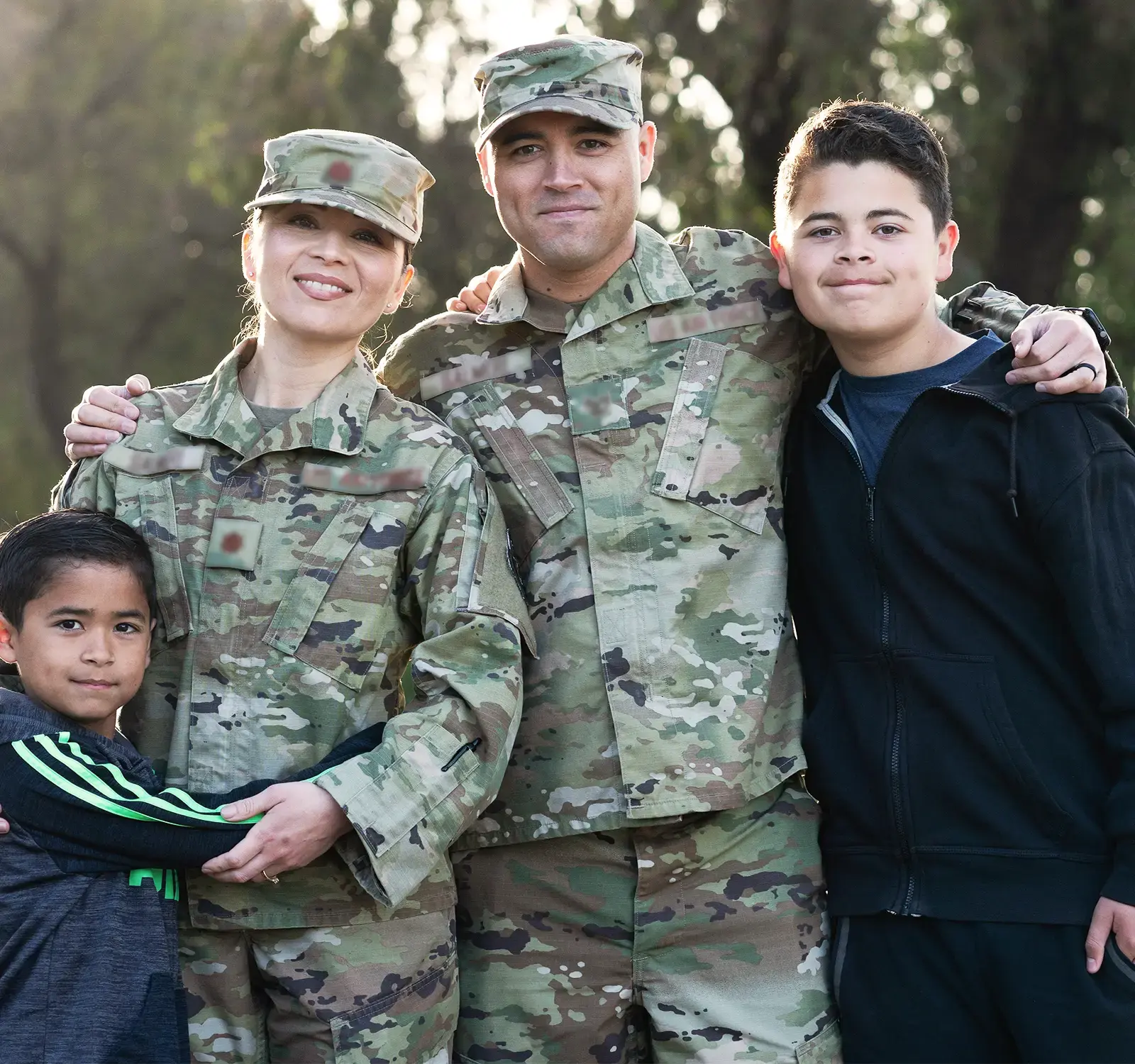
Army and Air Force personnel have access to specialized life insurance through government-sponsored programs like Servicemembers' Group Life Insurance (SGLI) and private non-profits like the American Armed Forces Mutual Aid Association (AAFMAA). These plans offer high coverage limits—up to $500,000 for SGLI—and unique benefits such as traumatic injury protection and survivor assistance services tailored specifically to military life.
Securing financial protection for your family is a critical component of military readiness. Because military service involves unique risks—from combat deployments to high-intensity training—standard civilian life insurance policies often include "war clauses" or exclusions that can render them ineffective for active-duty members. Consequently, the Department of Veterans Affairs (VA) and specialized military-focused organizations provide robust alternatives designed to ensure that Army and Air Force families are never left without support.
As we navigate the requirements and options available in 2026, it is essential to understand the distinction between statutory government benefits and supplemental private policies. This guide provides a deep dive into eligibility, costs, and the strategic planning necessary to optimize your coverage.
The Foundation: Servicemembers' Group Life Insurance (SGLI)
For the vast majority of those serving in the Army and Air Force, SGLI is the primary line of defense. SGLI is a program managed by the VA but underwritten by private insurers, providing low-cost term life insurance to eligible service members.
Eligibility and Automatic Enrollment
In 2026, enrollment in SGLI remains automatic for active-duty members of the Army and Air Force, as well as Ready Reservists and National Guard members scheduled to perform at least 12 periods of inactive training per year. This "opt-out" rather than "opt-in" structure ensures that soldiers and airmen are protected from the moment they enter service.
Coverage Limits and 2026 Premium Costs
The maximum coverage amount for SGLI is $500,000, a standard established to keep pace with the rising cost of living and housing. Members can elect lower coverage amounts in increments of $50,000.
The premium for SGLI is exceptionally competitive because it is a group policy. As of 2026, the rate is $0.06 per $1,000 of coverage. For a soldier or airman carrying the full $500,000 of protection, the monthly premium is $30.00. An additional $1.00 is automatically added for Traumatic Injury Protection (TSGLI) coverage, bringing the total monthly deduction to $31.00. These premiums are deducted directly from the member’s Leave and Earnings Statement (LES).
The Role of the SGLI Online Enrollment System (SOES)
Managing your Army or Air Force life insurance is done through the SGLI Online Enrollment System (SOES). This portal allows members to name beneficiaries, increase or decrease coverage amounts, and update contact information. It is a vital tool for ensuring that your "Page 2" (Record of Emergency Data) matches your insurance intentions.
Specialized Protection: TSGLI and FSGLI
Military life insurance is not limited to a simple death benefit. It includes riders and secondary policies designed for the specific needs of military families.
Traumatic Injury Protection (TSGLI)
TSGLI is a mandatory rider attached to every SGLI policy. It provides short-term financial assistance to help severely injured service members and their families through the recovery process. Unlike the main life insurance benefit, TSGLI is paid to the service member, not a beneficiary. Benefits range from $25,000 to $100,000 depending on the severity of the injury, such as loss of sight, hearing, or limb, or severe burns.
Family SGLI (FSGLI)
Army and Air Force members with SGLI coverage can also insure their spouses and dependent children through FSGLI.
- Spousal Coverage: Spouses can be insured for up to $100,000 or the amount of the service member’s SGLI coverage, whichever is less. Premiums are based on the spouse's age.
- Child Coverage: Dependent children are automatically covered for $10,000 at no cost to the service member.
Transitioning to Civilian Life: Veterans' Group Life Insurance (VGLI)
One of the most significant challenges for those leaving the Army or Air Force is the loss of SGLI coverage. SGLI expires 120 days after separation from the service. To bridge this gap, the VA offers Veterans' Group Life Insurance (VGLI).
The Conversion Window
VGLI allows veterans to convert their SGLI to a renewable term life insurance policy. The window for application is critical:
- The 240-Day Rule: If you apply within 240 days of separation, you do not need to provide evidence of good health (a medical exam). This is a lifeline for veterans who may have developed service-connected disabilities that would make private insurance unaffordable or unavailable.
- The Final Deadline: The absolute limit to apply for VGLI is one year and 120 days from the date of separation. After this point, the opportunity to convert SGLI is lost.
VGLI Premiums in 2026
Unlike the flat rate of SGLI, VGLI premiums are age-banded. As a veteran grows older, the premiums increase every five years. While VGLI is an excellent option for those with health issues, healthy veterans in their 20s and 30s may find that private military-focused insurers offer lower rates for the same amount of coverage.
The Private Sector: AAFMAA and Military-Specific Providers
While the government programs provide a baseline, many in the Army and Air Force turn to the American Armed Forces Mutual Aid Association (AAFMAA) for supplemental or permanent coverage. Founded in 1879, AAFMAA was specifically created to serve the Army and, later, the Air Force.
Why AAFMAA is Unique
AAFMAA is a non-profit association, not a traditional commercial insurer. This distinction allows them to offer "Value-Added Services" that go beyond a check. These services include:
- Survivor Assistance: AAFMAA representatives assist the families of deceased members in navigating the complex web of military death benefits, including Social Security, VA pensions, and the Survivor Benefit Plan (SBP).
- No War Clause: Like SGLI, AAFMAA policies do not contain war clauses, meaning they pay out even if the death occurs in a combat zone.
- Vault Services: They provide a secure digital and physical repository for important military documents (DD-214s, marriage certificates, etc.), ensuring survivors have everything they need to file claims.
Permanent vs. Term Insurance
While SGLI and VGLI are term policies (they provide coverage for a specific period and do not build cash value), AAFMAA offers permanent life insurance options like Whole Life and Wealth Builder Life Insurance. These policies can serve as an investment vehicle, allowing members to lock in a premium rate for life and build equity that can be borrowed against in the future.
Comparing Army and Air Force Insurance Options
Choosing between government and private options requires a comparison of costs, flexibility, and long-term goals.
| Feature | SGLI (Active Duty) | VGLI (Veterans) | AAFMAA (Private/Non-Profit) |
|---|---|---|---|
| Max Coverage | $500,000 | $500,000 | Up to $1,000,000+ |
| Medical Exam | None | None (if within 240 days) | Required for most plans |
| Monthly Cost | $31.00 (Flat) | Age-Based (Increases) | Based on Health/Age (Level) |
| Portability | Ends 120 days post-sep | Portable for life | Portable for life |
| Cash Value | No | No | Yes (Permanent plans only) |
| War Clause | No | No | No |
Strategic Planning: How Much Coverage Do You Need?
A common mistake among Army and Air Force personnel is assuming that the $500,000 SGLI limit is sufficient. In 2026, with the average cost of a home and the expense of higher education, $500,000 may only cover a few years of a family's expenses.
The DIME Method
Financial planners often recommend the DIME method to calculate insurance needs:
- Debt: Total of all outstanding loans, credit cards, and personal debts.
- Income: Replace the service member's income for a set number of years (e.g., 10 years).
- Mortgage: The remaining balance on the family home.
- Education: The projected cost of college for all children.
If your DIME calculation exceeds $500,000, you should consider supplemental coverage through organizations like AAFMAA or the Armed Forces Benefit Association (AFBA).
Common Pitfalls in Military Life Insurance
Navigating these systems requires attention to detail. Several common errors can jeopardize a family's financial security.
1. Neglecting Beneficiary Updates
Life events such as marriage, divorce, or the birth of a child should immediately trigger an update in SOES. If a soldier forgets to remove an ex-spouse as a beneficiary, the law generally requires the insurance company to pay that named individual, regardless of current marital status. This is a frequent source of legal disputes in the military community.
2. Relying Solely on SGLI
While SGLI is excellent, it is temporary. If you develop a medical condition while on active duty and rely solely on SGLI, you may find VGLI premiums to be prohibitively expensive later in life. Buying a small private policy while young and healthy locks in lower rates and provides "insurability" for the future.
3. Misunderstanding the Death Gratuity
Some service members believe the $100,000 military death gratuity is part of their insurance. It is not. The death gratuity is a tax-free payment made by the Department of Defense to survivors within 72 hours of a member's death to meet immediate financial needs. This is separate from and in addition to SGLI.
The Claims Process: What Survivors Need to Know
In the event of a loss, the process for filing a claim depends on the status of the member at the time of death.
Active Duty Claims
For Army and Air Force members who die on active duty, a Casualty Assistance Officer (CAO) is assigned to the family. The CAO handles the paperwork for SGLI, the death gratuity, and unpaid pay and allowances. This is a high-touch process designed to shield the family from administrative burdens during grief.
Veteran and Private Claims
For those with VGLI or private policies like AAFMAA, the survivors must initiate the claim. This typically requires:
- A certified copy of the death certificate.
- The member’s DD-214 (Certificate of Release or Discharge from Active Duty).
- Completion of the VA Form SGLV 8283 (for VGLI).
Organizations like AAFMAA provide significant advantages here, as their survivor assistance teams are experts in coordinating these multiple streams of benefits.
Frequently Asked Questions
Can I keep SGLI after I leave the Army or Air Force?
No, SGLI coverage ends 120 days after your separation date. However, you have the option to convert it to VGLI or a commercial policy through a participating insurance company within the specified timeframes.
Is SGLI coverage valid if I am deployed to a combat zone?
Yes. SGLI (and AAFMAA) policies do not have war clauses. Coverage remains in effect regardless of the geographical location or the nature of the service, including combat operations.
Does my rank affect my life insurance premiums?
For government-sponsored programs like SGLI and VGLI, rank has no impact on premiums. A Private (E-1) pays the same rate for $500,000 of coverage as a General (O-10). Private insurers, however, may consider occupational hazards associated with certain military roles (such as special operations or aviation) when underwriting supplemental policies.
What happens to my insurance if I am AWOL?
SGLI coverage continues for 30 days after a member is declared absent without leave (AWOL). If the member does not return within that window, the coverage is terminated.
Can I have both SGLI and a private life insurance policy?
Yes, and many financial advisors recommend it. Having a private policy in addition to SGLI ensures that you have coverage that is not tied to your military status and can provide a higher total death benefit to meet your family's needs.
Practical Recommendations for 2026
To ensure your Army or Air Force life insurance is optimized for 2026, take the following steps:
- Log into SOES: Verify that your beneficiary designations and coverage amounts are correct. Do not assume they are accurate.
- Calculate Your DIME: Determine if the $500,000 SGLI limit actually covers your family's long-term needs.
- Evaluate Supplemental Options: If you are young and healthy, look into a private military-specific policy. Locking in a low rate now provides a safety net for when you eventually transition out of the service.
- Review VGLI Rates: If you are nearing retirement or separation, compare the 2026 VGLI premium tables against private alternatives to see which offers the best value for your age bracket.
By proactively managing these benefits, soldiers and airmen can focus on their mission with the peace of mind that their families are protected.