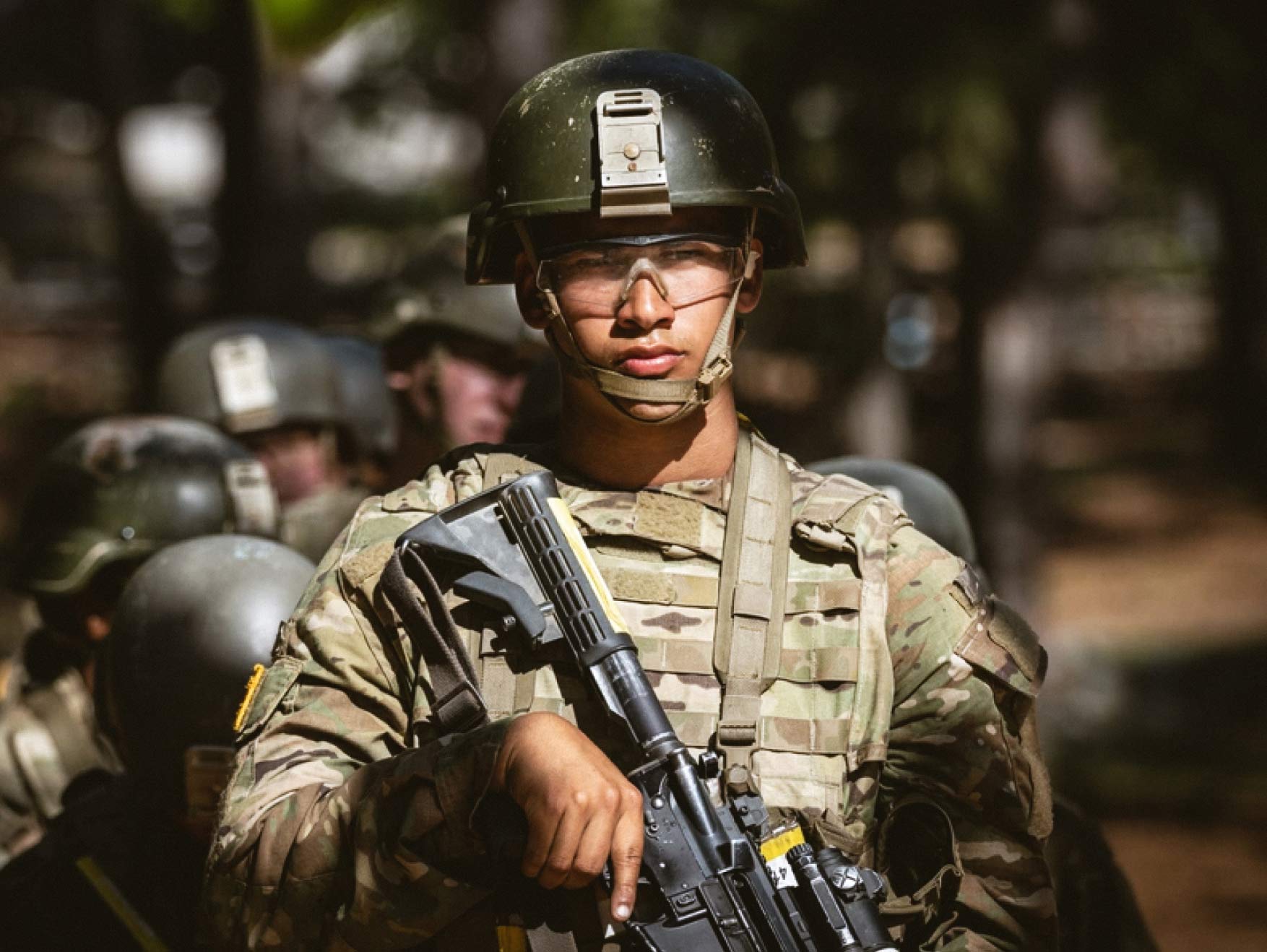
Army National Guard basic training, officially known as Basic Combat Training (BCT), lasts approximately 10 weeks. This timeframe excludes the "Reception" week (Week 0) and any subsequent Advanced Individual Training (AIT) required for your specific job. Total initial training time typically ranges from 14 to 52 weeks, depending on your chosen career path.
For most recruits entering the Army National Guard in 2026, the transition from civilian to soldier is a multi-phased journey. While the 10-week BCT period is the standardized "boot camp" where everyone learns the fundamentals of soldiering, the total time you will spend away from home depends heavily on your Military Occupational Specialty (MOS) and your specific enlistment contract. Understanding the nuances of these timelines—including the "Split Option" unique to the National Guard—is essential for planning your transition into military service.
The Core Components of National Guard Initial Entry Training (IET)
When people ask about the length of National Guard training, they are usually referring to Initial Entry Training (IET). IET is the umbrella term that encompasses everything from the day you arrive at the processing station to the day you graduate as a fully qualified soldier.
The Difference Between BCT and AIT
It is vital to distinguish between Basic Combat Training (BCT) and Advanced Individual Training (AIT). Every recruit, regardless of their job, attends the same 10-week BCT. This is where you learn to march, shoot, and survive in the field.
Following BCT, you move to AIT. This is where you learn the technical skills of your specific MOS. If you are a Combat Medic (68W), your AIT will be significantly longer and more academic than someone training to be a Motor Transport Operator (88M). Because National Guard members often have civilian careers or educational commitments, the Army offers different ways to sequence these two training blocks.
Breaking Down the 10-Week Basic Combat Training (BCT) Timeline
Basic Combat Training is organized into three distinct phases: Red, White, and Blue. Each phase lasts approximately three weeks and serves a specific developmental purpose. However, before you even reach the "Red Phase," you must pass through the Reception Battalion.
Reception Battalion (Week 0)
Often referred to as "Week 0," Reception is not technically part of the 10 weeks of training, but you are physically at the training installation. This period typically lasts 5 to 7 days. During this time, you will undergo medical screenings, receive vaccinations, get your military haircut, and be issued your initial uniforms and equipment. You will also complete the mountain of paperwork required to set up your military pay and benefits. While not physically "difficult" in a tactical sense, it is often mentally taxing due to the sleep deprivation and the sudden shock of the military environment.
Phase 1: Red Phase (Weeks 1–3)
The Red Phase is the "shakedown" period. Drill Sergeants are at their most intense during these weeks as they work to break down civilian habits and instill discipline.
- Week 1: You are introduced to the Army Values and the Warrior Ethos. You will begin intensive physical readiness training (PRT) and learn the basics of drill and ceremony (marching).
- Week 2: This week usually involves "The Gas Chamber," where recruits are exposed to CS gas to build confidence in their protective masks (MOPP gear). You will also begin learning hand-to-hand combat (Combatives).
- Week 3: Recruits learn the basics of tactical movement and land navigation. By the end of the Red Phase, you should be able to move as a member of a fire team.
Phase 2: White Phase (Weeks 4–6)
The White Phase focuses on "The Rifleman." The intensity of the Drill Sergeants may shift slightly from pure discipline to instruction.
- Week 4: Much of this week is spent on the rifle range, learning the fundamentals of marksmanship with the M4 carbine.
- Week 5: You will continue range work, focusing on zeroing your weapon and qualifying at various distances.
- Week 6: Recruits are introduced to heavier weaponry, such as the M249 Squad Automatic Weapon (SAW) and the M240B machine gun, as well as hand grenades.
Phase 3: Blue Phase (Weeks 7–10)
The Blue Phase is the final hurdle. It focuses on tactical proficiency and culminates in a grueling final field exercise.
- Week 7: Advanced tactical training, including patrolling and convoy operations.
- Week 8: This is typically when "The Forge" occurs. The Forge is a 96-hour cumulative training exercise that puts all your skills to the test under high stress and physical fatigue. It is the defining moment of BCT.
- Week 9: After completing The Forge, you are officially recognized as a Soldier in a "Rites of Passage" ceremony. You spend this week recovering gear and preparing for graduation.
- Week 10: Graduation week. Family members are invited to the installation to watch the graduation ceremony, after which you either head home (if you are a Split Option recruit) or move on to AIT.
Advanced Individual Training (AIT) Lengths by Career Path
Once BCT is finished, the "length" of your training becomes highly variable. National Guard soldiers choose their MOS before they enlist, so you should know exactly how long your AIT will be before you sign your contract.
As of 2026, some of the most common National Guard MOS training lengths are:
| MOS Code | Career Field | AIT Length (Approximate) | Total Training Time (BCT + AIT) |
|---|---|---|---|
| 11B | Infantryman (OSUT) | N/A | 22 Weeks |
| 12B | Combat Engineer (OSUT) | N/A | 14-15 Weeks |
| 19D | Cavalry Scout (OSUT) | N/A | 22 Weeks |
| 31B | Military Police (OSUT) | N/A | 20 Weeks |
| 68W | Combat Medic | 16 Weeks | 26 Weeks |
| 88M | Motor Transport Operator | 7 Weeks | 17 Weeks |
| 91B | Wheeled Vehicle Mechanic | 13 Weeks | 23 Weeks |
| 92Y | Unit Supply Specialist | 9 Weeks | 19 Weeks |
| 25B | Information Tech Specialist | 20 Weeks | 30 Weeks |
| 35F | Intelligence Analyst | 13 Weeks | 23 Weeks |
One Station Unit Training (OSUT)
For "Combat Arms" roles like Infantry (11B) or Armor (19K), the Army uses One Station Unit Training. Instead of graduating from BCT and moving to a new base for AIT, these recruits stay with the same Drill Sergeants and the same company for the entire duration. This streamlines the process but means you do not get the "break" or change of scenery that usually occurs between BCT and AIT. For example, an Infantry recruit will spend 22 weeks at Fort Moore (formerly Fort Benning) in a single continuous training cycle.
The Split Training Option for National Guard Recruits
One of the primary benefits of the National Guard is the Split Training Option (STO). This is specifically designed for high school juniors or college students who want to enlist without interrupting their academic year.
Under the Split Option:
- Year 1 Summer: The recruit attends the 10-week BCT.
- The Academic Year: The recruit returns home to finish high school or attend college. During this time, they attend monthly drills with their local National Guard unit as part of the Recruit Sustainment Program (RSP). They are paid for these drills but are not yet MOS-qualified.
- Year 2 Summer: The recruit attends AIT. Once AIT is completed, they return home as a fully qualified soldier.
This path effectively "stretches" the training length over a year but minimizes the impact on the recruit's civilian education. It is an excellent choice for students who want to earn military benefits while staying on track for graduation.
Factors That Can Extend Your Training Timeline
While the standard timeline for BCT is 10 weeks, several factors can result in a recruit staying at the training base longer than anticipated. In military terms, this is often called being "recycled."
Physical Fitness and the ACFT
As of 2026, the Army Combat Fitness Test (ACFT) is the standard for graduation. Recruits who fail to meet the minimum standards for the ACFT by the end of the Blue Phase may be "recycled" back to an earlier week of training to improve their physical conditioning. In some cases, recruits are sent to a Physical Fitness Troop (PFT) to focus exclusively on training until they can pass the test.
Medical Issues and Injuries
The most common reason for a training extension is injury. Stress fractures, severe sprains, or respiratory illnesses can sideline a recruit. If an injury requires more than a few days of recovery, the recruit is usually moved to a Medical Recovery Unit (MRU). Once cleared by a doctor, they are "slotted" back into a new training company that is at the same point in the cycle where they left off. This can add weeks or even months to the total time away from home.
Academic or Skill Failure
In AIT, the training is more classroom-oriented. If a recruit fails a critical MOS exam or cannot master a technical skill (such as radio programming or medical procedures), they may be recycled to a later class. If they fail repeatedly, they may be "re-classed" into a different MOS that is less demanding, which restarts the AIT clock entirely.
Living the "One Weekend a Month" Myth
It is important for prospective National Guard members to understand that while the service is often marketed as "one weekend a month, two weeks a year," the initial training period is full-time. During your 10 weeks of BCT and your subsequent AIT, you are on Active Duty for Training (ADT). You will receive full active-duty pay, housing allowance (if eligible), and healthcare. Only after you graduate from AIT do you transition to the traditional part-time National Guard schedule.
For more information on current enlistment standards and training locations, you can visit the Official National Guard Website or the U.S. Army Training and Doctrine Command (TRADOC).
Frequently Asked Questions
Do National Guard recruits go to the same basic training as Active Duty?
Yes. There is no separate basic training for the National Guard. You will train alongside Active Duty and Army Reserve recruits at one of the four major BCT locations: Fort Moore (Georgia), Fort Jackson (South Carolina), Fort Sill (Oklahoma), or Fort Leonard Wood (Missouri). The standards, Drill Sergeants, and graduation requirements are identical across all components.
Can I choose when I go to basic training?
To an extent. When you sit down with your recruiter and the guidance counselor at the Military Entrance Processing Station (MEPS), you will look at available "seats" in training classes. If you are a student, you can specifically request the Split Training Option to align with your summer break. However, your ship date is ultimately determined by the availability of slots for your specific MOS.
Will I get paid during basic training?
Yes, you are paid as a full-time soldier during training. Your pay grade (Rank) depends on your education level and any civilian credits you have. For example, an E-1 with no prior experience will earn a base pay of approximately $2,015 per month (based on early 2026 pay scales), while those with college credits may enter as an E-3 or E-4 with higher pay. You may also be eligible for Basic Allowance for Housing (BAH) if you have dependents or a lease in the civilian world.
What happens if I get sick or injured during BCT?
If you suffer a minor illness or injury, you will be treated at the troop medical clinic and returned to your unit. For more significant issues, you may be sent to the Medical Recovery Unit. The Army's goal is to heal you and get you back into training, not to send you home. Only in cases of permanent disability or pre-existing conditions that were not disclosed would a recruit be processed for a medical discharge.
How much time off do I get between BCT and AIT?
Usually, there is very little time off. Most recruits transition directly from their BCT graduation to their AIT location within 24 to 72 hours. If your BCT and AIT are at the same location (OSUT), you might get a "pass" for a day or two after the BCT portion, but you will not typically go home. The exception is the Split Training Option, where you go home for an entire year between the two phases.
Final Recommendation
If you are considering joining the Army National Guard in 2026, the best way to prepare for the 10-week basic training length is to begin your physical conditioning at least three to six months before your ship date. Focusing on the ACFT events—specifically the deadlift, plank, and two-mile run—will significantly reduce your risk of being "recycled" due to injury or fitness failure. Additionally, ensure you have your civilian affairs (finances, power of attorney, and family care plans) in order so that you can focus entirely on the mental and physical demands of becoming a soldier.