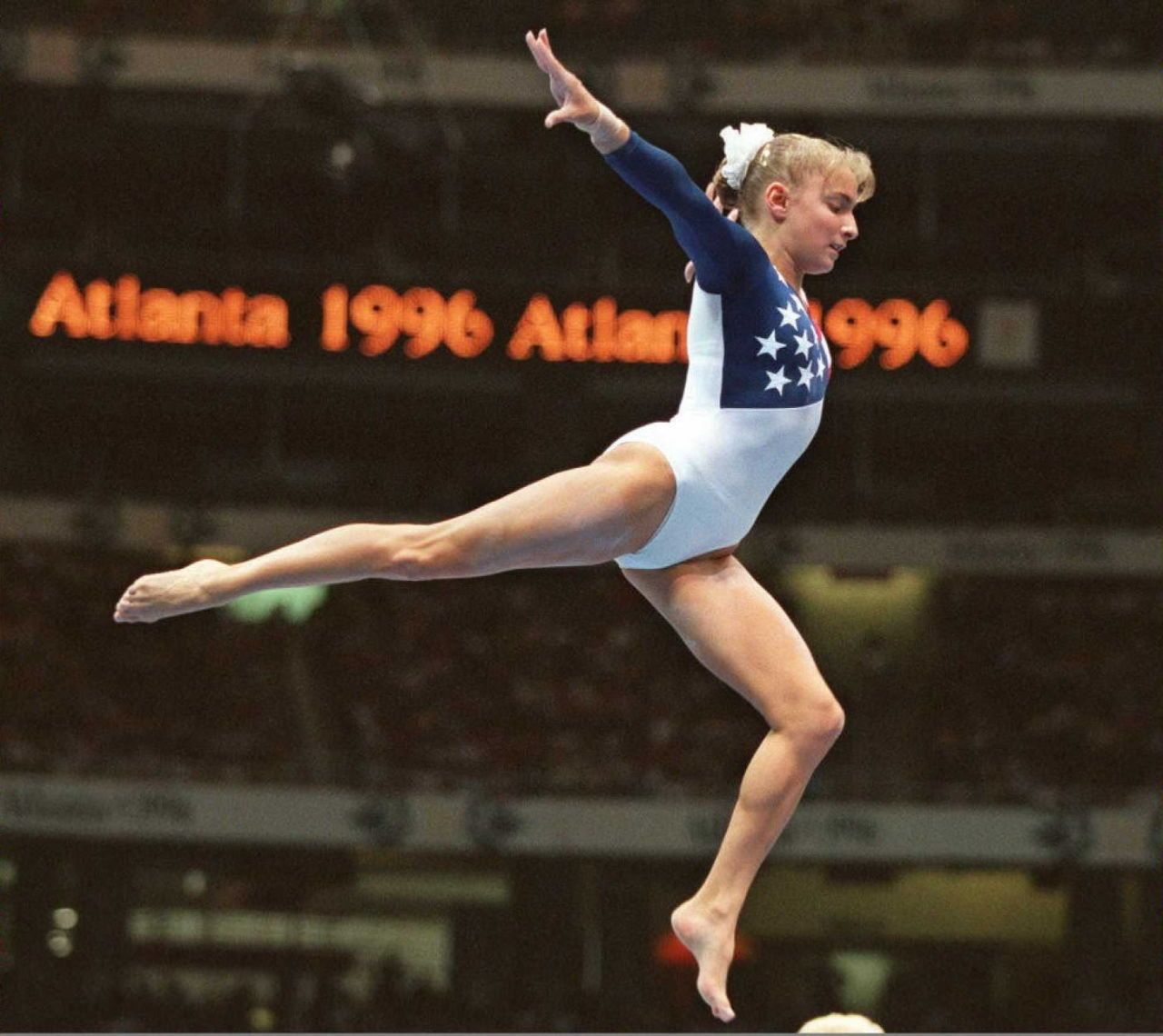
The 1996 Olympics gymnastics team final, held on July 23, 1996, in Atlanta, Georgia, remains one of the most significant events in American sports history. The United States women’s team, nicknamed the "Magnificent Seven," secured their first-ever team gold medal by defeating powerhouse programs from Russia and Romania, culminated by Kerri Strug's historic vault on an injured ankle.
Historical Context: The Centennial Games and the Rise of USA Gymnastics
By the time the 1996 Centennial Olympic Games arrived, the landscape of international women’s gymnastics was undergoing a tectonic shift. Historically, the Soviet Union (and the subsequent Unified Team in 1992) and Romania had dominated the podium. However, the United States had been steadily climbing the ranks throughout the late 1980s and early 1990s, led by coaches like Bela and Martha Karolyi and Steve Nunno.
The 1996 team was a blend of seasoned veterans and rising stars. Shannon Miller, the most decorated American gymnast at the time, brought leadership and unparalleled technique. Dominique Dawes and Amy Chow provided immense power and difficulty on the uneven bars and floor exercise. Jaycie Phelps and Amanda Borden were models of consistency, while the young Dominique Moceanu and the gritty Kerri Strug rounded out a squad that felt, for the first time, like the favorites on home soil.
The competition format in 1996 differed significantly from the current "three-up, three-count" system. At the time, teams consisted of seven gymnasts, with six competing on each apparatus. The lowest score was dropped, and the final team total was a combination of "Compulsory" routines (standardized movements performed by every athlete) and "Optional" routines (original choreography with high-level difficulty).
The Path to the Podium: Compulsories and the Scoring System
To understand the magnitude of the final on July 23, one must look at the preliminary compulsory round held two days prior. In the 10.0 scoring era, precision in compulsories was the bedrock of a gold-medal campaign. The U.S. women performed nearly flawlessly during the compulsory round, finishing with a narrow lead over the Russian Federation.
The scoring system rewarded "perfect" form, and the U.S. team managed to stay within striking distance of the elusive 10.0 mark across several rotations. This technical head start was crucial because it placed the psychological pressure on the Russians—the defending champions—to be perfect during the "Optionals" (the team final).
Entering the final night of competition at the Georgia Dome, the atmosphere was electric. Over 30,000 spectators created an environment more akin to a collegiate football game than a traditional gymnastics meet. This home-court advantage played a significant role in the momentum of the evening, though it also heightened the stakes for the seven young women under the spotlight.
Rotation 1 and 2: Establishing the Lead
The U.S. team began their quest for gold on the Uneven Bars. This was a critical rotation because Amy Chow and Dominique Dawes were world-class on this apparatus. Chow, in particular, performed a routine with such high difficulty—including her signature "Chow" release move—that it set a high bar for the rest of the night. The U.S. emerged from the first rotation with a solidified lead, demonstrating that they would not crumble under the pressure of the moment.
In the second rotation, the team moved to the Balance Beam. Traditionally the most nerve-wracking event, the beam had the potential to derail any team’s gold medal hopes. Shannon Miller, the reigning World Champion on beam, delivered a masterclass in stability and flexibility. Despite the precarious nature of the four-inch-wide surface, the U.S. avoided major falls, while their primary rivals, the Russians, began to show minor cracks in their composure.
By the halfway point, the "Magnificent Seven" were not just competing against Russia; they were competing against history. The technical depth of the team allowed them to drop scores that would have been the top marks for many other nations, a luxury that proved vital as they moved toward the final two events.
Rotation 3: The Floor Exercise
The Floor Exercise was where the personality of the 1996 team truly shone. Dominique Moceanu, only 14 years old, performed to "The Devil Went Down to Georgia," a nod to the host city that sent the crowd into a frenzy. Her charisma and technical execution scored high, as did the powerful tumbling passes of Dominique Dawes.
However, even in a gold-medal performance, there are moments of tension. The floor exercise required a balance of artistry and athleticism, and while the U.S. scores remained high, the Russian team, led by the legendary Svetlana Khorkina and Rozalia Galiyeva, began a fierce comeback on the uneven bars and vault. As the teams moved to their final rotations, the math suggested the U.S. had a comfortable lead, but in gymnastics, a single collapse can bridge a massive gap in seconds.
Rotation 4: The Vault and the Moment of Truth
The final rotation for the United States was the Vault. Under the rules of the time, each gymnast performed two vaults, with the better of the two scores counting toward the team total. Mathematically, the U.S. needed solid scores to mathematically lock out the Russians, who were finishing their night on the Floor Exercise.
The rotation began well enough, but tension spiked when Dominique Moceanu, usually a reliable vaulter, fell on both of her attempts. This placed the burden squarely on the final gymnast: Kerri Strug.
On her first vault attempt (a Yurchenko 1.5 twist), Strug under-rotated and fell backward. As she stood up, she felt a sharp snap in her left ankle. She had suffered two torn ligaments and a third-degree lateral sprain. In the chaos of the arena, neither Strug nor her coach, Bela Karolyi, knew for certain if the gold medal was safe. Karolyi famously shouted, "You can do it! One more time!"
Strug limped back to the start of the runway. In one of the most iconic displays of grit in Olympic history, she sprinted down the mat, performed a nearly perfect Yurchenko 1.5, and stuck the landing on one foot. She held the position long enough to satisfy the judges—saluting with her arms raised while keeping her injured leg lifted—before collapsing in pain. The score was a 9.712, effectively clinching the gold medal for the United States.
Technical Comparison of Top Teams
The following table illustrates the final standings and the narrow margins that defined the 1996 team final. Note that these totals represent the combined Compulsory and Optional scores.
| Country | Compulsory Total | Optional Total | Final Team Score | Result |
|---|---|---|---|---|
| United States | 193.661 | 195.564 | 389.225 | Gold |
| Russian Federation | 193.796 | 194.608 | 388.404 | Silver |
| Romania | 192.846 | 193.286 | 386.132 | Bronze |
| China | 191.233 | 193.034 | 384.267 | 4th Place |
The data shows that while Russia actually outperformed the U.S. slightly in the compulsory round, the Americans' superior performance in the "Optional" final (outscoring Russia by nearly a full point) was the deciding factor.
The Magnitude of the Victory
The impact of the 1996 team final extended far beyond the medal ceremony. For decades, gymnastics in the U.S. had been a niche sport with occasional individual stars like Mary Lou Retton. The "Magnificent Seven" turned gymnastics into a mainstream powerhouse.
The image of Bela Karolyi carrying Kerri Strug onto the podium to receive her medal became the defining image of the Atlanta Games. This victory catalyzed a surge in gymnastics enrollment across the country and established a blueprint for the future dominance of the U.S. women’s program, which would go on to win team golds in 2012, 2016, and 2024.
From a technical standpoint, the 1996 final was also the "swan song" for the traditional 10.0 scoring system in team formats, which would eventually be replaced by the open-ended Code of Points in 2006. The 1996 routines focused on a specific type of elegance and "perfection" that many fans still view as the golden era of the sport.
Individual Standouts of the Final
While the team gold was the primary objective, the performances during the team final also determined who qualified for the Individual All-Around and Event Finals.
- Shannon Miller: Her consistency was the team's anchor. She proved that longevity was possible in a sport often dominated by "one-and-done" teenagers.
- Amy Chow: Originally an alternate for the 1994 World Championships, Chow’s performance on the bars and vault in the 1996 final proved she was one of the most technically proficient gymnasts in the world.
- Dominique Dawes: Known as "Awesome Dawesome," her back-to-back tumbling passes on floor were revolutionary for the time and helped push the difficulty scores of the U.S. team beyond what the Russians expected.
Frequently Asked Questions
Was Kerri Strug's second vault actually necessary for the gold medal?
Technically, no. Based on the scores that came in from the Russian team’s final floor routines shortly after Strug’s vault, the United States would have won gold even if Strug had not performed her second vault. However, in the heat of the moment, the coaches and athletes did not have access to the final calculations of their opponents, and the second vault was performed to ensure victory regardless of the Russian scores.
What happened to the 10.0 scoring system after 1996?
The 10.0 system remained in place for several more years, including the 2000 and 2004 Olympics. However, following scoring controversies at the 2004 Athens Games, the International Gymnastics Federation (FIG) moved to an open-ended scoring system in 2006. This new system separates difficulty (D-score) from execution (E-score), making the "Perfect 10" a relic of the past.
Who were the members of the "Magnificent Seven"?
The team consisted of Shannon Miller, Dominique Dawes, Dominique Moceanu, Kerri Strug, Amy Chow, Amanda Borden, and Jaycie Phelps. All seven contributed scores during the two days of competition that led to the gold medal.
Did Kerri Strug compete in the Individual Finals?
No. Due to the severity of the ankle injury sustained during her final vault, Strug was forced to withdraw from the Individual All-Around and the Event Finals for Vault and Floor Exercise. Her teammate Roza Galieva (Russia) and others moved up in the standings, but Strug’s sacrifice for the team remained the primary story of the Games.
How did the 1996 team final change U.S. gymnastics?
The 1996 victory ended the era of Eastern European dominance and proved that the U.S. "club system" of training could produce world-class results. It led to increased media coverage, higher sponsorship values for gymnasts, and a massive increase in the number of girls entering the sport at the grassroots level.
Final Recommendation for Sports Historians
To truly appreciate the technical nuances of the 1996 Olympics gymnastics team final, it is recommended to view the archival footage of the "Compulsory" round alongside the "Optional" final. While the TV broadcasts focused heavily on the drama of the final night, the technical precision displayed in the compulsories was the true foundation of the U.S. victory. For those studying the evolution of the sport, analyzing the shift from the 1996 requirements to today’s high-difficulty environment offers a masterclass in how athletic standards have progressed over the last three decades.