Navigating the complexities of insurance requires distinguishing between common industry misconceptions and actual policy functions. While American home and auto insurance serve different risk profiles, they share foundational principles involving liability, premiums, and coverage limits. Understanding these realities allows policyholders to make informed decisions that protect assets while avoiding unnecessary expenditures.
Dissecting Common Myths in Home Insurance
Home insurance is often shrouded in misunderstandings that lead homeowners to either over-insure their property or leave themselves vulnerable to significant financial risk. One of the most persistent myths is the belief that "full coverage" implies every possible repair or incident is compensated.
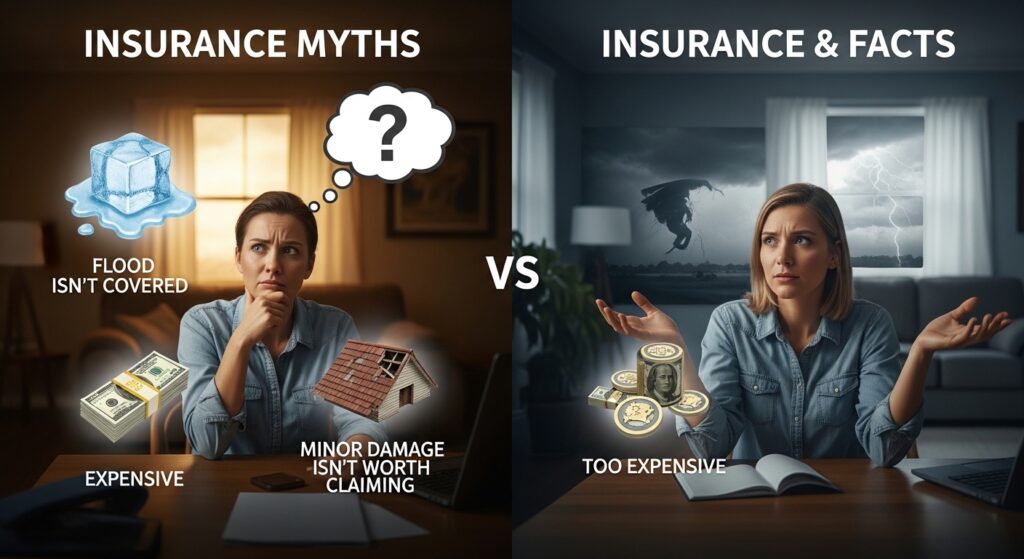
In reality, most standard home insurance policies (such as the HO-3 form) operate on an "open perils" basis for the structure and a "named perils" basis for personal property. This means that unless a specific cause of damage—such as fire, wind, or theft—is listed in the policy, the claim may be denied. Crucially, standard policies almost universally exclude damage caused by floods and earthquakes. If a homeowner assumes their standard premium covers a catastrophic flood, they will likely be left with significant out-of-pocket costs unless they have purchased a separate policy through the National Flood Insurance Program (NFIP) or a private insurer.
Another frequent myth is that home insurance covers the market value of the home. Insurance is designed to cover the replacement cost, not the market value. Market value includes the price of the land, which cannot be destroyed by fire or wind. Consequently, a home may be insured for $300,000 even if it would sell for $450,000 on the open market. Adjusting coverage based on market value leads to paying unnecessary premiums, while failing to calculate the cost to rebuild—factoring in current labor and construction material prices—can result in under-insurance during a total loss.
Clarifying Misconceptions in Auto Insurance
Auto insurance myths often center on how premiums are calculated and what is covered during an accident. A prevalent myth is that the color of a vehicle affects the insurance premium. Insurance actuaries focus on risk factors such as the vehicle’s safety ratings, theft frequency, repair costs, and engine size. They do not track the color of a car. While a red sports car might be associated with higher-risk driving behaviors, the paint pigment itself has zero impact on the risk assessment models used by underwriters.
Another significant misunderstanding involves the assumption that an insurance company will automatically pay for the full cost of a newer car if it is totaled. Auto policies typically pay the Actual Cash Value (ACV) of the vehicle at the time of the loss. Because vehicles depreciate rapidly, the ACV is often significantly lower than the amount still owed on an auto loan. This gap is known as "negative equity," and it is only covered if the policyholder has specific "gap insurance" added to their policy. Without it, the driver remains personally liable for the remaining balance on their loan after the insurance settlement is applied.
Finally, many drivers incorrectly assume that their insurance follows the vehicle regardless of who is driving. While this is often true for permissive users (friends or family who drive the car occasionally), insurance companies require that all regular residents of a household be listed on the policy. If a licensed teenager or housemate drives the vehicle regularly but is not disclosed to the insurer, a claim could be denied due to material misrepresentation.
The Interplay Between Home and Auto: Bundling Realities
Bundling home and auto insurance is a common recommendation, but consumers often misunderstand the extent of the benefits. The primary myth here is that bundling guarantees the absolute lowest price on the market. While multi-policy discounts are standard—often ranging from 5% to 25%—these discounts are applied to the gross premium. If a high-end insurer offers a bundling discount but has a higher base rate than a specialized monoline carrier, the total cost could still be higher than purchasing policies separately.
Furthermore, bundling does not inherently mean the coverage quality is identical. Consumers should evaluate each component of the bundle independently. A company might be excellent at handling auto claims but have more restrictive, less comprehensive language in its homeowners policies. Always verify the specific endorsements and deductible structures of each policy before committing to a multi-line discount.
Comparative Analysis of Coverage Expectations
The following table clarifies common assumptions versus the standard technical reality found in most 2026 insurance contracts.
| Scenario | Common Myth | Technical Reality |
|---|---|---|
| Home Replacement | Insurance covers the home's market value. | Insurance covers the cost to rebuild the structure. |
| Flood Damage | Covered under standard home insurance. | Generally excluded; requires separate coverage. |
| Vehicle Color | Red cars result in higher premiums. | Color is not a factor in actuarial risk assessment. |
| Totaled Car | Policy pays the current loan balance. | Policy pays the Actual Cash Value (ACV). |
| Bundling | Bundling always provides the lowest rate. | Discounts are applied to base rates; total costs vary. |
Identifying Your Coverage Needs
To ensure your financial protection is robust, you must distinguish between the "minimum requirements" mandated by law and the "adequate protection" required to maintain your financial health.
- Conduct a Periodic Audit: In 2026, construction costs remain volatile due to labor and material supply chain factors. Review your homeowners policy to ensure your coverage limit tracks with local rebuilding costs. If you have completed renovations, verify that your "dwelling coverage" was updated to reflect the increased replacement value.
- Review Liability Limits: Both home and auto policies provide liability coverage. If you have significant assets, your standard policy limits might be insufficient to protect your net worth in the event of a major lawsuit. Many individuals opt for a Personal Umbrella Policy (PUP) to provide an extra layer of liability coverage that kicks in when underlying policies are exhausted.
- Verify Deductible Impacts: A common mistake is choosing the lowest deductible possible for a small monthly premium reduction. However, a low deductible is often not cost-effective for minor claims that might lead to a premium increase (surcharge) upon renewal. Higher deductibles lower the annual premium and help you avoid filing claims for damages that are only slightly higher than the deductible itself.
Essential FAQ
Does my auto insurance cover items stolen from my car? Generally, no. Auto insurance typically covers the vehicle itself, its factory-installed equipment, and specific permanently attached parts. Items stolen from inside the vehicle—such as laptops, cameras, or personal effects—are usually covered under your homeowner’s or renter’s insurance policy, subject to your deductible.
Will my home insurance premium increase after every claim? Not necessarily, but it is a possibility. Claims related to "acts of God," such as windstorms or hail, are often treated differently than claims for theft or liability. Frequent filing of claims, regardless of the cause, can mark your policy as higher risk and potentially lead to non-renewal or significantly higher premiums upon expiration.
If I lend my car to a friend, is it insured? In most standard policies, the insurance follows the car. If your friend has your permission to drive and they cause an accident, your policy is generally the primary coverage. However, if the friend is a frequent driver or lives in your home and is not on your policy, the insurer may deny the claim or increase your premiums due to unlisted driver risks.
Are aging roofs fully covered by home insurance? This is a critical area of dispute. Many insurers in 2026 use "actual cash value" settlements for older roofs rather than "replacement cost." This means if your roof is 15 years old, they may only pay a depreciated amount that covers a small fraction of the cost of a new roof, leaving you to pay the difference. Always check your policy for "roof surfacing payment schedules."
Do I need full coverage on an older vehicle? If your vehicle has low market value, the premiums for collision and comprehensive coverage might exceed the potential payout. If the cost of the annual premium for these features is 10% or more of the car’s current value, it is often financially prudent to drop these coverages, provided you have sufficient savings to replace the vehicle if it is totaled.
Recommendations for Next Actions
If you are currently reviewing your insurance coverage, begin by requesting a "dec page" (declarations page) from your current provider. This document summarizes your coverage limits, deductibles, and active endorsements. Compare these against your current assets and potential financial risks. If you identify gaps—such as the lack of a personal umbrella policy or insufficient replacement cost coverage for your home—contact your licensed insurance agent or broker to receive quotes for endorsements or policy adjustments. Always ensure that any changes are confirmed in writing and that you understand the impact on your annual premium before authorizing changes.