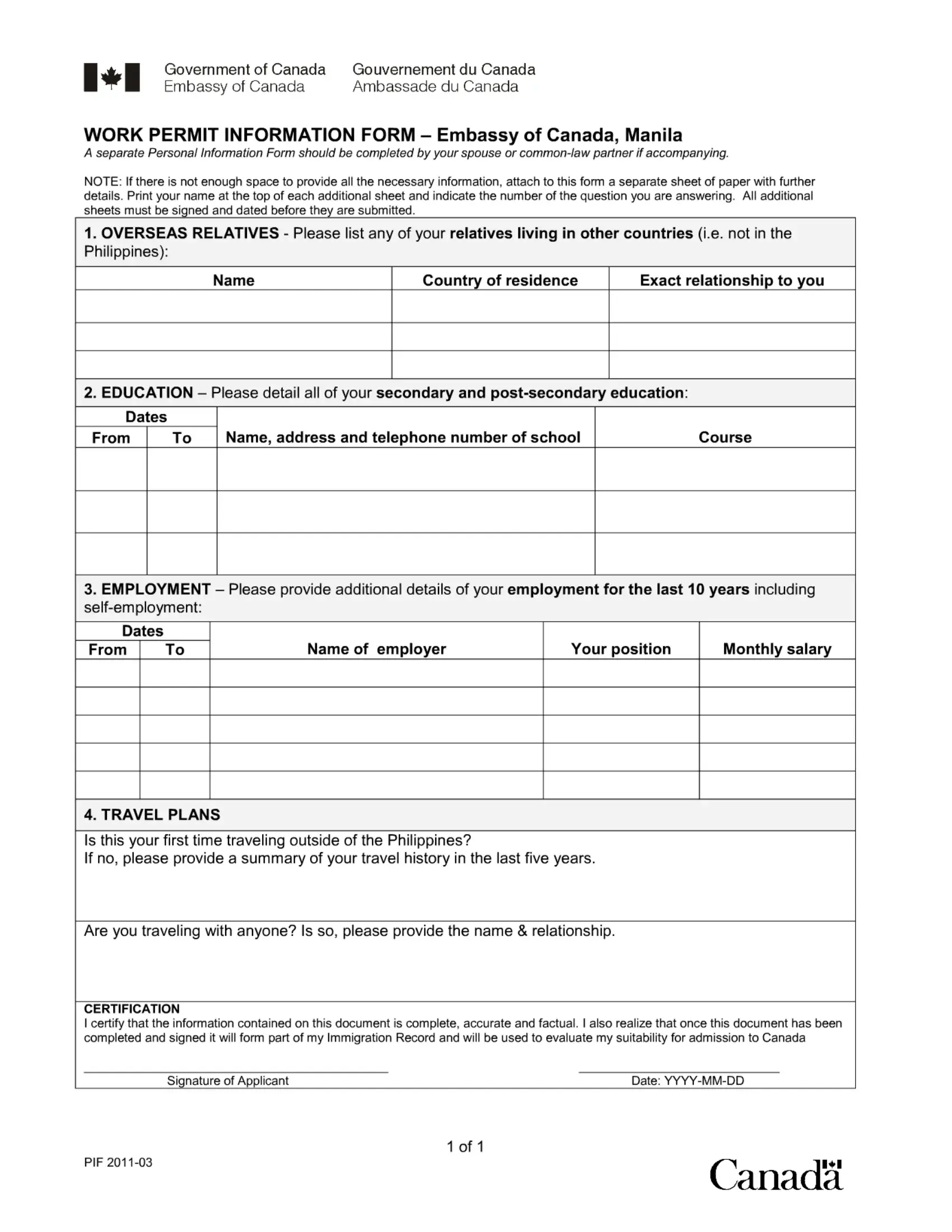
Applying for an open work permit in Canada allows foreign nationals to work for almost any employer in the country without first securing a specific job offer. To apply, you must verify your eligibility under a specific category—such as a spouse of a skilled worker or a recent graduate—gather required documents including proof of status and identity, and submit an electronic application through the Immigration, Refugees and Citizenship Canada (IRCC) portal while paying the necessary processing and holder fees.
The Canadian immigration landscape has undergone significant shifts leading into 2026, particularly regarding eligibility criteria for international students and their spouses. Navigating these changes requires a precise understanding of which "stream" you fall under and the specific evidentiary requirements for each. Unlike employer-specific work permits, which are tied to a single company and often require a Labour Market Impact Assessment (LMIA), the open work permit (OWP) offers unparalleled flexibility for the holder and reduces the administrative burden on the employer.
Understanding the Open Work Permit (OWP) Framework
An Open Work Permit is a unique category of authorization that does not specify a job title or a specific employer. This "open" nature is its primary advantage, as it allows the holder to change employers, move between industries, and reside in various locations across Canada (unless geographical restrictions are specifically noted on the permit).
In 2026, the OWP remains a cornerstone of Canada’s strategy to integrate the families of skilled workers and to retain international talent. However, it is not a "universal" permit. You cannot simply apply for an OWP because you wish to work in Canada; you must qualify under a specific "exemption" code. These codes represent public policy objectives, such as humanitarian efforts, trade agreements, or the support of the domestic labor market through the retention of international graduates.
There are generally two types of open work permits:
- Unrestricted: Allowing you to work in any occupation and any location.
- Restricted: Allowing you to work for any employer but with restrictions on the type of work (often due to medical reasons or lack of a medical exam) or the location.
Primary Eligibility Categories in 2026
To successfully apply for an open work permit, you must identify the legal gateway that applies to your situation. The IRCC strictly enforces these categories, and applying under the wrong stream is a leading cause of application refusal.
Post-Graduation Work Permit (PGWP)
The PGWP is the most common OWP for international students who have completed a program of study at a Designated Learning Institution (DLI). By 2026, the requirements for the PGWP have become more specific. Graduates from college programs must now ensure their field of study aligns with high-demand labor sectors as defined by the IRCC’s updated occupational lists. Furthermore, all PGWP applicants must meet minimum Canadian Language Benchmark (CLB) scores—typically CLB 7 for university graduates and CLB 5 for college graduates—to be eligible for the permit.
Spousal Open Work Permit (SOWP)
Significant reforms implemented in late 2024 and 2025 continue to define SOWP eligibility in 2026. Open work permits are primarily reserved for the spouses or common-law partners of:
- Students enrolled in master’s or doctoral degree programs.
- Students in specific professional programs (e.g., medicine, law, pharmacy).
- Highly skilled workers employed in TEER categories 0, 1, 2, or 3.
- Applicants who have applied for permanent residence in Canada.
Spouses of students in undergraduate or most diploma programs are generally no longer eligible for an OWP unless they fall under a specific public policy or pilot program.
Bridging Open Work Permit (BOWP)
The BOWP allows individuals who are currently in Canada and have applied for permanent residence (PR) to continue working while they wait for a decision on their PR application. To qualify, your current work permit must be within four months of expiring, and you must have received an "Acknowledgment of Receipt" (AoR) from IRCC indicating that your PR application has passed the initial completeness check.
International Experience Canada (IEC)
The IEC program includes categories like "Working Holiday," which provides an open work permit to youth from partner countries. This is a quota-based system where applicants must first enter a pool and receive an "Invitation to Apply" (ITA).
Document Requirements and Prerequisites
Preparation is the most critical phase of the OWP application. IRCC requires high-resolution digital scans of all supporting documents. Missing even one document or providing a low-quality scan can lead to the application being returned as incomplete.
Essential Documentation Checklist
- Valid Passport: Your passport must be valid for the entire duration of the permit you are seeking. Canada will not issue a work permit that extends beyond the expiry date of your passport.
- Proof of Status in Canada: If applying from within Canada, you must provide a copy of your current study permit, work permit, or visitor record.
- Proof of Eligibility: This varies by category. For a PGWP, you need your official transcript and a letter from your school confirming you completed your program. For an SOWP, you need a marriage certificate or statutory declaration of common-law union, plus proof of your partner’s status (e.g., their study/work permit and proof of employment or enrollment).
- Digital Photo: Must meet IRCC’s specific dimensions and file size requirements.
- Medical Exam: If you intend to work in "public health sensitive" jobs (such as healthcare or childcare) or if you have lived in certain countries for more than six months in the past year, you must undergo a medical exam by an IRCC-approved panel physician.
Fees and Financial Requirements
As of 2026, the cost for an open work permit typically consists of two parts:
- Work Permit Processing Fee: $155 CAD.
- Open Work Permit Holder Fee: $100 CAD.
- Biometrics Fee: $85 CAD (if you have not provided biometrics in the last 10 years).
The "Open Work Permit Holder Fee" is unique to this category and is used to fund initiatives that assist foreign workers in integrating into the Canadian labor market and to support compliance inspections.
Step-by-Step Application Process
The vast majority of applications for open work permits must be submitted online. IRCC has transitioned almost entirely away from paper-based applications for this stream.
Step 1: Create an IRCC Secure Account
You must register for a GCKey or use a Sign-In Partner (usually a Canadian bank) to access the IRCC portal. This account is where you will upload documents, pay fees, and receive updates on your application status.
Step 2: Complete the Eligibility Questionnaire
Before you can see your document checklist, the portal will ask a series of questions (the "Come to Canada" tool). Your answers regarding your current location, your purpose for coming to Canada, and your family's status will determine which forms and documents the system requests. Note: Ensure you select "Open Work Permit" when asked about the type of permit you are seeking.
Step 3: Fill Out the Required Forms
The most common form is the IMM 5710 (Application to Change Conditions, Extend my Stay or Remain in Canada as a Worker) if applying from within Canada, or the IMM 1295 if applying from outside Canada. These are PDF forms that must be filled out electronically, validated (which generates barcodes), and uploaded without being printed or scanned.
Step 4: Upload Documents and Pay Fees
Upload each document to its corresponding slot in the portal. Ensure files are in PDF, JPG, or DOCX formats and do not exceed the size limits (usually 4MB). Once uploaded, you will be prompted to pay the fees using a credit or debit card.
Step 5: Biometrics and Background Checks
After submission, you will receive a Biometrics Instruction Letter (BIL) within 24–48 hours if you need to provide fingerprints and a photo. You must book an appointment at a Service Canada location (if in Canada) or a Visa Application Centre (VAC) if abroad.
| Category | Typical Duration | Main Requirement (2026) | Restricted to Employer? |
|---|---|---|---|
| PGWP | 8 months to 3 years | Graduation from DLI + Language Test | No |
| SOWP | Linked to partner | Partner in Master's/PhD or Skilled Work | No |
| BOWP | Until PR decision | Applied for PR + Current permit expiring | No |
| Working Holiday | 12 to 24 months | Country-specific agreement + Age 18-35 | No |
| Vulnerable Worker | Up to 1 year | Proof of abuse or risk in current job | No |
Maintaining Status While Waiting
One of the most important concepts for applicants currently in Canada is Maintained Status (formerly known as "implied status"). If you apply for an open work permit before your current status (study or work) expires, you are legally allowed to remain in Canada and, in many cases, continue working under the conditions of your previous permit until a decision is made on your new application.
To benefit from maintained status:
- Your application must be submitted before your current permit expires (even one day before is sufficient).
- You must remain in Canada. If you leave the country while on maintained status, you generally lose the right to work until your new permit is approved and issued.
- You must be able to prove you applied (keep your submission confirmation and fee receipt).
Common Mistakes and How to Avoid Them
The complexity of the IRCC portal and the nuances of immigration law often lead to avoidable errors that cause significant delays.
1. Incorrect Fee Payment
Many applicants pay the $155 work permit fee but forget the $100 "Open Work Permit Holder" fee. If the total of $255 is not paid, the application will likely be rejected for incompleteness, which can be catastrophic if your current status has already expired in the interim.
2. Expiring Passports
IRCC will not issue a permit for longer than the validity of your passport. If you are eligible for a three-year PGWP but your passport expires in 14 months, you will only receive a 14-month permit. While you can sometimes apply to extend this later, it is a complex and often expensive process. It is highly recommended to renew your passport before applying for the OWP.
3. Inconsistent Information
Ensure that the dates of employment and education provided in your OWP application match exactly with what you provided in previous study permit or visa applications. IRCC systems are integrated, and discrepancies can trigger "procedural fairness" letters or accusations of misrepresentation.
4. Missing Language Results (For PGWP)
Since the 2025 updates, college graduates applying for a PGWP must include their language test results (IELTS, CELPIP, or PTE) at the time of application. Failing to include these will result in an immediate refusal under the 2026 guidelines.
Frequently Asked Questions
Can I work while waiting for my Open Work Permit to be processed?
If you applied for an extension or a change of status before your current permit expired, you have "maintained status" and can continue working if your previous permit allowed it. If you were a student, you might be able to work full-time after completing your studies and submitting your PGWP application, provided you met the criteria for working off-campus during your studies.
Does an Open Work Permit lead to Permanent Residency?
An OWP is a temporary resident permit; it does not automatically grant PR. However, it is a primary vehicle for gaining the "Canadian Work Experience" required for programs like the Canadian Experience Class (CEC) under the Express Entry system. The flexibility to work for any employer allows you to seek positions in NOC TEER categories that are most advantageous for your PR application.
Can I change from an employer-specific work permit to an open work permit?
Only if you qualify under one of the OWP categories. You cannot simply "convert" a closed permit to an open one because you want to change jobs. You must meet the criteria for a BOWP, SOWP, or another specific program. The exception is the "Vulnerable Worker" program, which allows workers on closed permits to get an OWP if they are experiencing abuse in their current workplace.
How long does the application process take in 2026?
Processing times fluctuate based on the volume of applications. In 2026, IRCC aims for a 60-day service standard for online applications submitted within Canada. Applications from outside Canada (through Visa Offices) can take anywhere from 1 to 6 months depending on the specific country's processing capacity.
What should I do if my application is refused?
If your application is refused, you will receive a letter explaining the reasons. If you still have valid status, you may be able to address the issues and re-apply. If your status has expired, you have 90 days to apply for "Restoration of Status," though you must stop working immediately until the restoration and new permit are granted.
Final Recommendations
Applying for an open work permit in Canada in 2026 requires a meticulous approach to eligibility and documentation. Given the recent restrictions on spousal permits and new language requirements for graduates, the "margin for error" has narrowed.
Before submitting your application, perform a final audit: verify that your passport validity covers your intended stay, confirm you have paid both the processing and holder fees, and ensure your digital forms are validated and barcode-compliant. For complex cases—such as those involving previous refusals or medical issues—consulting with a Regulated Canadian Immigration Consultant (RCIC) or an immigration lawyer can provide a necessary layer of security for your professional future in Canada.