Rapid7 offers three primary cloud security solutions designed to help organizations secure multi-cloud environments, manage compliance, and detect advanced threats across modern infrastructure: InsightCloudSec, Cloud Risk Complete, and Managed Threat Complete (with managed cloud detection and response capabilities).
Modern organizations increasingly rely on multi-cloud environments spanning Amazon Web Services (AWS), Microsoft Azure, Google Cloud Platform (GCP), and Kubernetes clusters. While this multi-cloud approach drives agility, speed, and digital transformation, it also introduces unprecedented visibility gaps, identity sprawl, and complex misconfigurations. Securing these dynamic environments requires moving away from fragmented, siloed point tools toward integrated cloud-native application protection platforms (CNAPP) and automated posture management. Rapid7 addresses these operational and security challenges by bundling its core offerings into structured packages tailored to modern security operations centers (SOCs) and cloud infrastructure teams.
Examining these three pillars helps security leaders evaluate how posture management, vulnerability remediation, and managed detection integrate into a comprehensive defense-in-command strategy. Each solution solves a distinct layer of the cloud security lifecycle, from continuous compliance to runtime visibility and active incident response.
1. Rapid7 InsightCloudSec: Cloud Native Application Protection Platform (CNAPP)
At the foundation of Rapid7’s cloud security portfolio is InsightCloudSec, a comprehensive Cloud Native Application Protection Platform (CNAPP). InsightCloudSec is engineered to provide continuous security, compliance, and governance across public cloud, containerized, and infrastructure-as-code (IaC) environments.
Core Architecture and Functionality
InsightCloudSec operates by connecting directly to cloud provider APIs via read-only (and selectively remediation-capable) service accounts. It aggregates data into a unified data model, allowing security teams to query their entire cloud estate instantly. The solution integrates several critical security disciplines into a single console:
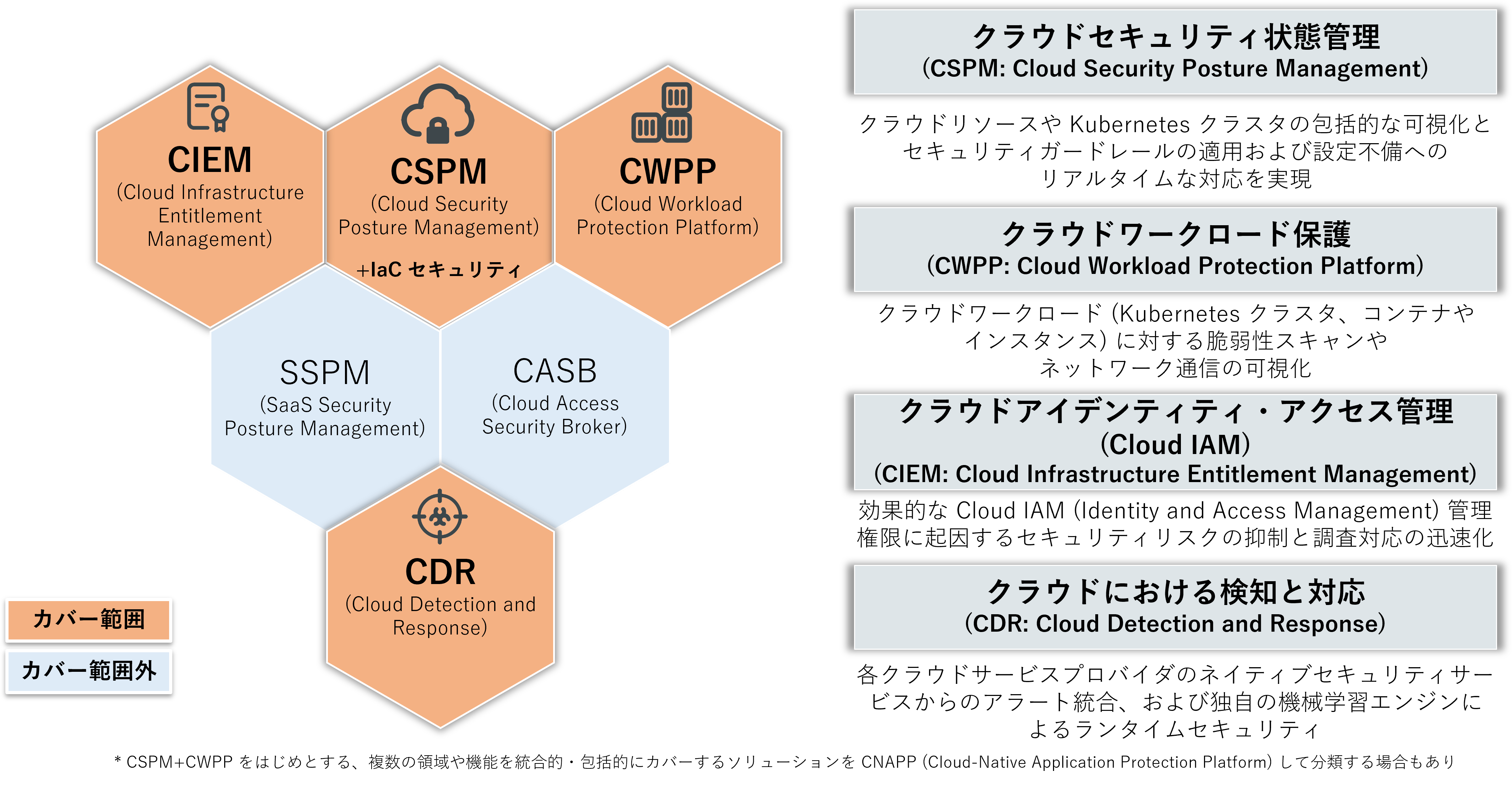
- Cloud Security Posture Management (CSPM): Continuously scans multi-cloud infrastructure for configuration drift, overly permissive IAM (Identity and Access Management) roles, unencrypted data storage buckets, and public-facing assets.
- Cloud Infrastructure Entitlement Management (CIEM): Analyzes human and non-human identities, permissions, and effective access paths to enforce the principle of least privilege across complex cloud IAM structures.
- Infrastructure as Code (IaC) Security: Shifts security left by scanning templates—such as Terraform, AWS CloudFormation, and ARM templates—for security flaws before code is ever deployed to production.
- Container Security: Assesses container images, Kubernetes manifests, and running clusters for vulnerabilities, misconfigurations, and compliance violations.
Operational Benefits for Engineering and Security Teams
One of the primary challenges in cloud security is friction between development and security teams. Security tools that generate high volumes of uncontextualized alerts often get ignored, while slow security reviews frustrate developers aiming to ship code rapidly. InsightCloudSec addresses this by enabling automated remediation and developer-friendly guardrails.
Instead of merely reporting an open security group or an unencrypted S3 bucket, InsightCloudSec can automatically execute remediation scripts, or route the finding directly to the developer who committed the IaC template via integrations with Jira, Slack, or continuous integration/continuous deployment (CI/CD) pipelines. This automated feedback loop dramatically reduces Mean Time to Remediation (MTTR) and prevents insecure configurations from entering production environments.
2. Rapid7 Cloud Risk Complete: Unified Posture and Vulnerability Management
While CNAPP solutions focus heavily on cloud configuration and entitlements, organizations must also address traditional vulnerability management across cloud workloads, virtual machines (VMs), and serverless functions. Rapid7 Cloud Risk Complete bridges the gap between posture management and vulnerability assessment.
Scope and Capabilities
Cloud Risk Complete combines the broad posture visibility of InsightCloudSec with Rapid7’s industry-leading vulnerability management engine, InsightVM. This holistic bundle gives organizations a centralized view of risk by correlating cloud resource misconfigurations with operating system and application vulnerabilities.
- Workload Vulnerability Assessment: Continuously scans cloud instances, virtual machines, and containers for missing patches, outdated software packages, and known Common Vulnerabilities and Exposures (CVEs).
- Risk-Based Prioritization: Integrates asset context, exploitability data, and threat intelligence to score vulnerabilities based on real-world risk rather than static severity scores (such as CVSS alone).
- Unified Inventory Tracking: Automatically discovers ephemeral cloud assets (such as auto-scaling groups, serverless functions, and temporary compute instances) as soon as they spin up, ensuring no shadow IT or forgotten assets escape security monitoring.
Why Context Matters in Cloud Risk Management
Traditional vulnerability scanners often overwhelm IT and security teams with thousands of low-context alerts. A vulnerability on a test server isolated in a private subnet poses a vastly different risk than the same vulnerability on an internet-facing database instance with excessive IAM privileges.
Cloud Risk Complete leverages graph-based data models to provide contextual risk analysis. By understanding the relationships between an asset, its network exposure, its identity entitlements, and underlying OS vulnerabilities, the platform highlights the exact toxic combinations of risk that attackers are most likely to exploit. This allows security analysts to prioritize patching efforts on critical pathways rather than chasing endless vulnerability lists.
3. Managed Threat Complete (Cloud Detection and Response)
Preventative security controls and posture management are essential, but highly motivated adversaries can still bypass perimeter defenses through compromised credentials, zero-day exploits, or sophisticated social engineering. To address runtime threats in the cloud, Rapid7 offers Managed Threat Complete, which includes advanced Cloud Detection and Response (CDR) capabilities backed by Rapid7’s 24/7 Managed Detection and Response (MDR) services.
How Cloud Detection and Response Works
Cloud environments generate immense volumes of log data, including AWS CloudTrail logs, Azure Activity logs, VPC flow logs, Kubernetes audit logs, and operating system telemetry. Sifting through this telemetry to find sophisticated attacker behavior is nearly impossible for resource-constrained internal security teams.
Managed Threat Complete ingests telemetry from cloud environments, endpoint agents, network sensors, and identity providers. Rapid7’s security operations center (SOC) analysts, augmented by automated detection analytics and threat intelligence, monitor this data around the clock to identify suspicious activities such as:
- Unusual API calls from foreign IP addresses or compromised credentials.
- Unauthorized resource creation (e.g., unauthorized cryptocurrency mining nodes or shadow compute instances).
- Privilege escalation attempts within IAM or Azure Active Directory.
- Data exfiltration patterns involving unusual volumes of outbound data transfers.
The Value of Managed SOC Expertise
Building an in-house 24/7 security operations center requires significant capital investment, specialized tooling, and continuous staff training. Through Managed Threat Complete, organizations gain immediate access to Rapid7’s elite threat hunters and incident responders. When an active cloud intrusion is detected, Rapid7 analysts do not just send an alert; they investigate the root cause, provide guided containment steps, or take direct containment actions based on pre-established playbooks. This drastically reduces dwell time and minimizes the business impact of a security incident.
Comparison of Rapid7 Cloud Security Solutions
To help organizations determine which solution or combination fits their architecture, operational maturity, and risk profile, the following comparison breaks down their primary focus areas, target personas, and core outcomes.
| Solution Name | Primary Focus Area | Key Technologies Used | Ideal Target Audience | Core Business Outcome |
|---|---|---|---|---|
| InsightCloudSec | Cloud-Native Security Posture & Governance (CNAPP) | CSPM, CIEM, IaC Security, Container Security | Cloud Architects, DevSecOps Engineers, Compliance Officers | Continuous compliance, prevention of cloud misconfigurations, and secure developer velocity. |
| Cloud Risk Complete | Unified Workload Vulnerability & Posture Management | CSPM, CIEM, Agent/Agentless Vulnerability Scanning | Security Operations, Infrastructure Teams, IT Managers | Comprehensive risk visibility combining posture flaws and underlying OS/application vulnerabilities. |
| Managed Threat Complete | 24/7 Runtime Threat Detection & Incident Response | Cloud Detection & Response (CDR), MDR, UEBA, Threat Intel | CISOs, Lean Security Teams, Risk Committees | Accelerated threat detection, reduced dwell time, and round-the-clock expert incident response. |
Evaluating Your Organization’s Cloud Security Maturity
Selecting the right Rapid7 cloud security solution requires a candid assessment of your organization's current cloud footprint, internal expertise, and compliance requirements. Organizations often progress through distinct phases of cloud security maturity:
- Visibility and Posture Phase: If your organization is rapidly migrating workloads to the cloud and struggling with basic visibility, shadow IT, and compliance frameworks (such as SOC 2, HIPAA, or ISO 27001), starting with InsightCloudSec establishes essential guardrails.
- Vulnerability and Workload Hardening Phase: If your infrastructure is deployed but you lack visibility into underlying OS vulnerabilities, container flaws, and contextual risk paths, combining posture management with vulnerability assessment via Cloud Risk Complete is vital.
- Active Defense and Monitoring Phase: If you have mature posture controls but recognize that prevention alone is insufficient against modern adversaries, integrating Managed Threat Complete ensures runtime protection and expert 24/7 monitoring.
Frequently Asked Questions
What is the difference between CSPM and CNAPP?
Cloud Security Posture Management (CSPM) focuses primarily on identifying cloud misconfigurations, compliance violations, and identity risks in public cloud environments. A Cloud Native Application Protection Platform (CNAPP) is a broader, unified framework that combines CSPM with workload protection, container security, infrastructure-as-code scanning, and cloud infrastructure entitlement management (CIEM) into a single solution.
Do Rapid7 cloud security solutions support multi-cloud environments?
Yes. Rapid7’s cloud security platforms, particularly InsightCloudSec and Cloud Risk Complete, are built to provide unified visibility and governance across major public cloud providers, including Amazon Web Services (AWS), Microsoft Azure, Google Cloud Platform (GCP), and modern container orchestration platforms like Kubernetes.
Can Rapid7 automate the remediation of cloud security misconfigurations?
Yes. InsightCloudSec supports both automated and human-approved programmatic remediation. Organizations can configure automated bots to instantly fix common misconfigurations—such as closing an open security group or enabling bucket encryption—without requiring manual intervention from engineers, thereby reducing MTTR.
How does Rapid7 price its cloud security offerings?
Rapid7 typically structures pricing based on resource consumption metrics, such as the number of cloud assets monitored, compute instances, virtual machines, or specific data ingestion volumes. Organizations should consult directly with Rapid7 sales or authorized partners to get a tailored quote aligned with their specific infrastructure scale.
Is an agent required for Rapid7 cloud workload protection?
Rapid7 offers both agent-based and agentless scanning capabilities depending on the specific solution and customer preference. Agentless scanning is often used for rapid posture assessment and vulnerability visibility across cloud workloads without impacting runtime performance, while agents may be utilized for deeper endpoint and container telemetry where required.
Next Steps and Actionable Recommendations
Securing modern cloud environments is an ongoing journey rather than a one-time project. To operationalize these insights effectively:
- Audit Your Current Environment: Map out your multi-cloud inventory, identify existing blind spots in IAM permissions, and review your current vulnerability scanning coverage.
- Define Compliance Requirements: Identify which regulatory frameworks govern your data to ensure your chosen solution provides out-of-the-box reporting frameworks.
- Engage with Rapid7 Specialists: Request a customized proof-of-concept (PoC) or demonstration from Rapid7 to test how InsightCloudSec or Cloud Risk Complete integrates with your existing CI/CD pipelines and security operations workflows.