When evaluating American General Life Insurance Company (AGL), a subsidiary of Corebridge Financial, policyholders and prospective buyers often encounter a mix of legacy reputation, industry shifts, and complex financial terminology. Sorting through these perceptions requires distinguishing between company-specific operational realities and broader misconceptions about how the life insurance industry functions in the United States.
American General Life Insurance Company is a major provider of life insurance and annuity products. Navigating the myths surrounding the brand usually involves clarifying its relationship with Corebridge Financial (formerly AIG Life & Retirement), understanding the regulatory landscape governing life insurance payouts, and recognizing the specific nature of their underwriting processes. By grounding your expectations in verifiable facts, you can make a more objective assessment of their policy offerings and financial stability.
Understanding the Corporate Structure: The Corebridge Financial Transition
A common source of confusion regarding American General stems from the company's rebranding and restructuring. In 2022, AIG rebranded its life insurance and retirement business as Corebridge Financial. Many consumers mistakenly believe that American General ceased to exist or that its policies were liquidated.
The reality is that American General Life Insurance Company remains the legal entity behind many of the life insurance products sold under the broader Corebridge umbrella. This is a standard corporate structure in the insurance industry; a parent corporation holds multiple specialized subsidiaries, each responsible for specific policy types, underwriting regions, or historical blocks of business.
When you hold a policy with American General, your contractual obligations, death benefit guarantees, and premium structures remain governed by the legal terms of your original agreement. The shift to Corebridge Financial was a public-facing transition intended to clarify the company’s independent capital structure, rather than a disruption to policyholder service or contractual integrity.
Myth vs. Fact: Common Misconceptions in Life Insurance
Life insurance often suffers from widespread myths that apply to the industry at large, but these are frequently projected onto specific companies like American General. Addressing these myths helps consumers avoid unnecessary anxiety when dealing with claims or applications.
Myth: Insurance companies look for any reason to deny a death benefit
This is perhaps the most persistent myth in the industry. The fact is that life insurance companies are heavily regulated by state insurance commissioners. For a company like American General, the criteria for paying a death benefit are clearly outlined in the policy contract.
Provided that the premiums were paid and the application did not contain material misrepresentations—such as concealing a terminal diagnosis that existed at the time of the medical exam—the company is legally obligated to pay the claim. During the two-year "contestability period" common in most policies, companies do investigate claims to ensure accuracy, but this is a standard industry practice, not a malicious strategy to withhold funds.
Myth: Older companies are less technologically advanced
Some consumers perceive "American General" as a legacy name and assume their digital interface or service speed is archaic. In 2026, the company has integrated robust online portals, enabling policyholders to manage payments, update beneficiary information, and view policy values digitally. While the life insurance sector is generally slower to innovate than the fintech industry, American General’s systems have evolved to handle modern customer service expectations.
Myth: Premiums will automatically increase every year
This depends entirely on the type of policy you hold. If you have a term life insurance policy, your premiums are locked in for the duration of the term (e.g., 10, 15, 20, or 30 years). If you have a universal life policy, the premium can fluctuate based on the performance of the policy’s cash value and the cost of insurance (COI) charges. Understanding your specific policy type is the best way to verify whether your premiums are guaranteed or variable.
Comparing Product Types and Suitability
Understanding what American General offers requires distinguishing between the two primary pillars of their business: term coverage and permanent life insurance.
| Feature | Term Life Insurance | Universal Life Insurance |
|---|---|---|
| Duration | Fixed period (10–30 years) | Lifetime (if premiums are paid) |
| Cash Value | None | Accumulates tax-deferred |
| Premium Type | Level (Fixed) | Flexible/Adjustable |
| Best For | Income replacement, debt coverage | Estate planning, supplemental savings |
Term life insurance is generally the most straightforward product. It is intended to provide a death benefit if the insured passes away during the specified term. Because it has no cash value component, the premiums are typically lower, making it a popular choice for families and professionals seeking high coverage levels at a manageable cost.
Universal life insurance, however, is a permanent product that carries more complexity. It includes a cash value account where a portion of your premium is set aside. This account earns interest based on various crediting methods. The trade-off is higher complexity; if the cash value performance is low and you have not increased your premiums, the policy could potentially lapse, requiring a higher payment later in life to keep it active.
The Underwriting Process: What to Expect
The underwriting process is where the most significant gaps between expectation and reality occur. Many applicants assume that their health history is the only factor, but American General, like most major carriers, utilizes a variety of data points to assess risk.
- Medical Records and Exam: For most high-coverage policies, a paramedical exam is required. This involves checking blood pressure, height/weight ratios, and collecting blood/urine samples.
- Medical Information Bureau (MIB) Report: Companies cross-reference your application with the MIB, which acts as a clearinghouse for information disclosed on previous insurance applications.
- Prescription Database Review: Modern underwriting often uses digital tools to review recent prescription history, which provides a more accurate picture of an applicant's health than a self-reported questionnaire alone.
The primary "myth" here is that minor health issues result in automatic rejection. In reality, underwriters are looking for stable management of conditions. If you disclose a condition like high blood pressure but provide evidence that it is controlled via medication and regular physician visits, your rating—and your premium—will be far more favorable than if you were to hide the information.
Financial Strength and Regulatory Oversight
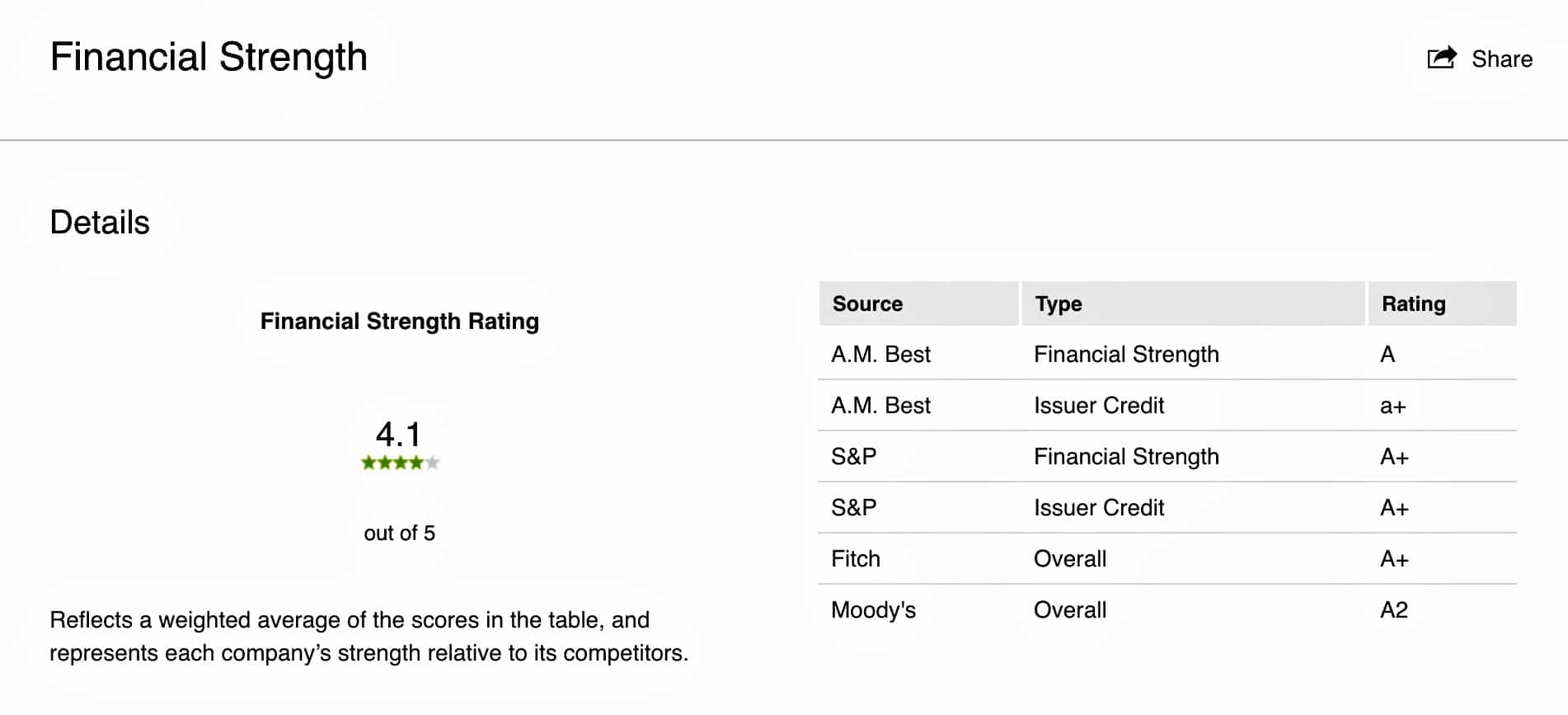
Consumers often express concern regarding whether an insurance company will be "around" to pay a claim 30 years from now. American General Life Insurance Company is monitored by rating agencies such as A.M. Best, S&P, and Moody’s. These agencies analyze the company’s capital adequacy, liquidity, and ability to meet its long-term contractual obligations.
Additionally, every state has a Life and Health Insurance Guaranty Association. If an insurance company were to become insolvent, these state-backed associations provide a safety net for policyholders up to certain limits (which vary by state). This system ensures that even in the unlikely event of a company failure, the vast majority of policyholders remain protected.
Frequently Asked Questions (FAQ)
Is American General Life Insurance still in business?
Yes. American General Life Insurance Company continues to operate as a subsidiary of Corebridge Financial. It remains an active issuer of life insurance, annuities, and retirement products, and it continues to service existing policies issued under its name.
Does American General offer "no medical exam" life insurance?
They do offer "simplified issue" products that may not require a traditional medical exam. However, these policies typically carry lower coverage limits and higher premiums per thousand dollars of death benefit compared to fully underwritten policies. Always read the policy summary to see if your specific product requires an exam.
How do I verify my American General policy details?
You can access your policy information through the Corebridge Financial online customer portal. If you have misplaced your policy documents, contact their customer service department directly using the phone number listed on your most recent premium statement or the official Corebridge website.
Can I change my beneficiary on an American General policy?
Yes. Policyholders generally retain the right to change their beneficiaries at any time. This is done by completing a "Change of Beneficiary" form provided by the company. It is recommended to review your beneficiaries every 3–5 years, or after significant life events like marriage, divorce, or the birth of a child.
What is the difference between AIG and American General?
American General was acquired by AIG many years ago. More recently, AIG spun off its life and retirement division, which was rebranded as Corebridge Financial. American General remains the legal issuer of many of these policies, but it operates under the strategic and financial umbrella of Corebridge.
Next Steps for Policyholders and Applicants
If you are currently researching American General Life Insurance, your next step should be to determine your coverage needs. If you are an existing policyholder, ensure that your contact information is up to date in the customer portal and that your beneficiary designations reflect your current wishes.
For those looking to purchase a new policy, request a "specimen policy" or a detailed quote from an independent agent. This document outlines the specific fees, surrender charges (if applicable), and interest crediting methods for permanent products. By reading the contract before signing, you eliminate the mystery surrounding the policy's performance and ensure the coverage aligns with your long-term financial goals.