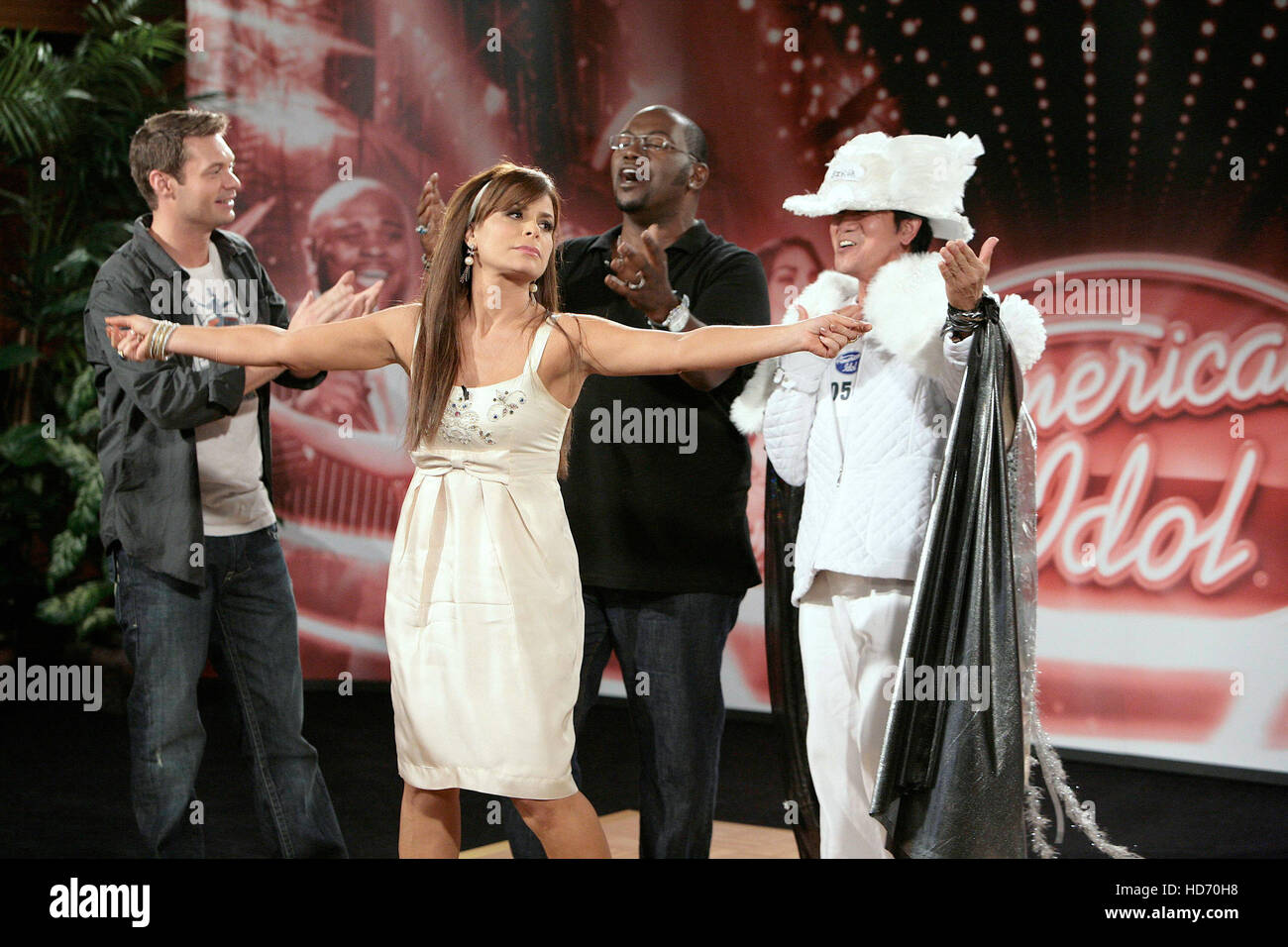
Randy Jackson’s trajectory from a world-class session bassist and record producer to a household name as a judge on American Idol, and eventually to a force in music production and chart-topping influence, serves as a masterclass in industry transition. While he is primarily remembered as the charismatic judge who spent twelve seasons behind the desk on the Fox network’s iteration of the hit singing competition, Jackson’s influence on the charts began long before he offered his first "Yo, dawg" to a hopeful contestant. Understanding his career requires examining the pivot point where a behind-the-scenes producer stepped into the spotlight and leveraged that visibility to influence the next generation of musical talent, ultimately leaving a lasting imprint on the recording industry’s commercial landscape.
The Foundation: A Career Before the Idol Desk
Before millions of viewers associated him with American Idol, Randy Jackson was a highly regarded musician and industry executive. Born in Baton Rouge, Louisiana, Jackson built his reputation as a formidable bassist, performing with industry titans such as Journey, Carlos Santana, and Billy Cobham. His technical proficiency allowed him to navigate various genres, from jazz-fusion to arena rock, which provided him with the credibility necessary to command respect as an A&R (Artists and Repertoire) executive at Columbia Records and MCA Records.
In the 1990s and early 2000s, Jackson’s role was to identify raw potential and shape it into marketable, chart-ready product. This background is critical to his tenure on American Idol; he was not simply a celebrity judge, but an insider who understood the mechanics of the Billboard charts, the importance of radio play, and the complexities of artist development. When he joined the original judging panel of American Idol in 2002 alongside Paula Abdul and Simon Cowell, he brought the ear of a man who had already contributed to multi-platinum album projects.
Auditions and the Discovery of Talent
The audition process on American Idol was, and remains, a high-stakes environment where the quality of selection determines the commercial viability of the show’s final product. As a judge, Jackson’s primary function during auditions was to filter thousands of hopefuls for vocal range, stage presence, and "the X-factor"—a quality he frequently referenced to explain the difference between a good singer and a potential star.
Jackson’s approach to auditions often prioritized technical ability mixed with commercial appeal. While Simon Cowell focused on blunt critique and Paula Abdul offered emotional support, Jackson acted as the technical bridge. His feedback frequently addressed vocal pitch, song choice, and how a performance would translate to a studio recording. This was a logical extension of his background in production; he was, in effect, performing a preliminary A&R screening for a major record label on national television.
Key Criteria for Success
When evaluating contestants, Jackson consistently looked for specific traits that would eventually translate to success on the charts:
- Vocal Consistency: The ability to perform under pressure without pitch fatigue.
- Artistic Identity: The ability to make a cover song feel original, a crucial skill for artists who have not yet written their own material.
- Marketability: Whether the contestant could fit into existing radio formats such as Pop, R&B, or Country.
Bridging the Gap: From TV Stage to Billboard Success
The transition from a televised competition to genuine chart success is historically difficult. Jackson’s expertise was vital during the mentorship phases of the show. He was one of the few individuals on the production team who could guide contestants through the reality of recording sessions. The shift from performing live in front of a studio audience to entering a sound booth to record a track is where many contestants failed; Jackson provided the technical guidance to minimize this friction.
His influence extended to the selection of producers and songwriters for the contestants' debut albums. Because he maintained deep connections within the music industry—having worked with legendary producers like Narada Michael Walden—he could help position finalists with the right creative teams. This network-driven approach ensured that American Idol alumni were not just singers, but were being prepared to compete with established artists already populating the charts.
The Economics of Post-Idol Careers
The commercial success of American Idol contestants often relied on the "Idol machine," which integrated the show’s momentum with established industry marketing apparatuses. The following table illustrates the operational phases of an Idol contestant’s transition from the audition stage to potential chart dominance.
| Phase | Focus Area | Goal | Jackson’s Role |
|---|---|---|---|
| Audition | Technical Skill | Eliminate non-starters | Identifying "The X-Factor" |
| Hollywood Week | Stamina & Growth | Thin the field | Vocal coaching/critique |
| Top 12 Live | Audience Engagement | Build a fanbase | Shaping song choices |
| Finale/Album | Studio Production | Commercial viability | Industry networking |
This structure allowed contestants to move from relative obscurity to a professional recording contract in a matter of months. Jackson’s role was to ensure that the transition maintained the quality standards of professional studio production, minimizing the "reality TV" stigma that often hindered contestants early in the show’s history.
Challenges and Limitations in Chart Success
Despite Jackson’s guidance and the platform provided by American Idol, long-term chart success was never guaranteed. The music industry in the 2000s and early 2010s faced significant disruption due to the rise of digital music distribution, which fundamentally altered how artists broke into the mainstream.
Common obstacles for contestants included:
- Over-exposure: The intensity of the show often left the public fatigued with a contestant by the time their debut album reached stores.
- Lack of Songwriting Autonomy: Many early winners were limited to performing covers or songs written by industry professionals, making it difficult to develop a long-term, authentic artistic brand.
- Genre Mismatch: Often, the style of music that won over a general voting public did not align with the genre-specific requirements of contemporary radio play.
Jackson often addressed these issues by encouraging contestants to focus on their unique vocal signature, recognizing that in a saturated market, a distinct tone was often more valuable than technical perfection.
Analyzing the "Randy Jackson Effect"
The "Randy Jackson Effect" refers to the specific professional standard he brought to the judges' table. By evaluating contestants through the lens of a record producer, he legitimized the competition as a viable pathway into the music industry. His tenure established that the judges were not just TV personalities, but mentors whose advice had real-world implications for a contestant's future salary, credibility, and chart potential.
His ability to pivot between different roles—judge, producer, and industry diplomat—provided a blueprint for future talent competition judges. He demonstrated that the role of a judge in a singing competition is most effective when it serves as a bridge between the amateur audition stage and the professional studio environment.
Frequently Asked Questions
1. How did Randy Jackson’s past as a session musician influence his judging style? His background as a professional bassist gave him an intimate understanding of the rhythm, tone, and musicality required to sustain a career. Unlike a personality-based judge, he evaluated performances based on the practical realities of studio recording and touring, which provided contestants with actionable, technical advice.
2. Was Randy Jackson responsible for the chart success of Idol winners? While he was not solely responsible, his industry connections and mentorship were pivotal. He helped bridge the gap between amateur performance and professional studio work, ensuring that contestants were paired with the right creative teams to produce competitive tracks.
3. What made an "Idol-ready" contestant in the eyes of Randy Jackson? Jackson looked for contestants who showed growth, technical vocal proficiency, and a clear understanding of their own brand. He often favored those who could take a classic song and apply a modern arrangement, proving they could function as viable recording artists in the current market.
4. How does the 2026 industry landscape differ from the early days of Idol? In 2026, the barrier to entry for independent artists is much lower due to social media and decentralized distribution. During the peak of American Idol, the "Gatekeeper" model was much more rigid. Jackson’s expertise was essential then because he provided access to those gates; today, artists can build their own charts, though his lessons on vocal and performance quality remain timeless.
Recommendations for Aspiring Artists
For performers today, the lessons from Randy Jackson’s career are clear: leverage your platform, prioritize your artistic identity, and understand the technical side of your craft. While reality competitions remain a powerful tool for exposure, they are only as effective as the preparation that follows the final episode. Aspiring artists should treat every performance as a studio-quality production, ensuring that their vocal output is consistent, their arrangements are deliberate, and their professional network is built on the same collaborative spirit Jackson championed throughout his career. Focus on the work behind the scenes, as the polish of the studio is what ultimately determines the longevity of success on the charts.