When a source does not have a named individual author, APA Style 7th Edition requires you to move the title of the work to the author position in the reference list. For in-text citations, use the title (or a shortened version of it) followed by the year of publication. If the work is specifically credited to "Anonymous," use that as the author’s name.
Compiling a research paper in 2026 often involves navigating a digital landscape where traditional bylines are missing. Whether you are citing a government report, a corporate website, or a news article with no designated journalist, maintaining the integrity of your APA formatting is essential for academic credibility. Understanding how to handle these "authorless" sources ensures your reader can locate your evidence while adhering to the rigorous standards of the American Psychological Association.
The Logic of APA Style for Missing Information
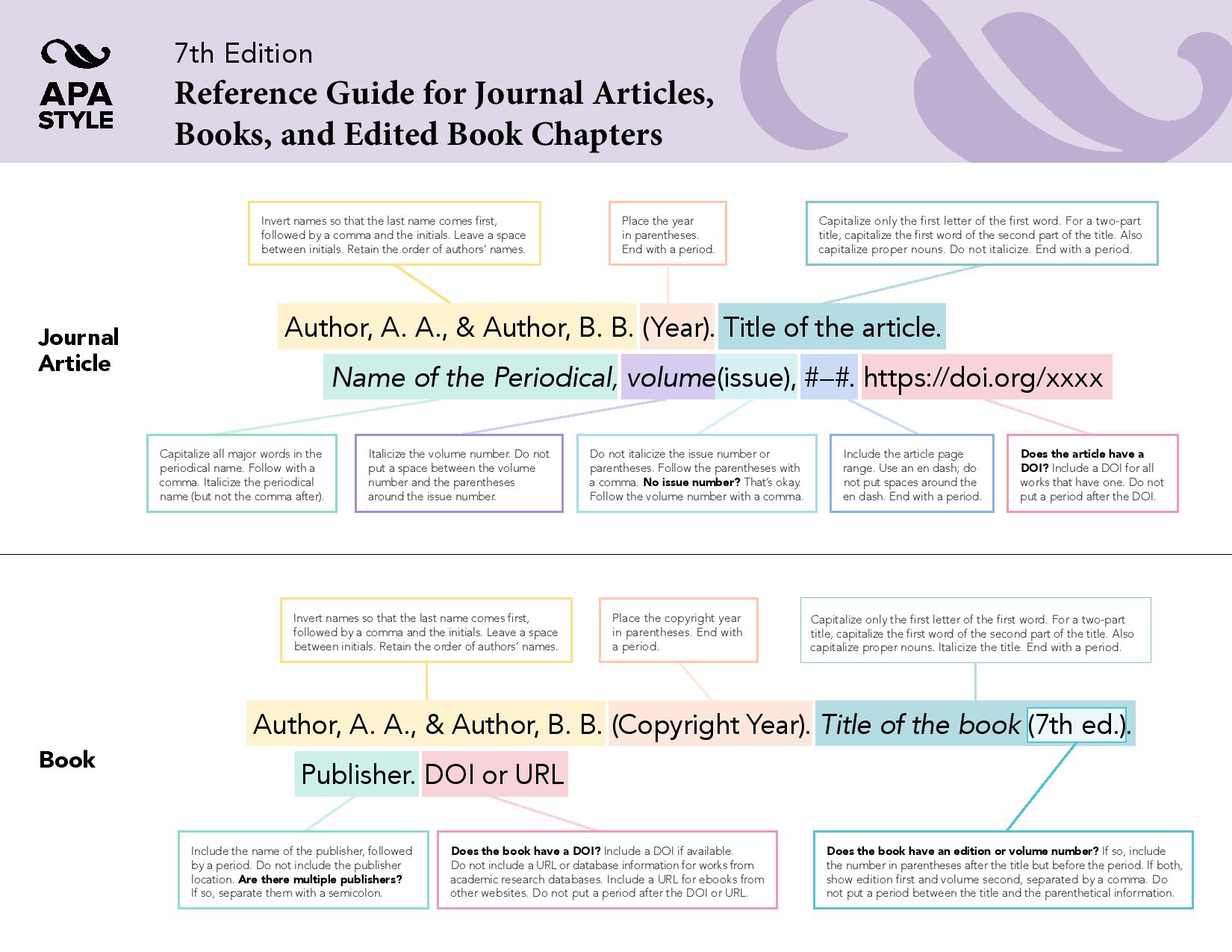
The foundation of APA Style (7th Edition) is built on four pillars: Who (Author), When (Date), What (Title), and Where (Source). When the "Who" is missing, the system does not break; it simply shifts the hierarchy. In the absence of a person, the "What" (the Title) becomes the primary identifier.
Before assuming a source has no author, it is vital to check for a group author. Many organizational documents—from the World Health Organization to Microsoft—do not list an individual person but are credited to the institution itself. In these cases, the organization is the author. You only treat a source as having "no author" if neither an individual nor an organization can be identified as the creator.
Formatting the Reference List Entry
The reference list provides the full details necessary for a reader to retrieve the source. When there is no author, the entry begins with the title of the work.
General Structure for No Author
- Title of the work (written in sentence case).
- Date of publication (in parentheses).
- Source information (such as the name of the website, the journal, or the publisher).
- DOI or URL.
Examples by Source Type
Webpage on a Website If you are citing a specific page from a website like a health portal where no author or group author is listed:
Allergic rhinitis. (2024, May 12). Healthline. https://www.healthline.com/health/allergic-rhinitis
Books and Reports For a standalone work like a book or a technical report with no author:
Interstellar travel: A guide to the galaxy. (2022). Star Press.
Dictionary or Encyclopedia Entries Reference works often lack a single author for individual entries:
Heuristic. (n.d.). In Merriam-Webster.com dictionary. Retrieved January 15, 2026, from https://www.merriam-webster.com/dictionary/heuristic
Rules for Alphabetizing
In an APA reference list, entries are alphabetized by the first word of the entry. When the title moves to the author position, you alphabetize by the first significant word of the title. You must ignore articles like "A," "An," and "The" at the beginning of the title when determining the alphabetical order. For example, a book titled The History of Rome would be alphabetized under "H," not "T."
Formatting In-Text Citations
In-text citations point the reader to the corresponding entry in the reference list. When the reference list entry starts with a title, the in-text citation must also use that title so the reader can find it easily.
Parenthetical vs. Narrative Citations
You have two options for citing sources in the body of your text:
- Parenthetical Citation: The title and year are placed in parentheses at the end of the sentence.
- Narrative Citation: The title is incorporated naturally into the sentence.
Formatting the Title in Citations
How you format the title in the text depends on how the title is formatted in the reference list:
- Italics: If the title is italicized in the reference list (e.g., a book, a report, or a whole website), italicize it in the in-text citation.
- Quotation Marks: If the title is not italicized in the reference list (e.g., an article, a webpage, or a book chapter), put the title in double quotation marks in the in-text citation.
Shortening Long Titles
Reference list titles can be quite long. For in-text citations, you should shorten a long title to the first few words to keep the text readable. Ensure the shortened version starts with the same word used to alphabetize the reference list entry.
Example of Shortening:
- Full Title: The impact of climate change on coastal avian populations in the Pacific Northwest
- In-text Citation: (The Impact of Climate Change, 2025)
Special Cases: Group Authors and Anonymous
Confusion often arises between "no author," "group author," and "anonymous." Distinguishing between these is critical for accurate APA 7th Edition formatting.
Group Authors
A group author is a government agency, association, non-profit, or corporation. If a webpage is published by the American Psychological Association and no individual name is listed, the "Author" is the American Psychological Association. Do not move the title to the author position in this case.
- Reference: American Psychological Association. (2026). Stress management in the workplace. https://www.apa.org/topics/stress-management
- In-text: (American Psychological Association, 2026)
The "Anonymous" Designation
Only use the word "Anonymous" as the author if the work is explicitly signed as "Anonymous." This is common in historical texts or specific legal/literary contexts. If the work simply doesn't list an author, do not label it as anonymous; follow the "title-first" rule instead.
- Reference: Anonymous. (19th Century). The secret memoirs of a courtier. Victorian Press.
- In-text: (Anonymous, 19th Century)
Handling Missing Dates (n.d.)
It is common for sources without authors—particularly webpages—to also lack a publication date. In these instances, you must use the abbreviation "n.d." (which stands for "no date").
Reference List Format:
Title of work. (n.d.). Source Name. URL
In-Text Citation Format:
("Title of Work," n.d.)
When using "n.d." for an online source that is likely to change (like a wiki or a live data dashboard), you should also include a retrieval date in the reference list entry to provide a timestamp for the information you accessed.
Summary Table: APA No-Author Scenarios
The following table summarizes how to handle various scenarios when an individual author's name is not available.
| Source Type | Reference List Start | In-Text Citation Format | Formatting Note |
|---|---|---|---|
| Journal Article | Article Title | ("Short Title," Year) | Use quotation marks for articles. |
| Book / Report | Title of Book | (Short Title, Year) | Use italics for standalone works. |
| Webpage | Page Title | ("Short Title," Year) | Use quotation marks for webpages. |
| Group Author | Name of Group | (Group Name, Year) | Group serves as the author. |
| Anonymous | Anonymous | (Anonymous, Year) | Only if "Anonymous" is printed. |
| Dictionary Entry | Term name | ("Term," Year) | Often includes "n.d." |
Technical Nuances of Title Case and Sentence Case
One of the most frequent errors in APA formatting relates to capitalization. APA uses two different styles depending on where the title appears.
Sentence Case (Reference List)
In the reference list, titles are written in sentence case. This means you only capitalize:
- The first word of the title.
- The first word of a subtitle (after a colon or dash).
- Proper nouns (names of people, places, or specific organizations).
Title Case (In-Text)
In the body of your paper (in-text citations), titles are written in title case. This means you capitalize:
- All major words (nouns, verbs, adjectives, adverbs, pronouns).
- Any word with four or more letters.
- The first word of the title and subtitle.
This distinction is important. Even if the title is in sentence case at the end of your paper, it must be in title case when you cite it within your paragraphs.
Common Mistakes to Avoid
- Using the URL as the Author: Never use a URL (e.g., www.nytimes.com) as the author name in your citation. Use the title of the article instead.
- Using "Author Unknown": While you might feel the author is unknown, APA does not use the phrase "Author Unknown" or "Unknown." Use the title.
- Capitalizing every word in the Reference List: Remember that in the reference list, the title (now in the author's spot) should still follow sentence case rules.
- Forgetting to shorten the title: If your title is "Economic Impacts of Subsidized Housing in Urban Environments during the Mid-20th Century," your in-text citation should just be (Economic Impacts, 2026).
Frequently Asked Questions
What if the source is a Wikipedia article?
Wikipedia articles are classic examples of sources without a single author. For the reference list, the title of the article comes first. Because Wikipedia content changes constantly, APA 7th Edition requires a retrieval date.
- Reference: Quantum entanglement. (2026, January 10). In Wikipedia. https://en.wikipedia.org/wiki/Quantum_entanglement
- In-text: ("Quantum Entanglement," 2026)
How do I cite a legal document without an author?
Legal citations in APA style follow The Bluebook: A Uniform System of Citation. Most legal materials (laws, court cases) do not have authors in the traditional sense. You typically start with the name of the act or the case name.
- Reference: Americans with Disabilities Act of 1990, 42 U.S.C. § 12101 et seq. (1990).
- In-text: (Americans with Disabilities Act, 1990)
If I have two sources with no author and the same title, how do I cite them?
If you have two different works with the same title and no author, and they were published in the same year, you differentiate them by adding lowercase letters (a, b, c) after the year.
- Ref 1: Climate Change. (2026a). Source A.
- Ref 2: Climate Change. (2026b). Source B.
- In-text: (Climate Change, 2026a) and (Climate Change, 2026b).
Should I cite the website name as the author if there is no person?
Only if the website name is also the name of the organization responsible for the content. For example, "The World Bank" is an organization and should be listed as the group author. However, "The Huffington Post" is a publisher/source, not necessarily the "author" of every unsourced news blurb. If it’s a news site with no author, use the article title.
Does the 7th Edition of APA differ from the 6th regarding no-author sources?
The 7th Edition simplified many rules. One major change is that you no longer include the "publisher location" for books, and for group authors, you no longer repeat the author's name if it is the same as the site name. However, the core "title-to-author-position" rule remained consistent between the 6th and 7th editions.
Practical Recommendation
When you encounter a source without an author, the most effective next step is to verify if there is a Group Author (corporate or organizational) responsible for the work. This is the most common "missing" author in academic and professional writing. If no group author exists, carefully move the Title to the author position in your reference list, ensuring you use sentence case. For your in-text citations, use a shortened version of that title in title case, making sure to apply italics for standalone works (books/reports) or quotation marks for parts of works (articles/webpages). Consistently applying these rules will ensure your 2026 research projects meet the highest academic standards.