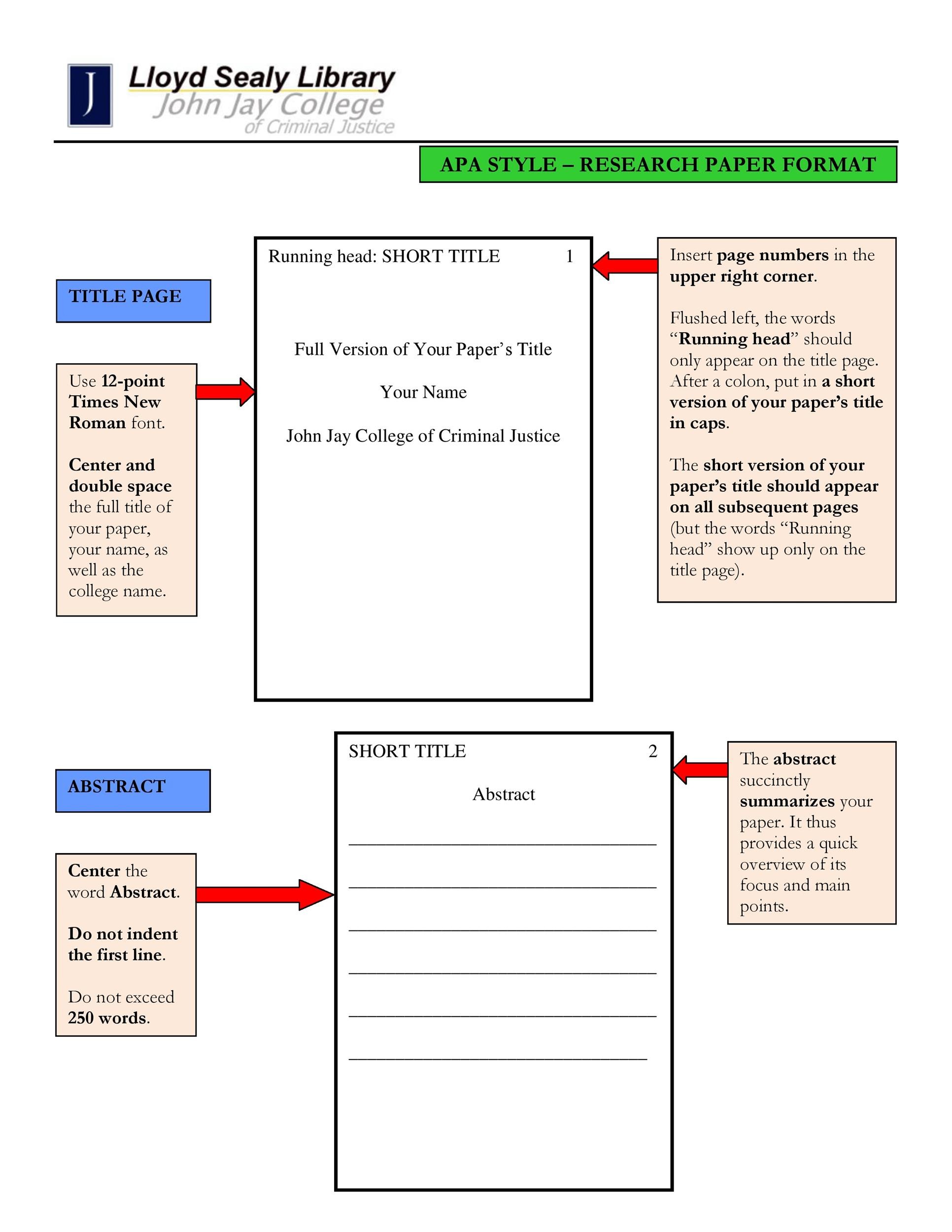
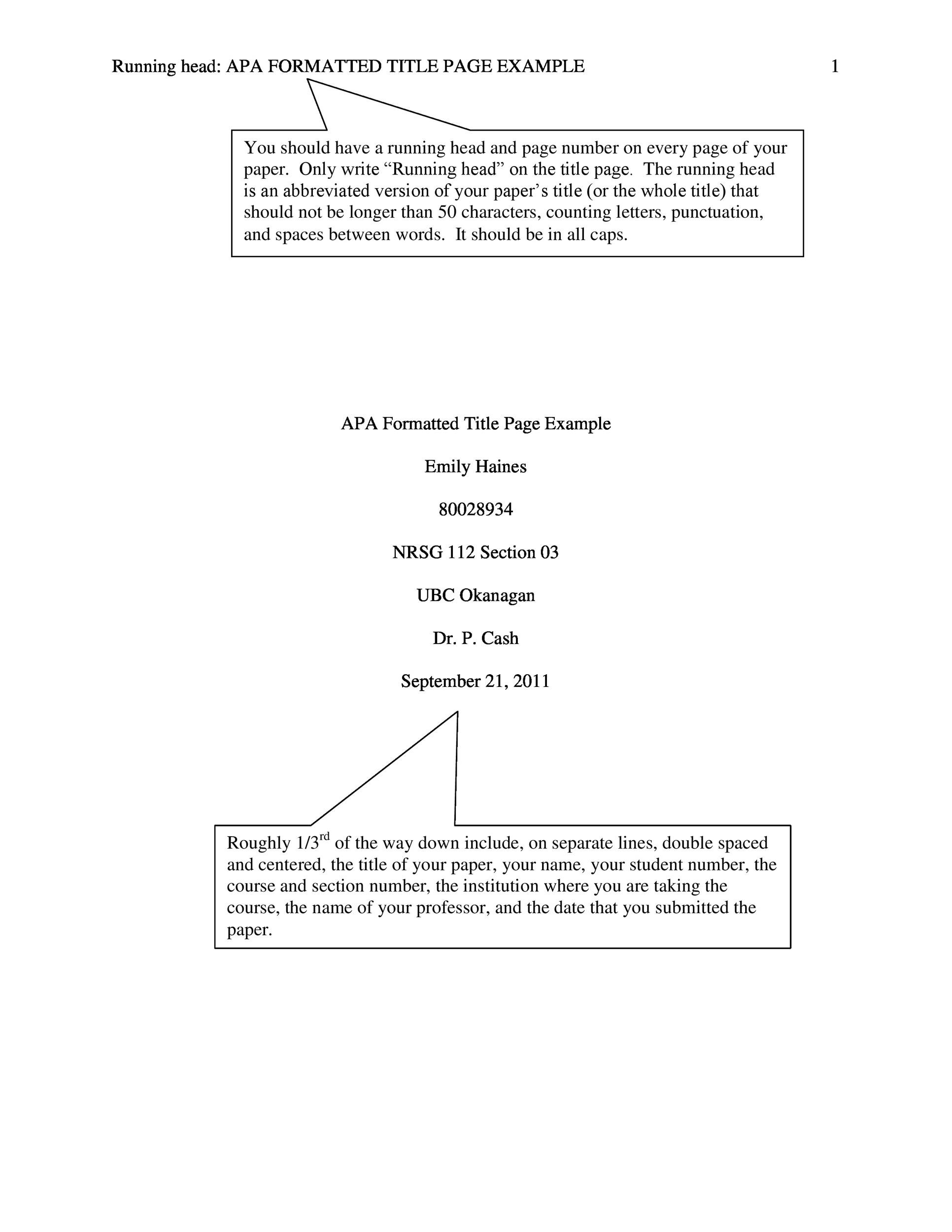
An APA paper format outline serves as the structural blueprint for academic writing, ensuring compliance with American Psychological Association (7th edition) standards. It organizes key arguments using a hierarchical heading system, integrating specific formatting rules for margins, fonts, and citations to facilitate a logical flow from the title page to the references section.
The transition from a rough set of notes to a polished academic manuscript often feels daunting. However, the American Psychological Association (APA) provides a rigorous framework designed to enhance clarity and provide a consistent reading experience. As we navigate the academic landscape of 2026, the 7th edition of the APA Manual remains the definitive authority on scholarly communication. This guide will walk you through the precise mechanics of constructing an APA paper format outline, ensuring your research is presented with the professional rigor required in social sciences, nursing, business, and education.
The Role of the APA Outline in Academic Writing
An outline is more than just a list of topics; it is a strategic map of your intellectual journey. In the context of APA style, the outline ensures that your paper follows a deductive or inductive logic that the reader can easily track. By establishing your hierarchy early, you avoid the common pitfall of "organizational drift," where the middle of the paper loses sight of the thesis statement.
In 2026, where digital collaboration and AI-assisted drafting are common, a structured outline remains the best defense against fragmented writing. It allows you to visualize the weight of your arguments—if one section of your outline has ten sub-points and another has only two, you have a visual cue that your paper may be unbalanced.
Core Formatting Prerequisites for APA 7th Edition
Before drafting your outline, you must set the "stage" for your document. The APA 7th edition introduced significant flexibility regarding typography while maintaining strict rules for spacing and margins.
Typography and Spacing
For decades, 12-point Times New Roman was the non-negotiable standard. Today, the APA permits a variety of accessible fonts. You may choose from:
- Sans Serif Fonts: 11-point Calibri, 11-point Arial, or 10-point Lucida Sans Unicode.
- Serif Fonts: 12-point Times New Roman, 11-point Georgia, or normal (10-point) Computer Modern.
Regardless of the font, the entire document—including the outline, title page, and references—must be double-spaced. You should not add extra space before or after paragraphs.
Margins and Indentation
Margins must be set to 1 inch (2.54 cm) on all sides of the page. This provides ample white space for instructor comments or peer review notations. For the outline itself, you will use the standard 0.5-inch indentation for each subordinate level of the hierarchy.
The Anatomy of an APA Paper
To create an effective outline, you must understand the standard components of an APA-style paper. While the specific sections may vary based on whether you are writing a literature review or an empirical study, the basic structure remains consistent.
1. The Title Page
In the 7th edition, there are distinct formats for student papers and professional manuscripts.
- Student Version: Includes the paper title, author name, affiliation (department and university), course number and name, instructor name, and due date.
- Professional Version: Includes the paper title, author names and affiliations, author note, and a running head.
Notably, in 2026, the running head is no longer required for student papers unless specifically requested by the instructor.
2. The Abstract
An abstract is a concise summary of the paper, typically between 150 and 250 words. It should outline the research problem, method, key findings, and conclusions. In your outline, the Abstract is usually the first major heading after the Title Page, though it is often written last.
3. The Body
This is where the majority of your outline will focus. The body is typically divided into:
- Introduction: Introduces the topic, presents the problem, and states the thesis. Note that in APA style, the word "Introduction" is not used as a heading; the paper title is repeated at the top of the first page of text.
- Method: Describes how the research was conducted.
- Results: Reports the findings without interpretation.
- Discussion: Interprets the results, discusses limitations, and suggests future research.
4. References
Every source cited in the body must appear in the references, and vice versa. This section starts on a new page.
Types of APA Outlines
There is no "one-size-fits-all" outline. Depending on the complexity of your topic, you might choose one of the following three formats.
The Alphanumeric Outline
This is the most common format used in American academia. It uses a specific sequence of characters:
- Roman Numerals (I, II, III): Main headings (e.g., Major sections of the paper).
- Capitalized Letters (A, B, C): Subheadings or supporting arguments.
- Arabic Numerals (1, 2, 3): Specific evidence or data points.
- Lowercase Letters (a, b, c): Further details or citations.
The Full Sentence Outline
In a full sentence outline, every entry is written as a complete sentence. This is highly recommended for complex research papers because it forces the writer to clarify their thoughts early. If you can't summarize a section in a single sentence, you likely haven't narrowed the focus enough.
The Decimal Outline
Common in technical and scientific reports, the decimal outline uses numbers (1.0, 1.1, 1.1.1) to show the relationship between ideas. This format is particularly useful for long manuscripts where cross-referencing specific sections is necessary.
Mastering APA Heading Levels
One of the most critical aspects of an APA paper format outline is the hierarchy of headings. APA uses five levels of headings to indicate the importance and relationship of different sections.
| Heading Level | Formatting Requirements |
|---|---|
| Level 1 | Centered, Bold, Title Case Capitalization |
| Level 2 | Flush Left, Bold, Title Case Capitalization |
| Level 3 | Flush Left, Bold Italic, Title Case Capitalization |
| Level 4 | Indented, Bold, Title Case Capitalization, Ending with a Period. |
| Level 5 | Indented, Bold Italic, Title Case Capitalization, Ending with a Period. |
When creating your outline, ensure that you never have a single sub-heading. If you have a Level 2 heading "A," you must have a Level 2 heading "B." This rule ensures logical division; you cannot "divide" a topic into only one part.
Step-by-Step Guide to Constructing Your Outline
Step 1: Define Your Thesis and Scope
Before you type "I. Introduction," you must know what your paper is arguing. Your thesis statement should be the "North Star" for your outline. Every major heading should directly support the thesis.
Step 2: Identify Major Sections
Start with the primary APA sections (Method, Results, Discussion). If you are writing a theoretical paper, these sections might be replaced by specific thematic arguments. Use Level 1 headings for these.
Step 3: Flesh Out Sub-arguments
Under each Level 1 heading, identify the 2-4 major points you need to make. These become your Level 2 headings. For example, under "Method," you might have "Participants," "Materials," and "Procedures."
Step 4: Integrate Evidence
For each Level 2 heading, list the specific studies or data points you will use. This is where you should include brief in-text citation notes (e.g., Smith, 2024) to ensure your final draft is easy to cite.
Step 5: Review for Logical Flow
Read your outline from top to bottom. Does each section transition naturally into the next? Does the sequence of arguments build toward a convincing conclusion? If not, move sections around now—it is much easier to reorganize an outline than a 20-page draft.
APA Style Nuances: Bias-Free Language and Style
A significant part of the APA 7th edition, which remains central in 2026, is the commitment to bias-free language. Your outline should reflect this sensitivity.
- The Singular "They": APA endorses the use of "they" as a generic third-person singular pronoun to avoid gender bias.
- Specificity: Use specific labels for groups of people (e.g., "participants aged 65-75" rather than "the elderly").
- Active Voice: While the passive voice was once the standard in science, APA now encourages the active voice (e.g., "We conducted the survey" instead of "The survey was conducted") to improve clarity.
Common Mistakes to Avoid in APA Outlining
Even experienced researchers can stumble over the specific requirements of APA style. Here are the most frequent errors observed in 2026:
- Over-complicating Levels: Do not use Level 4 or 5 headings unless your paper is exceptionally long (such as a dissertation). For most undergraduate and graduate papers, Levels 1 through 3 are sufficient.
- Inconsistent Capitalization: Remember that APA uses Title Case for headings (capitalizing major words) but Sentence Case for entries in the Reference list.
- Mismatched Formatting: Ensure the font used in your outline matches the font you intend to use for the final paper. If you switch from Calibri to Times New Roman later, it can throw off your page counts and visual hierarchy.
- Ignoring the Title Page: The outline process should include a draft of the title page. Getting the title right early helps solidify the focus of the entire project.
Verification and Quality Control
Once your outline is complete, verify it against the official guidelines. The American Psychological Association's official style website provides updated examples and "style alerts" that are invaluable for ensuring compliance. Additionally, tools like the Purdue Online Writing Lab (OWL) offer comprehensive visual samples of what a finished APA paper should look like.
In the academic environment of 2026, many universities also provide specific templates within their Learning Management Systems (LMS). Always cross-reference your manual outline with your institutional requirements, as some departments may have slight variations regarding the inclusion of an Abstract or specific Appendices.
FAQ: Frequently Asked Questions about APA Outlines
Is a table of contents the same as an APA outline?
No. An outline is a tool used during the writing process to organize thoughts and structure arguments. A table of contents is a formal list of the finished paper’s sections and page numbers. While they share a similar hierarchy, the outline is much more detailed regarding the evidence and sub-points within each section.
Does the APA Manual (7th ed.) mandate a specific outline format?
Technically, no. The APA Manual provides strict rules for the final paper (headings, citations, layout), but it does not dictate how you must organize your notes. However, using the alphanumeric or decimal system is the standard academic practice because it mirrors the heading levels required in the final document.
Should I include citations in my outline?
Yes. Including brief parenthetical citations in your outline is a "best practice." It ensures that when you begin the drafting phase, you have your evidence already mapped to specific arguments, which significantly reduces the risk of accidental plagiarism or "citation fatigue" at the end of the project.
How do I format a Level 1 heading in my outline?
In your final paper, a Level 1 heading is centered and bold. In an alphanumeric outline, your first Roman Numeral (I) effectively serves as your Level 1 heading. When you transition the outline to the final draft, you will convert those Roman Numeral headers into the centered, bolded APA format.
Do I need to outline the References section?
You do not need to outline individual references. However, your outline should include a placeholder for "References" at the end to remind you to compile your list. In 2026, many writers use citation management software, so the "outline" for this section is often just a folder of digital sources ready for export.
Is the running head required for all APA papers in 2026?
No. According to the APA 7th edition guidelines, the running head is only required for professional papers intended for publication. Student papers do not require a running head unless the instructor or department specifically requests it. Always check your assignment rubric for this specific detail.
Practical Recommendation for Next Actions
To successfully implement an APA paper format outline, start by creating a "Master Template" in your word processor. Set your margins to 1 inch and your line spacing to double. Input the five levels of APA headings as "Styles" in your software. This allows you to apply the correct formatting with a single click as you move from your outline to your first draft. Once your structure is set, focus on the logic: ensure every Level 2 heading serves as a direct bridge between your Level 1 section and your specific evidence. By investing time in a rigorous outline now, you ensure a smoother, faster, and more professional writing process.