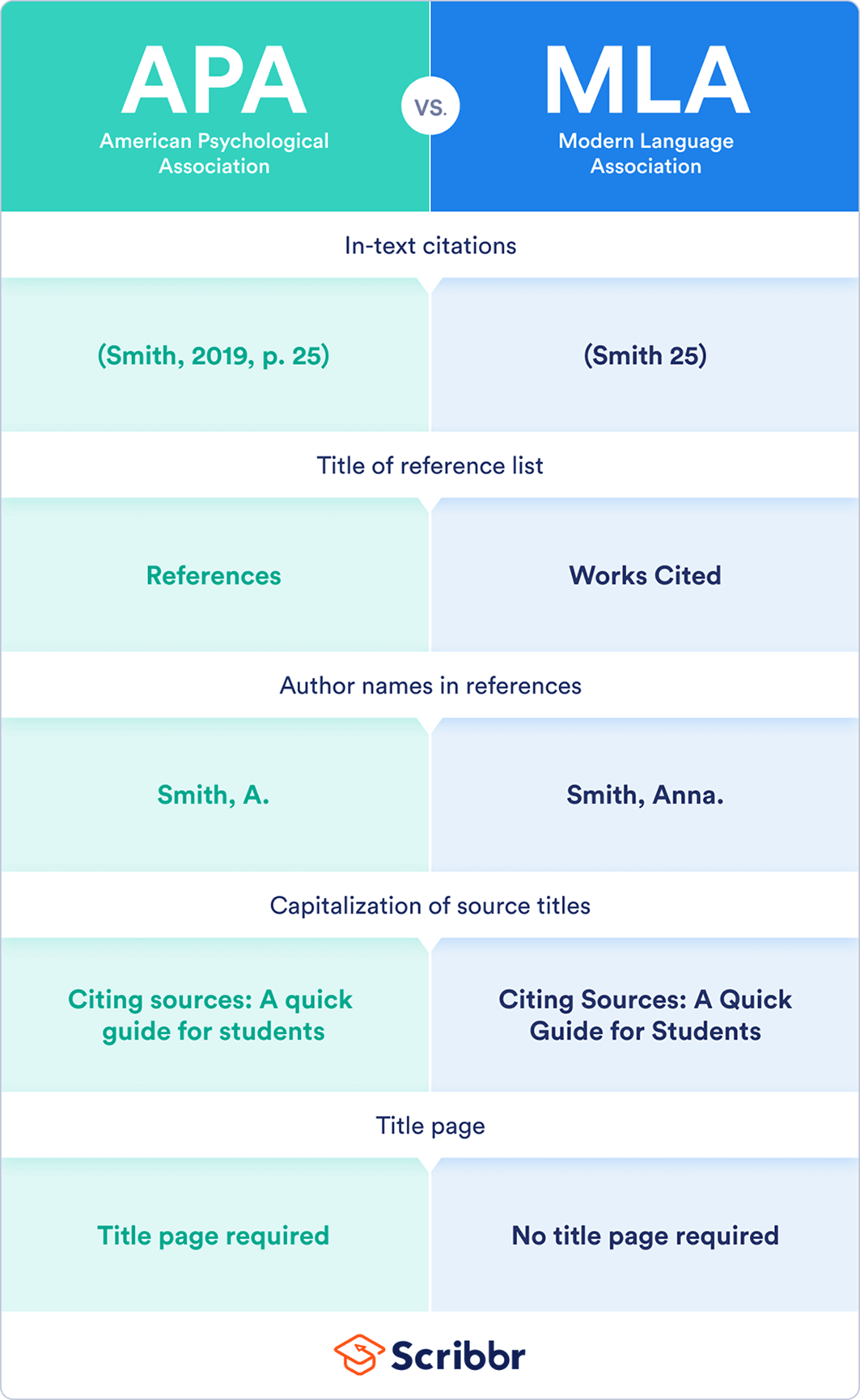
To cite a journal article with multiple authors in APA 7th Edition, list up to 20 authors in the reference list, using an ampersand before the final name. For in-text citations, use the first author’s name followed by "et al." for any work with three or more authors.
Effective academic communication relies heavily on the standardized attribution of ideas. As of 2026, the American Psychological Association (APA) 7th Edition remains the gold standard for social sciences, education, and nursing. One of the most frequent challenges researchers face is correctly formatting citations for journal articles featuring multiple contributors. Because modern scientific research is increasingly collaborative—often involving dozens of researchers across multiple institutions—understanding how to handle these lists is essential for maintaining academic integrity and ensuring your work meets professional publication standards.
The Evolution of Multiple Author Citations
The shift from the 6th to the 7th edition of the APA manual significantly simplified how we cite multiple authors, particularly for in-text citations. In the past, the rules changed depending on whether it was the first time you were mentioning a source or a subsequent mention. Today, the rules are more streamlined, designed to reduce the "clutter" of long lists of names within the body of a paper while providing comprehensive credit in the final reference list.
In the current 2026 academic landscape, precision in these citations is not merely about following rules; it is about facilitating the automated indexing systems used by databases like Scopus, Web of Science, and Google Scholar. When a citation is formatted correctly, these systems can accurately map the "citation web," ensuring that all contributors receive the professional credit they deserve for their research.
In-Text Citation Rules for Multiple Authors
In-text citations are brief markers that point the reader toward the full entry in the reference list. They appear in two forms: parenthetical (where the name and date are in parentheses) and narrative (where the author's name is part of the sentence).
One or Two Authors
For a journal article with one or two authors, the process is straightforward. You must list both names every time the citation occurs.
- Two Authors (Parenthetical): (Adams & Baker, 2024)
- Two Authors (Narrative): Adams and Baker (2024) argued that...
Note the use of the ampersand (&) in parenthetical citations and the word "and" in narrative citations. This is a subtle but vital distinction in APA style.
Three or More Authors
This is where the 7th edition simplified the process. For any article with three or more authors, you use the first author’s last name followed by "et al." (which is Latin for "and others") from the very first mention.
- Three+ Authors (Parenthetical): (Chen et al., 2025)
- Three+ Authors (Narrative): Chen et al. (2025) discovered...
Important Caution: Never put a comma between the author’s name and "et al." However, always put a period after "al" because it is an abbreviation. If the "et al." citation appears at the end of a sentence in parentheses, the period after "al" is followed by a comma, then the year, then the closing parenthesis, and finally the sentence period.
Resolving Ambiguity in In-Text Citations
Sometimes, you may cite two different articles from the same year where the lead authors have the same last name, or the same lead author has two different teams of collaborators. If using "et al." would make two different citations look identical, you must list as many names as necessary to distinguish the two references, followed by "et al."
For example, if you have:
- Berry, Miller, and Jones (2026)
- Berry, Smith, and Davis (2026)
The standard "Berry et al. (2026)" would be ambiguous. Instead, you would write:
- Berry, Miller, et al. (2026)
- Berry, Smith, et al. (2026)
Reference List Formatting for Multiple Authors
While in-text citations are designed for brevity, the reference list is designed for complete disclosure. The rules for the reference list depend on exactly how many authors the article has.
Articles with 2 to 20 Authors
In the reference list, you must provide the surnames and initials for up to and including 20 authors.
- Use a comma to separate authors.
- Use an ampersand (&) before the final author's name.
- Do not use "et al." in the reference list unless there are 21 or more authors.
Format Example (4 Authors): Author, A. A., Author, B. B., Author, C. C., & Author, D. D. (Year). Title of the article. Title of Periodical, Volume(Issue), Page range. https://doi.org/xxxx
Articles with 21 or More Authors
When a journal article has a massive list of contributors (common in physics or genomic research), APA 7th Edition uses an ellipsis to bridge the gap.
- List the first 19 authors.
- Insert an ellipsis (. . .) but no ampersand.
- List the final author’s name.
This results in a citation that displays the first 19 people who led the research and the final person (often the principal investigator or lab head), totaling 20 names shown in the entry.
| Number of Authors | In-Text Citation (First & Subsequent) | Reference List Rule |
|---|---|---|
| 1 Author | (Smith, 2026) | Smith, J. A. |
| 2 Authors | (Smith & Jones, 2026) | Smith, J. A., & Jones, R. B. |
| 3-20 Authors | (Smith et al., 2026) | List all names (up to 20); use & before last name. |
| 21+ Authors | (Smith et al., 2026) | List first 19, then ellipsis (. . .), then final name. |
Structural Elements of a Journal Reference
To successfully cite a journal article, you need more than just the names. You must also format the "source" information correctly. By 2026, almost all academic journals are accessed digitally, making the DOI (Digital Object Identifier) the most critical component after the author names.
1. The Author Component
Invert all names, providing the surname first, followed by a comma and the initials. For example, "John Michael Smith" becomes "Smith, J. M." Always maintain the order of authors as they appear on the published article; never rearrange them alphabetically, as the order usually signifies the level of contribution.
2. The Date Component
The year should be enclosed in parentheses followed by a period: (2026). If the journal is a newsletter or magazine that includes a month or season, include it: (2026, Spring) or (2026, January).
3. The Title Component
The article title uses sentence case. This means you only capitalize the first word of the title, the first word of the subtitle (after a colon), and any proper nouns. Do not italicize the article title.
4. The Source Component
The journal title and the volume number are both italicized. The issue number is placed in parentheses immediately after the volume number but is not italicized.
- Example: Journal of Academic Research, 14(2), 115–130.
5. The DOI or URL
The DOI is a permanent link to the article. In APA 7th Edition, DOIs must be formatted as functional URLs: https://doi.org/10.xxxx/xxxxxx. If a DOI is not available and the article was retrieved from a public website (not an academic database), include the URL. If the article was retrieved from a standard academic database (like JSTOR or PsycINFO) and lacks a DOI, you generally do not need to include a URL, as the database is implied.
Handling Special Author Scenarios
Not every journal article follows the standard "First Name, Last Name" format. Modern scholarship often involves organizations or researchers with specific naming conventions.
Group Authors (Organizations or Task Forces)
Sometimes an article is credited to a group, such as the "World Health Organization" or the "American Psychological Association."
- First In-Text Mention: (World Health Organization [WHO], 2026)
- Subsequent In-Text Mentions: (WHO, 2026)
- Reference List: World Health Organization. (2026). Title of article...
Authors with Hyphenated Initials
If an author has a hyphenated first name, such as "Jean-Baptiste," the initials should be hyphenated in the reference list: "Smith, J.-B."
Same Surname Authors
If your paper cites two different primary authors with the same last name (e.g., A. Smith and B. Smith), you should include the authors' first initials in the in-text citations to avoid confusion, even if the years of publication are different.
- Example: (A. Smith, 2024; B. Smith, 2025).
Common Pitfalls to Avoid in 2026
Despite the maturity of the APA 7th Edition rules, several errors remain common among students and researchers.
- Overusing "et al." in the Reference List: Remember that the reference list is where you give full credit. You should only use the ellipsis/et al. logic if there are 21 or more authors. If there are 15 authors, you must type out all 15.
- Italicization Errors: A frequent mistake is italicizing the article title instead of the journal title. Another is italicizing the parentheses around the issue number. Only the journal name and the volume number get the italics.
- Mismatched Lists: Every source mentioned in the text must appear in the reference list, and every source in the reference list must be cited in the text. This is often where "et al." errors lead to confusion.
- "Retrieved from" Phrasing: In APA 7, you no longer need the words "Retrieved from" before a DOI or URL unless a retrieval date is necessary (which is rare for journal articles). Simply provide the link.
- Database URLs: Do not include the URL of a library database (e.g., a proxy link starting with "ezproxy.university.edu"). These links are not accessible to readers outside your institution. Always prefer the DOI.
Practical Expert Guidance for 2026
When working on a large-scale project such as a dissertation or a systematic review, the volume of citations can become overwhelming. By 2026, citation management software like Zotero, Mendeley, and EndNote has become highly sophisticated. However, these tools often "scrape" metadata from PDF files or websites incorrectly.
Expert Tip: Always manually verify the metadata in your citation manager. Check specifically for sentence case in the article title and ensure the journal name is not abbreviated. Many databases provide the journal title in all caps or use "NLM" abbreviations (e.g., J. Biol. Chem. instead of Journal of Biological Chemistry). APA requires the full, unabbreviated journal name.
Furthermore, when citing "Online First" or "Advance Online Publication" articles—those that have been peer-reviewed and published online but not yet assigned to a specific volume or issue—include the phrase "Advance online publication" before the DOI.
Frequently Asked Questions
What is the literal meaning of "et al."?
"Et al." is an abbreviation of the Latin phrase et alii, which translates to "and others." Because "alii" is plural, it is used when there are at least two other people being referenced. In APA style, it specifically serves as a shorthand to keep the narrative flow of a paper from being interrupted by long lists of names.
Can I use "et al." in the reference list?
No, you cannot use the literal phrase "et al." in the reference list. For articles with 1 to 20 authors, you list all of them. For articles with 21 or more authors, you use an ellipsis (. . .) to represent the missing names between the 19th and the final author. The phrase "et al." is strictly for in-text citations.
How do I cite a journal article with no author?
If an article has no credited author, move the title of the article to the author position in the reference list. In-text, use a shortened version of the title in double quotation marks.
- Reference: Title of the article. (2026). Journal Name...
- In-text: ("Title of Article," 2026)
Does the order of authors matter?
Yes, the order is critical. In academic publishing, the first author is typically the person who performed the bulk of the research and writing. The final author is often the supervisor or the head of the laboratory. APA style requires you to maintain the exact order presented in the original publication to respect these professional hierarchies.
What if an author's name has a suffix like Jr. or III?
In the reference list, the suffix follows the initials. For example: "Smith, J. J., Jr." In the in-text citation, the suffix is omitted: (Smith, 2026).
Recommendation for Next Actions
To ensure your citations are flawless, begin by compiling a "master" list of your sources in a citation manager. Once your draft is complete, perform a dedicated "citation audit." During this audit, specifically look at every citation with three or more authors to ensure you have used "et al." consistently in the text. Then, cross-reference those entries with your bibliography to confirm that for any source with up to 20 authors, every name is spelled correctly and initials are provided.
For high-stakes submissions, refer directly to the official APA Style website or the Purdue Online Writing Lab (OWL) for the most recent clarifications on niche cases, such as translated articles or republished works.