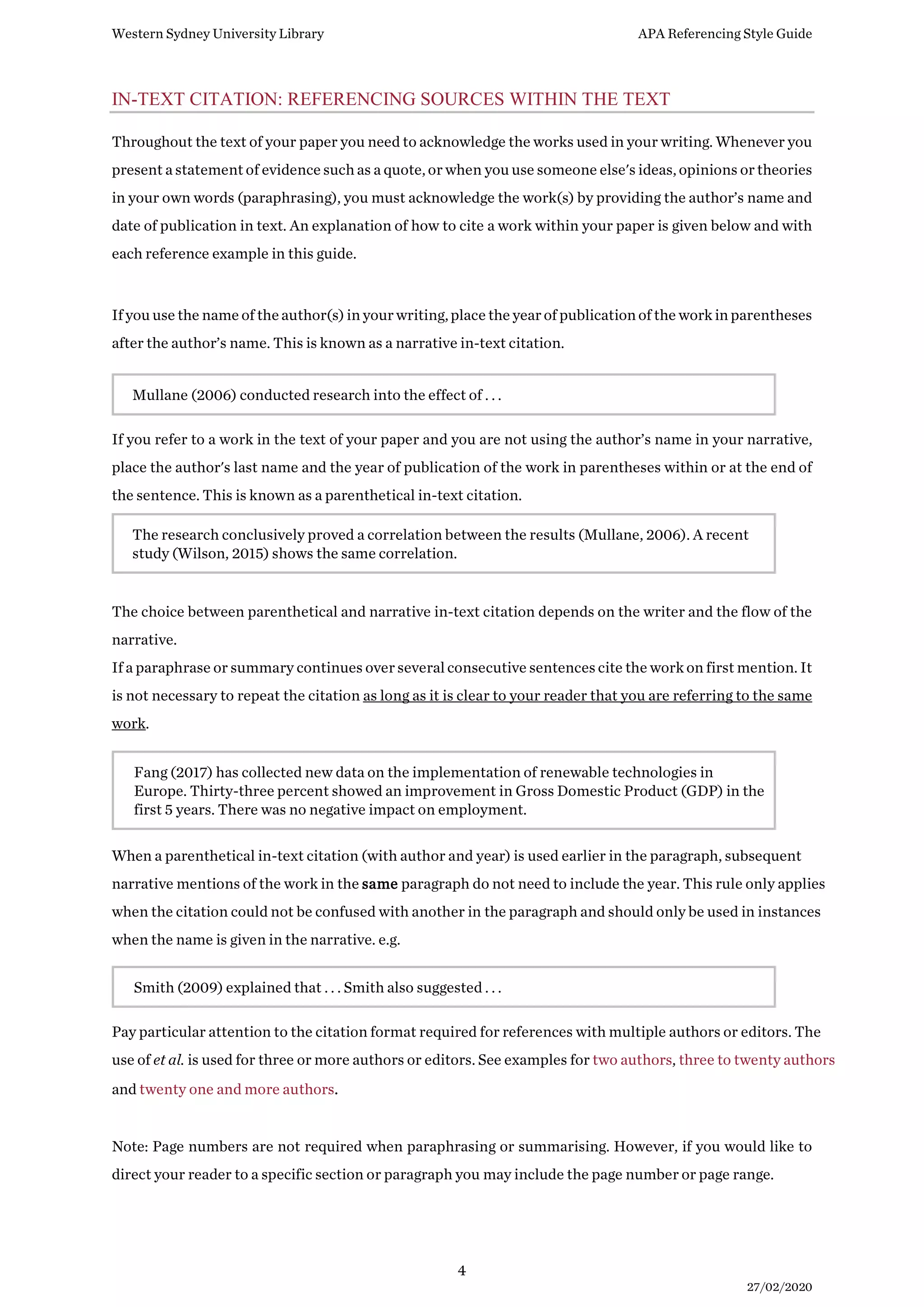
To cite an online article in-text using APA 7th Edition style, use the author’s last name and the year of publication. For example: (Smith, 2024). If you are quoting directly, you must also include a locator, such as a page number (Smith, 2024, p. 15) or a paragraph number if page numbers are absent (Smith, 2024, para. 4).
The transition to digital-first scholarship has made online article citations the standard in academic writing. Whether you are referencing a peer-reviewed journal found in a database, a news report from a major outlet, or an entry from a professional blog, the APA (American Psychological Association) provides a standardized framework to ensure your readers can locate the source. In 2026, as the volume of online information continues to expand, maintaining precision in these citations is critical for academic integrity and the verification of facts.
The Logic of the Author-Date System
APA style utilizes the author-date system for in-text citations. This method allows the reader to immediately identify the source's currency and the authority behind the claim. Every in-text citation must correspond to a full entry in the reference list at the end of the document. The primary goal is to provide enough information for the reader to find the correct entry in the reference list without disrupting the flow of the narrative.
In-text citations generally take two forms: parenthetical and narrative. A parenthetical citation places both the author and the date in parentheses at the end of a sentence or phrase. A narrative citation incorporates the author’s name into the sentence naturally, followed by the year in parentheses.
Parenthetical Citations
Parenthetical citations are the most common and are used when the author is not mentioned in the sentence itself.
- Example: New research suggests that remote work increases digital literacy (Anderson, 2023).
Narrative Citations
Narrative citations are useful when you want to highlight the author or the study as part of your argument.
- Example: Anderson (2023) argued that remote work environments are the primary drivers of digital literacy.
Citing Online Journal Articles
Online journal articles are the bedrock of academic research. In 2026, most journals are published digitally, often assigned a Digital Object Identifier (DOI). While the DOI is essential for the reference list, the in-text citation remains simple, focusing only on the author and the date.
When citing an online journal article, the citation does not change based on whether you accessed the article via a PDF, an HTML page, or an e-reader. The key is the metadata of the publication itself. If the article has multiple authors, APA 7th Edition has specific rules that simplify the process compared to older editions.
Handling Multiple Authors
- Two Authors: Always list both names in every citation. Use an ampersand (&) in parenthetical citations and the word "and" in narrative citations.
- (Taylor & Jones, 2024)
- Taylor and Jones (2024) noted that...
- Three or More Authors: Use the first author's last name followed by "et al." (meaning "and others") from the very first citation.
- (Miller et al., 2022)
- Miller et al. (2022) concluded...
Specifics for Online News and Magazines
Articles from news sites like the New York Times, BBC News, or specialized online magazines (e.g., Wired or Scientific American) follow the same author-date logic. However, because these sources are updated frequently, the date used in the in-text citation is only the year, even if the source provides a specific month and day.
One common challenge with online news articles is the lack of traditional page numbers. When you are paraphrasing a news article, the (Author, Year) format is sufficient. However, if you are using a direct quote, you must provide the reader with a way to find the quote within the text.
Locators for Sources Without Page Numbers
Since many online articles are single scrolling pages, you should use one of the following methods for direct quotes:
- Paragraph Numbers: Count the paragraphs from the beginning of the article.
- (Reuters, 2025, para. 8)
- Section Headings: Use the name of the heading within the article. If the heading is long, you can use a shortened version in quotation marks.
- (Global Health Institute, 2024, "Vaccine Distribution" section)
- Heading plus Paragraph: If a section is long, combine the heading and the paragraph count within that section.
- (Davis, 2023, Climate Change section, para. 2)
Addressing Missing Information
In the digital landscape, it is common to encounter articles that lack a clear author or a specific publication date. APA provides systematic "fallback" positions for these scenarios to maintain the structure of the citation.
No Author
If an online article has no individual author, check if a group author or organization is responsible for the content (e.g., World Health Organization, NASA). If a group author is listed, use the organization’s name.
If there is no author or organization at all, use the first few words of the article title in the in-text citation. Place the title in double quotation marks.
- Example: ("Digital Trends of 2026," 2025).
No Date
For articles where no publication or "last updated" date is visible, use the abbreviation "n.d." which stands for "no date."
- Example: (National Park Service, n.d.).
Citing Group Authors and Abbreviations
Many online articles are published by government agencies, NGOs, or corporations. The first time you cite a group author, you should write out the full name. If the organization has a well-known abbreviation, you may introduce it in brackets in the first citation and use the abbreviation thereafter.
- First Citation: (Centers for Disease Control and Prevention [CDC], 2024)
- Subsequent Citations: (CDC, 2024)
This approach helps keep the text concise while ensuring the reader understands exactly which organization is being referenced.
Summary Table: APA In-Text Citation Formats for Online Articles
The following table compares the different ways to format in-text citations based on the source's characteristics.
| Source Type | Parenthetical Citation | Narrative Citation | Notes |
|---|---|---|---|
| Journal (1 Author) | (Smith, 2024) | Smith (2024) | Standard format. |
| Journal (2 Authors) | (Smith & Doe, 2024) | Smith and Doe (2024) | List both authors. |
| Journal (3+ Authors) | (Smith et al., 2024) | Smith et al. (2024) | Use "et al." for 3 or more. |
| Group Author | (World Bank, 2025) | World Bank (2025) | Use the full name of the org. |
| No Author | ("Article Title," 2026) | "Article Title" (2026) | Use a shortened title. |
| No Date | (Author, n.d.) | Author (n.d.) | Use "n.d." for no date. |
| Direct Quote (No Page) | (Author, 2024, para. 5) | Author (2024) ... (para. 5) | Use para. for web pages. |
Direct Quotes vs. Paraphrasing
The requirements for an in-text citation vary depending on how you use the source material.
Paraphrasing
Paraphrasing is when you put the author's ideas into your own words. APA style strongly encourages paraphrasing over quoting. When paraphrasing, you only need to provide the author and year. However, APA notes that providing a page or paragraph number for a paraphrase can be helpful to readers if the source is very long or complex.
- Example: Digital literacy has become a prerequisite for participation in the 2026 labor market (Department of Education, 2025).
Direct Quotations
A direct quotation uses the exact words of the source. For quotes, the locator (page or paragraph number) is mandatory.
- Example: "The integration of AI in classroom settings has accelerated at an unprecedented rate" (Thompson, 2024, para. 12).
- Block Quotes: If the quote is 40 words or more, it must be formatted as a block quote. In this case, the citation (including the year and locator) comes after the final punctuation mark of the quote.
Common Mistakes to Avoid
- Including the URL In-Text: A very common error is placing the website address or URL directly in the body of the paper. URLs should only appear in the reference list. The in-text citation must use the author's name.
- Using the Article Title Instead of Author: Unless there is absolutely no author (individual or group), do not use the title of the article in the text.
- Confusing the Copyright Date with the Publication Date: Sometimes a website has a copyright year in the footer (e.g., © 2026). This is often not the date the specific article was published. Look for a "published on" or "last updated" date. If none exists, use "n.d."
- Incorrect Punctuation: In a parenthetical citation, the period for the sentence comes after the closing parenthesis, not before.
- Correct: ...according to the study (Adams, 2024).
- Incorrect: ...according to the study. (Adams, 2024)
Advanced Scenario: Multiple Works in the Same Citation
In academic writing, you may want to support a single point with multiple sources. When citing multiple online articles in one set of parentheses, list them in alphabetical order by the first author's last name and separate them with semicolons.
- Example: Several studies have confirmed that urban green spaces significantly improve mental health outcomes (Green, 2023; Lopez & Zhang, 2024; Williams et al., 2022).
This technique demonstrates a broad understanding of the literature and provides more weight to your arguments.
Verified Source Guidelines for 2026
When citing online articles, it is vital to distinguish between credible journalistic or scholarly pieces and informal content. In 2026, many websites use "AI-generated summaries." If you are citing such a summary, the author is generally the organization that owns the platform. For more on the specific nuances of citing AI, refer to the official APA Style blog, which provides the most current guidance on evolving digital formats.
Additionally, always prioritize articles that provide a Permanent Link or a DOI. Websites can be ephemeral; links break and content is removed. Using a DOI ensures that even if the website structure changes, the article remains discoverable by the reader.
FAQs
What if the online article doesn't have an author?
If no individual author is listed, use the organization or "group author" (e.g., American Heart Association). If no organization is responsible, use the first few words of the article's title in quotation marks, followed by the year. For example: ("New Scientific Breakthroughs," 2025).
How do I cite an article I found on a social media platform?
Social media posts (like those on X, LinkedIn, or Instagram) are treated as "social media" sources rather than "online articles." Use the author's name or handle and the specific date. However, if the post links to an external article, you should cite the article itself rather than the social media post that shared it.
Can I use the "Last Updated" date for an online article?
Yes. If an online article does not have an original publication date but provides a "Last Updated" or "Last Revised" date, use that year in your in-text citation. Do not use the date you accessed the site (the "retrieval date") in the in-text citation; retrieval dates are only used in the reference list for content that is designed to change frequently, like a wiki or a dashboard.
Do I need to include the "Retrieved from" link in my in-text citation?
No. In-text citations should only contain the author, year, and (if quoting) the locator (page or paragraph number). The URL or "Retrieved from" information belongs exclusively in the reference list at the end of your paper.
How do I cite a PDF article found online?
Cite a PDF exactly like any other online article. If it is a PDF of a journal article, it will likely have page numbers. Use those page numbers for direct quotes. If it is a PDF of a report without page numbers, use paragraph numbers or section headings as locators.
Recommendation for Accuracy
To ensure your in-text citations are flawless, always create your full reference list entry first. The first word of your reference list entry (usually the author's last name) must be the first word of your in-text citation. This internal consistency is the hallmark of professional academic writing and prevents confusion for the reader. If you are using a citation manager (like Zotero or Mendeley), double-check the metadata for each article, as these tools often pull incorrect "site names" into the author field for online articles.