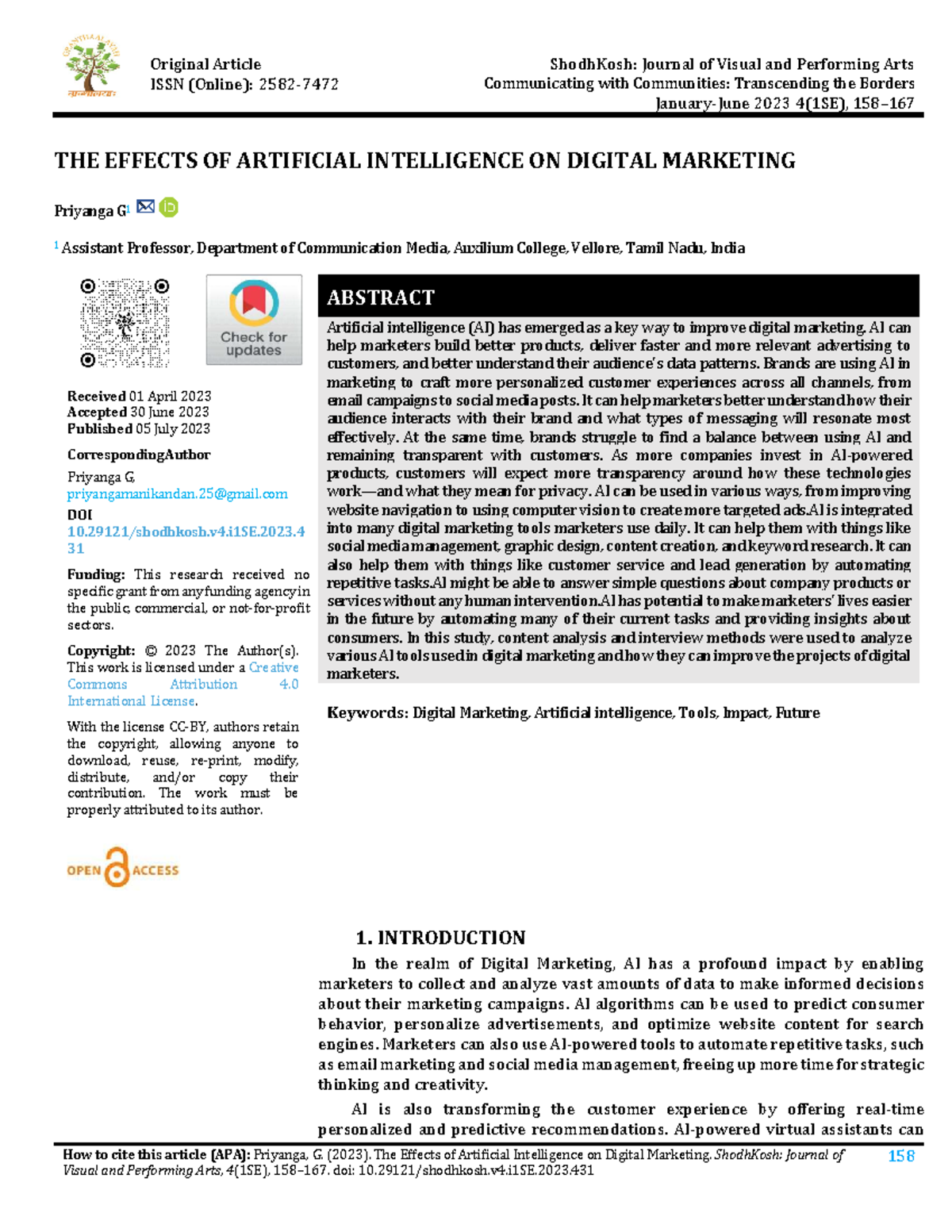
Artificial intelligence scholarly articles are peer-reviewed publications that document original research, theoretical frameworks, and experimental methodologies within the field of machine learning and computational intelligence. In 2026, finding and evaluating these articles requires utilizing specialized digital repositories like arXiv, IEEE Xplore, and ACM Digital Library, while leveraging AI-powered discovery tools to synthesize high-velocity data and verify reproducibility.
The Evolution of AI Scholarly Literature in 2026
The landscape of artificial intelligence research has transformed from a niche academic pursuit into a massive, globalized engine of innovation. Scholarly articles serve as the "gold standard" for this progress, providing a documented trail of how algorithms, hardware, and ethical frameworks evolve. In 2026, the volume of AI literature has reached a point where traditional manual searches are often insufficient. Researchers now navigate a dual-stream ecosystem: the rapid-fire world of pre-prints and the rigorous, slower-paced world of formal peer-reviewed journals.
Scholarly articles in this field are no longer just static text. They increasingly represent "living documents" that include integrated code repositories, interactive data visualizations, and links to pre-trained model weights. This shift ensures that a paper is not just an argument but a functional tool that other scientists can build upon immediately. Understanding how to navigate this literature is essential for anyone from graduate students to lead data scientists in the corporate sector.
Primary Repositories for AI Research
Accessing high-quality AI research depends on knowing where specific types of data are hosted. While general search engines exist, specialized databases offer the metadata and filtering tools necessary for technical precision.
arXiv and the Pre-print Culture
For AI researchers, arXiv (specifically the cs.AI, cs.LG, and cs.CV categories) remains the most critical resource. Because the AI field moves faster than traditional publishing cycles can accommodate, most "breakthrough" papers appear here months or even years before they are printed in a formal journal. By 2026, arXiv has integrated more robust automated screening tools to flag potential issues in methodology before a paper is even publicly listed.
IEEE Xplore and ACM Digital Library
These two repositories represent the institutional backbone of computer science. IEEE Xplore focuses heavily on the intersection of AI with hardware, robotics, and electrical engineering. If you are looking for scholarly articles on edge computing or neural processing units (NPUs), this is the primary source. The ACM Digital Library, conversely, is the home of foundational computing theory and human-computer interaction (HCI). Articles here often provide the deep theoretical proofs that underpin new machine learning architectures.
PubMed and Specialized Bio-AI Databases
As AI increasingly dominates drug discovery and medical imaging, PubMed has become a vital repository for AI scholarly articles focused on life sciences. These articles undergo a different type of scrutiny, often requiring clinical validation alongside algorithmic performance metrics. In 2026, the cross-pollination between computer science and biology is one of the most cited areas of research.
How to Evaluate the Quality of an AI Scholarly Article
With the sheer volume of publications, distinguishing between incremental updates and foundational breakthroughs is a vital skill. High-impact research typically exhibits several key characteristics that can be used as a checklist for evaluation.
- Peer Review Status: While pre-prints are valuable for speed, peer-reviewed articles in journals like the Journal of Machine Learning Research (JMLR) or at conferences like NeurIPS and ICML carry significantly more weight. These venues employ rigorous "double-blind" reviews to minimize bias.
- Ablation Studies: A high-quality AI paper does not just show that a model works; it includes an "ablation study." This is a section where researchers systematically remove parts of their model to show which specific component actually contributes to the performance gains. If an article lacks this, the results may be coincidental or over-engineered.
- Reproducibility and Artifacts: In 2026, the "Reproducibility Crisis" is managed by requiring authors to provide "artifacts"—the specific code, seeds, and hyperparameters used to achieve their results. Articles that link to verified GitHub or Hugging Face repositories are significantly more credible than those that do not.
- Citation Context: It is not just about the number of citations, but how the paper is being cited. Modern AI discovery tools allow you to see if a paper is being cited as a "foundational method" or if subsequent researchers are citing it to point out flaws or limitations.
The Structure of a Modern AI Research Paper
To efficiently process AI scholarly articles, one must understand their standardized technical structure. This allows a reader to extract the "signal" without getting lost in the "noise."
The Abstract and Introduction
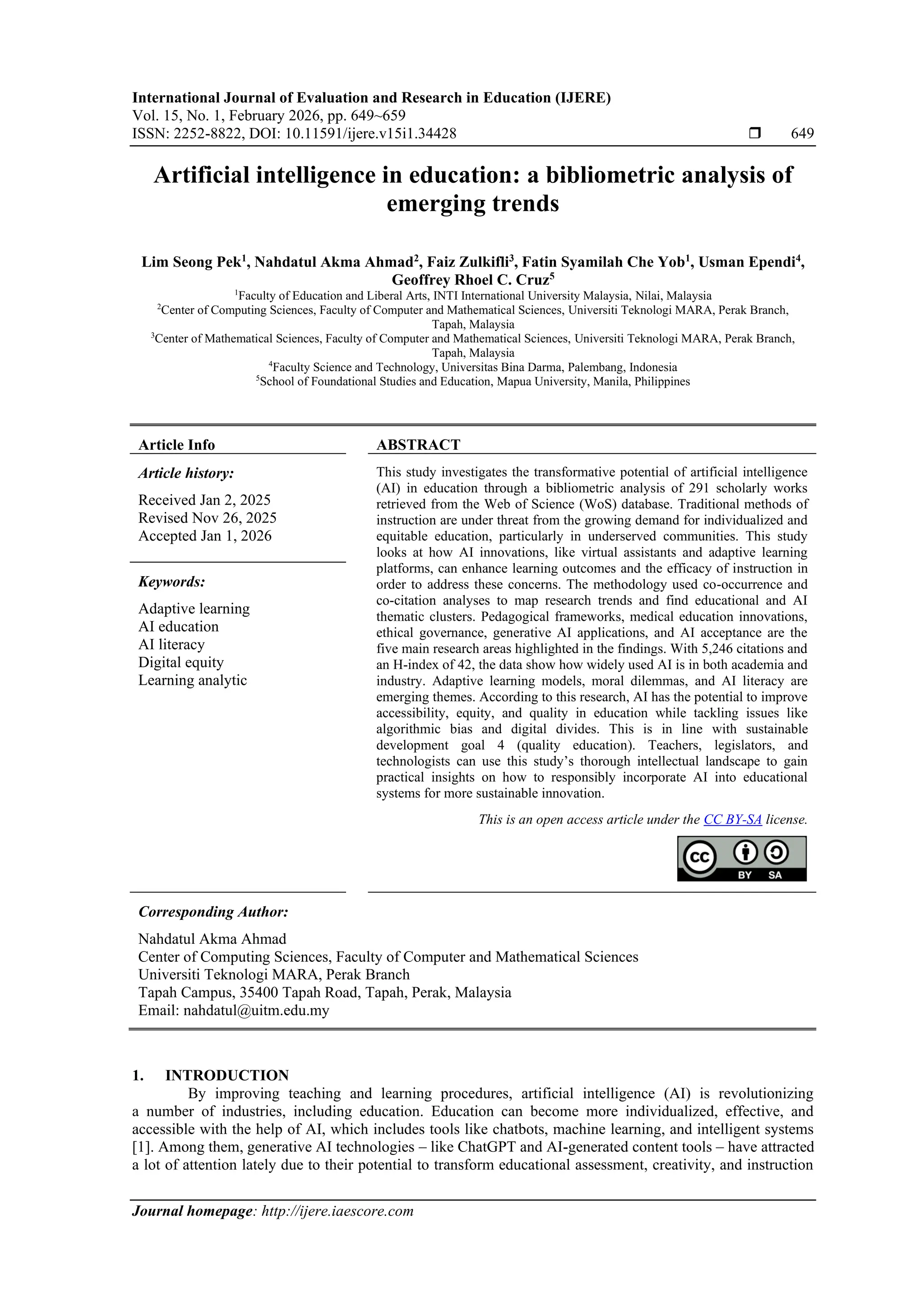
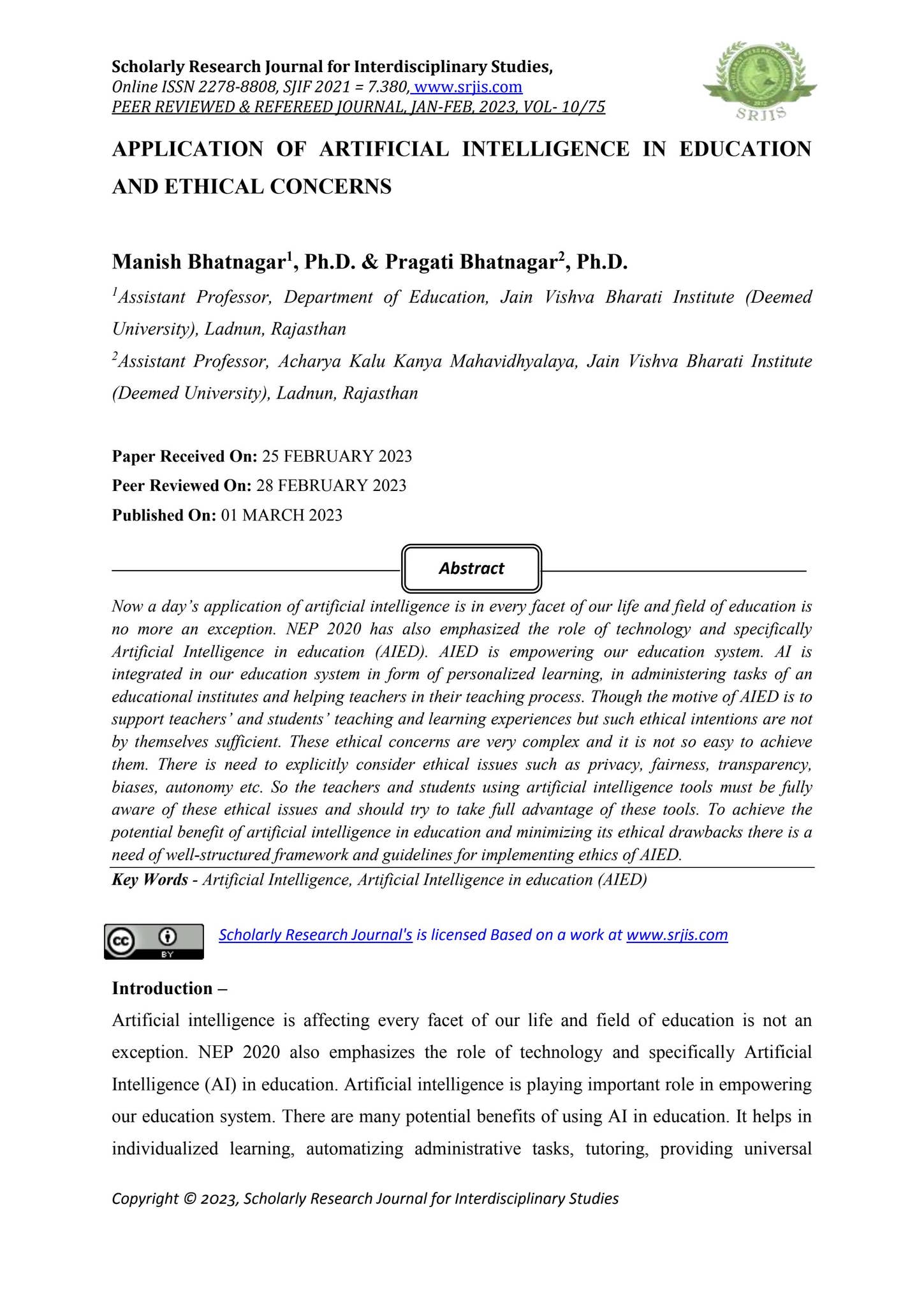
The abstract provides a high-level summary of the problem, the proposed solution, and the quantitative results (e.g., "Our model achieved a 4% increase in mAP on the COCO dataset"). The introduction places the work in context, explaining why previous methods (the "State of the Art" or SOTA) were insufficient.
Related Work
This section is a roadmap of the field. It lists other scholarly articles that the current authors have built upon. For a researcher, this is often the most useful section for finding other relevant papers.
Methodology and Architecture
This is the technical heart of the article. It describes the mathematical formulations, neural network layers, and optimization strategies used. In 2026, this section frequently includes pseudocode or high-level diagrams of transformer architectures or diffusion models.
Experiments and Results
Here, authors prove their claims using standard benchmarks. In AI research, benchmarks like ImageNet, GLUE, or specialized industry sets are used to provide an "apples-to-apples" comparison with existing models. Pay close attention to the "Baselines"—the older models the authors are comparing themselves against.
Comparison of Major AI Research Sources
The following table compares the primary venues where AI scholarly articles are published and accessed as of 2026.
| Source Name | Primary Focus | Access Model | Peer Review Type |
|---|---|---|---|
| arXiv (CS/AI) | Rapid dissemination of new algorithms | Open Access (Free) | Minimal (Moderated) |
| NeurIPS Proceedings | Neural networks and deep learning | Open Access | Double-Blind Peer Review |
| IEEE Xplore | Robotics, Hardware, Applied AI | Subscription/Pay-per-article | Technical Committee Review |
| JMLR | Theoretical machine learning | Open Access | Traditional Peer Review |
| ScienceDirect | AI in multidisciplinary sciences | Hybrid (Open/Paywall) | Editorial Peer Review |
| ACM Digital Library | Computing theory and ethics | Subscription-based | Academic Peer Review |
AI-Driven Tools for Searching Scholarly Articles
In 2026, the most significant change in how we interact with scholarly articles is the use of AI to find AI. Traditional keyword searching has been replaced by semantic search and RAG (Retrieval-Augmented Generation) systems.
Tools like Semantic Scholar and Consensus use natural language processing to understand the intent behind a query. Instead of searching for "neural network efficiency," a researcher might ask, "Which scholarly articles from 2024 to 2026 successfully reduced transformer inference latency without sacrificing accuracy?" The AI then synthesizes findings from across thousands of PDFs to provide a direct answer backed by citations.
Furthermore, tools such as Elicit allow for automated literature reviews. These systems can summarize the "Methodology" sections of fifty different papers simultaneously, creating a comparison table of their datasets and results. This has drastically reduced the time required for the "Literature Review" phase of research.
Ethics, Bias, and Social Impact in AI Literature
A major trend in AI scholarly articles over the last few years has been the mandatory inclusion of "Ethics Statements" and "Impact Statements." Leading journals and conferences now require authors to explicitly discuss the potential for algorithmic bias, the environmental cost (carbon footprint) of training their models, and the societal implications of their work.
When reading articles in 2026, it is crucial to look for these disclosures. An article that achieves record-breaking performance but requires an astronomical amount of compute may not be practical for most real-world applications. Similarly, research into facial recognition or predictive policing is now scrutinized heavily for its impact on marginalized communities, and scholarly articles are expected to address these risks transparently.
The Role of Open Access in AI Advancement
The AI community has historically been a champion of Open Access (OA). This philosophy suggests that because AI has such a profound impact on humanity, the underlying research should be available to everyone, not just those at wealthy institutions.
Most top-tier AI conferences (like CVPR, ECCV, and AAAI) provide their proceedings for free online. This "Green Open Access" model has allowed researchers in developing nations to stay at the cutting edge of the field. However, some prestigious journals still operate behind paywalls. In 2026, many funding agencies (such as the NIH in the US or various EU bodies) mandate that any AI research funded by public money must be published in an Open Access format immediately upon release.
Common Pitfalls When Reading AI Research
Navigating this field is not without its risks. Beginners and experienced professionals alike often fall into certain traps:
- Over-reliance on "SOTA" Claims: Just because a paper claims to be the "State of the Art" doesn't mean it is useful in a production environment. SOTA gains are often marginal (e.g., 0.1%) and may come at the cost of massive computational overhead.
- Ignoring the Data Source: An algorithm is only as good as the data it was trained on. If a scholarly article uses a proprietary dataset that is not available to the public, the results are difficult to verify and may not generalize to your specific problem.
- Mistaking Correlation for Causation: In AI research, particularly in "AI for Science," it is easy to find patterns that are statistically significant but physically meaningless. Always look for the theoretical justification behind an empirical result.
FAQ
How can I access AI scholarly articles for free?
Most AI research is available for free through arXiv.org or the open-access proceedings of major conferences like NeurIPS, ICML, and CVPR. Additionally, many researchers host "author versions" of their paywalled papers on their personal or university websites.
What is the difference between a pre-print and a peer-reviewed article?
A pre-print is a version of a scholarly article shared publicly (usually on arXiv) before it has undergone formal peer review. It is excellent for staying current but may contain errors. A peer-reviewed article has been vetted by independent experts in the field to ensure the methodology and conclusions are sound.
Which AI conferences are considered the most prestigious?
The "Big Three" are typically NeurIPS (Neural Information Processing Systems), ICML (International Conference on Machine Learning), and CVPR (Conference on Computer Vision and Pattern Recognition). Getting a paper accepted at these venues is often considered more prestigious than publishing in many traditional journals.
How do I know if an AI paper’s code is available?
Check the "Abstract" or the "Introduction" for a GitHub link. Alternatively, platforms like Papers with Code automatically link scholarly articles to their corresponding code repositories and track their performance on various benchmarks.
Are AI-generated summaries of articles reliable?
While AI summarization tools are highly efficient in 2026, they can occasionally "hallucinate" or misinterpret complex mathematical proofs. They should be used for initial screening, but any critical data or methodology should be verified by reading the original source text.
Practical Recommendation for Researchers
To stay ahead in the rapidly evolving field of artificial intelligence, you should establish a systematic "discovery pipeline." Start by subscribing to arXiv's daily mailers for your specific sub-field (e.g., cs.CL for Natural Language Processing). Use an AI-based discovery tool like Semantic Scholar to set up alerts for specific authors or foundational papers that are frequently cited in your area of interest.
When you find a promising article, prioritize those that provide reproducible artifacts (code and data). Before attempting to implement a new method, verify its standing on Papers with Code to see how it performs against other modern approaches. This disciplined approach ensures that you are building your work on a foundation of verified, high-quality scholarly evidence rather than fleeting trends.