Artificial intelligence index funds are specialized investment vehicles—primarily Exchange-Traded Funds (ETFs)—that track a basket of companies involved in the development, manufacture, and implementation of AI technologies. These funds provide a diversified way to gain exposure to the AI sector, covering hardware, software, and infrastructure providers through a single, cost-effective investment.
By 2026, artificial intelligence has transitioned from an experimental frontier to the fundamental architecture of the global economy. For investors, the challenge is no longer "if" they should have AI exposure, but "how" to achieve it without the extreme volatility associated with picking individual stocks. Artificial intelligence index funds offer a systematic solution, using rules-based methodologies to capture the growth of LLMs (Large Language Models), autonomous systems, and specialized semiconductor manufacturing.
The Evolution of AI Investing in 2026
As of 2026, the artificial intelligence landscape has matured significantly since the initial generative AI boom of 2023. We are now in the era of "Agentic AI" and "Sovereign AI," where companies are not just using chatbots but deploying autonomous agents to handle complex enterprise workflows. This shift has changed how index funds are constructed.
Early AI funds were often heavy on a few "magnificent" tech giants. However, modern 2026 index methodologies have become more granular. They now differentiate between AI Enablers (the companies building the chips and data centers), AI Creators (the developers of foundational models), and AI Adopters (industries like healthcare and logistics that are realizing massive margin expansions through AI integration).
Investors are increasingly looking at these funds to capture the "second and third-order effects" of AI. This includes the massive energy requirements for data centers and the localized "Edge AI" processing occurring in consumer devices, which are now standard components in many broad-based AI indices.
How Artificial Intelligence Index Funds Operate
Most AI index funds are technically Exchange-Traded Funds (ETFs) that track a specific thematic index. Unlike actively managed funds, where a human manager picks stocks based on intuition, index funds follow a strict set of rules known as a methodology.
Index Methodology and Selection Criteria
The strength of an AI index fund lies in its selection criteria. In 2026, most indices use one of two primary approaches:
- Revenue Purity: The index only includes companies that derive a specific percentage (often 50% or more) of their annual revenue from AI-related activities.
- Thematic Scoring: Using natural language processing (NLP), the index provider scans company filings, patent applications, and earnings calls to determine how deeply a company is integrated into the AI ecosystem, even if its current revenue is still transitioning.
Rebalancing and Weighting
Because the AI sector moves rapidly, these funds typically rebalance semi-annually or quarterly. This ensures that "zombie" companies—those that failed to capitalize on the AI shift—are removed and replaced by emerging leaders in niches like quantum computing or neuromorphic chips. Weighting strategies are also crucial; some funds use market-cap weighting (giving more room to giants like Nvidia or Microsoft), while others use equal weighting to provide more exposure to smaller, high-growth firms.
Strategic Comparison of Leading AI Index Funds
The following table provides a comparison of the primary AI-focused index funds available to investors in 2026. These funds represent different philosophies, from broad robotics to focused software integration.
| Fund Ticker | Full Name | Primary Focus | Expense Ratio | Key Characteristic |
|---|---|---|---|---|
| BOTZ | Global X Robotics & Artificial Intelligence ETF | Industrial Robotics & AI | 0.69% | Heavy focus on hardware and automation. |
| ROBO | ROBO Global Robotics and Automation Index ETF | Global Automation Ecosystem | 0.95% | Broadest global reach, including many mid-cap firms. |
| IRBO | iShares Robotics and Artificial Intelligence Multisector ETF | Multi-sector AI Integration | 0.47% | Low-cost entry point with a wide, equal-weighted basket. |
| WTAI | WisdomTree Artificial Intelligence ETF | Software & AI Solutions | 0.45% | Focused on the "creators" of AI software and platforms. |
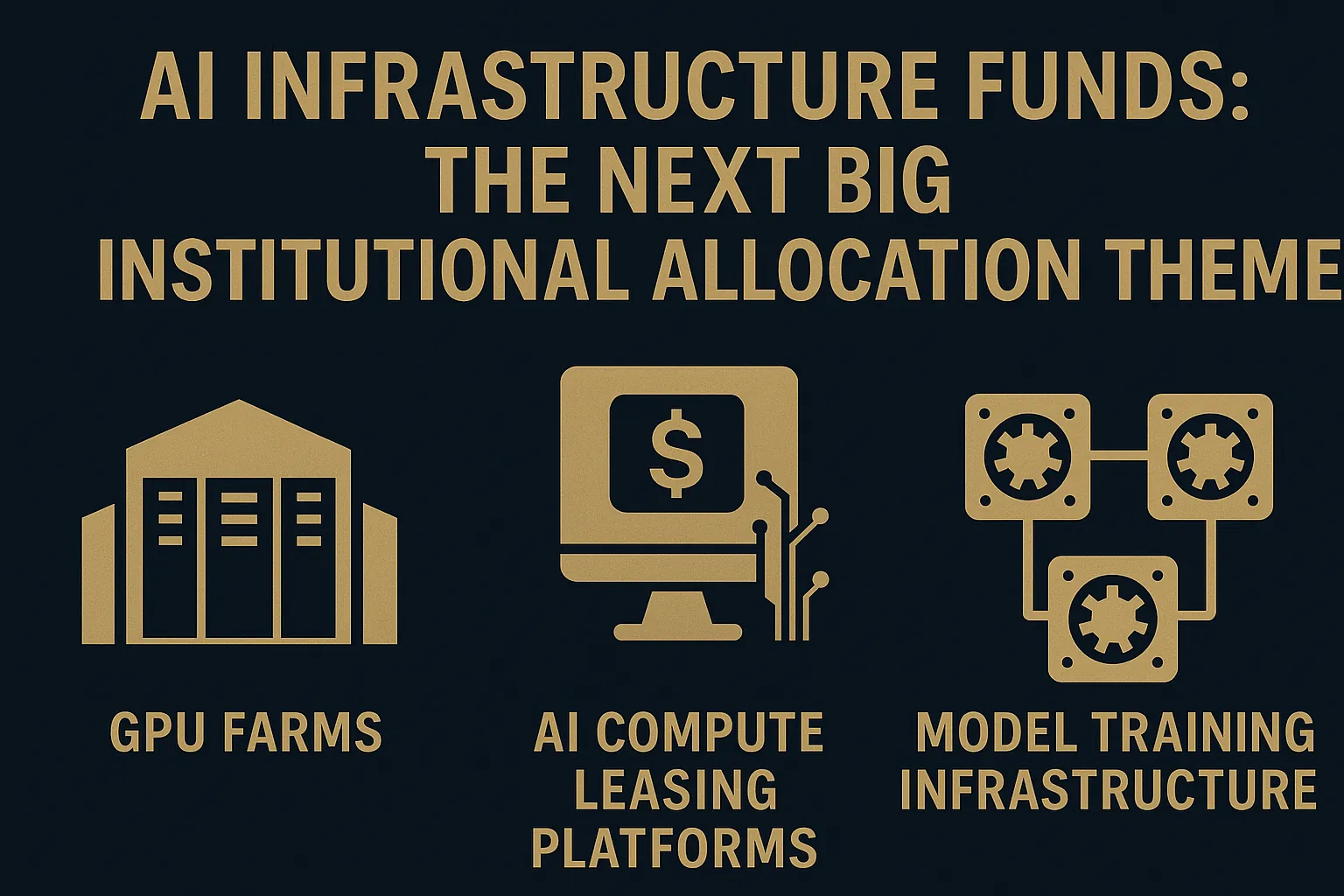
| THNQ | ROBO Global Artificial Intelligence ETF | Infrastructure & Services | 0.68% | Concentrates on data centers and cloud computing. |
The Benefits of a Passive Approach to AI
Investing in an index fund rather than individual stocks offers several structural advantages, particularly in a high-growth, high-risk sector like artificial intelligence.
Mitigation of Single-Stock Risk
The AI sector is notorious for "winner-takes-most" dynamics. While a single company might dominate a specific niche today, technological breakthroughs can render their product obsolete in a matter of months. An index fund mitigates this by holding 30 to 100 different companies. If one firm fails, the impact on the total portfolio is limited, while the winners naturally grow to represent a larger portion of the fund.
Lower Cost of Ownership
Active management in tech often comes with high fees (sometimes 1.5% or more). AI index funds, such as the iShares Robotics and Artificial Intelligence Multisector ETF (IRBO), offer expense ratios as low as 0.47%. Over a 10 or 20-year horizon, these lower fees can result in significantly higher net returns for the investor due to the power of compounding.
Automatic Exposure to Innovation
Individual investors often struggle to keep up with the technical nuances of AI. By the time a new sub-sector like "Agentic Workflows" becomes a household term, the stock prices may have already peaked. Index funds rely on professional index providers like Indxx or Solactive, who employ specialists to identify these shifts early and incorporate them into the index rules.
Risks and Limitations to Consider
While AI index funds provide a "safer" entry into the sector, they are not without significant risks that investors must monitor in 2026.
Concentration and Overlap
Despite being diversified, many AI index funds still hold the same top five companies. This creates a hidden concentration risk. If you own three different AI ETFs, you might find that 25% of your total capital is actually tied to just two or three semiconductor manufacturers. It is essential to check the holdings overlap before committing capital.
Valuation Sensitivities
AI companies often trade at high Price-to-Earnings (P/E) ratios because investors are pricing in decades of future growth. In environments with rising interest rates, these high-valuation stocks are often the first to be sold off. Investors in AI index funds must be prepared for higher-than-average volatility and potential "drawdowns" of 20% or more.
Regulatory and Geopolitical Factors
AI is a matter of national security. Changes in export controls on advanced chips or new privacy regulations regarding data usage can impact the entire sector simultaneously. Because index funds track the sector as a whole, they cannot "hide" from these systemic regulatory shifts.
How to Select the Right AI Fund for Your Portfolio
Choosing the right fund requires aligning the fund's specific methodology with your personal investment goals and risk tolerance.
Step 1: Identify Your Sub-Sector Interest
Are you interested in the physical hardware (chips, sensors, robots) or the digital applications (SaaS, LLMs, enterprise AI)?
- For Hardware, look toward BOTZ.
- For Software and Services, look toward WTAI or THNQ.
Step 2: Evaluate the Expense Ratio
For long-term buy-and-hold investors, the expense ratio is the single most important factor. A difference of 0.50% in fees can cost thousands of dollars over time. If two funds have similar holdings, always opt for the one with the lower fee.
Step 3: Analyze the Weighting Strategy
If you want a fund that is driven by the performance of the biggest companies in the world, choose a market-cap-weighted fund. If you believe that smaller, nimble startups will provide the best returns, look for an equal-weighted fund, which gives the smaller companies an equal voice in the fund's performance.
The Role of AI Index Funds in a Diversified Portfolio
In 2026, financial advisors generally recommend that thematic investments like AI index funds should represent a "satellite" portion of a portfolio, typically 5% to 15%. The "core" of the portfolio should still consist of broad-market index funds (like those tracking the S&P 500 or Total World Stock Market).
Using AI funds as a satellite allows you to capture the outsized gains of the technological revolution without risking your entire retirement on a single sector. As AI continues to integrate into every facet of the global economy, these funds act as a hedge against being left behind by the traditional industries that may be disrupted by automation.
Frequently Asked Questions
Do AI index funds pay dividends?
Most AI index funds do not focus on income; they are designed for capital appreciation (growth). While some of the mature companies in the index (like Microsoft or Apple) pay dividends, the overall yield for an AI index fund is typically very low, often under 1%. Investors seeking high current income should look elsewhere.
Are AI index funds better than the NASDAQ 100?
The NASDAQ 100 (often tracked via the QQQ ETF) includes many AI companies, but it also includes non-tech companies like PepsiCo and Starbucks. An AI index fund is a "pure play," meaning it provides higher concentration in AI. If AI outperforms the general tech market, the AI index fund will likely do better, but it will also be more volatile.
How does "rebalancing" affect my taxes?
Because these are ETFs, the rebalancing that happens inside the fund is generally tax-efficient. In the United States, ETFs use an "in-kind" redemption process that allows them to change their holdings without triggering significant capital gains taxes for the individual shareholder. However, you will still owe taxes when you sell your shares of the fund for a profit.
Can I invest in AI index funds through a 401(k) or IRA?
Yes, most brokerage-linked IRAs and 401(k)s with "brokerage windows" allow you to purchase AI ETFs just like any other stock. They are an excellent choice for tax-advantaged accounts because the long-term growth can compound tax-free or tax-deferred.
What is the difference between an AI ETF and an AI Mutual Fund?
While both are "index funds," ETFs trade throughout the day like stocks and generally have lower fees and better tax efficiency. AI mutual funds are rarer and typically only trade once per day after the market closes. For most individual investors in 2026, the ETF structure is preferred.
Practical Recommendation
For most investors looking for balanced exposure to the AI sector in 2026, a "core-and-satellite" approach is the most prudent path. Begin by identifying a low-cost, broad-based fund like the iShares Robotics and Artificial Intelligence Multisector ETF (IRBO) to serve as your primary entry point. This provides a diversified, equal-weighted foundation across multiple countries and sub-sectors.
If you have a higher risk tolerance and want to bet specifically on the infrastructure of AI, you can supplement this with a more concentrated fund like THNQ. Always ensure that your total thematic exposure does not exceed 15% of your total investable assets to protect against the inherent volatility of the technology sector. Before investing, consult the official prospectus of each fund on the provider's website (such as BlackRock or Global X) to verify the current holdings and fee structures.