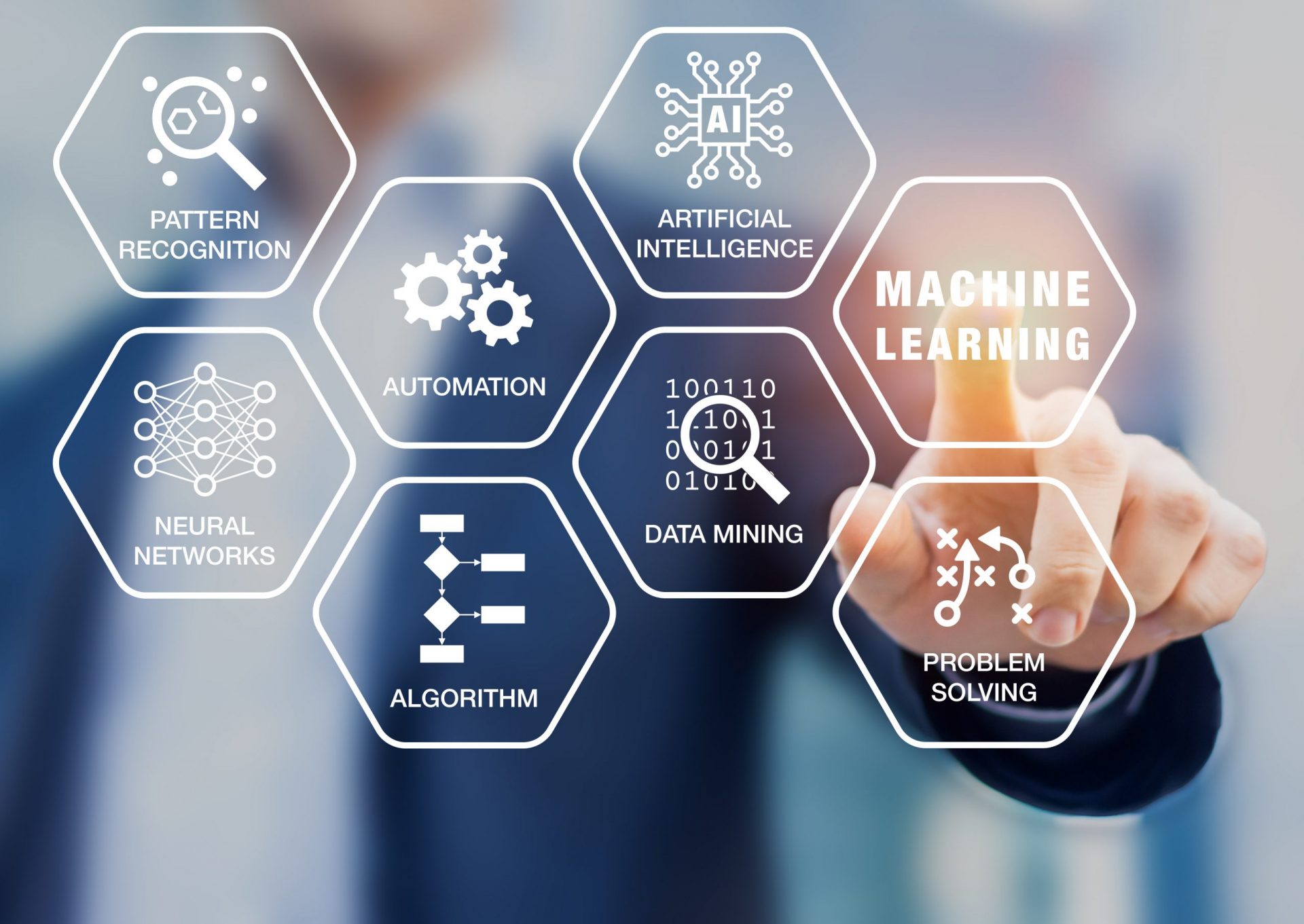
Artificial intelligence is the broad scientific field of creating systems capable of performing tasks that require human-like intelligence, while machine learning is the specific subset of AI that uses statistical techniques to enable computers to learn from data. Together, they form the foundation of modern automation, predictive modeling, and generative systems in 2026.
Understanding the Relationship Between Artificial Intelligence and Machine Learning
To grasp the current technological landscape, one must view artificial intelligence (AI) and machine learning (ML) not as competing technologies, but as nested disciplines. AI serves as the overarching umbrella. It encompasses any technique that enables computers to mimic human behavior, including logic, if-then rules, and decision trees. Machine learning is a specialized branch of AI that focuses on the development of algorithms that can grow and change when exposed to new data, rather than following static program instructions.
By 2026, the distinction has become more critical as enterprises move beyond simple automation toward "agentic" workflows. In these systems, AI provides the reasoning framework and goal-setting capabilities, while ML provides the specific predictive engines that allow the system to interpret visual data, understand natural language, or forecast market trends.
The Hierarchical Structure of Intelligence
The field is often visualized as a series of concentric circles. The outermost circle is Artificial Intelligence, which dates back to the 1950s. Inside that is Machine Learning, which gained prominence in the 1980s and 90s as computational power increased. The innermost circle is Deep Learning (DL), a subset of machine learning inspired by the structure of the human brain (neural networks), which has driven the massive breakthroughs in generative models and computer vision over the last decade.
The Core Mechanisms of Machine Learning
Machine learning functions through the identification of patterns. Rather than a programmer writing code to define what a "cat" looks like, an ML model is shown thousands of images of cats until it identifies the statistical commonalities—ears, whiskers, tail shapes—that define the entity. This process is generally categorized into four primary learning styles.
Supervised Learning
This is the most common form of ML used in business applications. In supervised learning, the algorithm is trained on a labeled dataset. This means the input data is already tagged with the correct answer. For example, a bank might use historical loan data where each record is labeled as "defaulted" or "paid." The model learns the relationship between applicant characteristics and the outcome, allowing it to predict the risk of future loan applications.
Unsupervised Learning
In unsupervised learning, the model is given raw data without explicit labels. The goal is for the algorithm to find hidden structures or patterns within the data. This is frequently used for customer segmentation in marketing. The AI might analyze a database of millions of customers and discover that they naturally cluster into five distinct groups based on purchasing frequency, average spend, and geographic location, even if the marketer didn't know those groups existed.
Reinforcement Learning
Reinforcement Learning (RL) operates on a system of rewards and penalties. An "agent" (the AI) takes actions in an environment to achieve a specific goal. If the action brings the agent closer to the goal, it receives a positive signal; if it moves further away, it receives a negative signal. This is the primary method used to train autonomous vehicles and sophisticated robotics, where the system must learn to navigate complex physical spaces through trial and error.
Semi-Supervised and Self-Supervised Learning
As of 2026, these methods have become the standard for training Large Language Models (LLMs). These systems use a small amount of labeled data combined with a massive amount of unlabeled data. In self-supervised learning, the model hides part of the data from itself and tries to predict it (e.g., predicting the next word in a sentence), essentially creating its own labels from the vast expanse of the internet.
The Evolution of Deep Learning and Neural Networks
Deep learning is the engine behind the most visible AI advancements. It utilizes Artificial Neural Networks (ANNs), which are layers of interconnected "neurons" that pass signals to one another. Each connection has a "weight" that adjusts as the model learns, effectively strengthening or weakening the path based on the accuracy of the output.
The "deep" in deep learning refers to the number of layers in these networks. Modern models in 2026 often feature hundreds or even thousands of layers, allowing them to process incredibly complex, multi-dimensional data.
- Convolutional Neural Networks (CNNs): Primarily used for image and video processing. They "scan" images in small sections to identify edges, textures, and eventually complex objects.
- Recurrent Neural Networks (RNNs): Designed for sequential data, such as speech or time-series financial data, where the order of the information matters.
- Transformers: The architecture that revolutionized the field. Transformers use a "self-attention" mechanism to weigh the significance of different parts of the input data regardless of their position. This is what allows modern AI to maintain context over long conversations or documents.
Comparing AI, Machine Learning, and Deep Learning
| Feature | Artificial Intelligence (AI) | Machine Learning (ML) | Deep Learning (DL) |
|---|---|---|---|
| Scope | The broad goal of creating "smart" machines. | A method of achieving AI through data-driven algorithms. | A specialized ML technique using multi-layered neural networks. |
| Data Requirement | Can be low (for rule-based systems). | Medium to High (requires structured datasets). | Very High (requires massive amounts of unstructured data). |
| Hardware | Basic CPUs for simple logic. | Powerful CPUs or basic GPUs. | High-end GPUs or TPUs (Tensor Processing Units). |
| Human Intervention | High (for defining rules and logic). | Medium (for feature engineering and labeling). | Low (the model performs its own feature extraction). |
| Complexity | Varies from simple to complex. | Generally mathematically intensive. | Highly complex; often considered a "black box." |
Technical Requirements for Implementation in 2026
Successfully deploying artificial intelligence and machine learning at an enterprise level requires more than just an algorithm. It requires a robust "AI Stack" consisting of data, compute, and talent.
Data Pipelines and Quality
The quality of an ML model is directly tethered to the quality of its training data. Organizations must implement DataOps—the automated, policy-based approach to managing data. This involves:
- Data Ingestion: Gathering data from various sources (IoT sensors, CRM, social media).
- Data Cleaning: Removing duplicates, correcting errors, and handling missing values.
- Data Labeling: Ensuring supervised models have high-quality ground truth.
- Feature Engineering: Selecting the most relevant variables that contribute to the model's predictive power.
Computational Infrastructure
In 2026, the demand for compute has led to a hybrid approach. While training large models still occurs in massive data centers using specialized chips like NVIDIA's H-series or custom silicon from cloud providers, "Inference" (the act of using the model) is increasingly moving to the Edge. Edge AI allows ML models to run locally on devices—smartphones, factory sensors, or medical equipment—reducing latency and improving privacy.
The Role of MLOps
MLOps (Machine Learning Operations) is the practice of unifying ML system development (Dev) and ML system operation (Ops). Unlike traditional software, ML models "decay" over time as the real world changes—a phenomenon known as model drift. MLOps frameworks provide continuous monitoring, automated retraining, and version control for models to ensure they remain accurate in a changing environment.
Ethical Considerations and Governance
As AI and machine learning become more autonomous, the ethical stakes have risen. By 2026, regulatory frameworks like the EU AI Act and similar guidelines in North America have mandated stricter transparency.
- Bias and Fairness: ML models can inherit and amplify human biases present in their training data. For example, a hiring AI trained on historical data from a male-dominated industry might unfairly penalize female candidates. Addressing this requires diverse datasets and algorithmic audits.
- Explainability (XAI): As models become more complex, it becomes harder to understand why they made a specific decision. Explainable AI focuses on creating tools that translate neural network weights into human-understandable reasons, which is vital in high-stakes fields like medicine or criminal justice.
- Data Privacy: With the rise of "Federated Learning," models can now be trained across multiple decentralized devices holding local data samples without exchanging them. This helps protect individual privacy while still allowing the model to learn from global patterns.
Practical Industry Applications
Healthcare and Life Sciences
AI and ML have transformed diagnostics. In 2026, ML algorithms are routinely used to analyze pathology slides and MRI scans with accuracy levels that rival or exceed human specialists. Furthermore, AI has shortened the drug discovery pipeline from years to months by simulating how different molecular structures will interact with biological targets.
Finance and Fintech
The financial sector uses machine learning for high-frequency trading, fraud detection, and personalized banking. ML models can detect anomalous patterns in credit card transactions in milliseconds, preventing fraud before a transaction is even cleared. Additionally, AI-driven "Robo-advisors" manage trillions in assets by automatically rebalancing portfolios based on real-time market sentiment analysis.
Manufacturing and Industry 5.0
Predictive Maintenance is the primary application here. By analyzing vibration and temperature data from factory machinery, ML models can predict a component failure weeks before it happens. This transition from "break-fix" to "predict-prevent" saves global manufacturing billions in downtime annually.
Common Obstacles to Success
Despite the maturity of the technology in 2026, many organizations still struggle with AI integration.
- Siloed Data: When data is trapped in different departments that don't communicate, the ML model cannot see the "big picture."
- Lack of Skilled Talent: There is a persistent gap between the need for data scientists and the available workforce.
- Over-reliance on "Hype": Companies often try to apply AI to problems that could be solved with simple statistics, leading to unnecessary costs and complexity.
Frequently Asked Questions
What is the main difference between AI and machine learning?
Artificial intelligence is the broad concept of machines acting in a way that we consider "smart." Machine learning is a specific application of AI that allows machines to learn from data without being explicitly programmed for every possible scenario. Think of AI as the goal and ML as one of the primary ways to achieve that goal.
Does machine learning require coding?
While there are many "No-Code" and "Low-Code" AI platforms available in 2026, professional machine learning development typically requires proficiency in languages like Python or R. These languages provide the libraries (such as PyTorch, TensorFlow, and Scikit-learn) necessary to build, train, and deploy sophisticated models.
How much data is needed for a machine learning model?
The amount of data required depends on the complexity of the task and the type of algorithm used. A simple linear regression model might only need a few hundred rows of data, whereas a deep learning model for image recognition or natural language processing often requires millions of data points to achieve high accuracy.
Can AI work without machine learning?
Yes. Early AI systems, known as "Expert Systems," used a massive library of hard-coded rules (if-then statements) to make decisions. These systems do not "learn" from new data; they only follow the logic provided by human experts. While less flexible than ML, they are still used in specific fields where total transparency and rigid logic are required.
Is AI a threat to jobs in 2026?
AI and ML are primarily changing the nature of work rather than eliminating it entirely. While repetitive tasks in data entry, basic customer service, and manufacturing are increasingly automated, there is a growing demand for roles that involve AI oversight, ethical auditing, and complex human-centric problem-solving.
How do I ensure my ML model is not biased?
Bias mitigation involves several steps: using diverse and representative training data, implementing "fairness metrics" during the testing phase, and conducting regular audits of the model's outputs. It is also important to have a diverse team of developers who can identify potential cultural or social biases that might be overlooked by a more homogeneous group.
Strategic Recommendation for 2026
To effectively leverage artificial intelligence and machine learning, organizations should adopt a "Data-First" strategy. Before selecting an AI model, focus on the integrity and accessibility of your data. Start with a specific, high-value business problem—such as reducing customer churn or optimizing supply chain routes—rather than attempting to "implement AI" generally.
Once a pilot project proves successful, scale through an MLOps framework to ensure long-term reliability. For individuals, focusing on "AI Literacy"—the ability to work alongside these systems and understand their limitations—is the most valuable skill in the 2026 labor market.