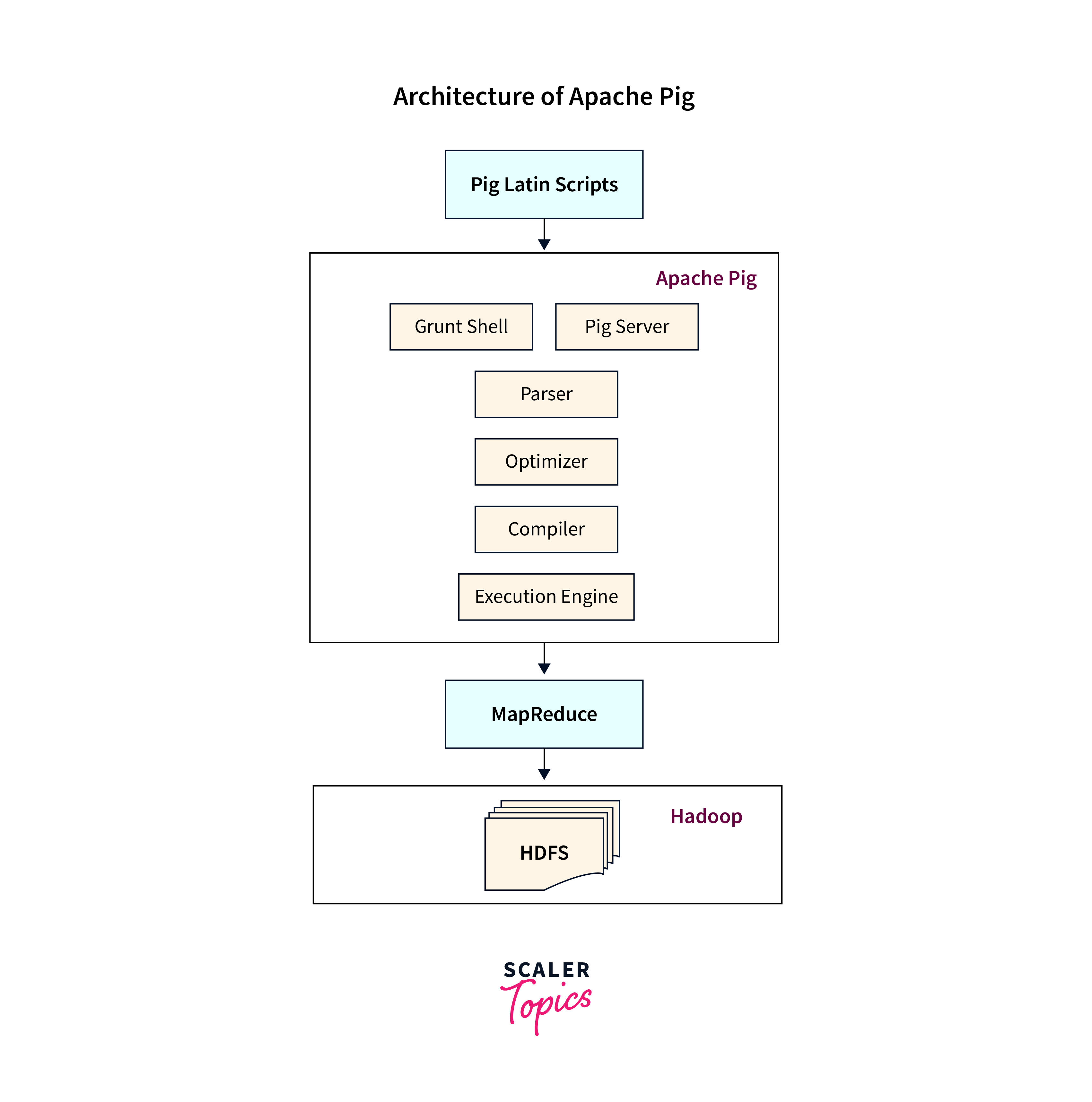
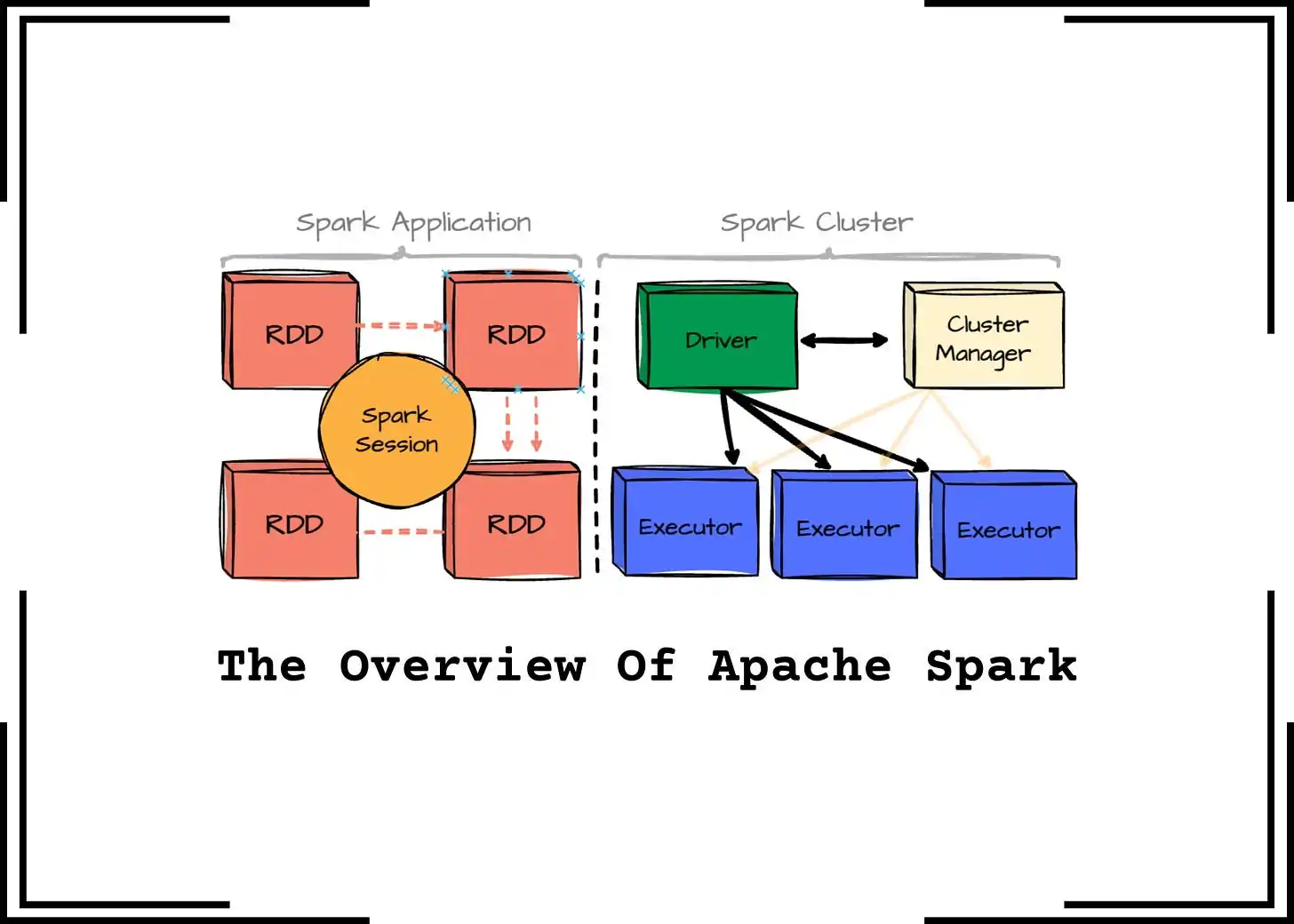
Apache Hadoop remains a cornerstone of large-scale data processing by providing a distributed framework that stores and processes petabytes of data across clusters of commodity hardware. By leveraging its core components—HDFS, YARN, and MapReduce—organizations achieve high fault tolerance and cost-effective scalability for massive, unstructured datasets in 2026.
The Role of Apache Hadoop in the 2026 Data Ecosystem
As we navigate 2026, the data landscape has evolved significantly from the early days of "Big Data" hype. While cloud-native object stores and serverless processing engines have proliferated, Apache Hadoop maintains its status as a foundational technology for on-premises, hybrid, and specific high-throughput cloud environments. Large-scale data processing involves handling data volumes that exceed the memory and processing capacity of a single server. Hadoop addresses this by distributing the workload across dozens, hundreds, or even thousands of interconnected nodes.
The persistence of Hadoop in 2026 is largely due to its maturity and the deep integration of its sub-projects. Organizations that require strict data sovereignty—where data cannot leave private physical infrastructure—rely on Hadoop's robustness to manage their data lakes. Furthermore, the cost-to-performance ratio for long-term storage of massive datasets remains highly competitive when compared to the escalating costs of egress and "hot" storage in public clouds. Hadoop is no longer just a tool; it is a standardized architecture for distributed computing.
Understanding Hadoop requires a shift in perspective regarding hardware. Instead of high-end, expensive supercomputers, Hadoop utilizes commodity hardware. This means standard, off-the-shelf servers that are cost-effective but prone to individual failure. The genius of Hadoop lies in its software-level resilience; it assumes hardware will fail and is designed to recover from those failures automatically without data loss or job interruption.
The Core Architecture: HDFS, YARN, and MapReduce
To master large-scale data processing, one must understand the three primary pillars of the Hadoop framework. Each pillar serves a distinct purpose in the lifecycle of a data processing job, from storage to resource allocation and final execution.
Hadoop Distributed File System (HDFS)
HDFS is the storage layer of Hadoop. Unlike traditional file systems, HDFS breaks large files into smaller chunks, known as blocks (typically 128MB or 256MB in size), and distributes them across the cluster. In 2026, HDFS continues to use a master/slave architecture consisting of a NameNode and multiple DataNodes.
The NameNode serves as the bookkeeper, maintaining the metadata and the directory tree. It knows exactly which blocks belong to which file and where they are located across the cluster. The DataNodes are the "workhorses" that store the actual data blocks. To ensure high availability, HDFS automatically replicates each block (standardly three times) across different racks. If a DataNode fails, the NameNode detects the absence and orchestrates the replication of the missing data from the remaining copies, ensuring the system remains self-healing.
Yet Another Resource Negotiator (YARN)
Introduced in Hadoop 2.0 and significantly refined in version 3.x, YARN is the operating system of the Hadoop cluster. Before YARN, resource management was tightly coupled with MapReduce, which limited the types of applications that could run on a cluster. YARN decoupled these functions, allowing multiple processing engines—such as Spark, Flink, and MapReduce—to coexist on the same infrastructure.
YARN consists of a global ResourceManager and a per-node NodeManager. When a user submits a processing job, YARN allocates "containers" (abstract units of CPU and RAM) to that job. This allows for multi-tenancy, where different departments can share the same physical cluster without one job consuming all available resources and starving others.
MapReduce: The Processing Engine
MapReduce is the programming model used for processing large datasets in a parallel, distributed manner. It breaks down a task into two primary phases: Map and Reduce.
- The Map Phase: The input data is split into independent chunks which are processed by map tasks in a completely parallel manner. The framework sorts the outputs of the maps, which are then passed to the reduce tasks.
- The Reduce Phase: The output from the Map phase is aggregated. For example, if you are counting the frequency of words in a billion documents, the Map phase counts words in individual chunks, and the Reduce phase sums those counts to provide a final total.
Data Locality: The Secret to Hadoop's Performance
A critical concept in large-scale data processing is Data Locality. In traditional systems, data is moved to where the computation resides. However, moving petabytes of data across a network creates massive bottlenecks. Hadoop flips this logic: it moves the computation to where the data resides.
Because the NameNode knows exactly which DataNodes hold the blocks for a specific file, YARN attempts to schedule the Map tasks on the very servers that hold those blocks. This minimizes network congestion and maximizes throughput. In 2026, with the advent of faster networking (100GbE and beyond), the importance of data locality has slightly diminished but remains a best practice for optimizing performance and reducing the cost of cluster operations.
Comparison of Hadoop with Modern Alternatives
When deciding on an architecture for large-scale data processing, it is essential to compare Hadoop with other industry-standard solutions available in 2026.
| Feature | Apache Hadoop (HDFS/MR) | Apache Spark | Cloud Data Warehouses (e.g., BigQuery, Snowflake) |
|---|---|---|---|
| Primary Processing Mode | Batch (Disk-based) | In-Memory / Stream | Serverless / SQL-based |
| Latency | High (Minutes to Hours) | Low (Seconds to Minutes) | Very Low (Sub-second to Seconds) |
| Best Use Case | Massive ETL, Archival Storage | Real-time Analytics, ML | Business Intelligence, Reporting |
| Storage Flexibility | Any format (Unstructured) | Highly Compatible | Managed (Proprietary/Optimized) |
| Cost Profile | High Upfront (CAPEX) | High Compute (OPEX) | Pay-per-query (Variable) |
| Operational Complexity | High (Requires Expertise) | Medium | Low (Fully Managed) |
Implementing Hadoop: Prerequisites and Requirements
Successfully deploying Hadoop for large-scale processing requires careful planning of both hardware and software environments. Despite the "commodity" label, the hardware must be tailored to the expected workload.
Hardware Considerations
For a production-grade Hadoop cluster in 2026, the following hardware specifications are generally recommended:
- Nodes: A minimum of 3 nodes for testing, but typically 10+ for a viable production cluster to realize the benefits of distribution.
- CPU: Multiple cores per node (e.g., 16-32 cores) to handle concurrent YARN containers.
- Memory: While MapReduce is disk-bound, YARN and the NameNode require significant RAM (64GB to 256GB+) to manage metadata and resource requests.
- Storage: High-density SATA or NVMe drives. In 2026, NVMe is increasingly preferred for the OS and metadata logs, while large SATA drives handle the bulk HDFS data.
Software and Skills
A successful Hadoop implementation requires a team proficient in:
- Linux Administration: Hadoop runs almost exclusively on Linux distributions (Ubuntu, RHEL, CentOS).
- Java/Python: MapReduce jobs are traditionally written in Java, though Python (via Hadoop Streaming) is widely used for data science workflows.
- Security Protocols: Kerberos is the standard for authenticating users and services within a Hadoop cluster. Understanding Apache Ranger for authorization and Apache Atlas for data lineage is essential for enterprise compliance.
Overcoming Common Challenges in Hadoop Processing
Large-scale data processing is rarely without hurdles. Several recurring issues can degrade performance or lead to job failure if not managed proactively.
The Small File Problem
HDFS is designed for large files. Every file, directory, and block in HDFS is represented as an object in the NameNode's memory. If an organization stores millions of 1KB files instead of a few 1GB files, the NameNode will run out of memory, regardless of how much disk space is available on the DataNodes. To solve this, developers use SequenceFiles or Apache Avro to bundle small files together or implement compaction routines that merge small outputs into larger blocks.
Data Skew
In the MapReduce model, data skew occurs when the majority of data for a specific key goes to a single reducer, while other reducers sit idle. For example, if you are processing sales data by city and one city (like New York) has 1,000x more transactions than others, the reducer handling New York will take much longer to finish. This "straggler" delays the entire job. Solutions include using salting (adding a random prefix to keys) or custom partitioners to distribute the load more evenly.
Performance Tuning
Tuning a Hadoop cluster involves balancing the number of mappers and reducers with the available hardware. In 2026, automated tuning tools and AI-driven resource managers help, but manual intervention is often required. Adjusting the mapreduce.map.memory.mb and mapreduce.reduce.memory.mb settings ensures that tasks have enough RAM to process data without triggering "Out of Memory" (OOM) errors, while not being so large that they waste cluster capacity.
The Future: Hadoop and Containerization
As we look further into 2026, the integration of Hadoop with container orchestration platforms like Kubernetes has become more common. This "Hadoop-on-K8s" approach allows organizations to treat HDFS as a persistent storage layer while spinning up YARN or Spark workers dynamically as containers. This hybrid approach combines the reliability of Hadoop's storage with the agility of modern cloud-native development cycles.
Furthermore, the rise of Erasure Coding in Hadoop 3.x has revolutionized storage efficiency. Traditionally, HDFS required 3x replication (200% overhead). Erasure Coding reduces this overhead to approximately 50% while maintaining the same level of fault tolerance, significantly lowering the total cost of ownership for massive data lakes.
Frequently Asked Questions
Is Apache Hadoop still relevant in 2026 given the rise of Snowflake and Databricks?
Yes. While Snowflake and Databricks are excellent for SQL-based analytics and cloud-native data science, Hadoop remains the preferred choice for organizations requiring on-premises control, massive-scale batch ETL (Extract, Transform, Load), and cost-effective storage of raw, unstructured data. It serves as the "foundation" upon which many other tools operate.
What is the difference between HDFS and cloud object storage like Amazon S3?
HDFS is a distributed file system that allows for "append-only" operations and provides high-bandwidth access to data via data locality. S3 is an object store which is generally slower for file-level operations but offers virtually infinite scalability and lower management overhead. HDFS is typically better for intensive processing tasks, while S3 is better for long-term storage and serverless access.
Can I run Apache Spark without Hadoop?
Absolutely. Spark can run in "standalone mode" or on Kubernetes without any Hadoop components. However, Spark often uses HDFS for storage and YARN for resource management in many established enterprise environments. The two are highly complementary but not strictly dependent.
How does Hadoop handle data security and privacy?
Hadoop uses a multi-layered security approach. Kerberos provides strong authentication, ensuring users are who they say they are. Apache Ranger provides granular access control (who can read/write which file), and Hadoop Transparent Encryption ensures that data is encrypted at rest on the disks.
Why is the NameNode considered a potential single point of failure?
In early versions of Hadoop, if the NameNode failed, the cluster became inaccessible. In 2026, this is mitigated by HDFS High Availability (HA), which uses a Standby NameNode that stays synchronized with the Active NameNode. If the Active node fails, the Standby takes over automatically with zero data loss.
Practical Recommendation for Next Actions
For organizations or engineers looking to implement or optimize Apache Hadoop in 2026, the first step is to perform a Data Workload Audit. Determine if your data is primarily unstructured and if your processing needs are batch-oriented. If so, start by deploying a small-scale cluster using a distribution like Cloudera or a community-supported version of Apache Hadoop 3.3+.
Focus on mastering HDFS Erasure Coding and YARN Federation to ensure your architecture is both cost-efficient and scalable across multiple data centers. If you are already running Hadoop, evaluate your "Small File" metrics and implement a compaction strategy using Apache Iceberg or Delta Lake tables on top of HDFS to improve query performance and metadata management.