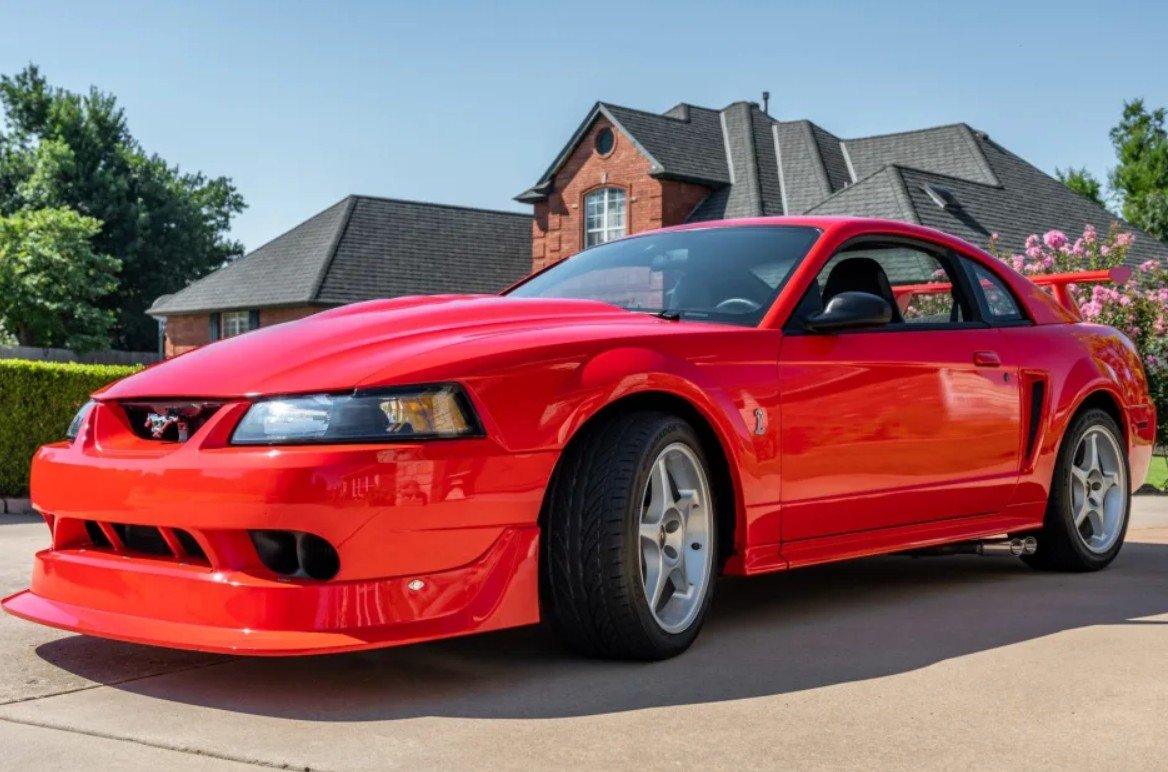
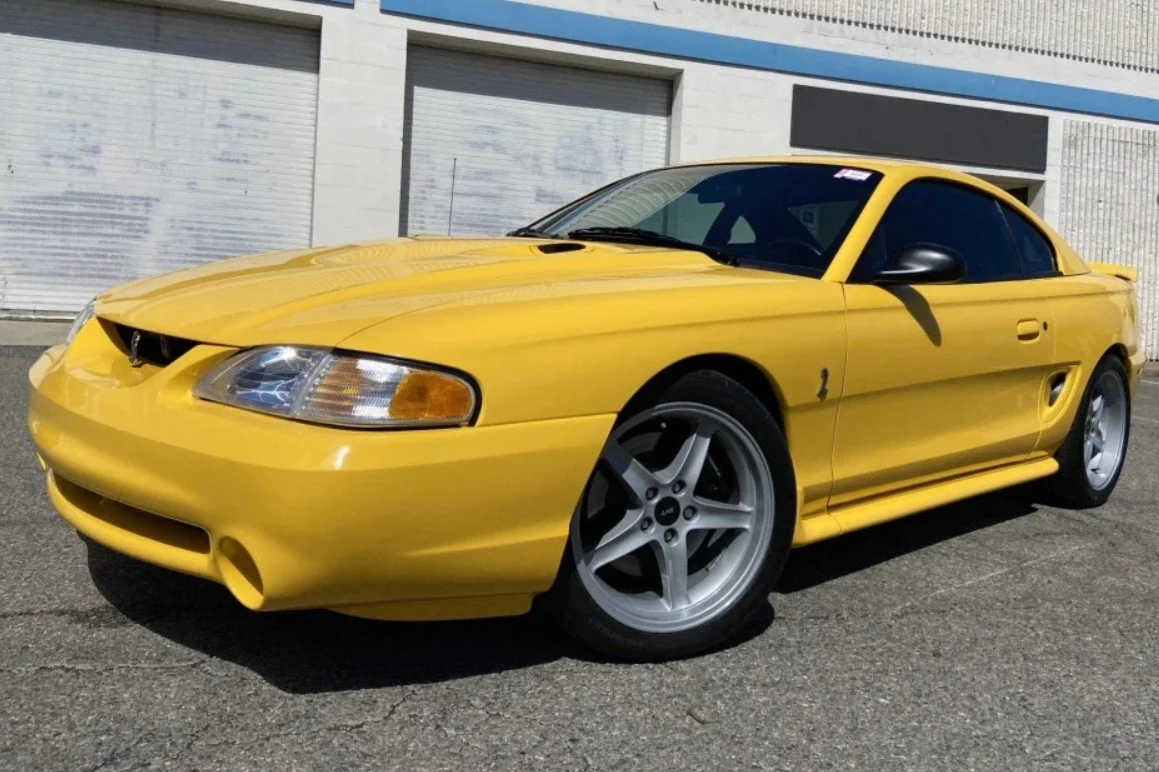
The 1998 Ford Mustang SVT Cobra produces a factory-rated 305 horsepower at 5,800 RPM and 300 lb-ft of torque at 4,800 RPM. This output is generated by a hand-assembled 4.6-liter DOHC 32-valve V8 engine, which served as the performance flagship for the final year of the round-body SN95 chassis.
For Mustang enthusiasts and collectors in 2026, the 1998 Cobra occupies a unique position. It represents the pinnacle of the "Modular" engine's first major iteration before Ford transitioned to the "New Edge" styling and the "tumble-port" head designs of 1999. While a 305-horsepower rating might seem modest compared to the four-digit outputs of modern electric or twin-turbocharged vehicles, the 1998 Cobra’s power-to-weight ratio and high-revving nature made it a formidable street machine in the late 1990s and a sought-after platform for modifications today.
The Engineering Behind the 305 Horsepower Output
To understand the 1998 Cobra's horsepower, one must look at the Special Vehicle Team (SVT) philosophy. Unlike the standard Mustang GT of the era, which utilized a 2-valve SOHC (Single Over Head Cam) version of the 4.6L engine, the Cobra was equipped with a sophisticated 4-valve DOHC (Double Over Head Cam) cylinder head design.
The "Teksid" Aluminum Block
One of the most significant components contributing to the 1998 Cobra's performance and longevity is the engine block. Known as the "Teksid" block, these units were cast in Italy by the same company that produced castings for Ferrari. This aluminum block is renowned among engine builders for its extreme strength-to-weight ratio. While the 1998 Cobra was rated at 305 hp, the Teksid block itself is capable of supporting over 1,000 horsepower with the right internal components, making it a "holy grail" for racers.
B-Head Architecture and High-RPM Flow
The 1998 model used what enthusiasts call "B-heads." These cylinder heads featured dual intake runners per cylinder. To manage low-end torque and high-end power, Ford implemented an Intake Manifold Runner Control (IMRC) system. At lower RPMs, one of the two intake ports was closed to increase air velocity and maintain torque. At approximately 3,250 RPM, the IMRC plates would butterfly open, allowing the engine to breathe fully through both ports. This "second wind" is a characteristic feeling for 1998 Cobra owners, as the car seems to surge forward with renewed energy as it climbs toward its 6,800 RPM redline.
Hand-Assembled Precision
Every 1998 Cobra engine was hand-assembled by a two-person team at Ford's Romeo Engine Plant. Upon completion, a small metal placard was affixed to the passenger-side valve cover, bearing the signatures of the two technicians who built the engine. This level of craftsmanship ensured that the tolerances were tighter than mass-produced engines, contributing to the 305 hp rating's consistency across the production run.
1998 SVT Cobra Technical Specifications
The following table summarizes the key performance and mechanical specifications of the 1998 SVT Cobra. These figures represent the vehicle in its stock factory configuration.
| Feature | Specification |
|---|---|
| Engine Type | 90-degree V8 (Modular) |
| Displacement | 4.6 Liters (281 Cubic Inches) |
| Horsepower | 305 hp @ 5,800 RPM |
| Torque | 300 lb-ft @ 4,800 RPM |
| Bore x Stroke | 3.55 in x 3.54 in |
| Compression Ratio | 9.85:1 |
| Valvetrain | DOHC, 4 Valves per Cylinder (32 Total) |
| Redline | 6,800 RPM (Fuel Cutoff at 7,000 RPM) |
| Transmission | Borg-Warner T-45 5-Speed Manual |
| Rear Axle Ratio | 3.27:1 (Limited Slip) |
| 0-60 MPH | 5.9 Seconds |
| 1/4 Mile | 13.9 Seconds @ 102 MPH |
Performance Context: The 1998 Landscape
In 1998, 305 horsepower was a significant milestone. To put this in perspective, the 1998 Mustang GT was only producing 225 horsepower. The Cobra provided a nearly 36% increase in power over the base V8 model. However, the Cobra faced stiff competition from the Chevrolet Camaro Z28 and Pontiac Firebird Trans Am.
In 1998, General Motors introduced the LS1 engine to the F-body platform. While the LS1 was officially rated at 305 hp (the same as the Cobra), many independent tests suggested the GM engine was underrated, often producing closer to 345 hp. This created a legendary rivalry on the streets. While the Camaro often had the edge in raw torque and straight-line acceleration, the SVT Cobra was praised for its more sophisticated engine architecture, better interior refinement, and superior braking performance thanks to its 13-inch Brembo-sourced front rotors.
Factors Affecting Horsepower in 2026
As these vehicles approach nearly three decades of age, several factors can influence whether a 1998 Cobra still produces its factory-rated 305 horsepower.
IMRC Clogging and Failure
The most common "power robber" for the 1998 Cobra is the buildup of carbon on the IMRC plates. Because these plates are located in the intake path, oil vapors from the PCV system can create a thick sludge over time. If the plates become stuck closed, the engine will "choke" at high RPMs, significantly reducing horsepower. Conversely, if they are stuck open, the car will feel sluggish and lose torque at low speeds. Many owners in 2026 choose to perform an "IMRC delete," though this requires a specialized computer tune to prevent loss of low-end performance.
Valvetrain Wear and Timing Chain Tension
The 4.6L 4V engine uses four long timing chains to synchronize the camshafts. Over time, the plastic guides and hydraulic tensioners can wear down. While this usually manifests as a rattle or "tick," severe wear can slightly retard ignition timing or valve events, leading to a measurable loss in peak horsepower. Regular oil changes with high-quality synthetic lubricants are essential for maintaining the health of this complex valvetrain.
Fuel System Degradation
The 1998 Cobra uses a return-style fuel system, which is generally robust. However, aging fuel pumps and clogged injectors can lead to a lean condition. In a high-revving DOHC engine, a lean condition under load is dangerous and can lead to detonation. Testing the fuel pressure at the rail and ensuring the 24 lb/hr injectors are clean is vital for maintaining the original 305 hp output.
Maximizing and Increasing 98 Cobra Horsepower
For owners looking to move beyond the stock 305 hp, the 1998 Cobra responds exceptionally well to specific modifications. Because the engine is naturally aspirated and relatively small in displacement, "bolt-on" modifications provide modest gains, while forced induction provides the most dramatic results.
1. The "Breathability" Upgrades
The stock intake and exhaust systems were designed with noise regulations and cost in mind. Replacing the factory air box with a high-flow cold air intake and swapping the restrictive "H-pipe" for a high-flow "X-pipe" can unlock an additional 15–20 horsepower. When combined with a professional dyno tune, these modifications help the B-heads flow more efficiently.
2. Rear-End Gearing
While not increasing engine horsepower, changing the rear-axle gears is the most popular modification for 1998 Cobra owners. The factory 3.27 gears are widely considered too "long" for the high-revving DOHC engine. Moving to 3.73 or 4.10 gears allows the engine to reach its power band (above 3,500 RPM) much faster, drastically improving the "felt" horsepower and acceleration.
3. Forced Induction (Supercharging)
The Teksid block makes the 1998 Cobra a prime candidate for supercharging. Centrifugal superchargers (like those from Vortech or ProCharger) are particularly popular because their power delivery matches the Cobra’s high-RPM nature. A modest 6–8 psi of boost on an otherwise stock engine can safely push the 1998 Cobra to 400–450 horsepower at the crank. If the internal rotating assembly is upgraded to forged pistons and rods, the block can easily handle 600+ horsepower.
1998 vs. 1999: The Horsepower Controversy
It is important to distinguish the 1998 Cobra from the 1999 model regarding horsepower claims. In 1999, Ford claimed the new "New Edge" Cobra produced 320 hp. However, many owners found their cars were actually slower than the 1998 models and were producing significantly less than the advertised power on dynamometers.
This led to a massive recall where Ford had to replace intake manifolds and exhaust components to meet the 320 hp claim. The 1998 Cobra, conversely, was never subject to such a scandal. Its 305 hp rating was considered accurate and "honest," which has contributed to its reputation as a reliable and predictable performer in the Mustang community.
Common Questions Regarding 98 Cobra Horsepower
Is the 1998 Cobra faster than a 1998 GT?
Yes, significantly. The 1998 Cobra's 305 hp is an 80-hp increase over the GT's 225 hp. In a quarter-mile race, a stock Cobra will typically finish about a full second faster than a stock GT of the same year. The Cobra also has a higher top speed, limited electronically to approximately 150 mph.
What is the "Teksid" block and why does it matter for horsepower?
The Teksid block is an aluminum engine block manufactured in Italy. It was used in the 1996–1998 Cobras. It is prized because it is roughly 70 pounds lighter than an equivalent iron block and is structurally capable of handling massive amounts of horsepower (up to 1,000+) without cracking. For those looking to build a high-horsepower 98 Cobra, this block is the ideal foundation.
Why is the torque rating lower than the horsepower?
The 4.6L Modular engine is a relatively small displacement V8 with a short stroke. Its strength lies in its ability to rev high and flow air through 32 valves. Small-displacement, multi-valve engines typically produce peak torque higher in the RPM range and in lower numerical amounts compared to large-displacement "pushrod" engines like the 5.0L (302ci) or the 5.7L (350ci) LS1.
Can a 98 Cobra handle a 150-shot of Nitrous?
While the Teksid block is strong, the factory pistons and connecting rods are the weak points. The 1998 Cobra uses cast pistons and powdered metal rods. While they can handle a small "shot" of nitrous (around 75–100 hp) with a very safe tune and high-octane fuel, a 150-shot is pushing the limits of the factory bottom end.
Final Recommendations for Owners and Buyers
If you are looking to purchase or maintain a 1998 SVT Cobra in 2026, the priority should be preserving the integrity of the DOHC valvetrain.
- Verify IMRC Function: Ensure the secondary intake runners are opening correctly. If the car feels flat after 3,500 RPM, they are likely clogged.
- Check for "The Tick": Listen for any rhythmic tapping from the cylinder heads, which could indicate a need for valvetrain service.
- Appreciate the History: With only 5,174 coupes and 3,480 convertibles produced in 1998, these are becoming rare. While it is tempting to chase 700 horsepower, a well-maintained 305-hp stock example is increasingly valuable in the collector market.
The 1998 Cobra remains a high-water mark for the SN95 generation. It offered a level of engine sophistication that was years ahead of its time, providing a driving experience characterized by a screaming exhaust note and a rewarding high-RPM power delivery that defines the SVT legacy.