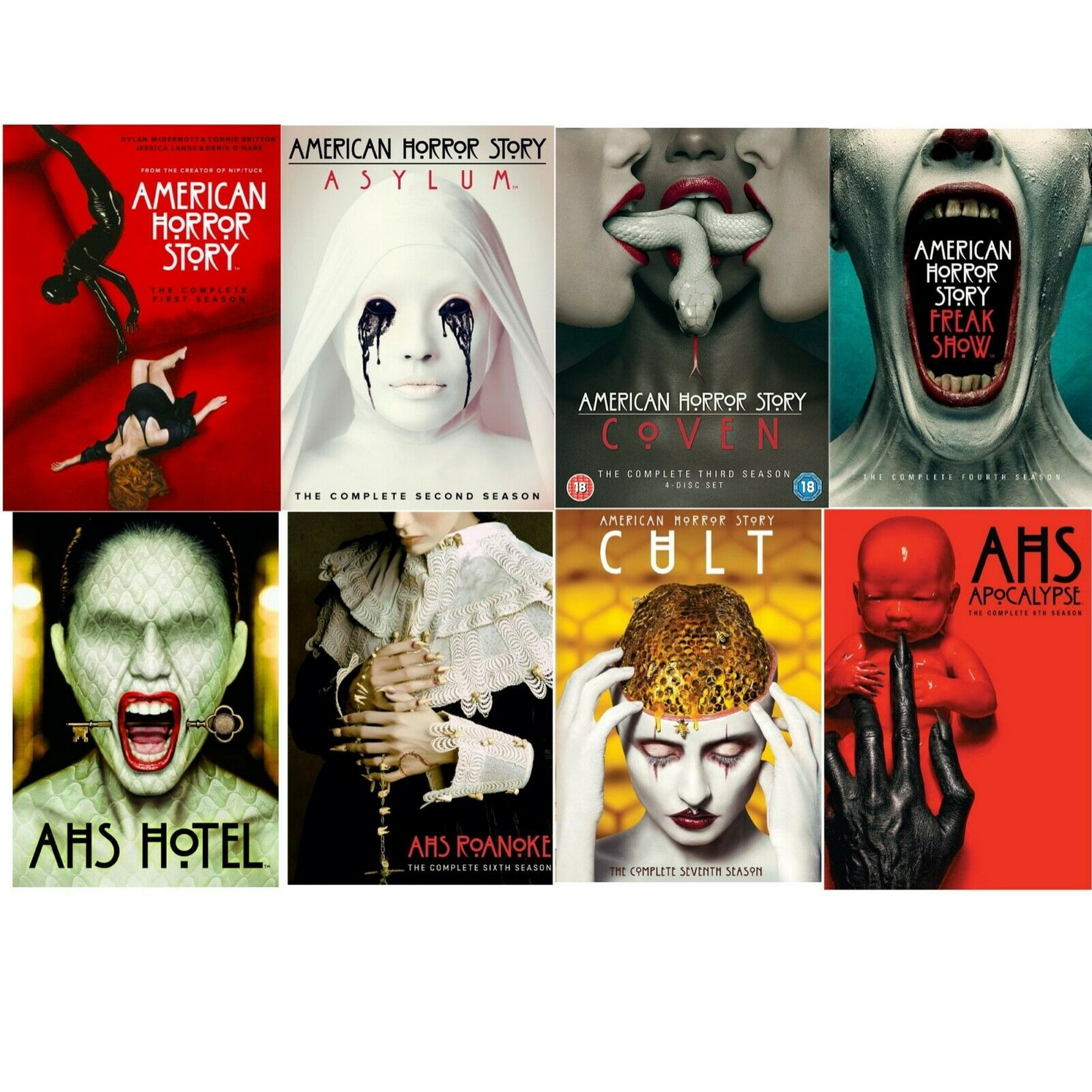
To watch American Horror Story in release order, start with Murder House (Season 1) and follow the chronological broadcast sequence through Delicate (Season 12) and into any subsequent 2025–2026 installments. While the series is an anthology where each season presents a new narrative, watching in release order is essential to appreciate the recurring characters, subtle crossovers, and the evolving "shared universe" lore.
The Evolution of the American Horror Story Anthology
Since its debut on FX in 2011, American Horror Story (AHS) has redefined the horror genre for television. Created by Ryan Murphy and Brad Falchuk, the series pioneered the seasonal anthology format, where the primary cast returns in different roles across varying settings. However, as the series progressed into the 2020s, it became clear that these stories do not exist in isolation.
Understanding the order of all seasons requires a dual perspective: the order in which they were aired and the internal chronological timeline of the AHS universe. For most viewers in 2026, the release order remains the gold standard. This allows you to experience the creative growth of the production team and the intentional "Easter eggs" that link the seasons together.
American Horror Story: All Seasons in Release Order
Watching the show as it was released allows you to see how Ryan Murphy and his team built the mythology. Below is the comprehensive breakdown of every season released to date.
Season 1: Murder House (2011)
Set in modern-day Los Angeles, the inaugural season follows the Harmon family as they move into a restored mansion, unaware of its bloody history. Murder House established the series' hallmark blend of psychological trauma, sexual tension, and classic ghost story tropes. It introduced mainstay actors like Evan Peters, Sarah Paulson, and Jessica Lange, the latter of whom won an Emmy for her portrayal of the intrusive neighbor, Constance Langdon.
Season 2: Asylum (2012)
Widely regarded by critics and fans as one of the strongest entries, Asylum shifts the setting to Briarcliff Manor, a sanitarium for the criminally insane in 1964. This season is dense with subplots, including alien abductions, demonic possession, and the terrors of a Nazi surgeon. It explores themes of institutional abuse and the thin line between sanity and religious fervor.
Season 3: Coven (2013)
Coven moves the action to New Orleans, focusing on a boarding school for young witches. It explores the power struggle between the Salem descendants and the Voodoo practitioners led by Marie Laveau. This season introduced a more "campy" and high-fashion aesthetic to the series, focusing on female empowerment and the legacies of oppression.
Season 4: Freak Show (2014)
Set in Jupiter, Florida, in 1952, Freak Show follows one of the last remaining troupes of "human curiosities" in the United States. This season is notable for its tragic tone and its direct connection to Asylum through the character Pepper, confirming for the first time that all seasons exist in a shared universe.
Season 5: Hotel (2015)
The focus returns to Los Angeles at the fictional Hotel Cortez. This season saw the departure of Jessica Lange and the arrival of Lady Gaga as The Countess, a fashion-forward vampire. Hotel is heavy on visual style, gore, and art deco aesthetics, featuring strong ties back to Murder House.
Season 6: Roanoke (2016)
In a departure from previous formats, Roanoke utilized a "show within a show" structure. The first half is presented as a paranormal documentary titled My Roanoke Nightmare, while the second half follows the "real" people and their actors returning to the haunted North Carolina site. It is arguably the most violent and experimental season of the first decade.
Season 7: Cult (2017)
Cult is unique because it lacks supernatural elements for the majority of its runtime. Set in the aftermath of the 2016 U.S. Presidential Election, it focuses on how a cult leader (Evan Peters) uses fear and paranoia to manipulate a small town. It serves as a stark sociological horror story about radicalization and phobias.
Season 8: Apocalypse (2018)
This season serves as the ultimate crossover event, acting as a direct sequel to both Murder House and Coven. Set in a near-future nuclear wasteland, the witches must battle the Antichrist. For viewers watching in order, Apocalypse is the most rewarding season, as it resolves long-standing character arcs from years prior.
Season 9: 1984 (2019)
A love letter to 1980s slasher films like Friday the 13th and Halloween, this season takes place at Camp Redwood. It leans heavily into synth-pop, aerobic fashion, and the trope of the "final girl." Despite the fun aesthetic, it maintains the series' signature dark twists and supernatural hauntings.
Season 10: Double Feature (2021)
This season is split into two distinct stories: Red Tide (set in a gloomy Cape Cod and focusing on talent-enhancing pills) and Death Valley (focusing on a government conspiracy involving extraterrestrials). While Red Tide received significant acclaim for its atmosphere, Death Valley provided a retro-horror look at the 1950s.
Season 11: NYC (2022)
Set in 1980s New York City, this season is a somber and gritty exploration of the LGBTQ+ community during the onset of the AIDS crisis. It uses a serial killer mystery as a metaphor for the systemic neglect and the "invisible" threat of the virus. It is often cited as the most grounded and emotionally devastating season.
Season 12: Delicate (2023–2024)
Based on Danielle Valentine’s novel Delicate Condition, this season stars Emma Roberts and Kim Kardashian. It explores the horrors of pregnancy, gaslighting, and the occult. Unlike previous seasons, it was released in two parts due to industry strikes, marking a shift in the series' production and release strategy.
Season 13 and Beyond (2025–2026)
As of 2026, the series has continued to push boundaries, often alternating between modern social commentary and classic Gothic horror. Watching these newer entries requires a firm grasp of the "Murphy-verse" tropes established in the first decade of the show.
The Chronological Order: A Deep Dive into the Timeline
For veteran fans, watching American Horror Story in chronological order provides a different perspective on how the various curses and bloodlines began. This order ignores the release dates and follows the primary year in which the majority of the season's plot occurs.
| Season Title | Primary Setting Year | Key Historical Context |
|---|---|---|
| Freak Show (S4) | 1952 | The decline of the traveling carnival era. |
| Asylum (S2) | 1964 | The peak of institutionalized mental healthcare. |
| NYC (S11) | 1981 | The early days of the AIDS epidemic in New York. |
| 1984 (S9) | 1984 | The golden age of the American slasher film. |
| Murder House (S1) | 2011 | Modern-day ghost story and family breakdown. |
| Coven (S3) | 2013 | Modern witchcraft and the legacy of Salem. |
| Roanoke (S6) | 2014–2016 | Found footage and reality TV culture. |
| Hotel (S5) | 2015 | Vampirism and addiction in LA. |
| Cult (S7) | 2017 | Post-election political polarization. |
| Apocalypse (S8) | 2020/Post-Apoc | The end of the world and the rise of the Antichrist. |
| Double Feature (S10) | 2021 / 1950s | Alien conspiracies and creative obsession. |
| Delicate (S12) | 2023–2024 | Modern reproductive anxiety and cult influence. |
Note: Many seasons, such as "Hotel" and "Double Feature," utilize extensive flashbacks to the 1920s, 30s, and 50s. The table above reflects the primary timeline of the central narrative.
Key Connections: Why Order Matters
The "shared universe" of AHS is not merely a collection of cameos; it is a complex web of cause and effect. Below are the primary reasons why following the release order is recommended for a cohesive experience.
The Character of Pepper
Pepper first appears in Asylum as a resident of Briarcliff. When Freak Show was released, viewers discovered her origin story, learning how she ended up in the asylum. Watching Freak Show before Asylum changes the emotional impact of her character arc significantly.
The Montgomery Legacy
Charles and Nora Montgomery, the original builders of the Murder House in Season 1, are the ancestors of Madison Montgomery (the telekinetic witch in Coven). Furthermore, in Hotel, The Countess visits the Murder House to seek an abortion from Dr. Montgomery. Without seeing Season 1 first, these pivotal lore moments lose their significance.
The Apocalypse Crossover
Season 8, Apocalypse, is essentially "Season 1, Part 2" and "Season 3, Part 2." It features the return of the Coven witches and a return to the Murder House to confront the spirit of Michael Langdon. You cannot fully understand the stakes of Apocalypse without having seen the first and third seasons.
Where to Watch American Horror Story
As of 2026, the licensing for American Horror Story remains largely centralized under the Disney umbrella due to the acquisition of 21st Century Fox.
- Hulu: In the United States, Hulu remains the primary streaming home for all FX content, including every season of AHS.
- Disney+: Internationally (UK, Canada, Australia, etc.), the series is typically hosted on the "Star" or "FX" hub within Disney+.
- Physical Media: For collectors, DVD and Blu-ray sets are available for the first ten seasons, though later seasons have seen limited physical releases in favor of digital exclusivity.
Frequently Asked Questions
Can I watch American Horror Story seasons out of order?
Yes, you can. Because each season is an anthology, the main plot of Asylum does not require knowledge of Murder House. However, you will miss the "Easter eggs" and recurring character connections that make the series a cohesive universe. If you choose to skip around, it is highly recommended to watch Murder House and Coven before watching Apocalypse.
What is the difference between "American Horror Story" and "American Horror Stories"?
American Horror Story (AHS) is a seasonal anthology where one story spans 10-13 episodes. American Horror Stories (AHStories) is an episodic spinoff where each individual episode is a self-contained story. The spinoff often returns to locations from the main series, such as the Murder House, further expanding the lore.
Who is the most recurring cast member in AHS?
Evan Peters and Sarah Paulson are the most frequent leads, appearing in nine of the first twelve seasons. Other mainstays include Lily Rabe, Frances Conroy, and Denis O’Hare. The recurring nature of the cast is a signature element of the show, allowing viewers to see actors showcase their range by playing vastly different characters each year.
Is American Horror Story based on true events?
While the overarching plots are fictional, the series heavily incorporates real-life historical figures and events. Examples include the Black Dahlia (Murder House), Anne Frank (Asylum), the Axeman of New Orleans (Coven), and Edward Mordrake (Freak Show). This blending of "true crime" history with supernatural fiction is a core part of the show's identity.
Recommended Next Steps for Viewers
If you are new to the series, begin with Season 1: Murder House. It serves as the most accessible entry point and establishes the rules of the AHS universe regarding ghosts and cursed locations. For those who have already seen several seasons and are looking for a fresh experience, try a "Chronological Marathon" using the timeline provided above. This allows you to track the history of the various factions—such as the Witches and the Voodoo practitioners—from the 19th century into the modern era.
For the latest updates on production and future seasons, you can visit the official FX American Horror Story page or check the series' record on IMDb.