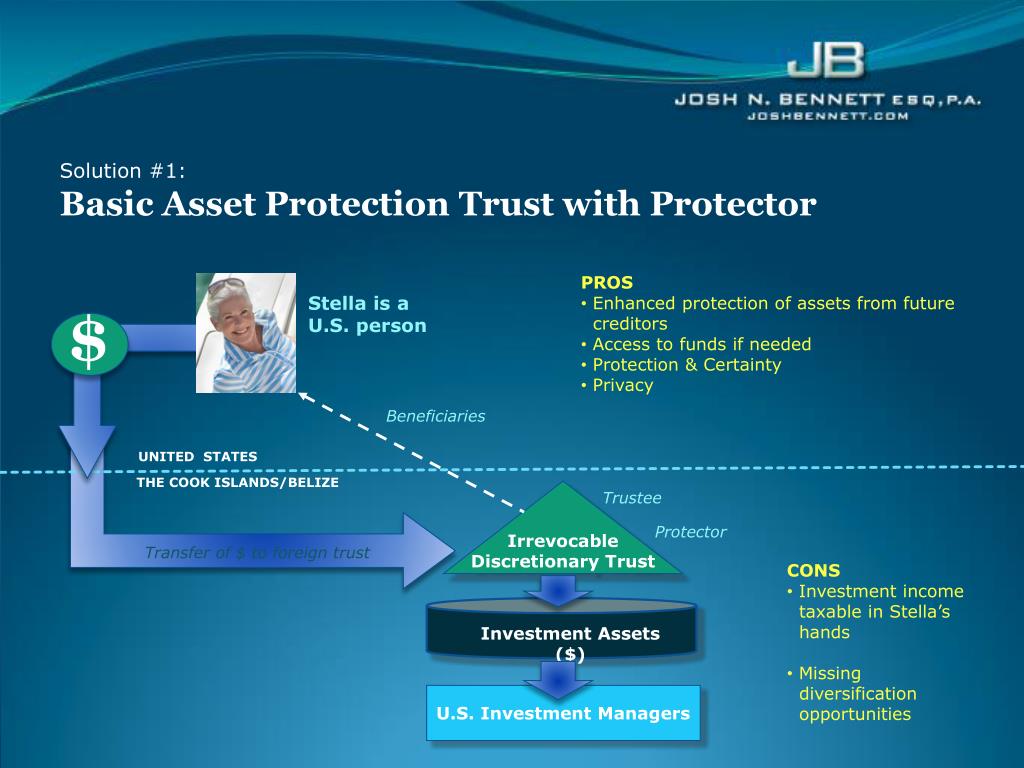
An irrevocable asset protection trust is a specialized legal arrangement where a grantor transfers ownership of assets to a third-party trustee for the benefit of named beneficiaries, permanently relinquishing control to shield those assets from future creditors, lawsuits, and judgments.
Establishing an asset protection strategy requires careful navigation of legal, financial, and structural considerations. For individuals facing professional liability, business risks, or estate planning concerns, understanding how to structure an irrevocable trust is essential for safeguarding wealth. This practical roadmap outlines the mechanics, requirements, benefits, and strategic limitations of utilizing an irrevocable trust for asset protection.
Understanding the Foundation of Irrevocable Trusts
An irrevocable trust is fundamentally different from a revocable living trust. While a revocable trust allows the grantor to amend, modify, or revoke the terms and pull assets back at any time, an irrevocable trust generally cannot be changed or terminated once executed without court intervention or the explicit consent of all beneficiaries.
By permanently transferring legal title of the assets to the trust, the grantor removes those assets from their personal net worth. Because the grantor no longer legally owns the property, future creditors cannot attach liens or force the liquidation of those assets to satisfy personal debts. However, this high level of legal protection comes with a significant trade-off: the loss of control and direct access to the principal.
To achieve valid asset protection, the trust must be established proactively, well before any legal claims or liabilities arise. Courts closely scrutinize transfers made when a lawsuit is pending or imminent, labeling them as fraudulent transfers under the Uniform Voidable Transactions Act (UVTA) or state-equivalent laws. Consequently, implementing a roadmap for asset protection must be done during periods of financial health and calm, rather than as a panicked reaction to a crisis.
Key Components and Roles Within the Trust Structure
Setting up an irrevocable trust involves three primary parties, each with distinct legal rights, fiduciary duties, and limitations. Defining these roles correctly is vital to ensuring the trust withstands judicial scrutiny.
- GRANTOR
- (Transfers assets, relinquishes control)
- TRUSTEE
- (Manages trust property according to terms)
- BENEFICIARIES
- (Hold equitable title and right to distributions)
The Grantor (Settlor)
The grantor is the individual who creates the trust and funds it by transferring assets. In a domestic asset protection trust (DAPT) or foreign asset protection trust, the grantor may sometimes be a permissible beneficiary, but doing so subjects the trust to complex statutory rules. The grantor must surrender direct managerial control to maintain the integrity of the asset shield.
The Trustee
The trustee holds legal title to the trust assets and administers them strictly in accordance with the trust agreement. To prevent a court from ruling that the trust is a "sham" or the alter ego of the grantor, the trustee should ideally be an independent third party, such as a professional corporate trustee, a trusted institution, or a non-beneficiary individual. If the grantor retains too much direct power over investment or distribution decisions, creditors may successfully argue that the trust assets remain accessible.
The Beneficiaries
Beneficiaries hold equitable title to the trust property and are entitled to receive distributions as outlined in the trust document. Discretionary trusts, where the trustee has absolute discretion over when and how much to distribute, offer the highest level of protection. Because a beneficiary does not have an absolute right to demand a distribution, a creditor generally cannot force the trustee to pay out funds on the beneficiary's behalf.
Domestic Versus Foreign Asset Protection Trusts
When drafting a roadmap for an irrevocable trust, a critical decision involves choosing the jurisdiction where the trust will be domiciled. Options generally fall into two categories: Domestic Asset Protection Trusts (DAPTs) and Foreign (Offshore) Asset Protection Trusts (FAPTs).
| Feature / Factor | Domestic Asset Protection Trust (DAPT) | Foreign Asset Protection Trust (FAPT) |
|---|---|---|
| Jurisdiction | Specific U.S. states (e.g., Nevada, Alaska, Delaware) | Foreign countries (e.g., Cook Islands, Belize) |
| Legal Recognition | Recognized by statutory law in select states; subject to the U.S. Constitution's Full Faith and Credit Clause | Governed by foreign laws; local courts generally do not enforce U.S. judgments automatically |
| Cost & Complexity | Moderate setup and ongoing maintenance costs | Higher initial and ongoing legal, administrative, and compliance costs |
| Privacy | Moderate privacy under state public records | High privacy; foreign trustees are not compelled by local laws to honor U.S. discovery requests |
| Contempt Risk | Low risk of domestic court contempt orders | Higher risk if a U.S. judge orders repatriation of assets that the foreign trustee refuses to release |
Domestic asset protection trusts are available in a growing number of U.S. jurisdictions that permit self-settled spendthrift trusts. However, jurisdictional conflicts can arise if a grantor living outside a DAPT state faces a lawsuit in their home state, as local courts may apply local public policy rather than the laws of the trust domicile.
Foreign asset protection trusts, frequently established in jurisdictions like the Cook Islands or Nevis, provide maximum resistance against U.S. creditor litigation. Foreign courts typically require creditors to relitigate claims locally under domestic laws, often barring contingency fee arrangements and shortening statutes of limitations. The primary challenge with offshore structures is the risk of a U.S. court holding the grantor in civil contempt if a judge orders asset repatriation that the foreign trustee refuses to execute.
Step-by-Step Practical Roadmap to Establishment
Implementing an irrevocable asset protection trust requires a disciplined, sequential approach. Skipping steps or executing transfers improperly can compromise the entire structure.
- Risk Assessment and Goal Definition: Collaborate with qualified legal and financial professionals to evaluate your specific risk profile, industry liabilities, family dynamics, and asset inventory.
- Jurisdiction Selection: Decide whether a domestic state jurisdiction or an offshore jurisdiction best aligns with your asset types, comfort level, and budget.
- Drafting the Trust Document: Retain specialized trust counsel to draft the irrevocable agreement. Ensure the document includes robust spendthrift provisions, discretionary distribution standards, and independent trustee provisions.
- Selecting Independent Fiduciaries: Appoint a qualified corporate trustee, trust company, or trusted individual who meets legal independence requirements.
- Funding the Trust: Formally transfer legal title of the assets into the trust name. This step requires executing new deeds for real estate, re-titling brokerage and bank accounts, and assigning business interests according to corporate governance rules.
- Tax and Regulatory Compliance: Obtain a separate Taxpayer Identification Number (TIN) or Employer Identification Number (EIN) for the trust, and file required annual federal and state income tax returns.
Tax Implications and Compliance Requirements
Creating an irrevocable trust introduces complex tax considerations that must be managed proactively to avoid unexpected liabilities. Depending on how the trust is structured, it may be classified as either a grantor trust or a non-grantor trust for federal income tax purposes.
In a grantor trust structure, the income, deductions, and credits of the trust flow through to the grantor's personal tax return, meaning the grantor pays the income tax associated with the trust assets. This is often viewed as a tax advantage because paying the tax further reduces the grantor's taxable estate without being treated as an additional taxable gift. Conversely, a non-grantor trust is treated as a separate taxable entity, requiring the filing of IRS Form 1041 and payment of trust-level tax rates, which reach the highest marginal brackets very quickly.
From a gift and estate tax perspective, funding an irrevocable trust is generally considered a completed gift to the beneficiaries. Grantors must file IRS Form 709 to report the transfer against their lifetime unified estate and gift tax exemption. Proper valuation of transferred assets by a qualified independent appraiser is essential to prevent Internal Revenue Service audits and valuation adjustments.
Common Pitfalls and Strategic Limitations
While an irrevocable trust is a potent tool, it is not an impenetrable fortress. Several common missteps can invalidate the protection or create unintended legal consequences.
- Fraudulent Transfer Violations: Transferring assets into a trust after a claim has materialized or with the intent to hinder known creditors is illegal and will be undone by a bankruptcy or civil court.
- Retained Control and Alter Ego Claims: If the grantor treats trust property as personal property—such as paying personal expenses directly from a trust checking account or maintaining sole checkbook authority—a court may pierce the trust veil under the alter ego doctrine.
- Neglecting Ongoing Maintenance: Failing to update beneficiary designations, maintain separate accounting books, or file annual tax returns can signal to a court that the trust is an invalid legal fiction.
- Loss of Liquidity and Access: Grantors must accept that once assets are transferred, they cannot unilaterally demand the return of those funds for personal emergencies, lifestyle changes, or investment opportunities outside the trust terms.
Frequently Asked Questions
Can I be the trustee of my own irrevocable asset protection trust?
Serving as your own trustee destroys asset protection. Courts will view the trust as a sham because you retain administrative control and legal title over the property. An independent trustee is mandatory.
Will an irrevocable trust protect my assets from nursing home costs and Medicaid look-back rules?
Yes, certain irrevocable trusts can protect assets from long-term care costs, but they are subject to strict government look-back periods (typically 60 months in the United States for Medicaid). Planning must occur long before nursing care is needed.
What kinds of assets can be placed into an irrevocable trust?
Real estate, marketable securities, privately held business interests, cash accounts, and valuable personal property can generally be funded into an irrevocable trust, subject to loan encumbrances and corporate transfer restrictions.
Does an irrevocable trust completely eliminate estate taxes?
Depending on how the trust is structured (such as an intentionally defective grantor trust or a credit shelter trust), it can remove asset appreciation from your taxable estate, reducing overall estate tax exposure.
Can an irrevocable trust be changed if family circumstances change?
Generally, no. However, modern trust laws in certain jurisdictions permit decanting (moving assets into a new trust with different terms) or include trust protector provisions that allow limited modifications under predefined conditions.
Next Actions and Professional Guidance
Implementing an irrevocable asset protection trust is a permanent legal and financial decision that demands specialized guidance. Because asset protection laws vary drastically by state and country, and federal tax regulations are strictly enforced, DIY approaches carry catastrophic risks.
Begin by conducting a comprehensive inventory of your assets and personal liabilities. Schedule a consultation with an experienced estate planning attorney who specializes in asset protection and cross-border or multi-jurisdictional trusts. Coordinate closely with your certified public accountant (CPA) to model the income, gift, and estate tax consequences of any proposed asset transfers before executing the trust documents.