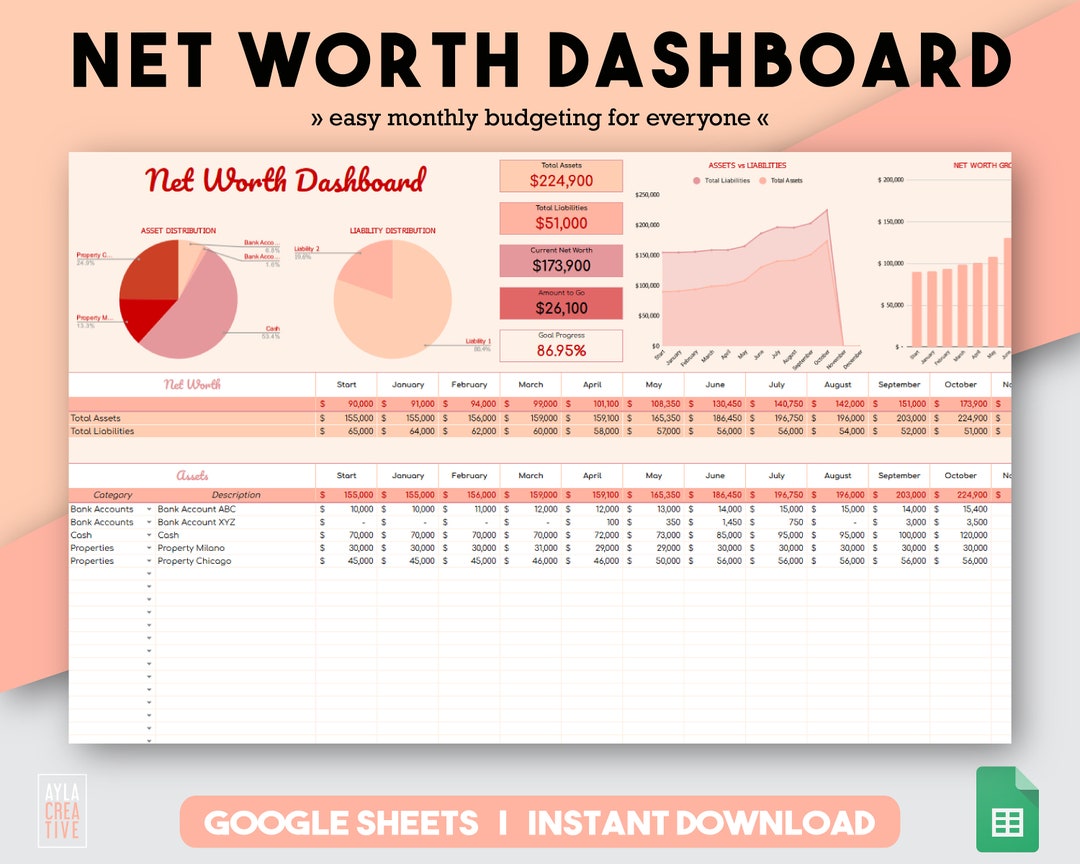
Net worth calculation fundamentally relies on the relationship between total assets and total liabilities, where an individual's accumulated assets represent the starting baseline before accounting for outstanding financial obligations. Determining this financial baseline accurately requires a rigorous separation of what you own from what you owe, providing a clear window into overall economic health.
The Foundational Definition of Assets and Net Worth
To understand how assets relate to net worth, one must first deconstruct the core components of a personal balance sheet. In financial terminology, a balance sheet serves as a snapshot of financial health at a specific point in time. It uses a straightforward equation: what you own minus what you owe equals your net worth.
Assets represent everything of economic value that an individual or household owns. These resources can be converted into cash or used to generate future financial value. Conversely, liabilities represent obligations, debts, and claims held by creditors against those resources. When financial planners or analysts look at "assets plus net worth," they are usually examining the gross asset base to see how much actual wealth remains once all encumbrances are removed.
Distinguishing between these elements prevents common accounting errors. For instance, a common mistake is counting the total market value of a home as pure wealth without subtracting the remaining mortgage balance. By properly cataloging every item, you establish a baseline for long-term financial planning, estate execution, and creditworthiness.
Categorizing Personal Assets
Assets are not all created equal. They differ significantly in how quickly they can be converted into cash without a loss of value—a characteristic known as liquidity. Financial institutions and wealth managers generally split assets into two primary categories: liquid (or current) assets and fixed (or long-term) assets.
Liquid and Current Assets
Liquid assets include cash and cash equivalents that can be accessed immediately to cover short-term expenses, emergencies, or investment opportunities.
- Checking and savings accounts
- Money market accounts
- Certificates of deposit (CDs) maturing in the short term
- Readily marketable securities, such as publicly traded stocks and bonds
Fixed and Long-Term Assets
Fixed or capital assets represent physical property, long-term investments, or possessions that require time and transaction costs to liquidate.
- Real estate holdings, including primary residences and investment properties
- Vehicles, watercraft, and other valuable machinery
- Retirement accounts, such as 401(k) plans, traditional IRAs, and Roth IRAs
- Personal property of significant value, including fine art, jewelry, and collectibles
| Liquid / Current Assets | Fixed / Long-Term Assets |
|---|---|
| Cash & Checking Accounts | Real Estate & Land |
| Savings & Money Market Accounts | Retirement Accounts (401k, IRA) |
| Marketable Securities (Stocks) | Vehicles & Valuable Collectibles |
Accounting for Liabilities: The Counterweight to Assets
Total assets alone do not paint an accurate financial picture. To arrive at a true net worth figure, you must compile all liabilities. Liabilities represent the total debt burden carried by an individual or household. They are typically divided into short-term (current) liabilities and long-term liabilities.
- Short-Term Liabilities: Obligations due within a 12-month period. This includes credit card balances, personal lines of credit, medical bills, and short-term promissory notes.
- Long-Term Liabilities: Debts scheduled to be paid over multiple years. This category encompasses residential mortgages, student loans, auto loans, and business development loans.
When liabilities exceed assets, an individual experiences negative net worth. Conversely, a growing positive gap between high-value assets and low liabilities indicates strong wealth accumulation.
The Net Worth Equation and Calculation Mechanics
Calculating net worth is a straightforward mathematical process, but it demands absolute honesty and precise record-keeping regarding asset valuation and debt tracking.
$$\text{Net Worth} = \text{Total Assets} - \text{Total Liabilities}$$
Step-by-Step Calculation Process
- List All Assets at Fair Market Value: Document the current price your assets would command in an open market, not what you originally paid for them. For real estate, use recent comparable sales or a professional appraisal. For vehicles, consult valuation guides such as Kelley Blue Book.
- Sum the Asset Values: Add all liquid and fixed asset valuations together to arrive at your gross asset total.
- List All Liabilities: Review credit reports, mortgage statements, student loan portals, and credit card apps to capture every outstanding debt balance.
- Sum the Liability Values: Add all outstanding balances together to find your total liabilities.
- Subtract Liabilities from Assets: Subtract the total debt figure from the gross asset figure to reveal your net worth.
Evaluating Assets vs. Net Worth: Key Differences
While assets measure the scale of what you control, net worth measures your actual financial independence. The table below outlines how these two concepts diverge in utility, risk assessment, and tracking.
| Feature | Total Assets | Net Worth |
|---|---|---|
| Definition | Gross economic value of all owned property and cash. | Remaining wealth after subtracting all debts from assets. |
| Primary Use | Assessing business scale, borrowing collateral capacity. | Measuring true financial health and long-term stability. |
| Debt Impact | Unaffected by debt amounts; high debt can coexist with high assets. | Directly reduced by every dollar of outstanding debt. |
| Liquidity View | Can obscure cash flow problems if assets are illiquid. | Highlights solvency, showing if you can cover all obligations. |
| Growth Goal | Expanding resource generation and investment streams. | Widening the gap between what is owned and what is owed. |
Practical Applications of Tracking Net Worth
Monitoring the relationship between your assets and your net worth is vital for major life milestones. Financial institutions, lenders, and advisors rely on these metrics for several core functions.
Lending and Credit Approvals
When applying for commercial loans, high-end mortgages, or private banking services, institutions often request a personal financial statement. This document requires a detailed breakdown of assets and liabilities. Lenders analyze your asset-to-debt ratio to determine whether you have sufficient backing to support a new loan facility.
Retirement Planning and Longevity
Financial independence calculators use net worth milestones to determine when a worker can safely retire. By tracking investable assets—excluding primary residences and personal cars—retirees can estimate sustainable withdrawal rates, such as the widely referenced four percent rule, ensuring their capital outlasts their retirement horizon.
Estate Planning and Tax Strategies
Knowing the exact market value of your asset base helps you structure wills, trusts, and gifting strategies. High-net-worth individuals must navigate estate tax thresholds, ensuring that asset transfers minimize tax liabilities for heirs and beneficiaries.
Common Mistakes in Asset and Net Worth Valuation
Inaccurate calculations frequently derail financial planning efforts. Avoiding these common errors ensures a realistic assessment of your economic standing.
- Using Purchase Price Instead of Market Value: Listing a home or car at its historical purchase price inflates asset values. Always use current fair market value.
- Ignoring Liquidity Constraints: Having a high net worth tied up entirely in commercial real estate or private equity can leave an individual cash-poor during an emergency.
- Omission of Small Debts: Forgetting store cards, medical bills, or personal loans skews liability totals and results in an overstated net worth.
- Failure to Account for Tax Liabilities: Traditional retirement accounts (like 401ks) are subject to income tax upon withdrawal. Failing to factor in future tax burdens can lead to overestimating net spendable wealth.
Frequently Asked Questions
Why is net worth considered more important than total assets?
Total assets only show the gross value of what you own, ignoring the debt tied to those items. Net worth accounts for your liabilities, revealing your true financial cushion and solvency if all debts were called due immediately.
Should I include my primary residence in my net worth calculation?
Yes, your primary residence is a physical asset. However, you must include the remaining mortgage balance as a liability, and you should use the conservative net market value (minus estimated selling costs) rather than the purchase price.
How often should I calculate my net worth?
Most financial professionals recommend calculating your net worth annually or semi-annually. Tracking it too frequently, such as daily, can cause unnecessary anxiety over short-term market fluctuations in investments and real estate.
Are personal possessions like clothing and furniture counted as assets?
While technically possessions with value, most standard personal items depreciate rapidly and are difficult to liquidate. Financial planners generally exclude clothing, everyday electronics, and standard furniture from net worth calculations unless dealing with rare antiques, fine art, or high-end jewelry.
What is a good net worth for my age?
Net worth benchmarks vary significantly based on income, geography, career path, and inheritance. General rules of thumb, such as having a net worth equal to your annual salary multiplied by your age divided by ten, serve as rough guidelines rather than strict rules.
Next Actions for Financial Health
To put these concepts into practice, begin by gathering your most recent financial statements, including bank accounts, investment portfolios, mortgage balances, and credit card accounts. Build a standardized balance sheet spreadsheet to separate liquid assets, fixed assets, short-term liabilities, and long-term liabilities. Review this document every six months to track your progress in building true net worth, paying down debt, and expanding your productive asset base.