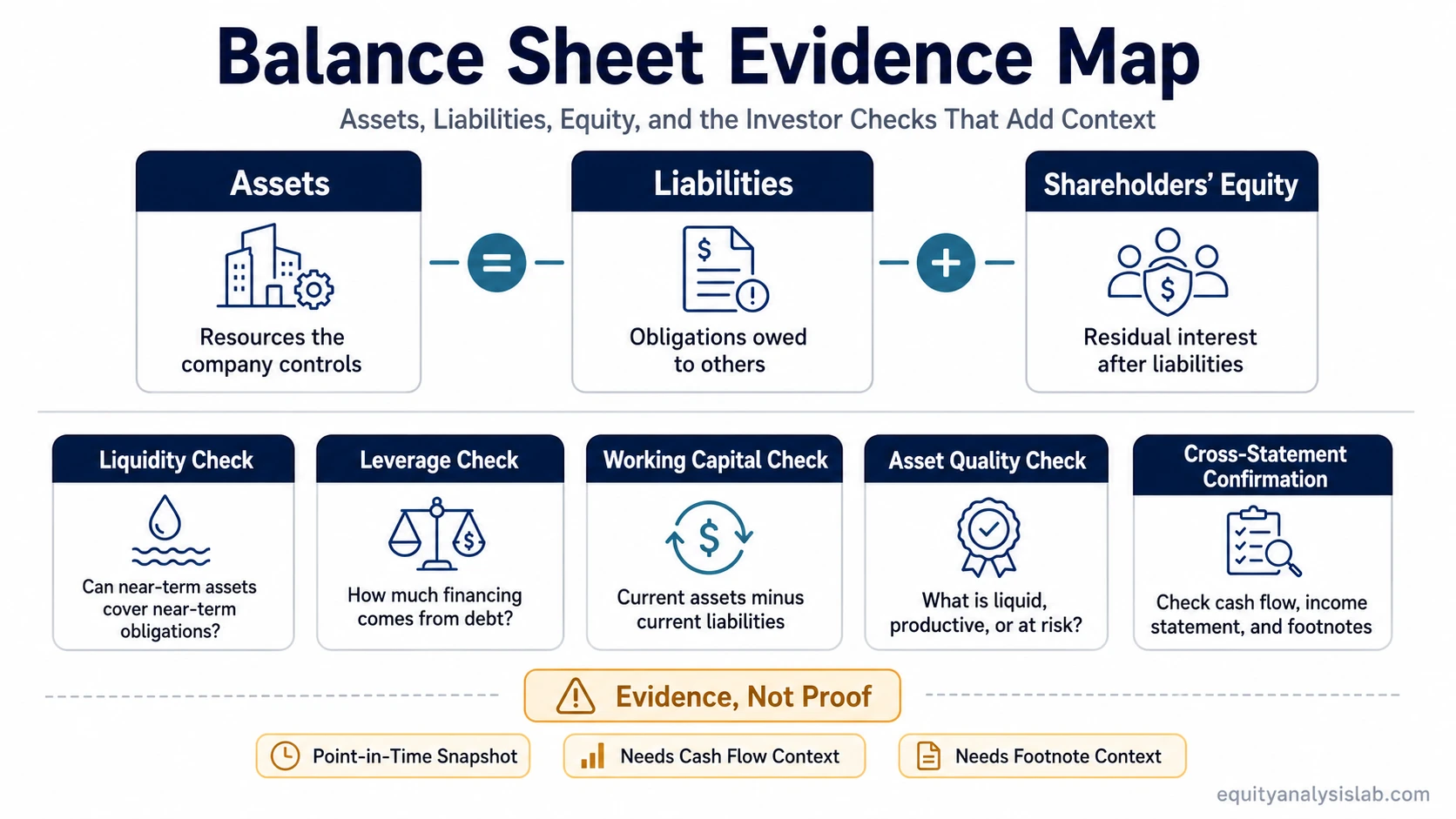
The fundamental accounting equation—assets equals liabilities plus stockholders' equity—states that a company's total resources must equal the claims against those resources by creditors and owners. It serves as the mathematical foundation for the double-entry bookkeeping system, ensuring that every financial transaction maintains balance across the financial statements.
The Foundation of Modern Accounting
Every financial transaction executed by a business, from purchasing a fleet of delivery trucks to paying utility bills or issuing new shares of stock, alters the financial position of the organization. Yet, despite the chaotic daily influx of invoices, receipts, and electronic transfers, the underlying architecture of financial reporting remains anchored by a single, unwavering mathematical expression: assets equal liabilities plus stockholders' equity. Often referred to as the balance sheet equation, this formula acts as the structural beam holding up the entire edifice of modern corporate finance and accounting standards.
Understanding this equation is not merely an academic exercise for accounting students; it is a vital requirement for business owners, investors, creditors, and corporate managers. When an investor evaluates a public corporation’s annual report, or when a small business owner reviews monthly financial statements, they are looking at a system built entirely upon the equilibrium of this formula. If the equation does not balance, the financial statements are fundamentally flawed, signaling potential errors in bookkeeping, misstated accounts, or systemic reporting failures.
Deconstructing the Three Core Elements
To fully grasp how the accounting equation operates in practice, one must examine its three constituent components individually. Each element represents a distinct category of financial value that, when interacting through double-entry accounting mechanics, preserves the structural integrity of the balance sheet.
Assets: What the Business Owns and Controls
Assets are economic resources owned or controlled by an enterprise as a result of past transactions and events, from which future economic benefits are expected to flow. In simpler terms, an asset is anything of value that the company owns and can use to generate revenue or settle obligations. Assets are generally categorized into two primary liquidity tiers on a classified balance sheet:
- Current Assets: Resources that are cash or are expected to be converted into cash, sold, or consumed within one normal operating cycle, typically one year. Examples include cash and cash equivalents, accounts receivable, inventory, and short-term investments.
- Non-Current (Long-Term) Assets: Investments and resources that provide economic value over a period exceeding one year. This category includes property, plant, and equipment (PP&E), long-term investments, intellectual property, patents, trademarks, and goodwill.
The valuation of assets requires strict adherence to accounting principles such as historical cost, conservatism, and impairment testing. Not all assets are listed at current market value; many are maintained on the balance sheet at their historical acquisition cost less accumulated depreciation or amortization.
Liabilities: What the Business Owes
Liabilities represent present obligations of the enterprise arising from past events, the settlement of which is expected to result in an outflow of resources embodying economic benefits. Essentially, liabilities are the debts and obligations that a company owes to outside parties, such as suppliers, lenders, employees, and tax authorities. Like assets, liabilities are bifurcated based on their timing and maturity:
- Current Liabilities: Obligations due within one normal operating cycle or one year. Common examples include accounts payable, short-term notes payable, accrued wages and salaries, taxes payable, and the current portion of long-term debt.
- Non-Current (Long-Term) Liabilities: Obligations that are due after one year or beyond the normal operating cycle. This includes long-term bank loans, bonds payable, mortgage obligations, and long-term lease liabilities.
Liabilities represent an external claim on a company's assets. When a creditor extends a loan or a supplier ships inventory on credit, they acquire a legal claim against the enterprise's assets, which takes priority over the claims of the equity holders in the event of liquidation.
Stockholders' Equity: The Residual Interest
Stockholders' equity—frequently referred to as shareholders' equity or net worth—represents the residual interest in the assets of an enterprise after deducting its liabilities. Mathematically, it can be rearranged from the core equation as assets minus liabilities equal stockholders' equity. This component reflects the net book value of the corporation belonging to its share-owning investors.
Stockholders' equity typically comprises several distinct accounts on the balance sheet:
- Common Stock and Preferred Stock: The par or stated value of capital stock issued to investors in exchange for capital contributions.
- Additional Paid-In Capital (Capital Surplus): The amount paid by investors for stock above its par value.
- Retained Earnings: The cumulative net income of the corporation that has been retained within the business rather than distributed to stockholders as dividends.
- Treasury Stock: Contra-equity account representing shares that the corporation has repurchased from the open market.
- Accumulated Other Comprehensive Income (AOCI): Unrealized gains and losses that bypass the income statement, such as foreign currency translation adjustments or unrealized gains on certain securities.
The Mechanics of Double-Entry Bookkeeping
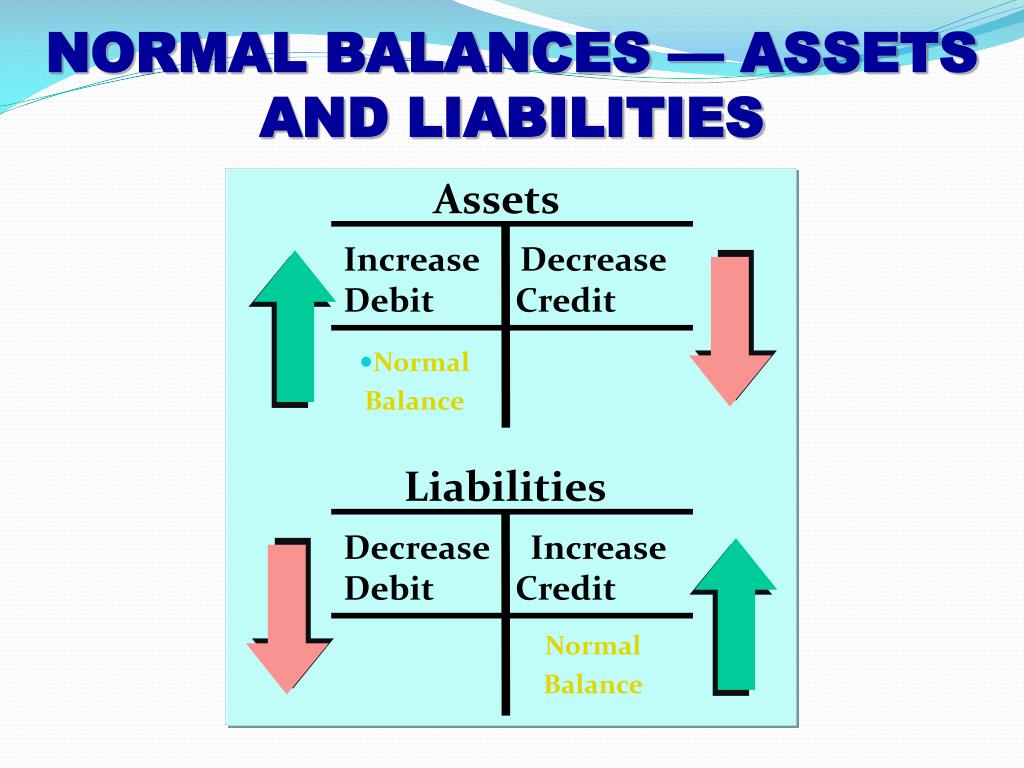
The brilliance of the formula assets equals liabilities plus stockholders equity lies in its integration with the double-entry bookkeeping system, formalized by Luca Pacioli in the late 15th century. Under this system, every financial transaction must be recorded with at least two matching entries: a debit and a credit. This ensures that the accounting equation remains in constant equilibrium.
| Account Type | Increase Recorded As | Decrease Recorded As | Normal Balance |
|---|---|---|---|
| Assets | Debit | Credit | Debit |
| Liabilities | Credit | Debit | Credit |
| Stockholders' Equity | Credit | Debit | Credit |
| Revenues | Credit | Debit | Credit |
| Expenses | Debit | Credit | Debit |
To maintain the balance of the equation, the total debits for any given transaction must equal the total credits. For example, if a company purchases $10,000 worth of inventory using cash:
- The asset account "Inventory" increases by $10,000 (recorded as a debit).
- The asset account "Cash" decreases by $10,000 (recorded as a credit).
Because both changes occur within the asset category, the total value of assets remains unchanged, and the equation stays in balance. If the same inventory were purchased on credit:
- The asset account "Inventory" increases by $10,000 (debit).
- The liability account "Accounts Payable" increases by $10,000 (credit).
Here, both sides of the equation increase by $10,000, preserving the equality between assets and the sum of liabilities and stockholders' equity.
The Expanded Accounting Equation
While the basic formula provides a high-level view, operational realities require breaking down stockholders' equity into its operational components, specifically revenues, expenses, dividends, and initial capital contributions. This leads to the expanded accounting equation:
$$\text{Assets} = \text{Liabilities} + \text{Contributed Capital} - \text{Dividends} + \text{Revenues} - \text{Expenses}$$
This expanded format demonstrates how the income statement connects directly to the balance sheet. Revenues increase net income, which flows into retained earnings, thereby increasing stockholders' equity and assets. Conversely, expenses decrease net income, reducing retained earnings, equity, and assets or increasing liabilities.
Practical Application of the Expanded Equation
Consider a newly formed consulting firm during its first month of operations:
- Capital Contribution: The founders invest $50,000 in cash to launch the business. Assets (Cash) increase by $50,000, and Stockholders' Equity (Common Stock) increases by $50,000.
- Borrowing Funds: The firm takes out a bank loan for $20,000. Assets (Cash) increase by $20,000, and Liabilities (Notes Payable) increase by $20,000.
- Earning Revenue: The firm performs consulting services and bills clients $15,000 on account. Assets (Accounts Receivable) increase by $15,000, and Revenues increase equity by $15,000.
- Incurring Expenses: The firm pays $5,000 in office rent and salaries. Assets (Cash) decrease by $5,000, and Expenses decrease equity by $5,000.
At the end of the month, total assets equal cash ($65,000) plus accounts receivable ($15,000), totaling $80,000. Total liabilities equal notes payable ($20,000). Total stockholders' equity equals common stock ($50,000) plus net income ($10,000 from revenues minus expenses), totaling $60,000. Liabilities ($20,000) plus equity ($60,000) equal $80,000, perfectly balancing the equation.
Financial Statement Interconnectedness
The equation assets equals liabilities plus stockholders equity is not just a balance sheet concept; it governs the structural relationship among all primary financial statements. Understanding this interplay allows analysts to diagnose operational strengths and financial vulnerabilities.
The Balance Sheet as a Static Snapshot
The balance sheet is the direct visual manifestation of the accounting equation. It presents a cumulative snapshot of a company's financial position at a specific point in time, usually the last day of a fiscal quarter or year. The left side (or top section) details assets, while the right side (or bottom section) details liabilities and stockholders' equity, proving mathematically that resources are funded either through debt or owner investment.
The Income Statement as a Dynamic Flow
The income statement measures financial performance over a specific period, detailing revenues generated and expenses incurred. Because net income (or net loss) flows directly into retained earnings on the balance sheet at the end of the accounting period, the income statement acts as a bridge explaining the change in stockholders' equity between two successive balance sheet dates.
The Statement of Cash Flows
The statement of cash flows categorizes cash inflows and outflows into operating, investing, and financing activities. Cash is a core asset account within the accounting equation. Every cash movement tracked in this statement directly impacts the asset side of the equation, which must be offset by corresponding changes in liabilities, equity, or other asset accounts.
Common Misconceptions and Troubleshooting
Even experienced professionals occasionally encounter conceptual traps when applying the accounting equation. Recognizing these pitfalls helps maintain accurate financial records.
- Confusing Profit with Cash: A company can report significant net income on the income statement while facing severe cash shortages. Because profitability increases equity through retained earnings, the corresponding asset increase might be tied up in accounts receivable or inventory rather than liquid cash. The equation remains balanced, but liquidity can still be constrained.
- Treating Expenses as Assets: Purchasing office supplies provides future utility, but standard accounting rules often require immediate expensing if the items are consumed quickly. Misclassifying expenses as long-term assets artificially inflates both assets and equity, distorting financial ratios.
- Overlooking Non-Cash Transactions: Transactions such as acquiring equipment through a capital lease or issuing stock for land involve non-cash exchanges. Bookkeepers must ensure both legs of the transaction are recorded accurately to preserve the equality of the equation.
When financial statements fail to balance, accountants follow a systematic troubleshooting protocol:
- Verify that the trial balance totals for all debit and credit accounts match.
- Check for transposition errors (e.g., entering $4,500 as $5,400), which create discrepancies divisible by 9.
- Review recent journal entries for unposted items or one-sided entries.
- Ensure all adjusting entries for depreciation, accruals, and deferrals have been correctly applied.
Strategic Implications for Stakeholders
For corporate decision-makers, maintaining a healthy balance within the accounting equation is essential for maintaining financial flexibility and investor confidence.
Leverage and Risk Management
The relationship between liabilities and stockholders' equity dictates a company's financial leverage. High reliance on debt (liabilities) to finance assets increases financial risk, as interest payments and principal maturities remain mandatory regardless of revenue fluctuations. Conversely, a high equity ratio indicates a conservative financial structure, reducing bankruptcy risk but potentially sacrificing return on equity (ROE) due to underutilized borrowing capacity.
Valuation and Investment Analysis
Investors utilize metrics derived from the accounting equation—such as the debt-to-equity ratio, return on assets (ROA), and return on equity (ROE)—to evaluate management effectiveness and capital allocation strategies. A growing asset base driven primarily by increasing retained earnings signals organic growth and profitability, whereas asset expansion fueled entirely by mounting debt warns of potential overextension.
Frequently Asked Questions
What happens to the accounting equation if a company takes out a bank loan?
When a company takes out a bank loan, its assets increase because it receives cash. Simultaneously, its liabilities increase by the exact same amount to reflect the obligation to repay the bank. This keeps both sides of the equation in balance.
Is stockholders' equity the same as the market value of a company?
No. Stockholders' equity represents the book value of the company, calculated using historical costs recorded in the accounting system. The market value, or market capitalization, is determined by the stock market based on investor expectations, future earnings potential, and share prices, which often differ substantially from book value.
Can assets ever be less than liabilities?
Yes. When a company accumulates massive losses or suffers severe asset impairments, its total liabilities can exceed its total assets. This results in negative stockholders' equity, often referred to as a deficit in retained earnings, indicating financial distress or insolvency.
Why must debits always equal credits in accounting?
Debits and credits are the mechanical tools of the double-entry system. Because every transaction involves both a source of funds and a use of funds, recording equal debits and credits ensures that the dual-aspect nature of business operations is accurately captured, keeping the balance sheet equation intact.
How do dividends affect the accounting equation?
Dividends represent a distribution of earnings to stockholders. Paying a cash dividend decreases assets (cash) and decreases stockholders' equity (through a reduction in retained earnings or a specific dividends account), preserving the balance of the equation.
Conclusion and Next Actions
The principle that assets equal liabilities plus stockholders' equity is the bedrock upon which all financial reporting is constructed. By ensuring that every economic exchange is recorded with mathematical precision, this equation provides clarity, accountability, and transparency across global markets. For ongoing financial health, professionals must regularly audit trial balances, monitor leverage ratios through the lens of equity and debt, and ensure that internal accounting controls strictly enforce double-entry mechanics. To deepen your understanding, review your organization's most recent balance sheet, trace how net income flows into retained earnings, and calculate your current debt-to-equity ratio to assess financial leverage.