When a Medicaid beneficiary passes away, state Medicaid agencies are legally mandated to seek reimbursement for certain long-term care and medical expenses through a process known as estate recovery. For individuals who own life insurance policies, navigating how these assets interact with Medicaid recovery rules requires a careful examination of beneficiary designations, policy ownership, and state-specific implementation of federal guidelines under the Omnibus Budget Reconciliation Act of 1993 (OBRA '93).
The Legal Framework of Medicaid Estate Recovery
Medicaid is a joint federal and state program designed to provide healthcare coverage for individuals with limited income and resources. Because long-term care services—such as nursing facility services, home and community-based services, and related hospital and prescription drug services—can be extraordinarily expensive, the federal government established guidelines to help replenish state program funds after a beneficiary's death.
Federal Mandates and State Implementation
Under Section 1917(b) of the Social Security Act, states are required to seek recovery from the estate of an individual who received Medicaid benefits while age 55 or older. While federal law sets the broad parameters, individual states administer their own estate recovery programs. This means the specific rules, thresholds, and assets subject to recovery can vary significantly depending on where the beneficiary lived and received care.
Defining the "Probate Estate" Versus the "Expanded Estate"
A central point of confusion for families dealing with asset recovery is the legal definition of an "estate."
- Traditional Probate Estate: Historically, state Medicaid agencies could only recover assets that passed through formal probate administration—assets owned solely by the deceased individual with no designated beneficiary.
- Expanded Estate: Following federal updates, many states have expanded their definition of a Medicaid estate to include assets that avoid probate. This can encompass jointly held property, living trusts, life estates, and certain assets passing outside of probate, depending on state statute. Understanding whether a state utilizes a narrow probate definition or a broad expanded estate definition is critical when evaluating life insurance policies.
How Life Insurance Interacts with Medicaid Recovery
Life insurance is designed to provide financial protection to loved ones upon the policyholder's death. However, whether the death benefit or cash value of a policy is vulnerable to Medicaid estate recovery depends entirely on how the policy is structured.
Named Beneficiaries and Probate Avoidance
The primary factor determining whether a life insurance policy is subject to Medicaid recovery is ownership and beneficiary designation:
- Policies with Designated Beneficiaries: When a life insurance policy names a specific living person (such as a spouse, child, or sibling) or a qualifying trust as the beneficiary, the death benefit generally passes directly to that beneficiary upon the insured's death. Because the funds bypass the probate process entirely, they typically do not become part of the probate estate. In states that strictly limit recovery to the probate estate, these funds are protected from Medicaid recovery.
- Policies with No Beneficiary or "Estate" as Beneficiary: If the policyholder names their own "Estate" as the beneficiary, or if the designated beneficiary predeceased the insured and no contingent beneficiary was named, the death benefit flows directly into the probate estate. Once inside the probate estate, the funds become fully accessible to creditors, including the state Medicaid agency seeking reimbursement.
The Role of Cash Value During Lifetime
Before examining death benefits, it is important to understand how life insurance interacts with Medicaid eligibility while the applicant is alive.
- Term Life Insurance: Typically has no cash surrender value and is generally disregarded for resource limits in most states, provided the face value is below certain thresholds.
- Whole or Permanent Life Insurance: Accumulates cash value. If the combined cash surrender value of all life insurance policies owned by an applicant exceeds state resource limits (often $1,500 per policy or a combined aggregate limit), the policy is considered an available asset. To qualify for Medicaid, individuals often must restructure these assets, cash them out for spend-down purposes, or irrevocably assign them.
State-Specific Variations and Expanded Estate Rules
Because Medicaid estate recovery is governed at the state level, statutory frameworks differ regarding non-probate assets. Families must review their specific state's Department of Health or Medicaid agency guidelines.
States with Narrow Probate Recovery
In jurisdictions that adhere strictly to traditional probate law, life insurance proceeds paid directly to a named beneficiary are safe from Medicaid estate recovery. The state cannot reach outside the probate estate to claim contractual payouts governed by beneficiary designations.
States Utilizing Expanded Definitions
Conversely, a subset of states have broadened their recovery definitions via state legislation. These expanded rules may allow the state to place liens or make claims against non-probate assets, including certain annuities, living trusts, and—in specific scenarios where statutory loopholes or fraudulent transfers are identified—life insurance arrangements. However, standard life insurance policies with designated beneficiaries remain generally protected in most jurisdictions unless the policy was transferred improperly during the Medicaid look-back period.
Comparison of Life Insurance Treatment Under Medicaid
| Policy Type / Structure | Impact on Medicaid Eligibility (Lifetime) | Vulnerability to Estate Recovery (Post-Death) | Primary Considerations |
|---|---|---|---|
| Term Life Insurance | Usually exempt if face value is low; no cash value. | Protected if a living beneficiary is named. | Must avoid naming "Estate" as beneficiary. |
| Whole Life (Low Value) | Exempt if total cash value stays under state resource limits. | Protected if a living beneficiary is named. | Monitor aggregate cash value limits closely. |
| Whole Life (High Value) | Counts toward resource limit; requires spend-down or restructuring. | Vulnerable if cash value is retained or estate is named. | Often requires irrevocable assignment or burial planning conversion. |
| Irrevocable Life Insurance Trust (ILIT) | Removes asset from personal estate if properly structured outside look-back. | Highly protected from state recovery. | Must be established well before applying for Medicaid to avoid penalties. |
Exemptions, Hardships, and Waivers
Federal law provides specific protections and exemptions that prevent Medicaid from pursuing recovery in situations where doing so would cause severe hardship or conflict with other family needs.
Protected Beneficiaries
Even if a life insurance policy or other asset falls into the estate, states are legally prohibited from seeking recovery in certain protected circumstances. Recovery is typically waived or deferred if the deceased beneficiary is survived by:
- A surviving spouse.
- A child under the age of 21.
- A blind or permanently disabled child of any age.
Undue Hardship Waivers
Most state Medicaid programs have formal procedures allowing heirs, beneficiaries, or co-residents to apply for an "undue hardship" waiver. To qualify, applicants must typically demonstrate that:
- The asset subject to recovery is the primary income-producing asset of the family (such as a family farm or small business).
- Recovery would force the surviving heirs into dependence on public assistance.
- The individual seeking the waiver made significant contributions to the care of the deceased beneficiary, which delayed institutionalization.
Proactive Estate Planning Strategies
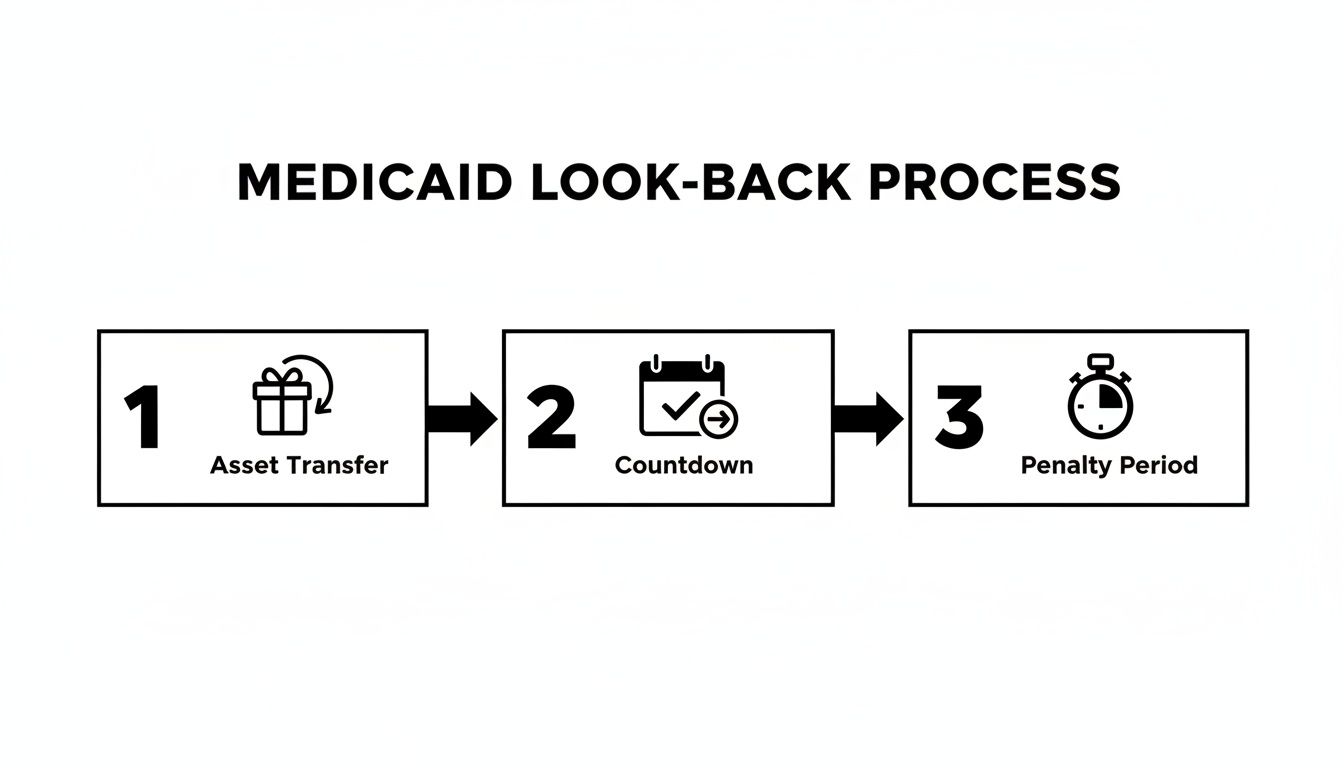
Families attempting to protect assets while ensuring long-term care needs are met often utilize specific legal and financial tools. Because Medicaid rules involve strict look-back periods (typically 60 months prior to application), planning must occur well in advance.
Utilizing Irrevocable Life Insurance Trusts (ILITs)
An Irrevocable Life Insurance Trust is a legal entity that can own a life insurance policy. By transferring ownership of the policy to an ILIT, the insured removes the policy from both their personal probate estate and their taxable estate. Because the trust—not the individual—owns the policy, the death benefit bypasses the estate entirely upon passing, shielding the proceeds from state Medicaid estate recovery.
Conversion to Burial and Funeral Plans
In many states, whole life insurance policies can be converted into irrevocable pre-need funeral arrangements or burial trusts. Because federal and state regulations generally exempt reasonable amounts set aside for burial spaces and expenses, this strategy allows individuals to utilize excess cash value in life insurance policies without violating Medicaid resource limits.
Common Mistakes to Avoid
Navigating Medicaid asset rules involves complex regulatory hurdles. Families frequently make avoidable errors that jeopardize insurance proceeds:
- Naming the Estate as Beneficiary: Failing to update beneficiary designations on older life insurance policies, leaving the default "Estate" or no beneficiary listed, which forces the payout into probate where Medicaid can make a claim.
- Transferring Ownership Improperly: Gifting a life insurance policy to children or relatives without professional guidance during the 60-month look-back period, triggering severe transfer penalties that can delay Medicaid eligibility.
- Failing to Track Cash Value Growth: Ignoring the accumulation of cash value in permanent life insurance policies, which can quietly push an applicant's countable resources above the strict Medicaid eligibility ceiling.
Practical Next Steps for Families
For families currently managing Medicaid planning or dealing with an estate after a beneficiary's passing, taking structured steps is essential:
- Review Existing Policy Documents: Locate all active term and permanent life insurance policies. Verify current beneficiary designations to ensure living individuals or trusts are explicitly named rather than the estate.
- Consult State-Specific Guidelines: Examine the official Medicaid estate recovery handbook for the specific state where the beneficiary received care, as rules regarding expanded estates differ nationwide.
- Engage Professional Counsel: Consult an elder law attorney or a certified financial planner specializing in Medicaid long-term care planning before making major policy transfers, surrenders, or trust creations.