Asset performance management software bridges the gap between traditional maintenance systems and data-driven reliability engineering by utilizing real-time sensor data, predictive analytics, and condition monitoring to maximize equipment uptime and minimize operating costs in capital-intensive industries.
The Core Foundations of Asset Performance Management
Asset Performance Management (APM) software represents a significant evolution from reactive repair cycles and static, calendar-based preventive maintenance schedules. In modern industrial operations—spanning energy, oil and gas, chemical processing, manufacturing, and transportation—unplanned equipment downtime erodes profit margins and creates severe safety and environmental liabilities. APM systems are designed to mitigate these risks by continuously evaluating the health, condition, and operational efficiency of physical assets throughout their life cycles.
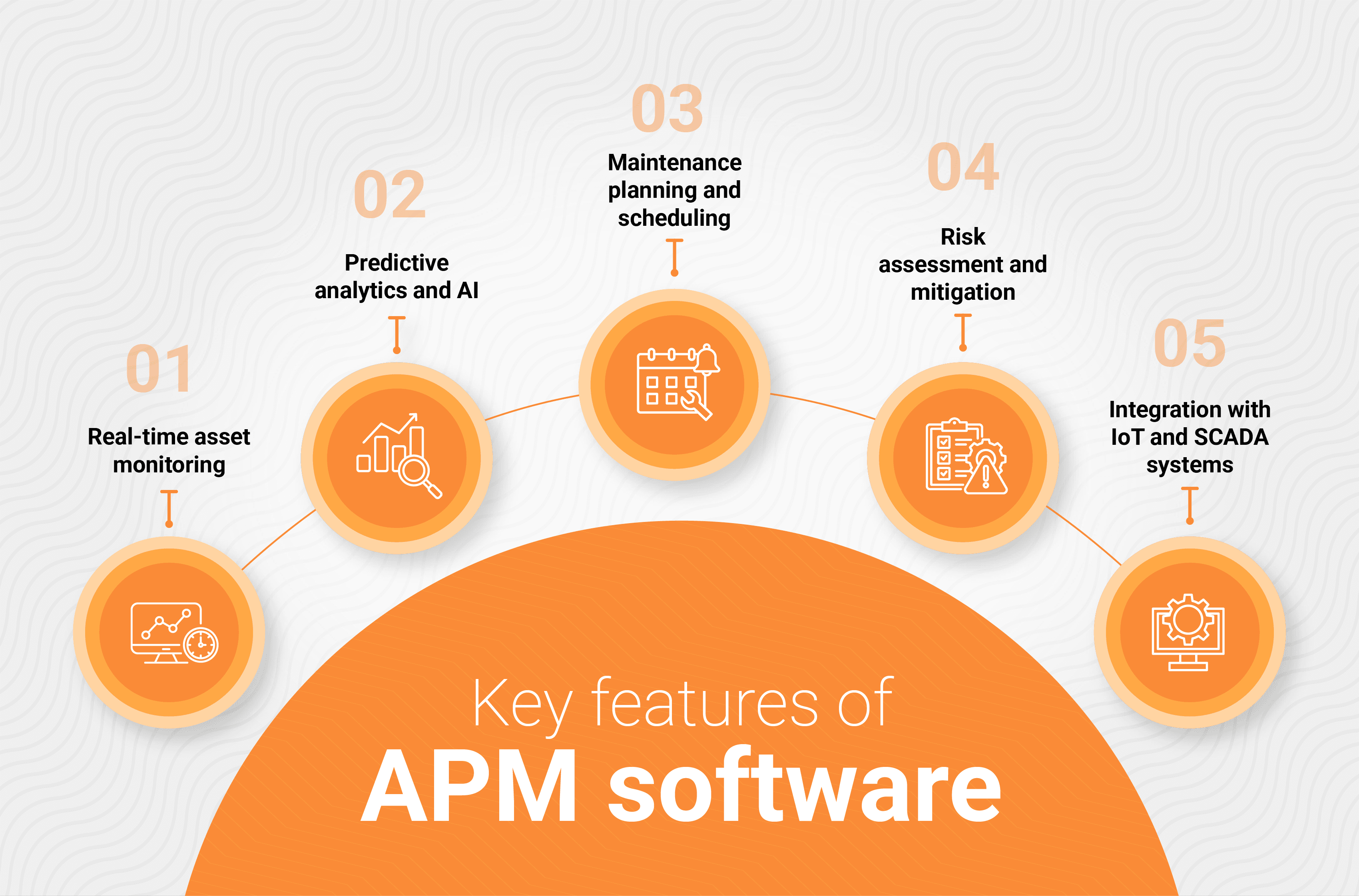
Unlike Computerized Maintenance Management Systems (CMMS) or Enterprise Asset Management (EAM) platforms, which historically focused on work order creation, labor tracking, and spare parts inventory, APM concentrates specifically on reliability and asset health. A robust APM architecture ingests data from multiple enterprise silos, including distributed control systems (DCS), supervisory control and data acquisition (SCADA) networks, historian databases, and manual inspection logs. By applying advanced analytics, machine learning algorithms, and physical asset models, the software evaluates this incoming stream to detect subtle operational anomalies long before they manifest as catastrophic mechanical or electrical failures.
Understanding APM in practice requires examining how disparate operational technologies (OT) and information technologies (IT) converge. Historically, plant floor data remained isolated within automation layers. APM breaks down these silos by offering enterprise-grade visualization, root cause analysis (RCA) tools, and risk-based inspection (RBI) modules. These components allow reliability engineers, maintenance managers, and operations personnel to collaborate on a single pane of glass, shifting the organizational mindset from "fix it when it breaks" to "predict, prevent, and optimize."
Core Modules and Technical Capabilities of Modern APM
To deliver tangible operational improvements, a comprehensive APM suite integrates several specialized software modules. Each module targets a distinct facet of asset reliability, risk management, and operational optimization. When implemented cohesively, these tools provide an end-to-end framework for asset governance.
1. Condition Monitoring and Predictive Diagnostics
The foundation of any advanced APM platform is its ability to ingest and process high-frequency time-series data. Vibration analysis, thermal imaging, acoustic emission, and lubricating oil metrics are continuously evaluated against baseline performance curves. Machine learning models identify deviations caused by friction, imbalance, misalignment, or electrical degradation, alerting engineering teams to developing faults weeks or months in advance.
2. Reliability-Centered Maintenance (RCM) and Failure Modes and Effects Analysis (FMEA)
APM software digitizes reliability engineering methodologies. RCM and FMEA modules guide cross-functional teams through structured evaluations of how assets fail, the probability of those failures, and the severity of their consequences. The software links these failure modes directly to specific mitigation strategies, ensuring that maintenance strategies are justified by operational risk rather than generic manufacturer recommendations.
3. Risk-Based Inspection (RBI) and Integrity Management
Particularly critical in capital-intensive, high-consequence industries such as refining and petrochemicals, RBI modules assess the structural integrity of static equipment like pressure vessels, piping networks, and storage tanks. By modeling corrosion rates, material fatigue, and environmental stressors, APM systems calculate real-time risk profiles. This enables organizations to safely extend inspection intervals for low-risk assets while concentrating mandatory shutdowns on high-risk components.
4. Root Cause Analysis (RCA) and Incident Learning
When failures do occur, APM platforms provide structured workflows for investigating the underlying systemic causes. By housing historical event data, maintenance logs, and operational parameters, the software helps reliability teams document failure chains, map fault trees, and store organizational learnings in a searchable knowledge base to prevent recurrence across sister facilities.
APM vs. CMMS vs. EAM: Understanding System Boundaries
Organizations frequently struggle to define the boundaries between APM, CMMS, and EAM platforms. While software vendors increasingly offer integrated suites that blur these lines, each system serves a distinct purpose within the enterprise technology stack.
| Feature / Capability | CMMS (Computerized Maintenance Management System) | EAM (Enterprise Asset Management) | APM (Asset Performance Management) |
|---|---|---|---|
| Primary Focus | Work order execution, labor tracking, and reactive maintenance. | Life-cycle management of physical assets across multiple sites. | Asset health, reliability engineering, and failure prediction. |
| Data Sources | Manual work logs, parts inventory, basic asset registers. | Procurement, financial depreciation, enterprise supply chain. | Real-time sensor data, SCADA, historians, advanced analytics. |
| Primary Users | Maintenance technicians, craft workers, planners. | Facility managers, procurement specialists, enterprise leadership. | Reliability engineers, condition monitoring specialists, data scientists. |
| Core Output | Work orders, maintenance schedules, purchase requisitions. | Total cost of ownership, asset registers, capital planning data. | Health indices, remaining useful life (RUL), risk matrices. |
| Analytical Depth | Basic descriptive reporting (e.g., mean time to repair). | Financial and logistical asset tracking. | Advanced diagnostic, predictive, and prescriptive analytics. |
In practice, APM does not replace a CMMS or EAM; rather, it complements them. When an APM platform detects a developing bearing anomaly on a critical boiler feed pump, it automatically generates a notification or triggers an integrated work order within the plant's CMMS. This seamless integration ensures that predictive insights translate directly into actionable maintenance execution on the plant floor.
The Implementation Lifecycle: From Strategy to Execution
Deploying APM software successfully requires a structured, multi-phase implementation roadmap. Organizations that treat APM as a purely "plug-and-play" IT project frequently experience low user adoption, data overload, and disappointing return on investment. A disciplined, engineering-led implementation process maximizes the likelihood of long-term success.
Phase 1: Asset Criticality Assessment (ACA)
An enterprise cannot monitor everything simultaneously, nor is it economically viable to apply advanced predictive analytics to low-value, easily replaceable balance-of-plant assets. The implementation journey begins with an exhaustive Asset Criticality Assessment. Cross-functional teams evaluate every physical asset based on safety, environmental impact, production loss, and repair cost. High-criticality assets—those whose failure halts total plant throughput or creates safety hazards—are prioritized for immediate APM integration.
Phase 2: Data Architecture and Integration
Once critical assets are identified, attention shifts to data readiness. APM systems require clean, contextualized data to generate accurate predictions. This phase involves mapping historian tag names to physical asset hierarchies, cleaning legacy maintenance records, and establishing secure data pipelines between operational technology networks and cloud or on-premises APM databases. Establishing clear data governance standards ensures that sensor drift or naming convention inconsistencies do not corrupt analytical models.
Phase 3: Model Configuration and Baseline Tuning
With data flowing into the platform, engineers configure diagnostic rules, predictive algorithms, and health scoring formulas. During this stabilization period, false positives are common. Reliability engineers must collaborate with software specialists to tune alert thresholds, ensuring that engineering teams are not overwhelmed by nuisance alarms while remaining vigilant against genuine operational anomalies.
Phase 4: Change Management and Cultural Integration
The ultimate success of APM in practice depends on human behavior. Maintenance planners, operators, and reliability engineers must trust the insights generated by the software. Comprehensive training programs, clear standard operating procedures (SOPs), and leadership commitment are essential to transition the organizational culture from reactive firefighting to proactive reliability management.
Operational Challenges and Common Pitfalls
While the theoretical benefits of APM are well-documented, executing an initiative in real-world industrial environments presents distinct hurdles. Organizations must anticipate and mitigate several common pitfalls to realize value.
Data Overload and Alarm Fatigue
Connecting thousands of high-frequency sensors to an APM platform without a filtering strategy inevitably leads to data saturation. When reliability engineers face hundreds of low-priority alerts daily, genuine warnings are frequently missed. Mitigating this risk requires tiered alarming structures, where automated triage handles routine notifications and advanced analytics escalate only high-risk anomalies.
Organizational Silos
Operational technology and information technology departments often operate under differing mandates, KPIs, and cultural norms. OT prioritizes uptime, safety, and operational continuity, while IT focuses on cybersecurity, network architecture, and data governance. Successful APM deployments require a unified governance structure that bridges these departmental divides, fostering shared accountability for asset health.
Skill Gaps and Resource Constraints
APM platforms leverage sophisticated statistical modeling, machine learning, and domain-specific engineering principles. Many industrial organizations face a skills gap, lacking personnel trained in both traditional reliability engineering and advanced data analytics. Upskilling internal staff or partnering with specialized reliability service providers is frequently necessary to interpret complex diagnostic outputs accurately.
Financial Considerations and ROI Realization
Investing in enterprise-grade APM software involves substantial capital and operational expenditure, including software licensing fees, cloud infrastructure, system integration services, and ongoing internal resource allocation. To justify these expenditures to executive leadership, organizations must evaluate return on investment through several quantifiable vectors.
- Reduction in Unplanned Downtime: Preventing a single catastrophic failure on a primary production line or turbomachinery train can save millions of dollars in lost output, preserving corporate revenue.
- Optimization of Inventory Holding Costs: By shifting from calendar-based maintenance to condition-based interventions, organizations avoid premature component replacements, reducing spare parts inventory and working capital requirements.
- Extension of Asset Life Cycles: Proactively addressing minor mechanical imbalances and lubrication issues reduces cumulative wear and tear, safely extending the operating lifespan of expensive capital assets and delaying capital replacement cycles.
- Labor Efficiency Gains: Eliminating routine, unnecessary manual inspections frees skilled technicians to focus on value-adding corrective and proactive maintenance tasks.
Future Outlook: The Evolution of APM in Industrial Operations
As industrial enterprises continue their digital transformation journeys, APM software is evolving beyond traditional diagnostic capabilities. Generative artificial intelligence and large language models are increasingly integrated into APM interfaces, allowing reliability engineers to query complex asset histories using natural language prompts (e.g., "Summarize all vibration anomalies on Compressor 4 over the last quarter"). Furthermore, edge computing allows basic anomaly detection to occur locally on the device before transmitting data upstream, reducing bandwidth consumption and enabling near-instantaneous automated responses to critical operational triggers.
Organizations that successfully embed APM into their daily operational workflows position themselves to achieve superior asset reliability, enhanced worker safety, and sustained competitive advantage in increasingly demanding global markets.
Frequently Asked Questions
What is the primary difference between APM and CMMS?
An APM focuses on asset health, predictive analytics, and reliability engineering to prevent failures before they occur. A CMMS is primarily an operational tool used to track work orders, manage maintenance schedules, schedule labor, and oversee spare parts inventory. While APM predicts when an asset might fail, a CMMS executes the resulting repair work order.
How does APM improve plant safety and environmental compliance?
APM systems monitor critical safety instruments, pressure vessels, and rotating equipment for degradation and anomalous behavior. By detecting mechanical wear, corrosion, or seal degradation early, the software prevents catastrophic containment failures, hazardous chemical leaks, and uncontrolled explosions, thereby protecting personnel and maintaining strict environmental compliance.
What types of industries benefit most from APM software?
Capital-intensive industries with continuous-process operations or high-consequence asset failures benefit most from APM. This includes oil and gas exploration and refining, chemical processing, power generation and distribution, heavy manufacturing, mining, pulp and paper, and commercial aviation and rail transport.
How long does a typical APM software implementation take?
Implementation timelines vary significantly based on enterprise size, asset count, and data readiness. A targeted pilot project focusing on a single plant or asset class can take 3 to 6 months, whereas an enterprise-wide global deployment across multiple facilities typically spans 12 to 24 months, including data integration, model tuning, and user change management.
Do organizations need internal data scientists to use APM software?
While advanced APM platforms utilize machine learning and predictive algorithms, modern software is designed with user-friendly interfaces tailored for reliability engineers and maintenance managers. Out-of-the-box diagnostic templates and automated rules engines mean organizations rarely need dedicated data scientists on staff, though partnership with reliability domain experts is highly advantageous.