Asset-based lending transactions and corporate sales involving net worth multiples require careful navigation because standard net worth rarely dictates loan proceeds or sale valuations directly. Instead, lenders and acquirers focus on liquidation values of specific collateral like accounts receivable and inventory, while valuation multiples typically apply to earnings metrics such as EBITDA rather than total net worth.
Understanding Asset-Based Lending and Business Valuation Fundamentals
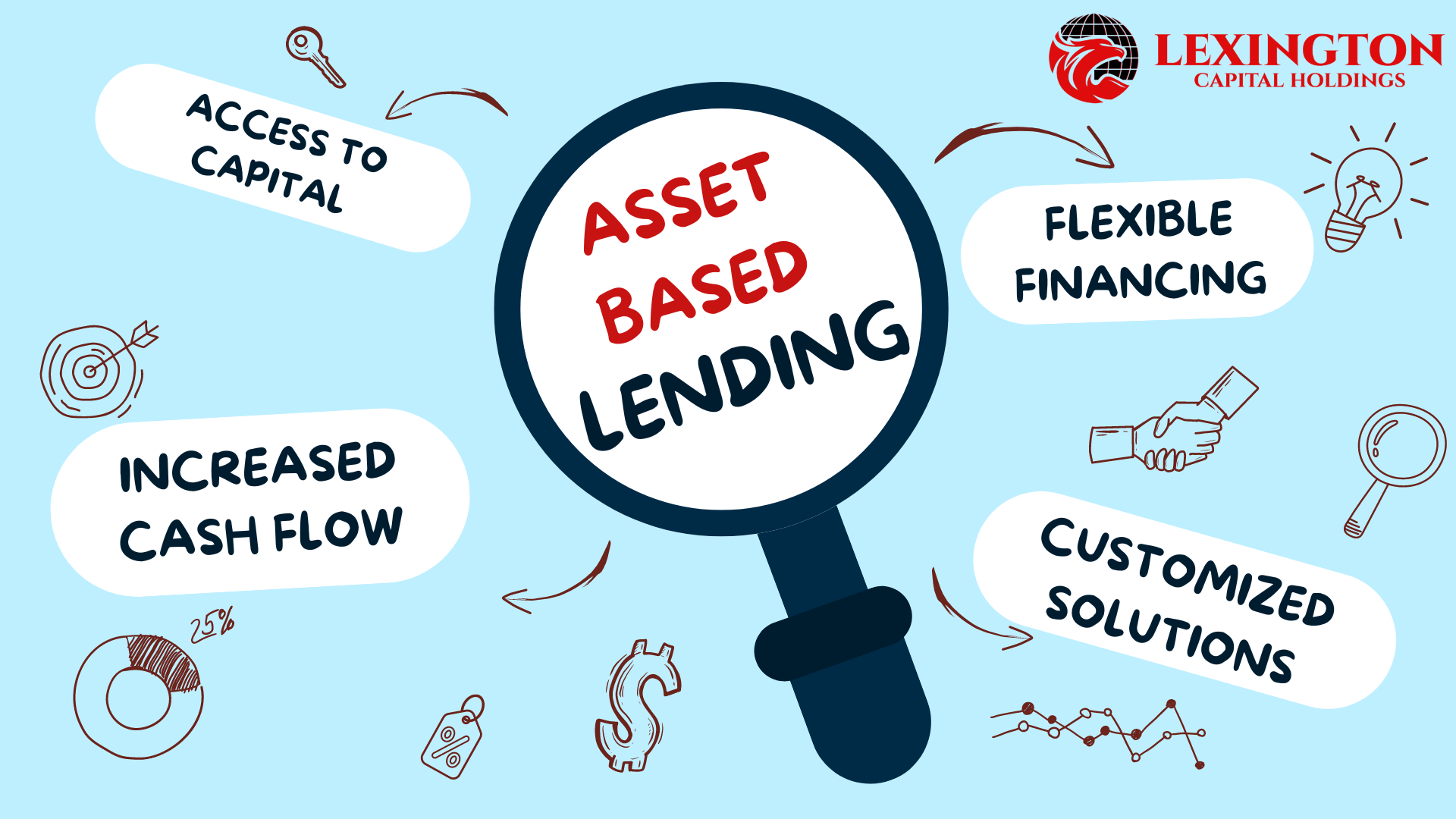
To analyze how asset-based lending (ABL) and sale transactions interact with net worth multiples, one must first deconstruct the core financial terminology. Asset-based lending is a specialized form of commercial financing where a company uses its liquid assets—primarily accounts receivable, inventory, machinery, equipment, and sometimes real estate—as collateral to secure a revolving line of credit or term loan. Unlike traditional cash-flow lending, which evaluates a borrower's ability to repay debt out of future operating income, ABL focuses heavily on the net liquidation value (NLV) of the pledged assets.
Conversely, the concept of "net worth multiples" frequently surfaces in two distinct contexts: corporate sales (mergers and acquisitions) and loan covenant compliance. In M&A transactions, businesses are rarely valued as a multiple of book net worth unless the firm is capital-intensive, asset-holding, or distressed, and liquidation is imminent. Instead, buyers apply multiples to earnings (such as EBITDA or EBIT) or revenue. However, lenders and buyers frequently examine net worth, tangible net worth (TNW), and adjusted net worth to determine financial leverage, risk tolerance, and borrowing capacity.
The Distinction Between Net Worth and Collateral Value
A common point of confusion for business owners entering the market for financing or a corporate sale is assuming that a high net worth translates directly into high borrowing capacity or a predictable sale price. In asset-based lending, the book value of an asset listed on a balance sheet is largely irrelevant to the lender.
Lenders discount book values through a rigorous appraisal process. For example:
- Accounts Receivable (AR): Standard ABL lenders typically advance between 75% and 85% of eligible accounts receivable. Ineligible accounts—such as those over 90 days past due, foreign receivables, or customer concentrations exceeding specific thresholds—are completely excluded from the borrowing base, regardless of their net book value.
- Inventory: Inventory is heavily discounted due to the uncertainty of liquidation. Raw materials might receive a 35% to 50% advance rate against net liquidation value, while finished goods may command slightly higher rates. Work-in-progress (WIP) inventory is frequently assigned a zero value by conservative lenders.
- Machinery and Equipment (M&E): Lenders rely on Machinery and Equipment Appraisers (MEAs) to determine Orderly Liquidation Value (OLV) or Forced Liquidation Value (FLV), advancing a percentage of that specific appraisal figure rather than the historical cost minus depreciation recorded on the balance sheet.
Why Net Worth Multiples Are Rare in Going-Concern Valuations
In corporate finance, valuing a profitable, ongoing enterprise strictly as a multiple of net worth is generally inadequate. Net worth—calculated as total assets minus total liabilities—represents historical accounting book value rather than present economic reality.
For service-based companies, software firms, and modern enterprises, net worth is often minimal because their primary value generator is intellectual property, human capital, or recurring customer contracts, none of which carry significant historical book values under standard accounting rules. Even in manufacturing or distribution, book net worth reflects historical depreciation schedules that bear little resemblance to current replacement costs or fair market values.
When Multiples of Net Worth Do Apply
Despite the dominance of earnings-based valuations (EBITDA multiples), there are specific scenarios where net worth or tangible net worth multiples play a pivotal role:
- Distressed Sales and Corporate Liquidation: When a company is insolvent or ceasing operations, buyers or liquidators estimate the recovery value of assets relative to liabilities. In severe distress, a business might trade at a fraction of its net book value (a sub-1.0x multiple of net worth).
- Asset-Heavy Holding Companies: Real estate holding companies, investment funds, and capital-intensive asset leasing firms are frequently evaluated based on Net Asset Value (NAV), which is functionally similar to adjusted tangible net worth. In these cases, market participants may apply a premium or discount to NAV based on market conditions, tax liabilities, and asset quality.
- Financial Covenant Testing: While not a "sale multiple," commercial lenders frequently enforce Tangible Net Worth covenants. A borrower might be required to maintain a Tangible Net Worth of a specific dollar amount, or risk default. In some underwriting guidelines, total funded debt-to-tangible net worth ratios dictate maximum leverage multiples.
Asset-Based Lending Metrics vs. Corporate Sale Valuations
Evaluating a transaction requires distinguishing between the metrics used by a lender to extend credit and those used by an acquirer to purchase equity. The following table contrasts how ABL facilities and corporate sales interact with balance sheet figures and valuation multiples.
| Feature / Metric | Asset-Based Lending (ABL) | Corporate Sale / M&A Valuation |
|---|---|---|
| Primary Focus | Liquidation value of collateral (AR, Inventory, Equipment) | Future cash flow generation and earnings power |
| Valuation Metric | Advance rates applied to Net Liquidation Value (NLV) | Multiples of EBITDA, EBIT, or Revenue |
| Role of Net Worth | Used for baseline leverage checks and covenant compliance | Generally secondary; replaced by Fair Market Value of assets/equity |
| Asset Treatment | Heavily discounted (ineligibles stripped out) | Adjusted to Fair Market Value (FMV) during due diligence |
| Primary Objective | Mitigating downside risk upon borrower default | Maximizing purchase price based on synergies and growth |
Calculating Adjusted Tangible Net Worth for Lending and Transactions
Because raw balance sheet net worth can be distorted by intangible assets, shareholder loans, and unrecorded liabilities, financial analysts must normalize the figure. Calculating Adjusted Tangible Net Worth (ATNW) is a mandatory step before any serious ABL underwriting or corporate valuation review.
Step-by-Step Adjustment Process
- Start with Total Book Equity: Locate total stockholders' equity or owner's equity on the balance sheet.
- Subtract Intangible Assets: Remove goodwill, patents, trademarks, copyrights, capitalized software development costs, and organizational expenses. These assets possess no independent liquidation value for a lender.
- Adjust for Due from Affiliates / Owner Advances: If the balance sheet includes notes receivable from shareholders, officers, or sister companies, lenders typically subtract these items because collectibility is often uncertain.
- Account for Off-Balance-Sheet Liabilities: Factor in pending litigation, environmental liabilities, unfunded pension obligations, and operating lease commitments that may impact future capital requirements.
- Revalue Fixed Assets to Appraised Value: Replace the net book value of property, plant, and equipment (PP&E) with the appraised Orderly Liquidation Value (OLV) if required by the lender's underwriting policy.
Key Factors Influencing Borrowing Capacity and Sale Pricing
Whether negotiating an asset-based credit facility or preparing a company for sale, several underlying operational and financial factors dictate the ultimate financial outcome. Ignoring these variables often leads to valuation gaps or reduced credit availability.
Asset Quality and Turnover
In ABL facilities, the velocity of asset turnover directly impacts borrowing availability. Slow-moving inventory ties up working capital and attracts aggressive discount factors from collateral examiners. Similarly, accounts receivable with extended collection cycles or high historical bad-debt write-offs will see lower advance rates. In a corporate sale, clean working capital and high asset turnover signal operational efficiency, supporting a higher valuation multiple on earnings.
Earnings Quality and Sustainability
For transactions involving going-concern valuations, buyers pay for sustainable cash flow. Even in asset-heavy industries where balance sheet strength is paramount, acquirers apply multiples to normalized EBITDA rather than net worth. Adjustments—often referred to as quality of earnings (QoE) adjustments—remove non-recurring expenses, owner's personal perks, and one-time gains to reveal the true operational earnings power of the enterprise.
Leverage and Fixed Charge Coverage
Commercial lenders monitor the ratio of total debt to tangible net worth to ensure the borrower maintains adequate skin in the game. High leverage combined with low tangible net worth restricts a company's ability to weather economic downturns, prompting lenders to reduce advance rates or demand additional equity injections.
Common Misconceptions and Pitfalls
Business owners and inexperienced financial analysts frequently commit critical errors when attempting to apply net worth multiples to asset-based lending or corporate sales.
- Equating Book Value with Market Value: Assuming that a company with a $10 million net worth can secure an $8 million ABL facility or sell for a predictable multiple of that net worth is a fundamental mistake. Lenders lend against collateral liquidity, not accounting equity.
- Overlooking Dilutive Liabilities: Failing to account for contingent liabilities can severely distort net worth calculations, leading to unexpected covenant defaults post-closing.
- Ignoring Dominion of Funds: In strict ABL arrangements, lenders frequently implement a "cash dominion" mechanism where customer payments are swept directly into a lender-controlled lockbox to pay down the revolving line of credit. Understanding structural cash control is just as important as initial valuation multiples.
Summary and Next Steps
Evaluating asset-based lending structures and corporate sales requires a clear separation between accounting net worth and actual economic value. While asset-based lenders focus on discounted collateral liquidation values (such as advance rates on receivables and inventory), corporate acquirers rely primarily on earnings multiples (such as EBITDA).
For business owners preparing for financing or a sale, the recommended next steps include commissioning an independent collateral appraisal, normalizing the balance sheet to determine accurate Tangible Net Worth, and engaging experienced financial advisors or commercial brokers who specialize in the company's specific industrial sector.