Asset-backed securities represent a specialized and often misunderstood segment of the broader fixed-income landscape, functioning as financial instruments collateralized by pools of underlying assets like auto loans, credit card receivables, and student debt. For institutional investors and sophisticated retail participants, this hidden corner of fixed income offers an avenue for yield enhancement and portfolio diversification, distinct from traditional corporate or sovereign bonds, though it introduces complex structural and prepayment risks that demand rigorous analysis.
Understanding the Mechanics of Asset-Backed Securities
To grasp what asset-backed securities (ABS) are, one must first look at the process of financial intermediation and securitization. Originating institutions—such as commercial banks, specialty finance companies, or auto lenders—accumulate large portfolios of individual, illiquid loans on their balance sheets. While these loans generate a steady stream of interest and principal payments over time, they also tie up capital and concentrate credit risk. Securitization provides a mechanism to transform these illiquid pools of debt into tradable, liquid capital market instruments.
The mechanics begin when an originator pools thousands of homogeneous loans together and sells them to a bankruptcy-remote Special Purpose Vehicle (SPV). By transferring these assets to an SPV, the originator removes them from its balance sheet, insulating the investors from the credit risk of the originating company itself. The SPV then issues debt securities backed specifically by the cash flows generated by the underlying collateral pool.
Unlike traditional corporate bonds, which rely entirely on the general creditworthiness and operating income of a single corporate issuer, ABS rely on the cash-generating capacity of a specific pool of physical or financial assets. If the issuing corporation faces financial distress, the assets held within the bankruptcy-remote SPV remain legally segregated and protected for the benefit of the ABS investors. This structural firewall is a fundamental pillar of the asset-backed securities market, shifting the focus of credit analysis from corporate balance sheets to the performance of consumer or commercial debt.
- [Originator: Bank/Lender]
- (Sells Loan Portfolio)
- [Bankruptcy-Remote SPV]
- (Issues Securities backed by cash flows)
- [Investors: Fixed-Income Market]
The Anatomy of Collateral: What Backs an ABS?
The diversity of the underlying collateral distinguishes the ABS market from standard corporate debt. Virtually any asset that produces a predictable stream of cash flows can be structured into an asset-backed security. However, the market is dominated by several major consumer and commercial asset classes, each possessing unique credit characteristics, payment behaviors, and regulatory considerations.
Auto Loans and Leases
Auto loan ABS represent one of the most mature and liquid sectors of the market. The collateral consists of retail installment sale contracts used by consumers to purchase new or used vehicles. These pools generally exhibit short to medium maturities, typically ranging from two to five years. Credit performance is heavily influenced by macroeconomic factors such as employment rates, used car values, and consumer debt burdens. Auto lease ABS, while similar, involve the residual value risk of the vehicles returned at the end of the lease term, adding an extra layer of market value exposure.
Credit Card Receivables
Credit card ABS are structured as revolving master trusts rather than amortizing pools. Because credit card debt is revolving—meaning borrowers continuously make purchases, pay down balances, and incur new charges—the collateral pool fluctuates over time. To manage this, these structures feature a revolving period where principal collections are used to purchase new receivables, followed by an accumulation or amortization period when principal is paid back to investors. Yields can be higher, but these securities carry unique risks related to cardholder payment rates and yield decay during economic downturns.
Student Loans
Student loan ABS are backed by pools of federal or private educational loans. Federal student loans historically offered government guarantees that mitigated credit risk, though legislative changes over the years have altered the landscape of federally backed programs. Private student loans, on the other hand, carry direct credit risk dependent on the future earning potential and employment stability of the borrowers. These assets feature very long durations, making their market prices highly sensitive to interest rate fluctuations.
Niche and Esoteric ABS
Beyond traditional consumer debt, the esoteric ABS market encompasses a wide array of specialized cash-generating assets. These include equipment leases, aircraft lease receivables, whole business securitizations (where cash flows are derived from the brand royalties and operating profits of restaurant chains or franchise businesses), and solar panel installment contracts. While these esoteric sectors can offer attractive yield premiums, they require specialized underwriting expertise due to the lack of standardized historical data and complex legal frameworks.
Structural Enhancements: Credit Tranching and Protection
Because the underlying pools of loans consist of borrowers with varying credit scores and default probabilities, ABS issuers employ structural enhancements to transform high-risk loan pools into investment-grade instruments. This process, known as credit tranching, slices the cash flow waterfall into distinct risk tiers, or tranches, each with a different priority of claim on the underlying cash flows.
The senior tranche sits at the top of the capital structure. It receives the highest credit ratings from rating agencies (typically AAA) and has first claim on all principal and interest payments. To absorb losses before they reach the senior tranche, issuers utilize subordinated or mezzanine tranches, along with unrated equity or first-loss pieces retained by the originator. If defaults within the loan pool exceed expectations, the losses erode the equity tranche first, then move up to the mezzanine tranches, leaving the senior tranche insulated until all lower-tier capital is exhausted.
| Tranche Level | Typical Credit Rating | Priority of Claim | Risk Profile |
|---|---|---|---|
| Senior Tranche | AAA / Aaa | First priority | Lowest risk, lower yield, highly liquid |
| Mezzanine Tranches | A to BB | Intermediate priority | Moderate risk, higher yield, absorbs middle losses |
| Equity / First-Loss | Unrated / B to CCC | Last priority | Highest risk, residual cash flows, absorbs initial defaults |
In addition to tranching, issuers use explicit credit enhancement techniques to bolster security ratings:
- Overcollateralization: The principal balance of the underlying assets exceeds the principal balance of the securities issued, providing an immediate cushion against loan defaults.
- Reserve Accounts: Cash accounts funded at closing or built up from excess spread over time to cover short-term delinquencies.
- Excess Spread: The difference between the interest rate generated by the collateral pool and the coupon rate paid to investors, serving as a first line of defense against losses.
Risks and Operational Complexities in the ABS Market
Investing in asset-backed securities requires navigating a complex matrix of risks that extend far beyond standard duration and interest rate risk. Because these instruments are tied to consumer behavior and specialized legal structures, market participants must evaluate several distinct vulnerabilities.
Prepayment Risk and Extension Risk
Unlike corporate bonds, which generally pay regular interest and return principal at a single maturity date, ABS feature monthly pass-through cash flows where principal is paid down continuously as borrowers pay off their underlying loans ahead of schedule. When interest rates fall, consumers tend to refinance or pay off auto loans and mortgages more rapidly, returning principal to investors when reinvestment yields are low (prepayment risk). Conversely, if interest rates rise, prepayments slow down, extending the duration of the security and exposing investors to capital depreciation in a rising-rate environment (extension risk).
Credit and Default Risk
The performance of an ABS is inextricably linked to the financial health of the underlying borrowers. Economic shocks, rising unemployment, or inflation can cause spikes in loan delinquencies and defaults. While structural enhancements protect senior tranches, severe economic downturns can impair mezzanine and junior tranches, leading to permanent capital loss or rating downgrades.
Liquidity and Transparency Challenges
The asset-backed securities market is largely over-the-counter (OTC), meaning trades are negotiated dealer-to-dealer rather than on a centralized exchange. While benchmark auto and credit card ABS enjoy robust secondary market liquidity, niche and esoteric ABS can suffer from limited trading volume. Valuing these securities often requires complex pricing models and proprietary analytics, making them less suitable for investors requiring daily liquidity or simple transparency.
Comparing Fixed-Income Sectors
To understand where asset-backed securities fit within a comprehensive fixed-income allocation, it is helpful to compare their core characteristics against traditional bond categories like corporate bonds and U.S. Treasuries.
| Feature | U.S. Treasuries | Investment-Grade Corporates | Asset-Backed Securities (ABS) |
|---|---|---|---|
| Credit Risk | Virtually none (sovereign guarantee) | Corporate default risk | Collateral pool credit risk + structural protection |
| Cash Flow Structure | Bullet maturity (semi-annual coupons) | Bullet maturity (semi-annual coupons) | Amortizing monthly cash flows (principal & interest) |
| Yield Potential | Lowest | Moderate | Moderate to High (includes complexity premium) |
| Liquidity | Extremely High | High | Varies (High for consumer, low for esoteric) |
| Primary Risk Driver | Interest rate risk | Corporate credit quality & rates | Prepayment speed & collateral performance |
Frequently Asked Questions
What is the primary difference between ABS and MBS?
Mortgage-backed securities (MBS) are a specific subset of asset-backed securities where the underlying collateral consists exclusively of residential or commercial real estate mortgages. While the structural concepts of securitization and tranching are similar, general ABS typically refer to non-mortgage consumer and commercial debt, such as auto loans, credit cards, equipment leases, and student loans.
How do rising interest rates affect asset-backed securities?
Rising interest rates impact ABS in two primary ways. First, like all fixed-income instruments, higher discount rates can pressure the market prices of fixed-rate ABS. Second, rising rates generally slow down consumer prepayment speeds, extending the average life of the securities. For floating-rate ABS, coupons adjust upward with benchmark rates, providing a natural hedge against interest rate risk.
Are retail investors able to buy asset-backed securities directly?
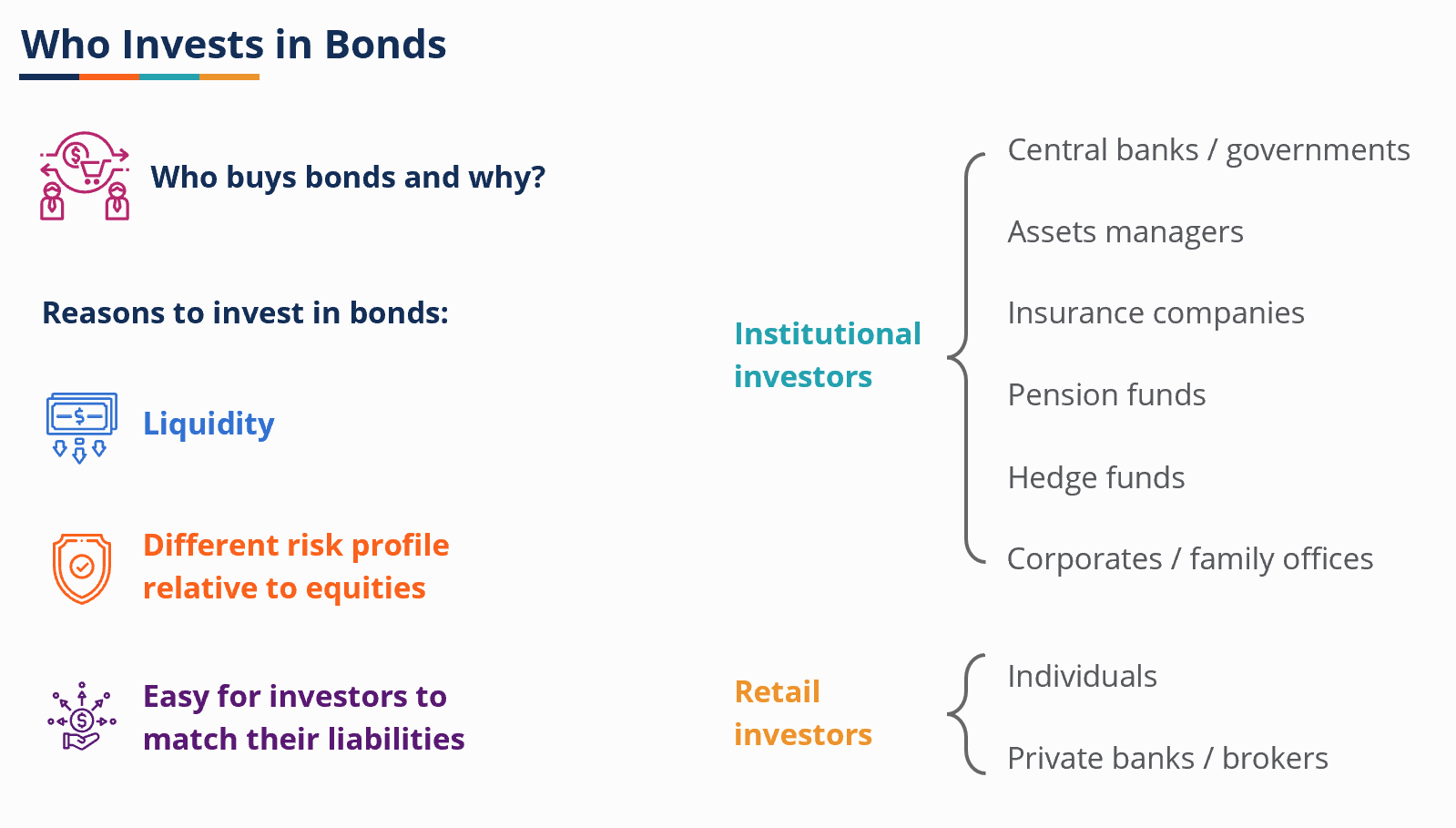
Direct access to individual ABS is largely restricted to institutional investors, such as pension funds, insurance companies, and asset managers, due to high minimum denomination requirements and complex underwriting documentation. However, individual investors can gain exposure to this asset class indirectly through specialized fixed-income mutual funds, exchange-traded funds (ETFs), or closed-end funds that hold diversified portfolios of asset-backed securities.
What does "bankruptcy-remote" mean in securitization?
Bankruptcy-remote refers to the legal status of the Special Purpose Vehicle (SPV) that holds the loan collateral. The originating lender transfers legal ownership of the assets to the SPV in a true sale. If the originating company subsequently experiences bankruptcy or financial distress, creditors of the originator cannot lay claim to the securitized assets, protecting investors from corporate insolvency risk.
How are asset-backed securities rated by agencies?
Rating agencies evaluate ABS using quantitative models and stress testing. They analyze historical loss rates, delinquency trends, recovery values of the collateral, and the structural protections built into the legal documents—such as overcollateralization levels and waterfall priority rules. The senior tranches are typically awarded investment-grade ratings (AAA through BBB), while lower subordination tiers receive speculative or unrated status.
Strategic Allocation and Practical Next Steps
For portfolio managers and sophisticated investors seeking to expand beyond standard corporate and government debt, asset-backed securities provide a compelling mechanism to capture incremental yield and diversify credit risk. Successfully navigating this hidden corner of fixed income requires a disciplined approach to credit research, an understanding of prepayment modeling, and careful evaluation of the legal structures governing the underlying collateral pools.
Investors looking to integrate ABS into an existing strategy should begin by assessing their liquidity needs and risk tolerance. Rather than attempting direct execution in the over-the-counter market, most participants achieve optimal exposure by engaging with specialized fixed-income funds managed by professionals with dedicated securitized product desks. By treating ABS as a targeted tool for yield enhancement rather than a passive holding, investors can successfully harness the cash-flow mechanics of consumer and commercial debt to strengthen overall portfolio resilience.