The assets net worth ratio is a personal finance metric that measures the proportion of an individual's total assets that contribute directly to their net worth, helping distinguish between high-value holdings and debt-heavy portfolios. By evaluating how much of what you own is genuinely yours versus what is financed through liabilities, this ratio provides a clear window into your long-term financial stability, solvency, and liquidity management.
What Is the Assets Net Worth Ratio?
At its core, financial health is rarely judged by a single number. While having a high net worth sounds impressive, two people with identical net worth figures can have vastly different risk profiles. One might own all of their property and investments outright, while the other might have massive debts offset by equally massive, highly leveraged real estate holdings. To understand the underlying composition of wealth, financial analysts and astute planners use the assets net worth ratio.
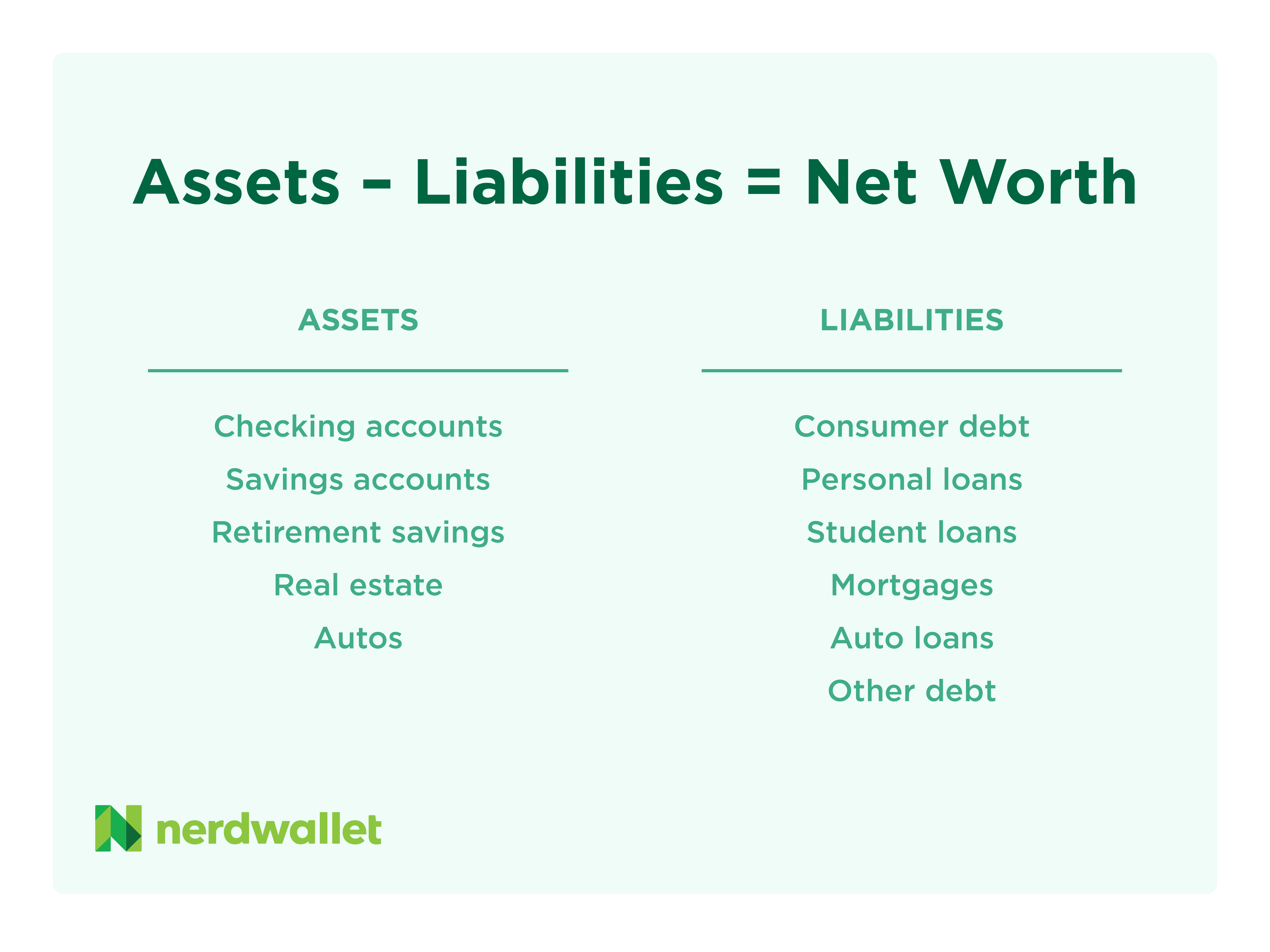
To fully grasp this metric, it is necessary to look at the three foundational pillars of a personal balance sheet:
- Assets: Everything of economic value that you own, including cash, checking and savings accounts, retirement funds, real estate, vehicles, investments, and valuable personal property.
- Liabilities: All outstanding debts, including mortgages, student loans, credit card balances, auto loans, and personal lines of credit.
- Net Worth: The residual value derived by subtracting total liabilities from total assets.
The assets net worth ratio evaluates the relationship between your gross assets and your net worth. It essentially asks the question: For every dollar of net worth I claim, how many dollars of total assets do I control?
When tracking this over time, individuals can see whether their wealth accumulation is driven by organic asset growth and debt reduction or by an over-reliance on borrowing. While it is less commonly cited in consumer guides than the debt-to-income (DTI) ratio, it is an indispensable tool for long-term wealth preservation and risk assessment.
How to Calculate the Assets Net Worth Ratio
Calculating the assets net worth ratio requires an accurate, up-to-date personal balance sheet. Because your balance sheet is a snapshot of your financial life on a specific day, you must tally the current market value of everything you own and the exact payoff amounts for everything you owe.
The Mathematical Formula
The standard formula for the assets net worth ratio is:
$$\text{Assets Net Worth Ratio} = \frac{\text{Total Assets}}{\text{Net Worth}}$$
Alternatively, because Net Worth equals Total Assets minus Total Liabilities, the formula can also be expressed using liabilities:
$$\text{Assets Net Worth Ratio} = \frac{\text{Total Assets}}{\text{Total Assets} - \text{Total Liabilities}}$$
Step-by-Step Calculation Example
To see how this works in practice, consider two hypothetical individuals, Person A and Person B, both boasting a net worth of $500,000.
Person A (Low Leverage / Conservative):
- Total Assets: $600,000 (includes a paid-off home, retirement accounts, and savings)
- Total Liabilities: $100,000 (a modest car loan and low credit card balance)
- Net Worth: $600,000 - $100,000 = $500,000
- Calculation: $\frac{$600,000}{$500,000} = \mathbf{1.2}$
Person B (High Leverage / Aggressive):
- Total Assets: $2,500,000 (includes a heavily mortgaged commercial property and investment accounts)
- Total Liabilities: $2,000,000 (outstanding mortgages and investment loans)
- Net Worth: $2,500,000 - $2,000,000 = $500,000
- Calculation: $\frac{$2,500,000}{$500,000} = \mathbf{5.0}$
Even though both individuals possess the exact same net worth, Person A has an assets net worth ratio of 1.2, while Person B has a ratio of 5.0. This variance highlights a profound difference in risk exposure.
Interpreting Your Ratio: What the Numbers Mean
The resulting ratio number communicates your level of financial leverage. Because net worth can never exceed total assets (assuming liabilities are zero or positive), the absolute lowest possible value for this ratio is 1.0.
1. The Ideal Range: 1.0 to 1.5 (Low Leverage)
A ratio between 1.0 and 1.5 indicates that your assets are largely unencumbered by debt.
- Characteristics: You own most of your assets outright. Your mortgage balances are low relative to home values, or you own your property without a loan. Consumer debt is minimal or nonexistent.
- Risk Profile: Low. Economic downturns, asset depreciation, or sudden income loss pose minimal threat to your solvency because you do not rely heavily on creditors to maintain your asset base.
2. Moderate Range: 1.5 to 3.0 (Balanced Growth)
A ratio between 1.5 and 3.0 is common for working-age adults, particularly those who have active mortgages or are leveraging low-interest loans to build wealth.
- Characteristics: You carry standard consumer or mortgage debt, but your asset appreciation and principal paydown outpace your liabilities.
- Risk Profile: Moderate. This level of leverage is often healthy for building long-term wealth (such as buying a primary residence), provided your cash flow can comfortably service the debt obligations.
3. High Range: 3.0 and Above (High Leverage)
A ratio exceeding 3.0 means that a substantial portion of your asset portfolio is funded by debt.
- Characteristics: Common among real estate investors, business owners, or aggressive speculators utilizing margin accounts. For example, a ratio of 5.0 means that for every $1 of your own money, you have borrowed $4.
- Risk Profile: High. While high leverage can supercharge returns during bull markets, it creates severe vulnerability. If asset values drop even slightly, your liabilities can exceed your asset value, plunging your net worth into negative territory and risking insolvency.
| Assets Net Worth Ratio | Financial Interpretation | Typical Profile | Risk Level |
|---|---|---|---|
| 1.0 – 1.5 | Minimal debt encumbrance; high true ownership. | Retirees, conservative savers, debt-free homeowners. | Low |
| 1.6 – 3.0 | Balanced mix of equity and standard mortgage/loan debt. | Mid-career professionals, standard homeowners. | Moderate |
| 3.1 – 5.0+ | Heavy reliance on borrowed capital to hold assets. | Real estate investors, business owners, high-net-worth speculators. | High |
Why the Assets Net Worth Ratio Matters for Financial Planning
Understanding your assets net worth ratio goes far beyond a mathematical exercise; it acts as an operational dashboard for your financial security. Integrating this metric into your reviews offers several distinct advantages.
Assessing Solvency and Bankruptcy Risk
Solvency is your ability to pay all debts if all assets were liquidated today. If your liabilities exceed your assets, your net worth is negative, and your assets net worth ratio becomes mathematically undefined or negative. Tracking this ratio ensures you maintain a healthy buffer above insolvency, protecting you from unexpected shocks like medical emergencies or job loss.
Evaluating Liquidity Versus Illiquidity
High asset totals do not automatically mean high cash availability. An individual might have a low ratio (indicating low debt) but find all their wealth tied up in illiquid assets like real estate or private equity. Conversely, someone with a high ratio might hold volatile assets that cannot be quickly liquidated at fair market value during a cash crunch. Reviewing this ratio forces you to examine the quality of your assets, not just their nominal valuation.
Preparing for Credit and Lending Underwriting
When applying for commercial loans, jumbo mortgages, or private banking services, lenders look beyond your income. They inspect your personal balance sheet. Lenders calculate leverage ratios similar to the assets net worth ratio to determine whether you are overextended. A lower ratio signals to lenders that you manage debt responsibly and possess genuine equity cushion.
Common Pitfalls and Misinterpretations
Even with a clear formula, calculating and interpreting financial ratios can lead to errors if certain variables are mishandled. Avoid these frequent mistakes:
- Confusing Income with Assets: The assets net worth ratio is a balance sheet metric, not an income statement metric. Earning a high salary does not improve this ratio unless that income is converted into unencumbered assets or used to pay down liabilities.
- Overvaluing Personal Property: When listing assets, people often include the emotional or purchase value of cars, furniture, and electronics. These items depreciate rapidly. Always use conservative, realistic liquidation values for personal property.
- Ignoring Tax Liabilities: Certain assets, such as traditional IRAs, 401(k)s, or appreciated real estate, carry hidden tax liabilities. Selling them triggers capital gains taxes or income taxes. Failing to account for these potential taxes can inflate your net worth figure, skewing your ratio.
- Neglecting Contingent Liabilities: Co-signing a loan for a child or business partner creates a contingent liability. While it may not appear on your primary credit report immediately, it represents a real risk that can suddenly alter your asset-to-debt reality.
Strategies to Optimize Your Ratio
Depending on your financial goals—whether you want to de-risk your portfolio or optimize leverage for growth—you can take deliberate steps to adjust your assets net worth ratio.
To Lower Your Ratio (Reduce Risk and Leverage)
If your ratio is high and you feel financially vulnerable, you need to decrease your reliance on debt or increase your true equity:
- Accelerate Debt Paydown: Direct excess cash flow toward high-interest liabilities first, followed by principal payments on mortgages or investment loans.
- Liquidate Underperforming Assets: Sell leveraged assets that require high maintenance costs or interest payments, and use the proceeds to eliminate debt.
- Build Cash Reserves: Accumulate emergency savings in high-yield vehicles to improve your foundational asset base without adding debt.
To Raise Your Ratio (Increase Strategic Leverage)
If you are an experienced investor looking to scale operations or acquire income-producing properties, a higher ratio may be acceptable or even desirable:
- Utilize Strategic Mortgages: Purchase income-generating real estate with appropriate down payments rather than all-cash purchases, freeing up capital for diversification.
- Reinvest Cash Flow: Channel returns from existing investments into new asset classes, expanding your asset base safely within your risk tolerance limits.
Related Questions
Is a high net worth always a sign of good financial health?
Not necessarily. Net worth is simply total assets minus total liabilities. An individual can have a net worth of $2,000,000 entirely tied up in a single, highly leveraged commercial property subject to market downturns and tenant vacancies. Without adequate liquidity or a low assets net worth ratio, that high net worth individual could face severe cash-flow crunches.
How often should I calculate my assets net worth ratio?
You should review your personal balance sheet and calculate this ratio at least annually, or major life milestones such as buying a home, changing careers, receiving an inheritance, or starting a business. Frequent tracking helps you spot creeping debt before it compromises your financial stability.
Does the assets net worth ratio apply to businesses?
While personal finance uses the term net worth, corporate finance uses equity. The corporate equivalent of the assets net worth ratio is the assets-to-equity ratio (Total Assets divided by Shareholder Equity). Both ratios serve the exact same analytical purpose: measuring financial leverage and solvency.
What is the difference between the assets net worth ratio and the debt-to-equity ratio?
The debt-to-equity ratio compares total liabilities directly to total net worth (Debt ÷ Equity). The assets net worth ratio compares total assets to net worth (Assets ÷ Equity). Both measure financial leverage, but the assets net worth ratio highlights how much total property is controlled per dollar of net worth.
Conclusion and Next Actions
The assets net worth ratio is a powerful diagnostic tool for anyone looking to look beneath the surface of their personal balance sheet. By measuring how much of your total property is genuinely backed by your own equity versus borrowed money, you gain an unfiltered view of your financial resilience.
To put this guide into practice today:
- Gather your recent bank statements, investment account balances, and loan payoff amounts.
- Construct a comprehensive personal balance sheet listing all assets and liabilities.
- Calculate your net worth, then divide your total assets by that net worth figure.
- Evaluate your ratio against your personal risk tolerance and adjust your debt-reduction or investment strategy accordingly.