Preparing a comprehensive asset net worth statement in a PDF format requires adhering to specific structural, legal, and financial documentation standards. Whether you are applying for a commercial loan, undergoing a wealth management review, satisfying estate planning requirements, or submitting disclosures for legal proceedings, understanding the exact formatting, calculation methodologies, and verification documentation needed for a portable document format (PDF) submission ensures your financial profile is presented accurately and professionally.
Understanding the Purpose of an Asset Net Worth Statement PDF
An asset net worth statement is a formal financial snapshot that balances everything an individual or business entity owns against everything they owe. When financial institutions, lenders, courts, or regulatory bodies require this document delivered as a PDF, they are not merely asking for a casual spreadsheet. They require a stable, unalterable document that locks in calculations, preserves digital or wet signatures, and securely encapsulates sensitive personal identifying information (PII) along with underlying proof of asset ownership.
The transition from dynamic spreadsheets to a static PDF format prevents unauthorized post-submission edits, preserves layout consistency across different operating systems, and streamlines digital archiving. However, because a PDF is static, meeting specific structural and evidentiary requirements before conversion is vital to avoid processing delays, rejected applications, or legal compliance failures.
Core Structural Components of a Net Worth Statement
To satisfy professional and legal review standards, a net worth statement PDF must be organized logically, distinguishing clearly between short-term liquidity, long-term investments, and various liability tiers. A disorganized statement will likely be rejected by underwriters or financial analysts.
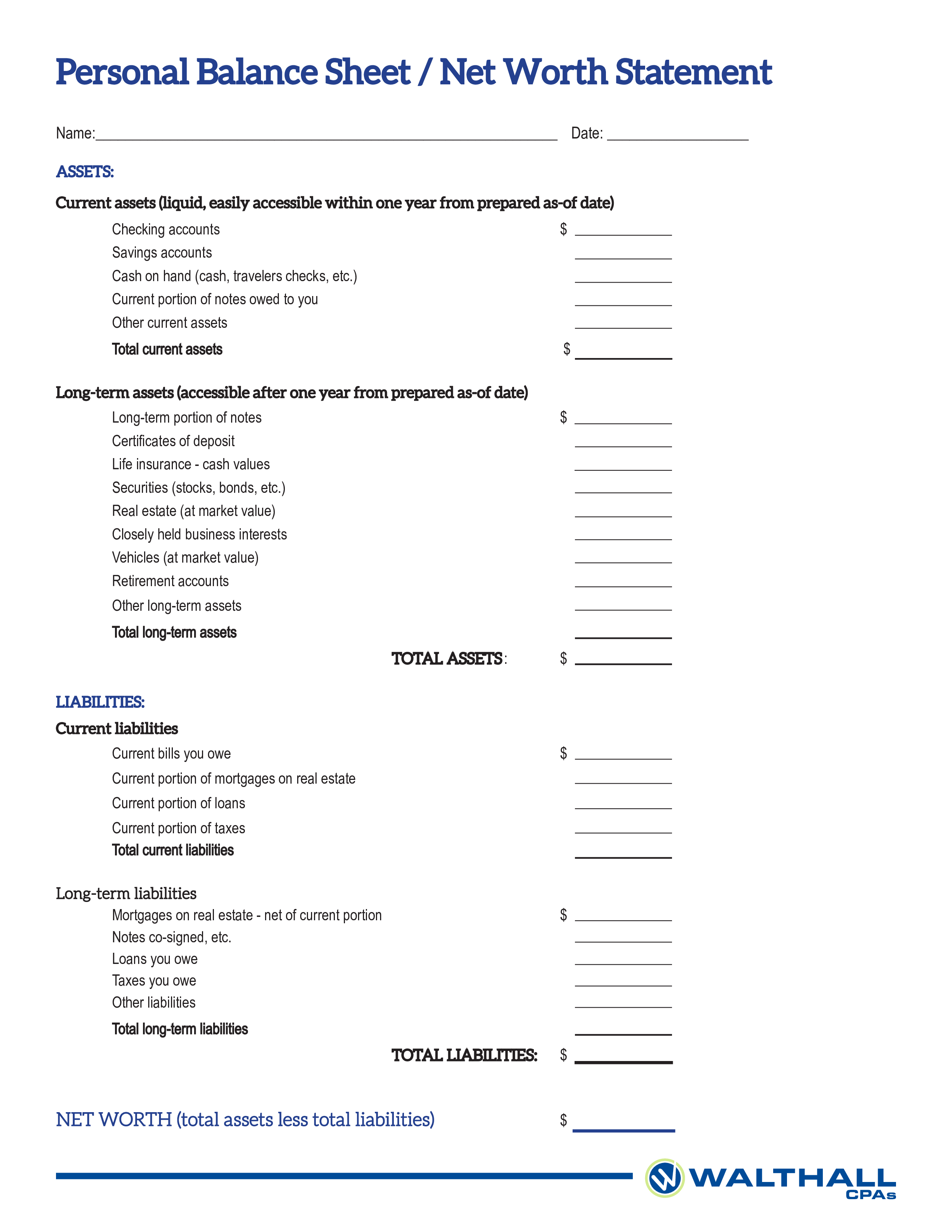
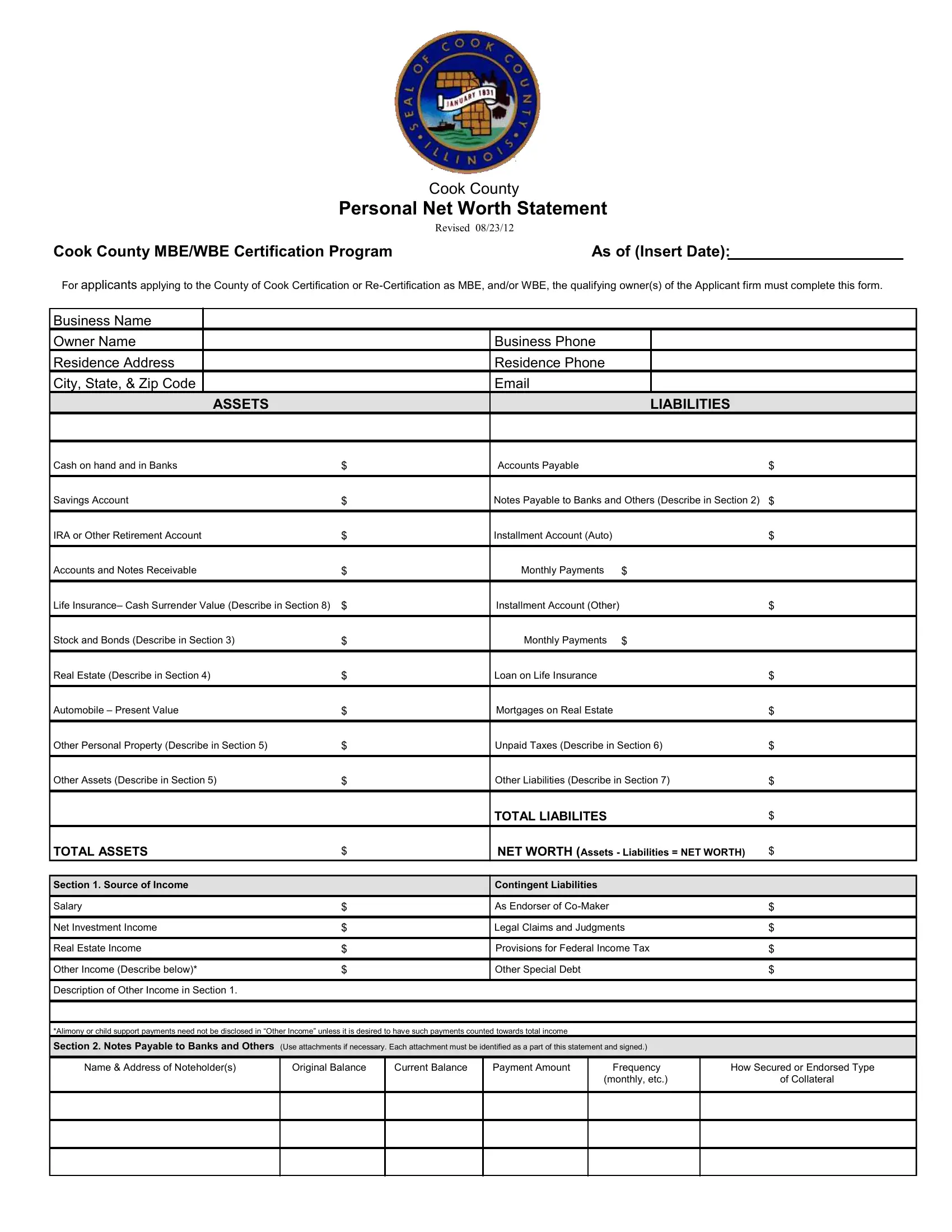
1. Header and Identification Information
The document must begin with clear identifying markers. These elements establish accountability and provide context for the financial figures listed below:
- Full Legal Name(s): Include co-borrowers or spouses if filing jointly.
- As-of Date: Net worth is a moving target. The statement must state an exact effective date (e.g., "As of December 31, 2025") because asset valuations fluctuate.
- Contact Information: Current residential address, telephone number, and email address.
- Filing Status: Individual, joint, corporate, or trust-based representation.
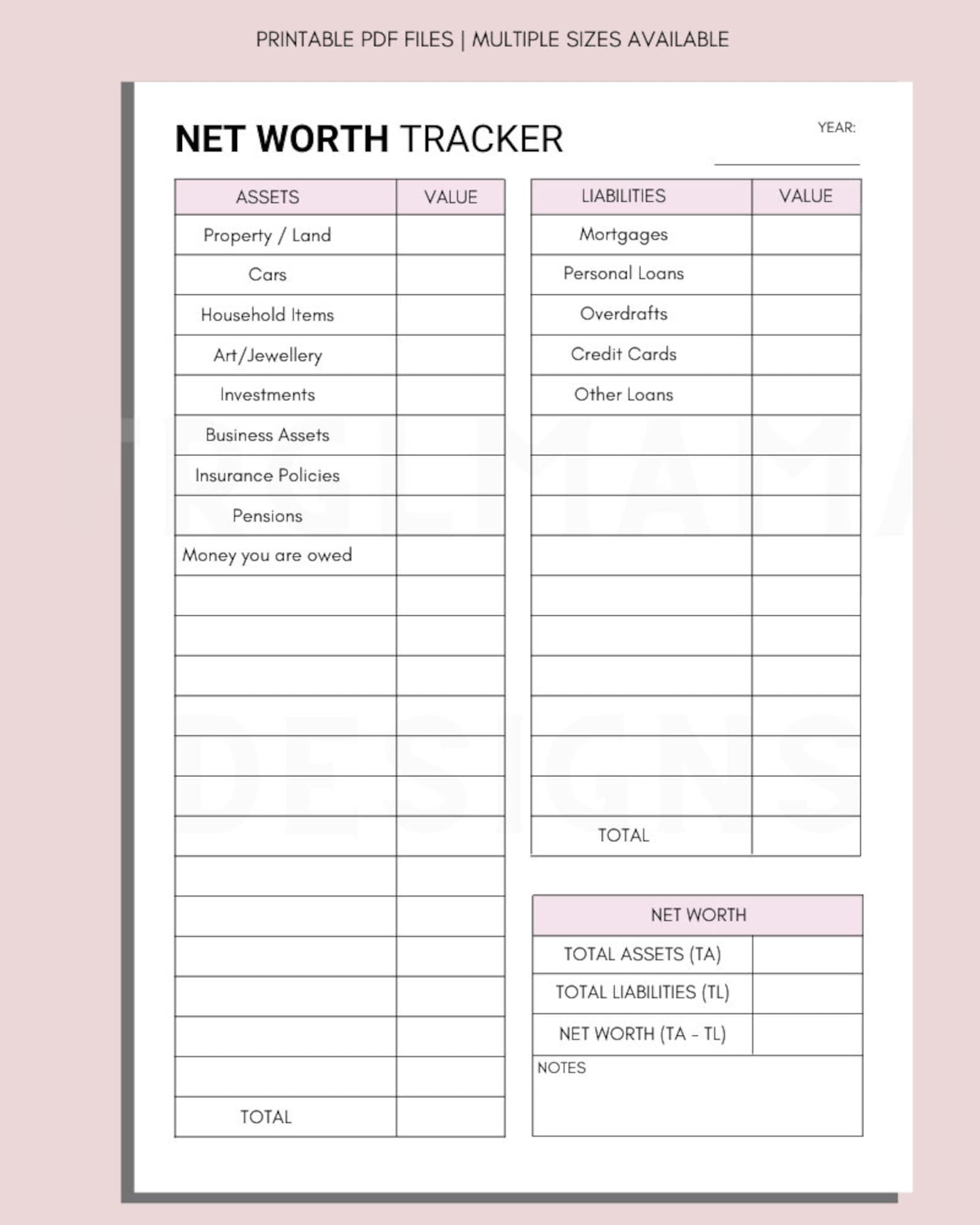
2. Assets (What You Own)
Assets must be categorized by liquidity and permanence. Lenders and financial institutions generally divide assets into two primary categories:
- Liquid Assets (Current Assets): Cash and equivalents that can be converted to currency quickly without significant loss in value. This includes checking accounts, savings accounts, money market accounts, certificates of deposit (CDs), and marketable securities (stocks, bonds, and mutual funds traded on public exchanges).
- Illiquid Assets (Long-term / Fixed Assets): Real estate holdings (primary residence, commercial property, land), closely held business interests, retirement accounts (traditional IRAs, 401(k)s with early withdrawal penalties noted), automobiles, valuable collectibles, and private equity investments.
3. Liabilities (What You Owe)
Liabilities must match the timeline of the assets. They are separated into short-term obligations and long-term debts:
- Current Liabilities: Credit card balances, personal loans, unpaid taxes, medical debt, and accounts payable due within 12 months.
- Long-Term Liabilities: Mortgages on primary and secondary real estate, vehicle loans, business notes payable, and student loans.
4. Net Worth Calculation
The mathematical formula driving the statement is straightforward, but its presentation must be explicit: $$\text{Total Assets} - \text{Total Liabilities} = \text{Net Worth}$$
In a compliant PDF statement, these totals must be clearly summarized at the top or bottom of the primary balance sheet page, allowing a reviewer to determine the net financial position within seconds.
Technical and Formatting Specifications for PDF Submissions
When converting a net worth statement into a PDF, technical compliance is just as important as the math. Submitting a poorly formatted, blurry, or password-corrupted file can stall professional evaluations.
| Element | Standard Requirement |
|---|---|
| File Format | PDF/A (for long-term archiving) |
| Text Clarity | Searchable text (no flat image scans) |
| Digital Signatures | PKI-compliant or verified e-signature |
| Security & Encryption | Unrestricted view (or password-shared securely with the recipient) |
| Maximum File Size | Typically under 10MB to 25MB |
File Integrity and Text Searchability
Many institutional compliance departments utilize automated document parsers to scan financial statements for key figures. Submitting a scanned image of a handwritten net worth statement saved as a PDF often results in automated rejection. The PDF should ideally be generated directly from a word processor or spreadsheet software (such as Microsoft Excel, Google Sheets, or financial planning software) using vector fonts, ensuring the text remains selectable and searchable.
Digital Signatures and Attestation
Most formal net worth statements require an attestation clause—a signed declaration stating that the information provided is true, correct, and complete to the best of the filer's knowledge. Within a PDF workflow, this requires either:
- A cryptographic digital signature adhering to standards like PKI (Public Key Infrastructure).
- A compliant electronic signature platform (such as DocuSign or Adobe Sign) that embeds a verification audit trail directly into the PDF metadata.
- Printing, signing with a wet ink signature, and scanning cleanly into a multi-page PDF document if digital signatures are not accepted by the recipient.
Verification and Supporting Documentation Requirements
A net worth statement PDF is rarely submitted in isolation. For high-stakes applications—such as securing commercial credit, proving accredited investor status, or satisfying court-ordered financial disclosures—third-party verification documents must often be bundled into the same PDF package or provided as supplementary exhibits.
Asset Valuation Evidence
Lenders will not take asset valuations at face value. You must be prepared to back up line items with source documents:
- Bank and Brokerage Accounts: Most recent monthly or quarterly account statements displaying the institution name, account holder, and exact ending balance.
- Real Estate: Recent property tax assessments, professional appraisal reports, or comparative market analyses (CMAs) validating estimated market values.
- Business Interests: CPA-compiled financial statements, corporate tax returns, or independent business valuations.
- Retirement Assets: Year-end or most recent plan statements showing vested balances.
Liability Verification
Similarly, liabilities must be substantiated with recent billing statements:
- Mortgage statements showing principal balance remaining and monthly payment amounts.
- Auto loan payoff quotes.
- Credit card statements displaying current balances and credit limits.
Common Mistakes to Avoid When Preparing Your PDF Statement
Avoiding procedural missteps prevents processing delays and potential allegations of financial misrepresentation.
- Failing to Distinguish Between Market Value and Purchase Price: Real estate and vehicles must be listed at current fair market value (minus estimated selling costs in strict institutional formats), not what was originally paid for them years ago.
- Omitting Contingent Liabilities: If you have co-signed a loan for a family member or business partner, this represents a contingent liability that must often be disclosed in footnotes or separate sections of the net worth statement.
- Mixing Personal and Business Net Worth: Unless explicitly requested for a commercial loan guarantee where personal and business assets are cross-collateralized, mixing personal accounts with corporate balance sheets creates confusion and fails underwriting standards.
- Using Unverified Conversion Tools: Free online PDF converters can scramble formatting, misalign columns, or strip out secure signature blocks. Always use native "Save as PDF" or "Export to PDF" functions from professional software.
Frequently Asked Questions
Can I submit a handwritten net worth statement in PDF format?
While some small community lenders or informal agreements may accept a clear photo or scan of a handwritten statement, institutional lenders, courts, and wealth management firms uniformly require typed, professionally formatted, and mathematically verified digital documents. Handwritten statements increase the risk of transcription errors and lack the formal presentation expected in professional finance.
Do I need a CPA to sign my net worth statement PDF?
For standard personal loan applications or residential mortgages, a certified public accountant (CPA) signature is usually not required; self-certification with an attestation clause is sufficient. However, for specialized legal proceedings, corporate financing, or specific accredited investor verifications, third-party compilation or attestation by a licensed CPA may be mandatory.
How current must the asset values be on the statement?
Financial institutions generally require asset and liability values to be current within the last 30 to 90 days. Using outdated quarterly statements from six months prior can invalidate the document, as market volatility may have substantially altered your liquidity and investment valuations.
What is the difference between net worth and liquid net worth?
Total net worth includes all assets (including illiquid real estate, vehicles, and retirement funds) minus all liabilities. Liquid net worth strips away illiquid holdings, measuring only cash, cash equivalents, and readily marketable securities minus short-term liabilities, providing a clearer picture of immediate financial stamina.
Should I include social security numbers or sensitive account numbers in the PDF?
Institutional security policies vary. Many financial institutions require full account numbers for verification, whereas others request that account numbers be partially redacted (showing only the last four digits) to protect against identity theft during transmission, requiring full disclosures only via secure upload portals. Always verify the recipient's secure submission guidelines before dispatching documents containing sensitive PII.
Final Recommendation
When preparing an asset net worth statement PDF, prioritize absolute accuracy, clean typography, and comprehensive supporting documentation. Always build your statement using professional financial software or structured spreadsheet templates, verify that all math reconciles correctly, attach up-to-date third-party statements as exhibits, and ensure that any required attestation clauses are properly signed and dated before secure transmission.