Asset allocation for retirement is the strategic division of an investment portfolio among various asset classes—such as equities, fixed income, and cash equivalents—tailored to balance an individual's risk tolerance, time horizon, and financial goals as they transition out of their working years.
As individuals approach and move through retirement, the primary financial objective shifts from aggressive wealth accumulation to capital preservation, risk management, and the generation of sustainable income. Navigating this transition successfully requires a structured understanding of how different asset classes behave, how to adapt portfolios as time progresses, and how to mitigate common traps like sequence-of-returns risk and inflation. Because financial regulations and market conditions vary, individuals should consult qualified financial professionals before making major investment decisions.
Understanding the Core Pillars of Asset Allocation
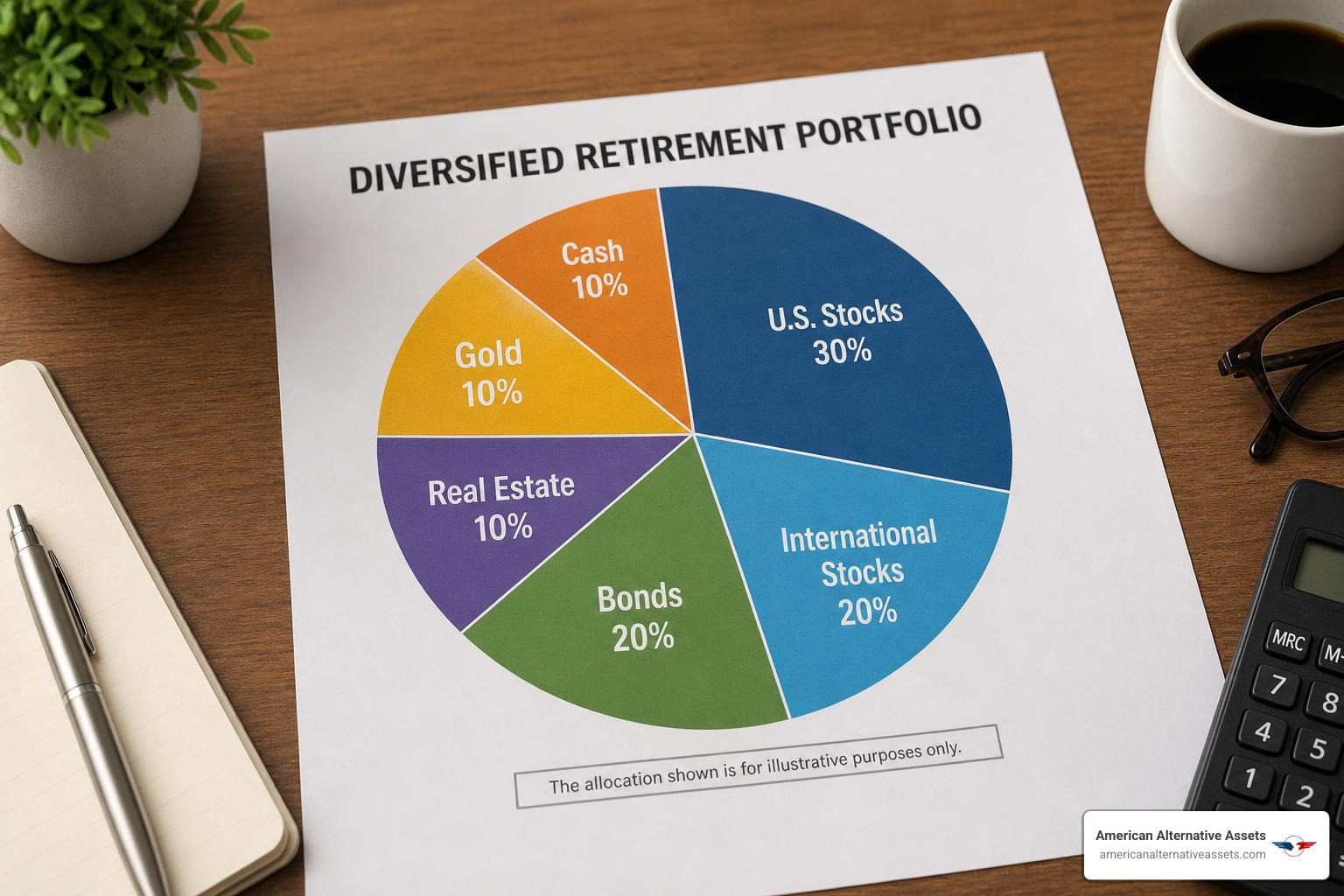
At its core, asset allocation is not about picking individual winning stocks or bonds; rather, it is about deciding how much of your wealth to place into broad categories that react differently to economic conditions. The three traditional asset classes form the foundation of most retirement portfolios, each serving a distinct purpose.
Equities (Stocks) for Growth and Inflation Protection
Equities represent ownership shares in corporations. Historically, stocks have provided the highest long-term returns, making them essential for outstripping inflation over a multi-decade retirement. However, equities are also subject to short-term volatility and market downturns. In a retirement context, holding a healthy allocation of stocks ensures that your purchasing power does not erode over a 25- or 30-year retirement span, though the exact percentage must align with your personal risk tolerance.
Fixed Income (Bonds) for Income and Stability
Fixed income securities, such as government and corporate bonds, involve lending money to an entity in exchange for regular interest payments and the return of principal at maturity. Bonds generally exhibit lower volatility than stocks and provide predictable income streams, which can be critical for covering living expenses in retirement. They act as a stabilizing cushion when equity markets decline.
Cash and Cash Equivalents for Liquidity
Cash equivalents include Treasury bills, certificates of deposit (CDs), money market funds, and high-yield savings accounts. These assets offer minimal risk of capital loss and immediate liquidity. While they rarely outpace inflation significantly over the long term, maintaining an adequate cash buffer prevents retirees from being forced to sell depressed stocks or bonds during a market downturn to cover short-term expenses.
The Evolution of Asset Allocation: From Accumulation to Decumulation
The process of asset allocation changes dramatically across different stages of life. The journey can be divided into two primary phases: the accumulation phase and the decumanlution phase.
- Working Years / Accumulation
- High Equities, Low Cash
- Pre-Retirement Transition (Glide Path)
- Balanced Equities, Increasing Bonds
- Retirement / Decumulation
- Conservative Equities, High Income/Cash Buffer
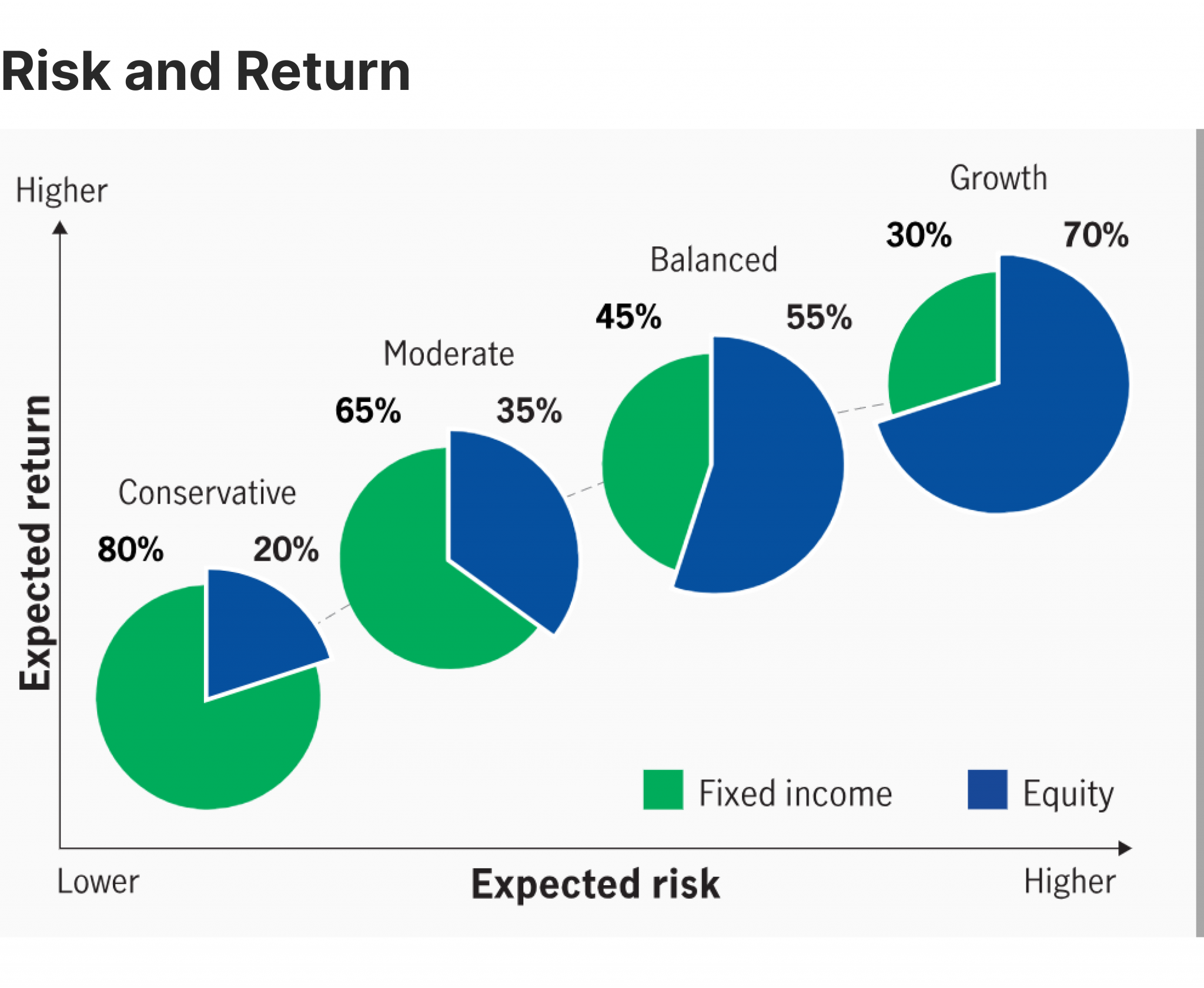
During the accumulation phase, when retirement is decades away, investors typically maintain heavy allocations in equities to maximize compound growth. As retirement approaches—often referred to as the pre-retirement window—portfolios typically undergo a structural shift known as a "glide path."
The glide path gradually reduces exposure to volatile equities while increasing allocations to fixed income and cash. This transition lowers the overall volatility of the portfolio just as the investor prepares to withdraw funds rather than add to them. In retirement itself, the portfolio must strike a delicate balance: it needs enough growth assets to last through a potentially long retirement, but enough income-generating and stable assets to fund immediate annual spending.
Strategies for Structuring Your Retirement Portfolio
Investors use several established methodologies to determine the right mix of assets for their retirement needs. Each approach balances simplicity, customization, and risk management differently.
Target-Date Funds
Target-date funds (TDFs) are mutual funds or exchange-traded funds (ETFs) designed to automatically adjust their asset allocation over time based on a specific target retirement year. For instance, a fund targeted for the year 2050 will hold a heavy equity concentration today, but as 2050 approaches, the fund manager automatically rebalances the portfolio toward bonds and cash equivalents. TDFs offer a hands-off, automated solution for investors who prefer a set-it-and-forget-it model.
The Bucket Strategy
Popularized by various financial planners, the bucket strategy divides a retiree's wealth into distinct time-horizon buckets:
- Bucket 1 (Cash / Short-Term): Holds 1 to 2 years of living expenses in cash or cash equivalents to fund immediate needs without selling investments.
- Bucket 2 (Intermediate / Income): Holds bonds, dividend-paying stocks, and fixed annuities designed to generate income for years 3 through 10.
- Bucket 3 (Long-Term / Growth): Holds equities and alternative assets meant for growth over years 11 and beyond.
This approach helps psychological comfort during market slumps, as retirees know their immediate living expenses are secured in cash.
Core-Satellite Approach
In this strategy, the "core" of the portfolio consists of low-cost index funds or broad-market ETFs that represent the primary asset allocation targets. The "satellite" portion consists of smaller, tactical investments—such as sector-specific funds, individual equities, or real estate investment trusts (REITs)—intended to boost yield or manage specific risks.
Comparing Retirement Asset Allocation Strategies
| Strategy | Primary Mechanism | Best Suited For | Key Limitation |
|---|---|---|---|
| Target-Date Funds | Automated glide path adjustments over time. | Hands-off investors seeking simplicity. | Higher fees in some funds; lacks personal customization. |
| Bucket Strategy | Dividing wealth into cash, income, and growth tiers. | Retirees wanting psychological security for spending. | Requires active manual oversight and periodic rebalancing. |
| Core-Satellite | Broad index core paired with tactical satellite holdings. | Experienced investors desiring customized growth. | Higher complexity and potential for increased transaction costs. |
Key Risks to Manage Through Asset Allocation
A well-constructed asset allocation framework specifically guards against the most common threats to retirement security.
Sequence-of-Returns Risk
Sequence-of-returns risk is the danger of experiencing poor investment returns or market crashes early in retirement when you are actively withdrawing funds. If you are forced to sell assets at depressed prices to fund living expenses, your portfolio may deplete much faster than anticipated, even if average long-term market returns are positive. Maintaining a robust cash buffer or fixed-income allocation mitigates this risk by providing alternative sources of funds during downturns.
Longevity Risk
With average life expectancies rising, retirees face the real possibility of outliving their savings. An asset allocation that becomes overly conservative too early in life can fail to generate the growth needed to sustain purchasing power over a 30-year retirement. Balancing bonds with a healthy core of equities helps combat the creeping cost of living driven by inflation.
Inflation Risk
Inflation erodes the purchasing power of money over time. Fixed-income securities that pay a static interest rate lose real value when inflation spikes. Equities, real estate, and Treasury Inflation-Protected Securities (TIPS) serve as vital tools within an asset allocation plan to help maintain real purchasing power.
Practical Steps to Implement Your Allocation Plan
Translating asset allocation theories into a personal retirement plan involves a clear sequence of operational steps.
- Assess Your Time Horizon and Cash Flow Needs: Calculate your expected annual expenses in retirement and subtract guaranteed income sources like pensions or Social Security. The remaining gap represents the amount your portfolio must generate.
- Determine Your Risk Tolerance: Evaluate both your financial capacity to absorb losses and your emotional comfort with market volatility.
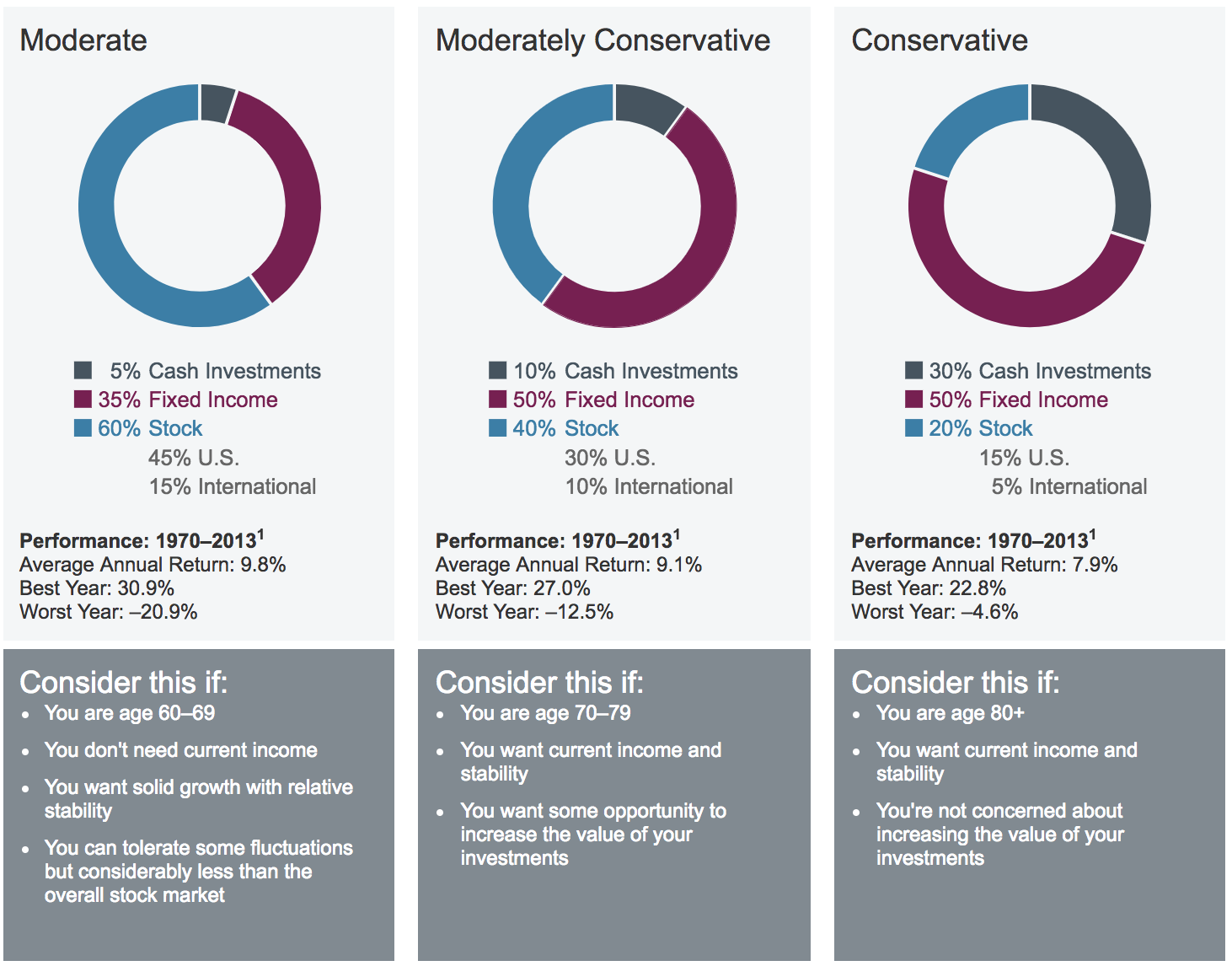
- Select Your Target Asset Mix: Establish concrete percentage targets for equities, fixed income, and cash (e.g., 50% equities, 40% bonds, 10% cash).
- Consolidate and Execute: Review existing accounts across 401(k)s, IRAs, and taxable brokerages as a single unified portfolio rather than isolated silos. Execute trades or select funds that align with your targets.
- Establish a Rebalancing Schedule: Over time, market movements will cause your asset percentages to drift from their targets. Schedule annual check-ins or threshold-based triggers (such as a 5% deviation) to rebalance your holdings back to your target allocations.
Frequently Asked Questions
What is a traditional asset allocation rule of thumb for retirement?
A classic guideline was the "100 minus your age" rule, which suggested that your age subtracted from 100 equals the percentage of your portfolio that should be in stocks (e.g., at age 65, 35% in stocks). Because people are living longer, many modern financial advisors now advocate for "110 minus your age" or "120 minus your age" to ensure adequate equity exposure for combating longevity risk.
How often should I rebalance my retirement portfolio?
Most financial professionals recommend reviewing your asset allocation at least once a year. Alternatively, you can use threshold rebalancing, where you readjust your portfolio whenever an asset class drifts more than 5% away from its target weight. Frequent rebalancing can trigger unnecessary transaction costs and tax consequences, so annual or threshold reviews are generally optimal.
Should I hold cash in retirement if interest rates fluctuate?
Yes. Holding a cash reserve—typically representing one to two years of living expenses—is essential regardless of interest rate environments. While low interest rates mean cash earns nominal yield, its primary purpose is liquidity and safety, ensuring you never have to sell depressed investments during a market correction.
How do taxes affect asset allocation decisions?
Tax efficiency plays a critical role in how you distribute assets across accounts. Highly tax-efficient investments, such as broad equity index funds, are often well-suited for taxable brokerage accounts. Less tax-efficient assets, such as actively traded bond funds or high-yield fixed income, may be better positioned inside tax-advantaged accounts like Traditional IRAs or 401(k)s where taxes are deferred until withdrawal.
Can my asset allocation change after I am already retired?
Yes. Asset allocation is not static. As you progress through different stages of retirement—such as transitioning from an active early retirement to a more settled later retirement—your health, spending patterns, and risk capacity may evolve, necessitating adjustments to your portfolio mix.
Next Actions
To put these principles into practice, begin by compiling a comprehensive inventory of all your retirement accounts, current asset holdings, and projected annual expenses. Evaluate whether your current equity-to-bond ratio aligns with your personal risk tolerance and time horizon. If managing these allocations independently feels complex, consider scheduling a consultation with a fee-only fiduciary financial planner to review your portfolio strategy.