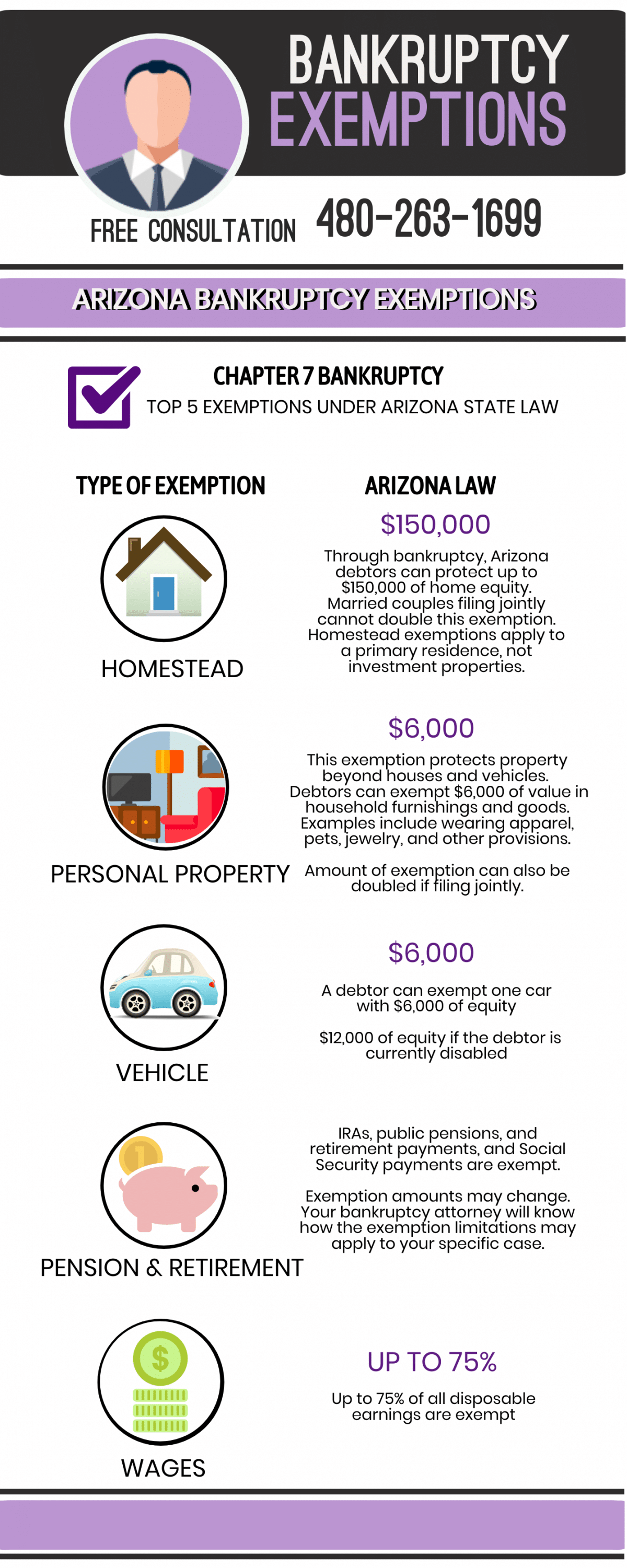
Navigating bankruptcy requires knowing that exemption laws protect essential properties—such as primary residences, vehicles, work tools, and retirement accounts—from being seized and liquidated by the bankruptcy trustee to pay off unsecured creditors.
When individuals or married couples find themselves overwhelmed by insurmountable debt, filing for bankruptcy often emerges as a necessary legal strategy to achieve a financial fresh start. However, one of the most pervasive fears associated with filing for Chapter 7 or Chapter 13 bankruptcy is the prospect of losing everything. People worry about losing their homes, cars, personal belongings, and the nest eggs they spent decades building. Fortunately, federal and state laws incorporate specific protections known as exemptions. Understanding how these protections work is critical for anyone considering debt relief, as they dictate the precise boundary between what creditors can claim and what debtors get to keep.
The Fundamental Purpose of Bankruptcy Exemptions
At its core, the legal framework of bankruptcy is designed not to strip a debtor of all earthly possessions, but rather to provide an honest, unfortunate debtor with a predictable mechanism for financial rehabilitation. If the legal system forced individuals into absolute destitution, bankruptcy would defeat its own public policy purpose. Destitute citizens often require state assistance, face severe housing instability, and struggle to re-enter the economic mainstream. Bankruptcy exemptions prevent this by carving out protected pockets of property that cannot be touched by the bankruptcy trustee.
When a person files for bankruptcy, an immediate legal injunction called the automatic stay goes into effect. This stay halts virtually all collection activities, lawsuits, foreclosures, and wage garnishments. Simultaneously, an estate is created comprising all the legal and equitable interests of the debtor at the time the case is filed. While the bankruptcy trustee steps into the shoes of the debtor to liquidate non-exempt assets (in Chapter 7) or calculate repayment plans (in Chapter 13), exemptions act as a legal shield. Any property properly claimed as exempt is removed from the bankruptcy estate, ensuring the debtor retains ownership of those vital items.
Federal Versus State Exemptions: The Jurisdictional Maze
One of the most complex aspects of bankruptcy law in the United States is the division between federal and state exemption schemes. The Bankruptcy Code provides a standard set of federal exemptions under 11 U.S.C. § 522(d). These federal rules cover specific dollar amounts for homestead equity, motor vehicles, jewelry, tools of the trade, and wildcard provisions. However, Congress granted individual states the authority to opt out of the federal scheme.
When a state opts out, residents filing for bankruptcy within that state must use the exemptions provided by state law rather than the federal options. Approximately two-thirds of U.S. states require their residents to use state-specific exemptions. Other states permit debtors to choose between the state exemptions and the federal exemptions, while a smaller group mandates the federal scheme exclusively.
Furthermore, determining which state's laws apply is governed by strict residency requirements. Under federal law, a debtor must have lived in the state where they file for a continuous 730-day period (two years) prior to filing. If the debtor lived in multiple states during that two-year window, the law applies the exemption rules of the state where the debtor resided for the major portion of the 180 days preceding the two-year period. This rule was specifically designed to prevent "bankruptcy tourism," a practice where debtors would move to states with generous homestead exemptions (such as Florida or Texas) shortly before filing for bankruptcy to protect large sums of cash or real estate.
Common Categories of Exempt Assets
While exemption amounts vary wildly depending on jurisdiction, the types of property protected across most legal frameworks follow consistent categories. Debtors must carefully catalogue their possessions and apply the correct statutory limits to each category.
1. Homestead Exemptions (Primary Residence)
For most families, a home is both their largest asset and their greatest source of stability. The homestead exemption protects a specific amount of equity in a primary residence. Equity is calculated by taking the current market value of the property and subtracting any outstanding mortgage liens or encumbrances.
Some states, such as Florida and Texas, feature unlimited or extremely high homestead exemptions, provided the property meets acreage requirements (e.g., half an acre within a municipality or 160 rural acres in Texas). Conversely, other states offer modest homestead protections, sometimes as low as a few thousand dollars, which may force homeowners with significant equity to face property liquidation in a Chapter 7 proceeding or pay higher distribution amounts in a Chapter 13 plan. It is vital to note that homestead protections generally do not protect against mortgage foreclosure if the homeowner is behind on payments; they only protect equity from unsecured creditors within the bankruptcy process.
2. Motor Vehicles
Transportation is essential for maintaining employment, attending medical appointments, and managing basic household necessities. Consequently, federal and state laws almost universally provide a motor vehicle exemption. This exemption allows a debtor to retain equity in a car, truck, or motorcycle up to a statutory dollar limit. If a vehicle is financed and the loan balance exceeds or equals the market value, the equity is zero, making the car easily exempt. However, if the debtor owns the vehicle outright or has substantial equity, they must ensure the equity falls entirely within the exemption threshold. If the equity exceeds the limit, the trustee may sell the vehicle, give the debtor their exempt cash share, and use the remaining proceeds to pay unsecured creditors.
3. Personal Property, Household Goods, and Apparel
Bankruptcy law does not expect individuals to surrender their clothing, furniture, appliances, or basic household electronics. The personal property exemption covers everyday items necessary for daily living. Statutes typically phrase these protections around "household goods and furnishings of reasonable value" or set specific aggregate caps for items like clothing, musical instruments, family portraits, and domestic pets. While high-end luxury items, expensive art pieces, or rare collectibles rarely fit safely under standard household exemptions, ordinary furniture, televisions, and kitchen appliances are almost always fully protected.
4. Retirement Accounts and Pensions
Securing a debtor’s long-term financial future is a primary objective of modern bankruptcy legislation. Under the Bankruptcy Abuse Prevention and Consumer Protection Act (BAPCPA) of 2005, most tax-exempt retirement accounts—including 401(k) plans, 403(b) plans, defined benefit pensions, and traditional or Roth IRAs—receive robust protection. Employer-sponsored plans governed by ERISA (Employee Retirement Income Security Act) are generally excluded entirely from the bankruptcy estate, meaning they are fully protected regardless of dollar amount. Traditional and Roth IRAs are protected up to federal statutory caps that adjust periodically for inflation (typically exceeding one million dollars), safeguarding accumulated retirement savings from being seized to pay credit card bills or medical debt.
5. Tools of the Trade
For independent contractors, artisans, farmers, small business owners, and tradespeople, specialized equipment represents their livelihood. The "tools of the trade" exemption protects instruments, professional books, machinery, and specialized vehicles necessary to carry out a profession or trade. Whether it is a carpenter's power tools, a mechanic's diagnostic equipment, or a photographer's cameras, these exemptions ensure that filing for bankruptcy does not permanently strip a working professional of their ability to earn a living and rebuild their financial standing.
6. Public Benefits and Personal Injury Recoveries
Various forms of public assistance are shielded from creditors both inside and outside of bankruptcy. This category includes social security benefits, unemployment compensation, veterans' benefits, public assistance (welfare), and workers' compensation awards. Additionally, many jurisdictions protect a portion of personal injury settlements or awards, particularly those intended to compensate for bodily injury, loss of future earnings, or medical care, though awards compensating strictly for property damage may face different rules.
Comparison of Federal Bankruptcy Exemptions vs. Typical State Frameworks
The following table illustrates the structural differences between the federal exemption framework (11 U.S.C. § 522(d)) and typical state-level models. Note: Dollar limits for federal exemptions are adjusted periodically by the Judicial Conference of the United States; specific state limits vary significantly by jurisdiction.
| Exemption Category | Federal Exemption Limit (11 U.S.C. § 522(d)) | Typical State Variation |
|---|---|---|
| Homestead (Primary Residence) | Statutory dollar limit per debtor (indexed for inflation) | Varies from zero/low dollar limits to unlimited equity (e.g., Florida, Texas) |
| Motor Vehicle | Specific aggregate equity cap per debtor | Varies widely; some states offer modest caps, others allow wildcard application |
| Household Goods & Furnishings | Per-item cap and total aggregate cap on clothing, furniture, etc. | Varies; often structured around "reasonable and necessary" parameters |
| Tools of the Trade | Statutory aggregate limit for professional equipment and books | Varies; some agricultural states offer higher limits for farming equipment |
| Retirement Accounts | ERISA plans excluded; IRAs protected up to statutory federal inflation-adjusted cap | Generally aligns with federal protections, though some state-chartered pensions vary |
| Wildcard Exemption | Base dollar amount plus unused portion of the homestead exemption | Available in select states and federal scheme; unavailable in many conservative state models |
The Role of Wildcard Exemptions
A powerful tool found in the federal exemption scheme and select state statutes is the wildcard exemption. Unlike category-specific protections (such as those strictly designated for cars or tools), a wildcard exemption can be applied to any property of the debtor's choosing.
For instance, if a debtor does not own real estate and therefore does not utilize the homestead exemption, federal bankruptcy rules allow them to apply the unused portion of their homestead exemption—alongside a general wildcard amount—toward completely unrelated assets. This might include cash in a bank account, tax refunds, cryptocurrency holdings, secondary vehicles, or valuable musical instruments that exceed normal household limits. Debtors utilizing state systems must verify whether their jurisdiction provides a wildcard provision, as its absence often forces stricter adherence to rigid property categories.
Valuation of Assets: Market Value Versus Liquidation Value
An essential technical requirement in claiming exemptions is establishing the correct financial value of each asset. Debtors frequently make the mistake of listing what they originally paid for an item or guessing an arbitrary figure. Bankruptcy courts require the current fair market value—the price that a willing buyer would pay a willing seller in an open market under current economic conditions.
For personal property, this often means garage sale or thrift store value rather than replacement cost. A five-year-old television or used living room set is not valued at its original retail price; it is valued at what it would fetch if sold quickly at a liquidation auction. For real estate, obtaining a professional appraisal or a comparative market analysis (CMA) from a licensed real estate agent is standard practice to withstand scrutiny from the bankruptcy trustee and creditors.
Common Pitfalls and Legal Consequences in Exemption Planning
Attempting to manipulate exemption laws through hasty financial maneuvers immediately prior to filing bankruptcy can lead to severe legal penalties, denial of discharge, or criminal fraud charges. Trustees and bankruptcy judges closely examine financial transactions occurring within the months and years leading up to a bankruptcy petition.
1. Fraudulent Transfers and Conversion
A classic mistake involves liquidating non-exempt assets (such as cash savings or luxury items) right before filing and using those funds to purchase exempt assets (such as paying down a mortgage on a homestead or buying an expensive exempt vehicle). While some level of pre-bankruptcy planning is legally permissible, converting non-exempt property into exempt property with the intent to hinder, delay, or defraud creditors constitutes a fraudulent transfer under 11 U.S.C. § 548 and state fraudulent transfer statutes. Trustees possess the authority to claw back these assets and liquidate them for creditors.
2. Failing to Schedule Assets
Honesty and full disclosure are absolute prerequisites in the bankruptcy process. Every debtor must sign their bankruptcy schedules and petition under penalty of perjury. Omitting an asset—whether out of forgetfulness or a deliberate attempt to hide it—constitutes bankruptcy fraud. If a trustee discovers an undisclosed asset, they can seize it, and the court may dismiss the bankruptcy case entirely or refer the matter for federal prosecution.
Practical Next Steps for Debtors
Determining which assets are exempt requires careful documentation and professional guidance. Taking a systematic approach ensures compliance and peace of mind during debt relief proceedings:
- Inventory Everything: Create a comprehensive list of all possessions, bank accounts, investments, real estate, vehicles, and potential legal claims.
- Determine Jurisdiction: Confirm which state's exemption laws apply based on the strict two-year and 180-day residency rules.
- Establish Realistic Valuations: Research current market values for vehicles, real estate, and significant personal property using objective sources.
- Consult a Qualified Bankruptcy Attorney: Exemption law is filled with complex local rules, judicial precedents, and statutory nuances. Engaging a licensed bankruptcy attorney practicing within your specific federal judicial district is essential to protect your property legally and effectively.