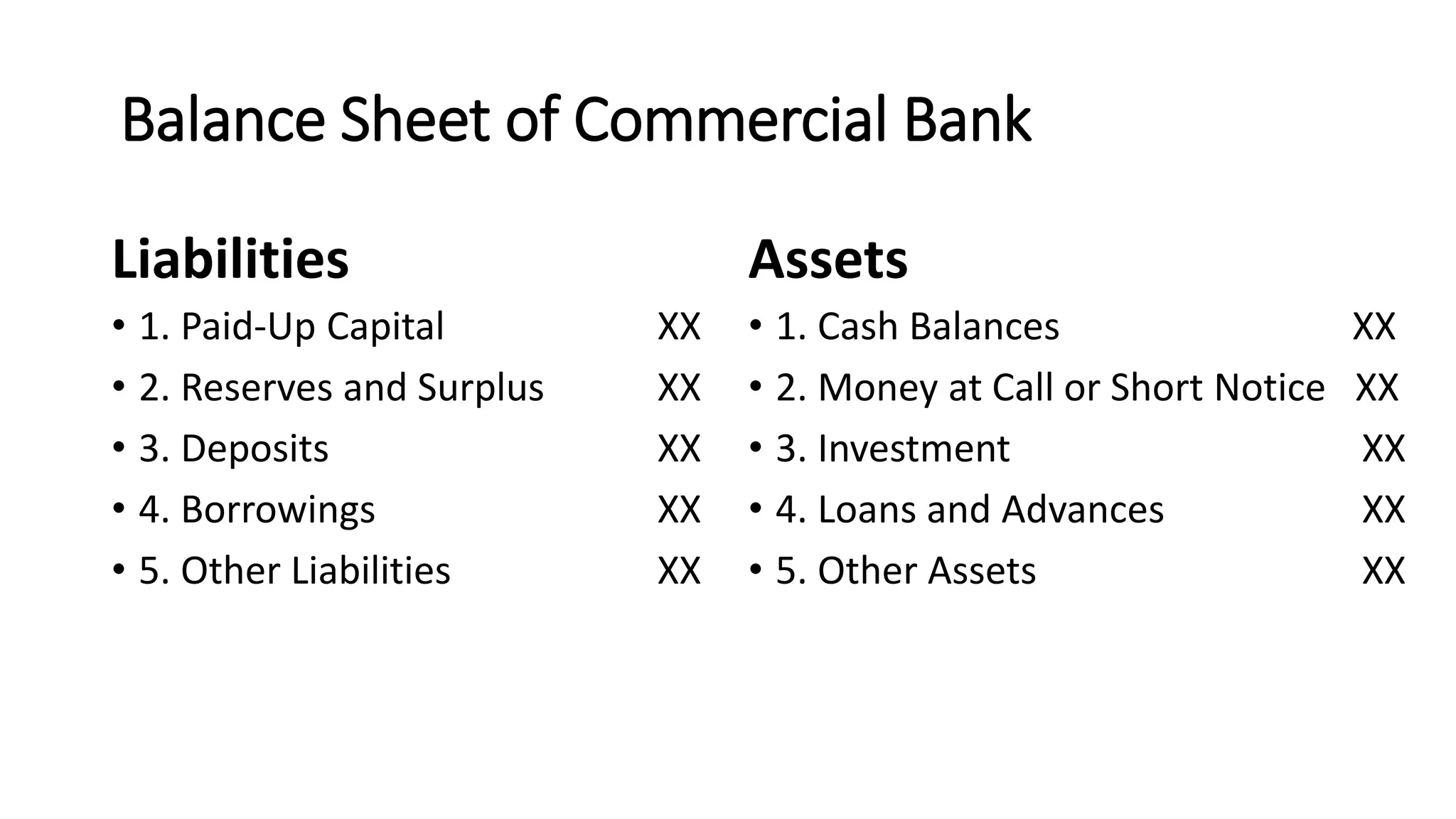
When evaluating the financial health, stability, and operational capacity of a financial institution, analysts place assets and liabilities bank in focus to dissect how money flows through the institution. A bank's balance sheet acts as an immediate financial ledger where assets represent everything the bank owns or is owed—such as loans, securities, and cash reserves—while liabilities represent what the bank owes to others, primarily customer deposits, wholesale borrowings, and accrued expenses. Understanding the interplay between these two components reveals how commercial and central banks manage liquidity, mitigate credit risk, and generate revenue within the modern monetary system.
The Core Anatomy of a Bank Balance Sheet
Unlike standard commercial or industrial enterprises, a bank’s balance sheet possesses an inverted operational dynamic. For a manufacturing firm, physical inventory, machinery, and facilities constitute primary assets, while debt constitutes liabilities. For a financial institution, however, customer deposits are recorded as liabilities because the bank owes those funds back to the depositors upon demand or maturity. Conversely, the loans extended to consumers and businesses are registered as assets because they generate interest income and represent a contractual obligation owed to the bank.
A comprehensive examination of a bank's financial statement requires dividing the ledger into standardized accounting segments. The fundamental accounting identity—Assets equal Liabilities plus Shareholders' Equity—governs every transaction. If a bank experiences a decline in asset quality due to widespread loan defaults, the loss directly erodes the shareholders' equity unless offset by loss provisions or capital injections.
Primary Asset Components
The asset side of a bank's balance sheet reflects how the institution deploys its capital to generate earnings and maintain operational liquidity. These items are generally categorized by liquidity, ranging from immediately accessible cash to long-term credit instruments.
- Cash and Due from Banks: Physical vault cash and electronic reserves held at the central bank. These assets yield little to no return but satisfy statutory reserve requirements and daily withdrawal demands.
- Investment Securities: Portfolios of government bonds, municipal securities, and mortgage-backed securities (MBS). These instruments provide a steady stream of interest income while offering secondary liquidity since they can be sold or pledged in repo markets.
- Loans and Leases: Typically the largest asset category for commercial banks. This includes commercial real estate loans, residential mortgages, consumer installment loans, and commercial and industrial (C&I) lending. Loans carry credit risk but generate the highest net interest margins.
- Other Assets: Physical premises, equipment, deferred tax assets, and customer liability on acceptances.
Primary Liability Components
Liabilities represent the sources of funds that a bank utilizes to finance its asset generation. The cost of acquiring and maintaining these liabilities directly dictates the institution's net interest margin.
- Customer Deposits: Core deposits form the lifeblood of retail and commercial banking. These include non-interest-bearing checking accounts, interest-bearing savings accounts, money market deposit accounts (MMDAs), and time deposits like certificates of deposit (CDs).
- Short-Term Borrowings: Wholesale funding mechanisms utilized to manage daily liquidity shortfalls, including federal funds purchased, repurchase agreements (repos), and short-term commercial paper.
- Long-Term Debt: Subordinated notes, debentures, and long-term advances from entities such as the Federal Home Loan Bank (FHLB) system, designed to satisfy regulatory capital and funding diversification requirements.
| Balance Sheet Category | Sub-Classification | Primary Function & Risk Profile |
|---|---|---|
| Assets | Cash & Reserves | Provides immediate liquidity; carries zero credit risk; yields minimal return. |
| Assets | Investment Securities | Generates stable interest income; offers secondary liquidity through market sales. |
| Assets | Loans & Leases | Core revenue driver; carries varying degrees of credit and interest rate risk. |
| Liabilities | Customer Deposits | Primary funding source; highly stable (core deposits) or sensitive to interest rates (hot money). |
| Liabilities | Wholesale Borrowings | Tactical liquidity management; subject to rapid repricing during market stress. |
| Equity | Retained Earnings & Capital | Absorbs unexpected losses; protects senior creditors and depositors. |
Commercial Banks Versus Central Banks: A Structural Comparison
While both commercial and central banks utilize asset and liability accounting frameworks, their macroeconomic objectives, functions, and balance sheet compositions differ fundamentally. Putting assets and liabilities bank in focus requires distinguishing between private-sector financial intermediaries and public-sector monetary authorities.
Commercial Bank Balance Sheets
Commercial banks operate as profit-seeking corporations. Their primary objective is to maximize net interest income—the spread between the interest rate earned on assets (loans and investments) and the interest rate paid on liabilities (deposits and borrowings).
Because commercial banks rely heavily on short-term liabilities (deposits) to fund longer-term assets (mortgages and loans), they are inherently exposed to asset-liability mismatch. If market interest rates rise rapidly, the cost of servicing deposit liabilities increases faster than the fixed yields on legacy loan assets, squeezing profitability and creating valuation losses in fixed-income portfolios.
Central Bank Balance Sheets
Central banks, such as the Federal Reserve, the European Central Bank, or the Bank of England, do not operate for profit. Their balance sheets serve as the primary engine for implementing monetary policy, regulating the national money supply, and maintaining systemic financial stability.
On a central bank balance sheet, liabilities consist primarily of currency in circulation (physical banknotes) and commercial bank reserves held on deposit at the central bank. On the asset side, central banks hold massive portfolios of sovereign debt and agency mortgage-backed securities, acquired historically through open market operations or quantitative easing (QE) and quantitative tightening (QT) programs.
Key Financial Metrics Derived from Balance Sheets
Financial analysts, regulators, and investors rely on specific ratios derived from asset and liability data to evaluate a bank’s operational soundness, capital adequacy, and risk exposure.
1. Capital Adequacy Ratio (CAR)
Regulated under global frameworks such as the Basel III accords, the Capital Adequacy Ratio measures a bank's capital relative to its risk-weighted assets (RWA). Assets are assigned risk weights based on their perceived credit risk—cash carries a 0% risk weight, residential mortgages often carry 35%, and unsecured commercial loans carry 100%. Maintaining a robust CAR ensures the bank can absorb unexpected loan losses without threatening insolvency.
2. Net Interest Margin (NIM)
NIM measures the net return a bank generates on its earning assets. It is calculated as the difference between interest income generated and the amount of interest paid out to lenders and depositors, divided by average earning assets. A compressing NIM signals that funding costs are outpacing asset yields.
3. Loan-to-Deposit Ratio (LDR)
The LDR compares a bank's total loans to its total deposits for a specific period. A ratio too high (e.g., above 90% or 100%) indicates that the bank may be relying on volatile wholesale funding to support illiquid loan growth, heightening liquidity risk. A ratio too low suggests the institution is failing to deploy its deposit base efficiently into income-generating assets.
Regulatory Oversight and Risk Management
The modern banking sector operates under rigorous regulatory scrutiny designed to prevent systemic failure. Regulatory bodies—such as the Office of the Comptroller of the Currency (OCC), the Federal Deposit Insurance Corporation ( FDIC), and the Federal Reserve—enforce strict guidelines regarding liquidity management and asset classification.
Liquidity Coverage Ratio (LCR) and Net Stable Funding Ratio (NSFR)
Introduced post-financial crisis, the LCR requires large banks to hold a sufficient reserve of High-Quality Liquid Assets (HQLA) to survive a severe 30-day acute stress scenario. Meanwhile, the NSFR mandates that banks maintain a stable funding profile in relation to the composition of their assets and off-balance-sheet activities over a one-year horizon.
Interest Rate Risk in the Banking Book (IRRBB)
Because asset and liability maturities rarely match perfectly, banks utilize sophisticated interest rate risk modeling. By conducting duration gap analysis, risk managers estimate how changes in the benchmark yield curve will impact the economic value of equity and net interest income, allowing institutions to hedge exposures using interest rate swaps and futures contracts.
Frequently Asked Questions
Why are customer deposits considered liabilities on a bank's balance sheet?
Customer deposits represent money that individuals and businesses have placed with the bank, which the bank is legally obligated to return upon demand or at the end of a specified maturity term. Because the bank owes these funds to its customers, they are classified as liabilities.
What is the difference between earning assets and non-earning assets?
Earning assets are financial instruments deployed by a bank to generate revenue, such as consumer loans, commercial mortgages, and investment securities. Non-earning assets include physical cash in vaults, bank premises, equipment, and cash items in the process of collection, which support operations but generate no direct interest income.
How do rising interest rates affect a bank's assets and liabilities?
Rising interest rates increase the cost of liabilities as banks must pay higher yields to retain deposits and secure wholesale funding. On the asset side, variable-rate loans reprice upward, but fixed-rate assets—such as legacy mortgages and long-term bonds—lose market value, which can create unrealized losses on the balance sheet.
What role do central bank reserves play in the banking system?
Central bank reserves are balances held by commercial banks in accounts at the central bank. They serve as the ultimate settlement medium for interbank transactions, satisfy regulatory reserve requirements, and act as a crucial tool for central banks executing monetary policy through interest rate adjustments.
How do non-performing loans impact a bank's capital?
Non-performing loans are borrowings where the borrower is delinquent on interest or principal payments for an extended period (typically 90 days or more). Banks must set aside provisions for loan losses to cover these defaults. These provisions directly reduce net income and deplete retained earnings, lowering the bank's overall capital adequacy.
Practical Next Steps for Financial Analysis
For analysts, investors, or finance professionals seeking to evaluate an institution with assets and liabilities bank in focus, the primary action involves pulling the institution's official regulatory filings—such as the Call Report for US commercial banks or annual Form 10-K SEC filings. Review the balance sheet footnotes to identify the duration breakdown of investment securities, the concentration of uninsured corporate deposits, and the level of non-performing assets relative to total reserves. By pairing these balance sheet metrics with income statement efficiency ratios, stakeholders can accurately gauge an institution's capacity to navigate shifting macroeconomic cycles.