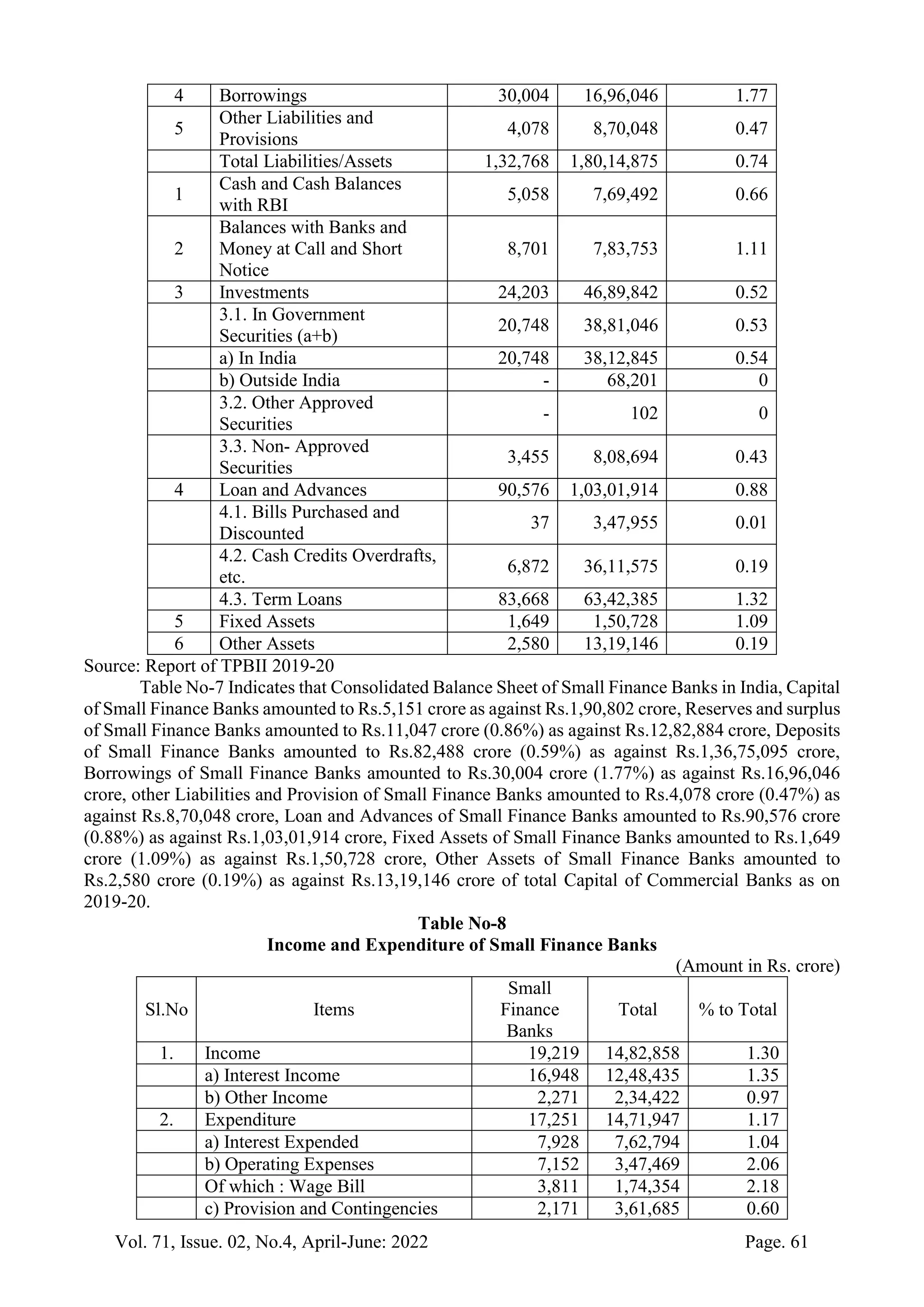
Commercial banks in India balance financial operations by holding liabilities—such as public deposits and borrowings that represent what they owe—and assets—such as loans, advances, and investments that represent what is owed to them. These components generate net interest income and dictate the stability of the banking sector.
Introduction to Commercial Banking Structure in India
The financial architecture of India relies heavily on commercial banks, which act as the primary conduits for monetary policy transmission, capital allocation, and public savings mobilization. Regulated strictly by the Reserve Bank of India (RBI) under the Banking Regulation Act, 1949, commercial banks operate on a fundamental premise: accepting money from surplus units (savers) and channeling it to deficit units (borrowers and investors).
To comprehend the financial health, operational viability, and systemic stability of these institutions, analysts, regulators, and economists look at their balance sheets. A commercial bank balance sheet is divided into two primary sides: liabilities (sources of funds) and assets (uses of funds). Understanding how these elements interact illuminates how banks generate revenue, manage risk, and comply with regulatory mandates such as the Cash Reserve Ratio (CRR) and the Statutory Liquidity Ratio (SLR).
What Are Liabilities of Commercial Banks?
Liabilities represent the obligations that a commercial bank owes to external parties. In simpler terms, liabilities are the sources from which a bank raises capital to deploy elsewhere. If a bank cannot manage its liabilities efficiently, it faces liquidity crises and potential insolvency. Liabilities are broadly categorized into capital and reserves, borrowings, and public deposits.
Public Deposits (Demand and Time Deposits)
Deposits form the largest chunk of a commercial bank's liabilities. They represent money entrusted by individuals, corporations, and institutional investors to the bank for safekeeping and growth. Deposits are split into two major types:
- Demand Deposits: These consist of Current Accounts and Savings Accounts (CASA). Demand deposits can be withdrawn by the account holder at any time without prior notice. While savings accounts offer modest interest rates and transactional flexibility, current accounts typically offer no interest and are utilized by businesses for high-frequency transactions. CASA deposits are considered low-cost funds for banks.
- Time Deposits (Term Deposits): These include Fixed Deposits (FDs) and Recurring Deposits (RDs). Funds deposited under these accounts are locked in for a predetermined tenure. They carry higher interest rates compared to demand deposits because they provide banks with stable, predictable liquidity over a medium to long-term horizon.
Borrowings
Apart from deposits, commercial banks often need short-term or long-term funds to bridge liquidity mismatches. These borrowings can take several forms:
- Borrowings from the Reserve Bank of India: Banks borrow from the central bank through mechanisms like the Liquidity Adjustment Facility (LAF)—encompassing Repo operations—and the Marginal Standing Facility (MSF).
- Interbank Borrowings: Banks lend to and borrow from one another in the call money market, notice money market, and term money market to manage temporary cash flow deficits.
- Refinance Facilities: Borrowings obtained from specialized financial institutions like the National Bank for Agriculture and Rural Development (NABARD) or the Small Industries Development Bank of India (SIDBI) for specific sector-lending mandates.
Other Liabilities and Provisions
This category includes bills payable, interest accrued but not paid, unearned income, and various provisions made for non-performing assets, taxation, and employee benefits. Capital and reserves (paid-up equity capital, statutory reserves, and retained earnings) are technically liabilities owed to the shareholders of the bank, representing the owners' stake in the institution.
What Are Assets of Commercial Banks?
Assets are the economic resources owned or controlled by a commercial bank. They represent the deployment of funds collected through liabilities. Assets generate income for the bank, primarily through interest spreads, fees, and capital appreciation. A well-managed asset portfolio minimizes risk while maximizing yield.
Cash and Balances with the Reserve Bank of India
Liquid cash held in bank vaults and balances maintained with the RBI constitute the most liquid assets. A portion of this is held compulsorily to satisfy the Cash Reserve Ratio (CRR), which requires banks to keep a specified percentage of their Net Demand and Time Liabilities (NDTL) as cash reserves with the central bank.
Balances with Other Banks and Money at Call and Short Notice
Banks maintain accounts with other domestic and foreign correspondent banks to facilitate interbank settlements, foreign exchange transactions, and clearinghouse operations. Money at call and short notice refers to loans advanced for a very brief period, ranging from one day to fourteen days, yielding quick liquidity.
Investments
Commercial banks invest a substantial portion of their surplus funds in financial securities. This serves two purposes: complying with regulatory requirements and earning safe returns.
- Statutory Liquidity Ratio (SLR) Securities: Indian commercial banks must invest a specified percentage of their NDTL in approved government securities (G-secs), treasury bills, and state development loans.
- Non-SLR Investments: Investments made voluntarily in corporate bonds, debentures, shares, and mutual funds to diversify income streams beyond standard lending.
Loans and Advances (Credit Portfolio)
Loans and advances form the core income-generating asset class for commercial banks. When banks extend credit, they charge an interest rate that is typically higher than the cost of their liabilities. Loans and advances are classified into:
- Term Loans: Medium to long-term financing provided to businesses and individuals for capital expenditure, infrastructure projects, housing, and consumer durables.
- Working Capital Loans: Short-term credit facilities like cash credit, overdrafts, and bill discounting extended to businesses to manage day-to-day operational expenses and inventory cycles.
- Retail Credit: Personal loans, credit card receivables, and auto loans extended directly to individual consumers.
Comparative Structure of Assets and Liabilities
To visualize how a commercial bank balances its books, the following table summarizes the primary heads found on a typical bank balance sheet in India, reflecting standard financial reporting formats under the Banking Regulation Act.
| Balance Sheet Component | Sub-Components | Primary Purpose / Functional Nature |
|---|---|---|
| Liabilities | Capital & Reserves | Represents shareholder equity and retained earnings (internal liability). |
| Liabilities | Public Deposits (CASA & Term) | Low-cost and stable retail/corporate funds; primary source of bank capital. |
| Liabilities | Borrowings (RBI, Interbank, Bonds) | Tactical funding used to plug liquidity gaps and meet regulatory shortfalls. |
| Assets | Cash & RBI Balances | Immediate liquidity and mandatory regulatory compliance (CRR). |
| Assets | Investments (G-Secs, Bonds) | Regulatory compliance (SLR) and risk-mitigated interest income. |
| Assets | Loans & Advances | Core revenue driver; funding business operations, retail, and infrastructure. |
Asset-Liability Management (ALM) in Indian Banking
Managing the mismatch between assets and liabilities is one of the most critical functions for risk managers in commercial banks. Because liabilities often have shorter maturities (e.g., savings deposits can be withdrawn instantly) while assets have longer maturities (e.g., a 20-year housing loan), banks are exposed to systemic risks.
Interest Rate Risk
When interest rates fluctuate, the market value of fixed-rate assets and liabilities changes unevenly. For instance, if interest rates rise, the cost of acquiring new liabilities (deposits and borrowings) increases faster than the yields on legacy fixed-rate assets, squeezing the Net Interest Margin (NIM).
Liquidity Risk
Liquidity risk arises when a bank is unable to meet its financial obligations as they come due—such as sudden, massive withdrawals by depositors—without incurring unacceptable losses. To mitigate this, the RBI mandates robust Asset-Liability Management (ALM) frameworks that require banks to bucket their cash inflows and outflows across various time horizons.
The Role of Non-Performing Assets (NPAs)
An asset ceases to generate income when a borrower defaults on principal or interest repayments for a specified period (typically 90 days in India). These are known as Non-Performing Assets (NPAs).
When a commercial bank accumulates high levels of NPAs, its asset quality deteriorates. This forces the bank to set aside capital as provisions, which directly eats into profitability and depletes the capital adequacy ratio. Managing the recovery of NPAs through mechanisms like the Securitisation and Reconstruction of Financial Assets and Enforcement of Security Interest (SARFAESI) Act, 2002, and the Insolvency and Bankruptcy Code (IBC), 2016, is essential for maintaining asset-side health.
Conclusion
The operational framework of commercial banks in India rests on the careful calibration of assets and liabilities. Liabilities provide the raw material—capital mobilized from depositors and financial markets—while assets represent the productive deployment of that capital into loans, advances, and secure investments. Maintaining an optimal equilibrium between liquidity, profitability, and risk management ensures that these financial institutions remain resilient pillars of the Indian economy.