Assigning a life insurance policy to a funeral home in Kansas allows policyholders to designate the death benefit toward final expenses, ensuring that funeral and burial costs are covered without placing an immediate financial burden on grieving family members. This financial arrangement involves legally transferring all or a portion of the policy's ownership rights or death benefit proceeds to a licensed funeral establishment or a dedicated trust organization operating under Kansas insurance and mortuary laws.
When a person plans for the end of life, managing final arrangements can be one of the most stressful aspects for surviving relatives. In Kansas, state regulations provide a structured legal pathway to use existing life insurance policies to fund pre-planned or immediate-need funeral services. Understanding how this process works, the legal requirements involved, and the distinctions between assignments and beneficiary designations can protect your assets and ensure your exact wishes are fulfilled.
Understanding Life Insurance Assignment for Funeral Expenses
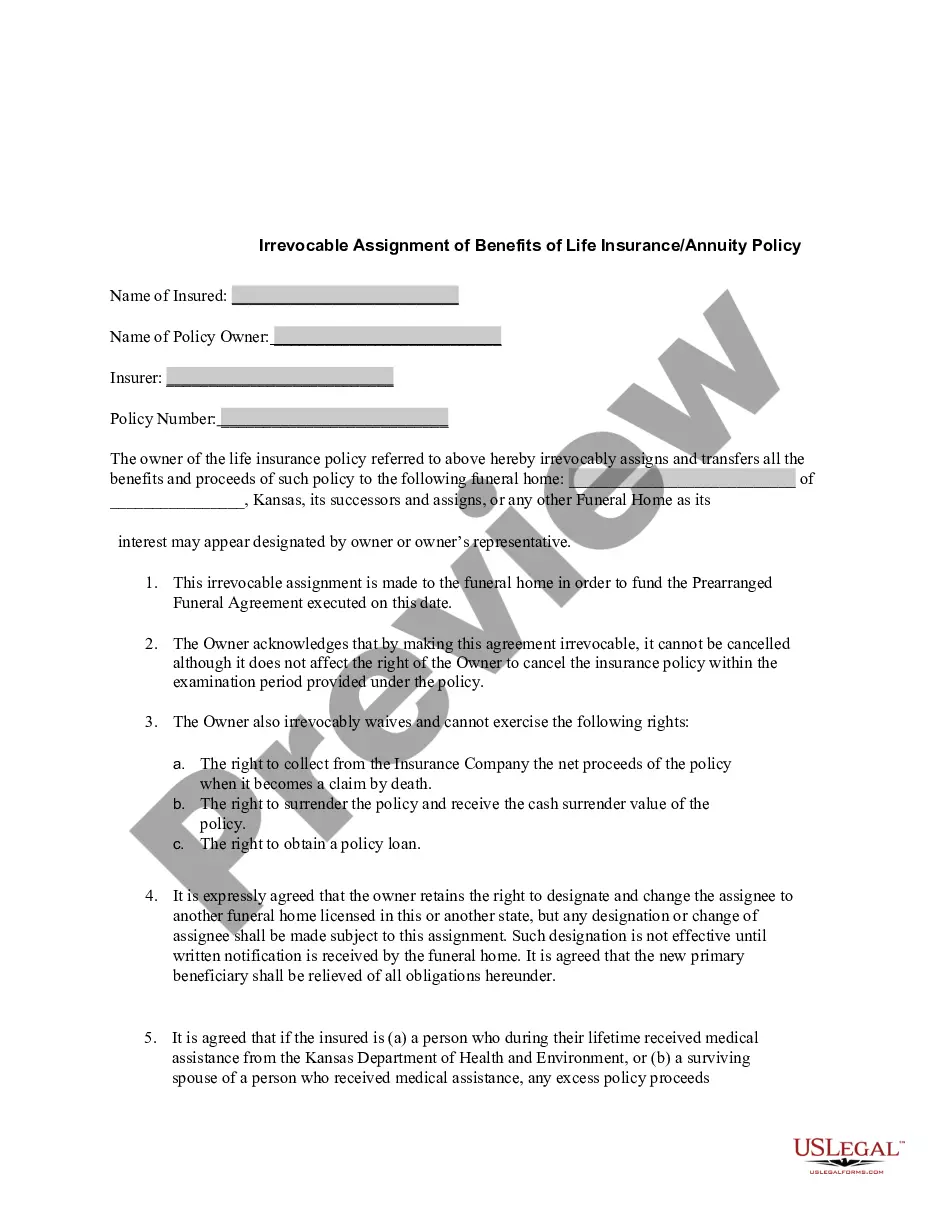
An assignment of a life insurance policy involves transferring specific rights from the policyowner to a third party—in this case, a funeral home. Unlike simply naming a person or entity as a beneficiary, an assignment creates a legal claim against the policy proceeds. In Kansas, this transaction is governed by both the Kansas Insurance Department regulations and Kansas statutes concerning funeral pre-arrangements and cemetery merchandise.
When you assign a policy to a funeral home, you are essentially entering into a contract where the funeral home agrees to provide specific goods and services, and in exchange, they receive the designated portion of the insurance payout upon your passing. This is frequently utilized in pre-need funeral planning, where an individual makes arrangements years in advance, or at the time of need when a loved one has passed away and immediate funds are required to cover service costs.
It is critical to distinguish between an absolute assignment and a collateral assignment. An absolute assignment transfers all ownership rights, meaning you relinquish control over the policy entirely. A collateral assignment, which is far more common for funeral expenses, uses the policy as security for a specific debt or contract—the funeral service agreement—while you retain residual ownership rights of the policy.
Prerequisites and Eligibility Requirements in Kansas
Before a life insurance policy can be assigned to a funeral home in Kansas, specific conditions must be met by both the policy and the funeral establishment. Not all life insurance policies qualify for assignment, and funeral homes must adhere to strict state licensing and consumer protection laws.
Policy Eligibility
- Active Status: The life insurance policy must be in good standing, with all premiums paid up to date. Lapsed policies hold no cash or death benefit value and cannot be assigned.
- Policy Type: Term life insurance, whole life insurance, and universal life insurance can theoretically be assigned, but whole life and universal life policies with accumulated cash value are most commonly used because they are permanent. Term policies may expire before the insured passes away, rendering the assignment void.
- Ownership Rights: The person assigning the policy must be the legal owner of the policy, not just the insured person (though they are frequently the same individual). If the policy is owned by an irrevocable trust or a third party, that entity must execute the assignment.
- Absence of Irrevocable Beneficiaries: If the policy currently lists an irrevocable beneficiary, that beneficiary must sign a release or consent to the assignment. If the beneficiary is revocable, the policyowner generally has the right to change it or execute an assignment without their consent, depending on the insurer's contract terms.
Funeral Home and Provider Compliance
In Kansas, funeral homes that handle insurance assignments must comply with the rules enforced by the Kansas State Board of Mortuary Arts and the Kansas Insurance Department.
- Licensing: The funeral home or its designated trust partner must be legally authorized to transact pre-need funeral business in the state.
- Third-Party Funding Companies: Many Kansas funeral homes partner with specialized insurance assignment companies (such as Global Atlantic, First Guarantee Mortgage Corporation, or similar assignment processors). These companies verify the policy, advance funds to the funeral home if necessary, and handle the claim processing with the insurance carrier, charging a processing fee for their services.
Step-by-Step Process to Assign a Policy in Kansas
Executing a life insurance assignment requires coordination between the policyowner, the funeral director, and the insurance carrier. Rushing through these steps can lead to processing delays or rejected claims when funds are urgently needed.
1. Consult with a Licensed Funeral Director
Begin by meeting with a licensed funeral director in Kansas to plan the services and establish a detailed, itemized statement of goods and services. Under the Federal Trade Commission’s Funeral Rule, which applies in Kansas, funeral homes must provide clear, itemized pricing. You must know the exact financial total required before assigning funds.
2. Request Assignment Forms from the Insurance Company
Contact the life insurance company that issued the policy. Request their specific Collateral Assignment or Policy Assignment form. Do not rely solely on generic forms provided by the funeral home, as major insurance carriers often require their own proprietary paperwork to legally update their records.
3. Complete the Assignment Documentation
Fill out the assignment form accurately. You will typically need to provide:
- The full legal name and policy number of the life insurance policy.
- The exact legal name, address, and tax identification number (EIN) or license details of the funeral home or assignment processing company.
- The specific dollar amount assigned, or a clause designating "an amount necessary to cover the funeral and burial expenses as detailed in the attached contract."
4. Execute Signatures and Notarization
The policyowner, the insured (if different), and a representative of the funeral home must sign the document. Many insurance companies and Kansas legal standards require these signatures to be notarized to prevent fraud or unauthorized policy manipulation.
5. Submit and Confirm Registration with the Insurer
Mail or securely transmit the completed assignment form to the insurance company’s home office. Request written confirmation from the insurance carrier that they have received, recorded, and filed the assignment. An assignment is generally not legally binding on the insurance company until it is formally recorded in their corporate office.
Financial and Legal Considerations
Assigning a life insurance policy carries significant financial and legal consequences that require careful evaluation.
Tax Implications
Generally, life insurance death benefits paid to a beneficiary are income tax-free under Internal Revenue Code Section 101(a). When a policy is assigned to a funeral home to pay for services, the portion of the proceeds used to settle the funeral bill is treated as satisfying a legal debt. The funeral home receives the funds as payment for goods and services, not as taxable income, while the estate or beneficiary typically does not face income tax on the assigned portion. However, excess proceeds above the funeral costs are usually returned to the secondary beneficiary or the estate.
Potential Risks and Pitfalls
- Policy Lapses: If a whole life policy has an automatic premium loan provision or is subject to cash-value borrowing, ensure that the assignment does not inadvertently trigger a lapse by restricting cash value usage.
- Over-Assignment: Never assign an amount greater than the anticipated funeral costs unless you have a mechanism in place for the funeral home to refund the remaining balance to your estate or secondary beneficiary.
- Contested Estates: If other family members dispute the validity of the funeral arrangements or the assignment, it can lead to legal delays in releasing funds. Clear communication and notarized documentation mitigate this risk.
| Feature / Aspect | Beneficiary Designation | Policy Assignment |
|---|---|---|
| Legal Nature | Names a recipient to receive leftover funds after death. | Transfers a security interest or ownership right to settle a specific debt/contract. |
| Control | Policyowner retains full control and can change the beneficiary at any time. | Restricts the policyowner's ability to surrender or borrow against the assigned portion. |
| Purpose | General wealth transfer or income replacement for survivors. | Direct payment mechanism for specific services, such as final expenses. |
| Processing Speed | Subject to standard insurer death claim verification and processing times. | Often expedited if handled through dedicated third-party assignment companies partnered with funeral homes. |
Alternatives to Policy Assignment
Assigning a life insurance policy is not the only way to fund final arrangements in Kansas. Depending on your financial situation and preferences, several alternatives may better suit your needs:
- Naming the Funeral Home as a Beneficiary: Instead of an assignment, you can name the funeral home as a primary or contingent beneficiary for a specific percentage or dollar amount of the policy. This avoids complex assignment paperwork, though it still requires the insurer to process a standard death claim.
- Pre-Need Funeral Trust: You can fund a pre-need trust directly through cash, installments, or a dedicated single-premium life insurance policy explicitly structured as a pre-need product. In Kansas, these trusts are strictly regulated by the state to protect consumer funds.
- Payable-on-Death (POD) Bank Account: Setting up a POD savings account designated for funeral expenses allows designated family members immediate access to cash upon presenting a death certificate, bypassing probate without altering life insurance contracts.
- Final Expense Insurance: Purchasing a small, dedicated whole life insurance policy (often called burial insurance) specifically sized to cover funeral costs, with the funeral home or a trusted relative named as beneficiary from inception.
Frequently Asked Questions
Can a term life insurance policy be assigned to a Kansas funeral home?
Yes, term life insurance policies can technically be assigned, but it carries substantial risk. Because term policies expire after a set period or when the insured reaches a certain age, the policy may lapse before death occurs. Funeral homes generally prefer permanent whole life policies because the coverage is guaranteed to remain active as long as premiums are paid.
What happens to the money if the insurance payout exceeds the funeral cost?
If the life insurance policy payout is higher than the total cost of the funeral services outlined in the contract, the funeral home or assignment company is legally obligated to return the excess funds. These remaining proceeds are paid out to the policy's secondary beneficiary or to the deceased person's estate.
Can an assignment be canceled or modified later?
A collateral assignment can typically be modified or canceled by the policyowner, provided the assignment agreement allows for it and the funeral home has not yet rendered the services or incurred non-recoverable expenses. To release an assignment, the funeral home must sign a formal release of assignment form, which is then submitted back to the insurance carrier.
Do Kansas funeral homes charge fees for processing life insurance assignments?
Many funeral homes utilize third-party assignment funding companies to verify and process policies quickly. These companies frequently charge an administrative fee—often ranging from 3% to 5% of the assigned policy value—to cover the cost of advancing funds and handling paperwork. Always ask the funeral director for a clear breakdown of any third-party processing fees before signing.
What documents are required by the insurance company to process the assignment?
To process a policy assignment, the insurance company typically requires their specific assignment form signed by all legal owners and witnesses or a notary, a copy of the itemized funeral contract, and verification of the policy's current status. Upon the insured's passing, a certified copy of the death certificate will also be required to release the funds.
Next Actions and Professional Guidance
If you are currently evaluating how to arrange and finance final expenses in Kansas, begin by gathering your active life insurance policy documents and reviewing the ownership terms. Schedule a consultation with a licensed Kansas funeral director to discuss your specific service preferences and obtain a written itemized estimate. Because life insurance contracts and state regulations involve complex legal and financial obligations, consider consulting an estate planning attorney or financial advisor to ensure that your policy assignment aligns seamlessly with your broader estate plans and protects your beneficiaries' interests.